





Published Thursday, June 11, 2026 by Elena R. in Popular Dogs
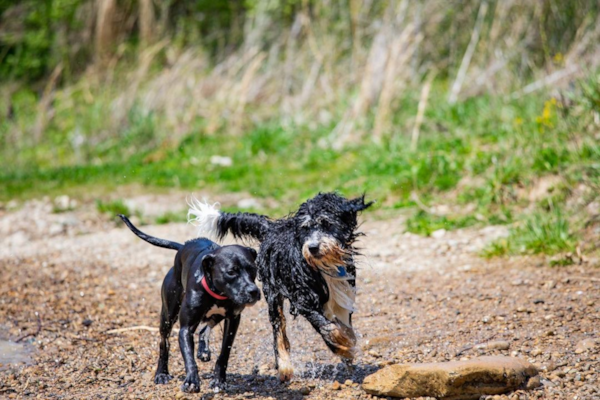
People usually arrive at this question carrying a specific picture in their head. A fluffy, sleepy teddy bear curled on the couch, content to nap through a quiet afternoon and ask for very little. Some Mini Bernedoodles grow into that dog. Plenty of others spend their first two years convinced the living room is a racetrack and the couch is a launch pad.
So here is the straight answer: Mini Bernedoodles sit in the moderate range, and they lean higher than the breed's calm reputation suggests. The energy is real, the activity needs are daily, and the puppy and adolescent stages catch a lot of first-time owners off guard.
That said, 'high energy' gets thrown around loosely, and it hides a few different things that matter a great deal once you are actually living with the dog. A genuinely high-energy dog is not the same as a bored dog, an overtired dog, or a young dog that never learned how to settle. Confuse them and you end up exhausting yourself walking a puppy that actually needed a nap.
This guide breaks down how energetic Mini Bernedoodles really are, where that energy comes from, how it shifts as they grow, how much exercise they genuinely need, and how to tell whether the breed's activity level fits your home before you commit to fifteen years of it.
Table of Contents
- The Honest Answer: Energetic More Than Expected
- Where the Energy Actually Comes From
- How Generation and Size Shift the Picture
- Energy Is Not the Same as Hyperactivity
- What the Energy Looks Like Year by Year
- How Much Exercise Mini Bernedoodles Need
- Why the Brain Tires Faster Than the Body
- Signs the Energy Is Not Being Met
- Does Their Energy Fit Your Life?
- Final Thoughts
The Honest Answer: Energetic More Than Expected
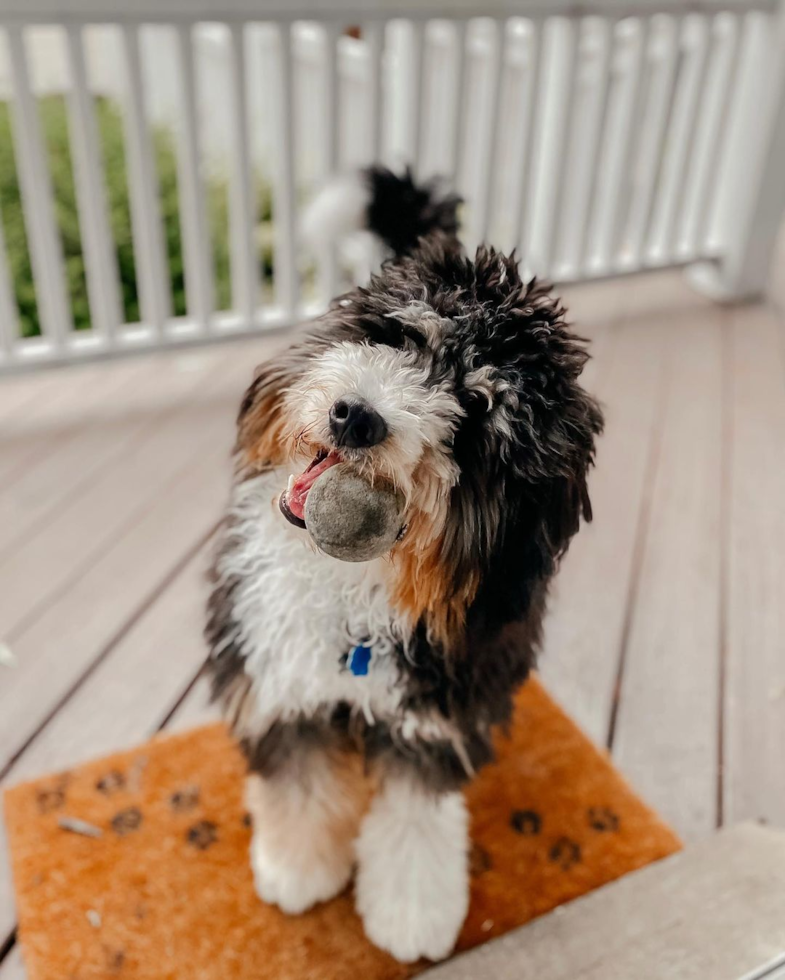
Most breed descriptions land on the word 'moderate,' and that word does not paint the full picture. Moderate to a marathon runner and moderate to someone who considers a flight of stairs a workout are not the same standard. A Mini Bernedoodle described as moderate energy will still happily hike for two hours, then trot home wondering what is next.
The cleaner way to think about it: a healthy adult Mini Bernedoodle wants real activity every single day, and a young one wants more than that. This is not a dog you exercise on weekends and apologize to on weekdays. The need is consistent, and skipping it shows up in behavior fast.
Mini Bernedoodles also carry a reputation for being a touch buzzier than their Standard cousins. The reason is partly mechanical. You are putting an athletic, work-bred temperament into a smaller, quicker, more agile body. A 35-pound dog can pivot, bounce, and reload faster than a 90-pound one, which makes the same energy feel more electric inside a house.
None of this makes them hyper by default. It makes them somewhat active dogs that thrive on engagement and unravel a little without it. The owners who feel blindsided are almost always the ones who expected the teddy bear and got the athlete. The breed's full mix of strengths and demands is worth understanding before the puppy comes home.
Where the Energy Actually Comes From

To predict a Mini Bernedoodle's activity level, look at the two breeds underneath it. They contribute very different things, and the blend explains most of what you will see at home.
The Bernese Mountain Dog brings a surprising wrinkle. People assume Bernese are mellow, and adults generally are, but the breed is energetic with limited stamina. These were farm dogs built for steady, purposeful work alongside a person, not for sprinting all day. That heritage shows up as a dog that enjoys activity in bursts and then genuinely wants to rest, rather than one that needs to run itself into the ground.
The Miniature Poodle pulls in the opposite direction. Poodles are athletic, quick-thinking working dogs with real drive, and that side contributes both physical energy and a busy, problem-solving brain. The Poodle influence is the part that makes a tired Mini Bernedoodle still find trouble if its mind has not been worked.
Cross the two and you get a dog with athletic capability, a thinking brain, and a body that recovers fast but does not always know when to quit on its own. The Poodle side tends to set the floor for how much engagement the dog needs. The Bernese side influences how willing the dog is to flop down and call it a day once that need is met. Which parent's tendencies win out varies from dog to dog, which is exactly why the next two factors matter so much.
How Generation and Size Shift the Picture
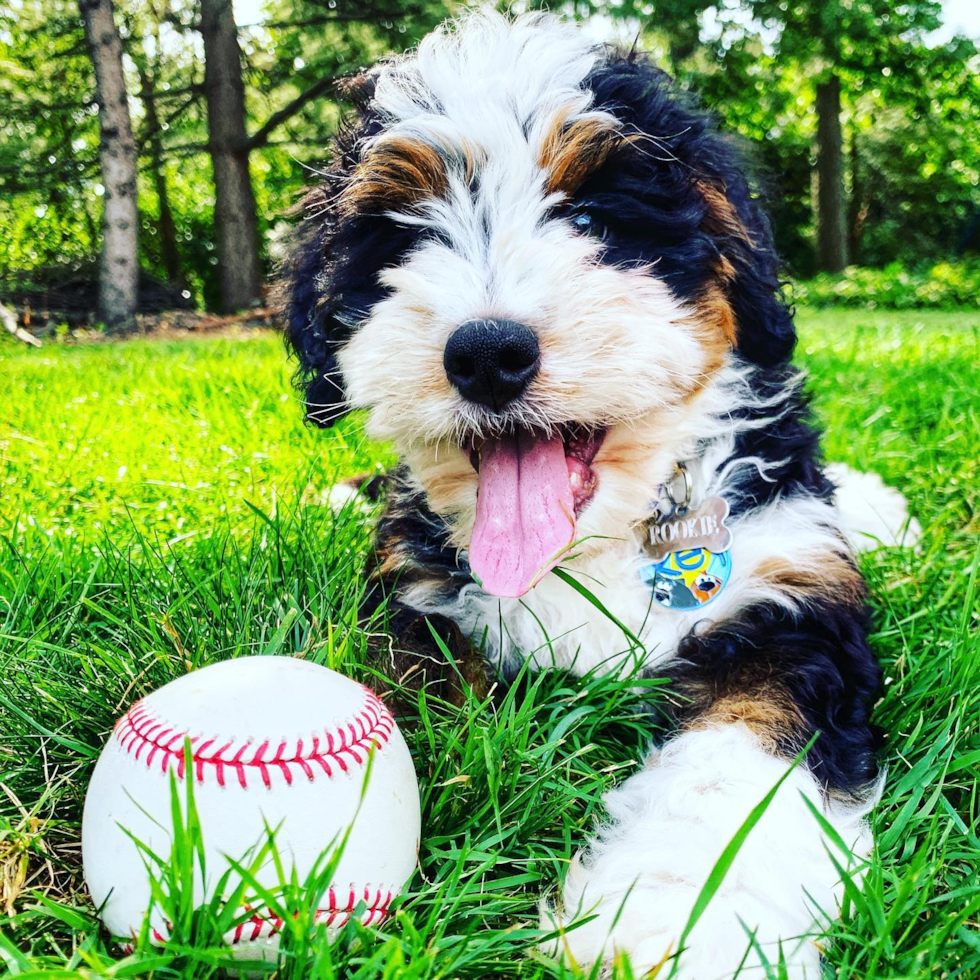
Two Mini Bernedoodle puppies can grow into noticeably different adults, and a good chunk of that comes down to generation. The math is worth understanding before you choose a puppy.
An F1 Mini Bernedoodle is a straight 50/50 cross, one Bernese parent and one Miniature Poodle parent. F1s produce the widest spread in temperament. Some lean Bernese and settle into calmer, steadier adults. Others lean Poodle and stay zippy and mentally demanding well into adulthood. The variability is the whole personality of an F1, which is why a careful breeder temperament-tests individual puppies rather than promising a fixed result.
An F1B Mini Bernedoodle is an F1 bred back to a Poodle, landing around 75 percent Poodle. That extra Poodle weighting buys more coat predictability, and it usually nudges energy and drive upward too. F1Bs are frequently the more athletic, more trainable, more engagement-hungry option. Families who specifically want an active partner sometimes choose this generation on purpose, while families hoping for a calmer dog should know what the higher Poodle percentage tends to bring.
F2 and multigen dogs scatter across the range depending on what got combined, so generation alone will not tell you everything. Size plays a role within the 'mini' label as well. Smaller, leggier individuals can feel relentless, while the heavier dogs closer to the upper end of the weight range sometimes carry a bit more of the Bernese mellowness. Like all Mini Bernedoodles, they are still mixed-breed dogs, so the label says mini and the energy does not always read the memo.
RELATED: Are Mini Bernedoodles Smart?
Energy Is Not the Same as Hyperactivity

This is the distinction that saves owners the most frustration, and most articles skip right past it. A Mini Bernedoodle that is bouncing off the walls is not always a high-energy dog. Frequently it is a dog whose needs got tangled.
There are four very different things people lump under 'hyper.' The first is genuine, healthy energy, the kind that wants a walk and a game and is satisfied afterward. The second is boredom, where an under-stimulated brain invents its own entertainment, usually involving your shoes. The third is anxiety, where the dog cannot relax because something feels off, not because it has fuel to burn. And the fourth, the sneakiest one, is overtiredness.
Young Mini Bernedoodles in particular hit a wall in the late afternoon or evening and lose the plot entirely. The biting ramps up, commands stop landing, and the zoomies turn frantic instead of playful. It looks exactly like a dog with too much energy. It is the opposite. An overtired puppy is flooded with stress hormones because it skipped naps, and piling on more activity pours fuel on the fire. The fix is a quiet crate and an enforced nap, not another lap around the block. New owners often spend several baffled evenings wondering what is wrong with their dog, right up until they realize the answer was sleep.
Settling is also a skill, not a personality trait the dog arrives with. A Mini Bernedoodle that never learned to be calm while nothing exciting is happening will pester, pace, and demand attention regardless of how many miles it logged. You can teach an off-switch through place training and rewarding calm behavior, and dogs that learn it look dramatically less hyper than dogs that did not, with the exact same energy under the hood. Before deciding you have a high-octane dog, rule out the boring explanations first.
What the Energy Looks Like Year by Year
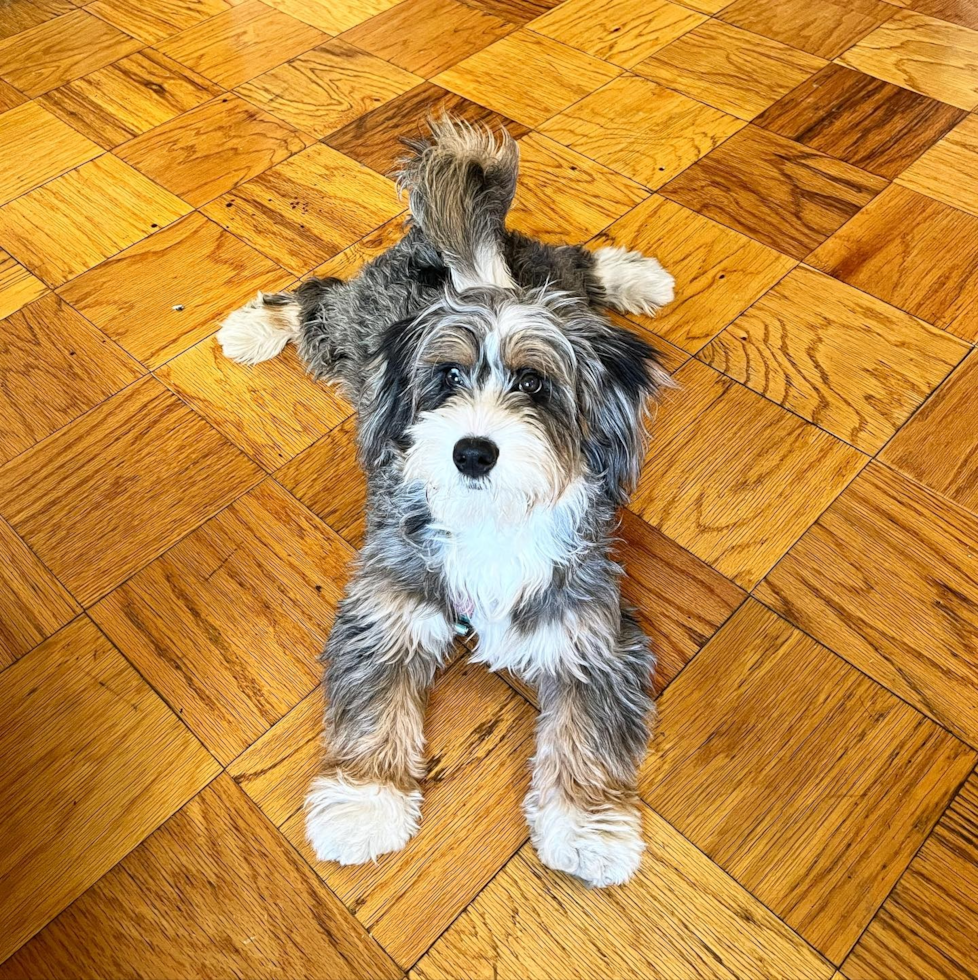
A Mini Bernedoodle's activity level is a moving target. Judging the breed by a six-month-old is like judging a person by their teenage years. Here is the actual arc.
Puppyhood, from a couple of months old to around a year, runs on bursts. The puppy detonates with energy for a few wild minutes, sprints in circles with a stolen sock, then crashes hard and sleeps. That cycle of chaos and collapse is normal and necessary, since puppies need something close to 16 to 18 hours of sleep a day for healthy development. The trap is that the awake bursts feel intense enough to convince owners they have got a hyper dog on their hands.
Adolescence is the phase that breaks people. Somewhere between roughly six months and two years, the energy stops coming in tiny bursts and turns into sustained, confident, boundary-testing fuel. The dog knows the commands and decides they are optional. Recall evaporates the instant a squirrel appears. Selective hearing becomes a personality. This stretch feels harder than puppyhood because the dog is bigger, faster, and more sure of itself, and it is the point where consistency matters most and feels least rewarding.
The shift usually arrives between 18 months and about two and a half years. Impulse control clicks into place, the dog starts making better decisions on its own, and owners describe finally meeting the dog they were promised. Full maturity tends to settle in around age three. From there you generally get a companion that is calm when the house is calm and ready to go when you are. Seniors slow down further, trading long hikes for shorter, gentler outings, though minis often stay sprightly later than the bigger Bernedoodles.
How Much Exercise Mini Bernedoodles Need
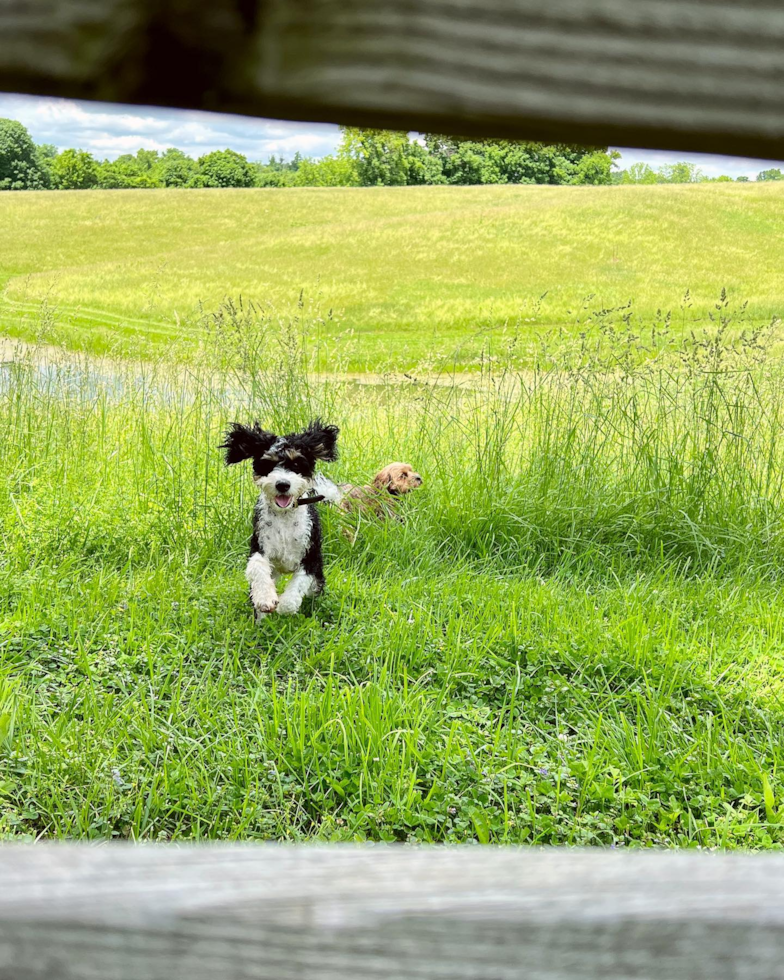
For a healthy adult Mini Bernedoodle, plan on roughly 60 to 75 minutes of physical activity a day, paired with 20 to 30 minutes of focused mental work. Splitting that into a couple of sessions, a morning outing and an evening one, works better than a single long march, partly because the Bernese side appreciates the rest in between.
Quality counts as much as the clock. A brisk, sniff-heavy walk does more than a slow loop around the same block, and adding higher-intensity bursts like fetch, tug, or off-leash running drains the tank faster than steady plodding. A good weekly menu mixes walks, a game of fetch, hiking on moderate terrain, swimming for dogs that take to water, and a few short training games sprinkled through the day.
Puppies are the big exception, and getting this wrong can cause real harm. Their growth plates have not closed, so forced running, long hikes, and repetitive jumping can damage developing joints. A widely used rule of thumb is about five minutes of structured exercise per month of age, once or twice a day, so a four-month-old gets short twenty-minute sessions rather than a five-mile adventure. The good news is that puppy energy is better spent on free play, training, sniffing, and the all-important enforced naps than on endurance.
It helps to picture an ordinary weekday. A thirty-minute sniffy walk and a short training session in the morning, a puzzle feeder at lunch, then a brisk evening walk with ten minutes of fetch tacked on. That is it. Spread that way, the dog's tank empties without anyone rearranging their whole life around it, and the breaks between sessions suit a dog that likes a little downtime after activity.
One more reassurance for nervous readers: this is not a Border Collie. Mini Bernedoodles do not need hours of relentless drilling to stay sane. They need their daily needs met consistently. A dog that gets its walk, a little brain work, and some real interaction is usually a pleasant houseguest the rest of the day.
Why the Brain Tires Faster Than the Body

Here is the part owners discover the hard way. You can walk a Mini Bernedoodle until your own legs give out and still come home to a dog looking for a job. A dog that runs for an hour but never gets its mind engaged is just a fitter dog with the same restlessness. The Poodle brain needs work, and physical exercise alone will not supply it.
Mental engagement reaches a Mini Bernedoodle in a way laps around the yard never will. A twenty-minute training session, a puzzle feeder at mealtime, a scatter of kibble in the grass to sniff out, a snuffle mat, a short nose-work game, or learning a new trick can leave the dog more genuinely satisfied than an extra walk. Owners regularly notice their dog settling far more easily after a thinking activity than after pure cardio.
This also makes the breed manageable for people without endless time outdoors. On a rainy day, ten minutes of training and a stuffed food toy can carry a Mini Bernedoodle through an afternoon that a sprint-only plan never could. Working the brain is the lever most owners underuse, and it is the one that quietly does the heavy lifting.
The other half of the equation is teaching calm directly. Rewarding the dog for relaxing, building in low-stimulation downtime, and letting it simply exist near you without a game running all teach a skill that exercise cannot. A Mini Bernedoodle that has learned doing nothing is allowed becomes a noticeably easier dog to live with.
The mistake worth avoiding is the cycle of constantly upping the activity. An owner sees a wound-up dog, adds a longer walk, ends up with a fitter dog that is still wound up, and concludes they have got a bottomless pit of energy on their hands. Usually the dog needed a different kind of tiredness, the mental kind, plus permission to switch off. More movement rarely fixes a brain that is still searching for a job.
Signs the Energy Is Not Being Met
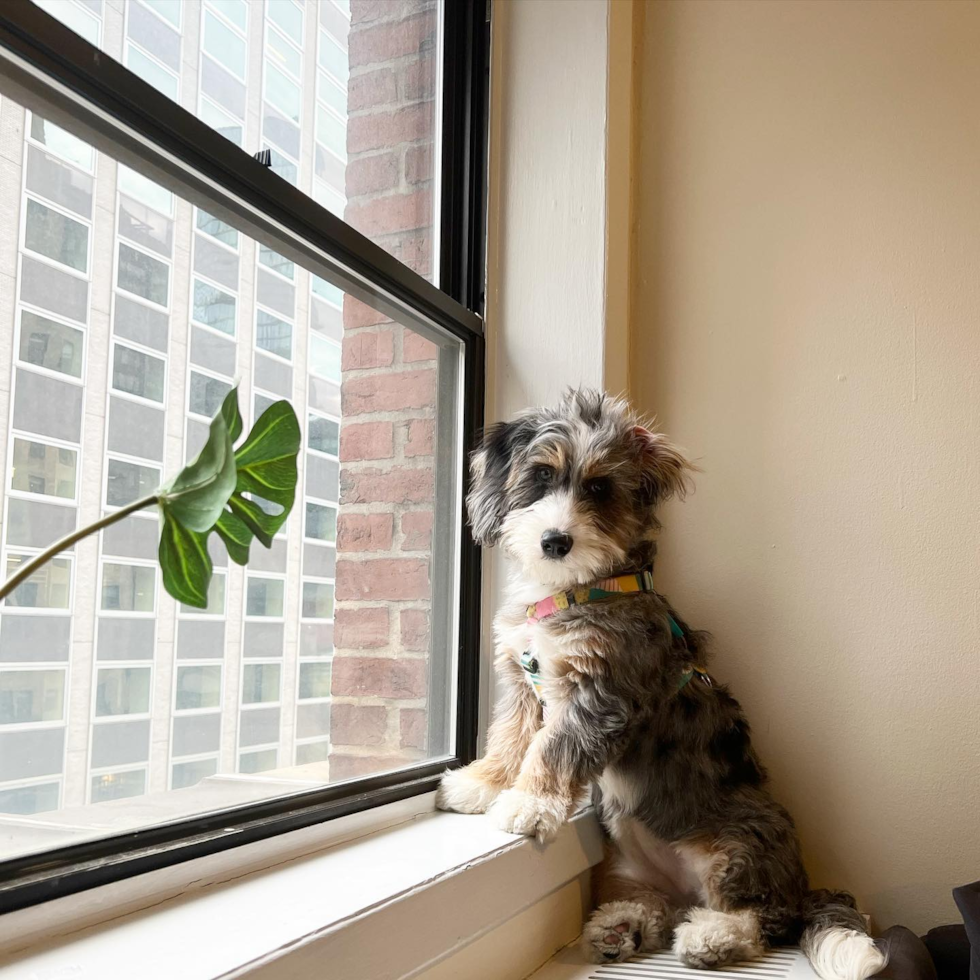
A Mini Bernedoodle that is not getting enough of the right activity will tell you, usually loudly. The behaviors below are not character flaws. They are a dog communicating that something it needs is missing.
- Destructive chewing aimed at furniture, baseboards, shoes, or anything else within reach
- An inability to settle, with pacing or constant repositioning even during quiet evenings
- Demand barking, attention-seeking, and nudging that will not quit
- Zoomies that tip from playful into frantic and hard to redirect
- General restlessness, like a dog that follows you room to room looking for a purpose
The catch is that these same signs can come from boredom, from skipped naps, or from too much stimulation rather than too little. A puppy melting down at 7 p.m. probably needs sleep, not a longer walk. A bored adult needs a job, not necessarily more miles. Reading which one you are dealing with is the actual skill, and it usually beats simply adding exercise on top of exercise. When in doubt, learning the breed's overtired-versus-genuinely-worked-up distinction early saves a lot of guesswork.
When the balance is right, the picture flips. A well-exercised, mentally engaged Mini Bernedoodle is genuinely easy company, content to lounge nearby, relaxed when the house is relaxed, and ready to spring into action the moment something fun is on offer. That contrast is exactly why energy management matters so much with this breed.
Does Their Energy Fit Your Life?
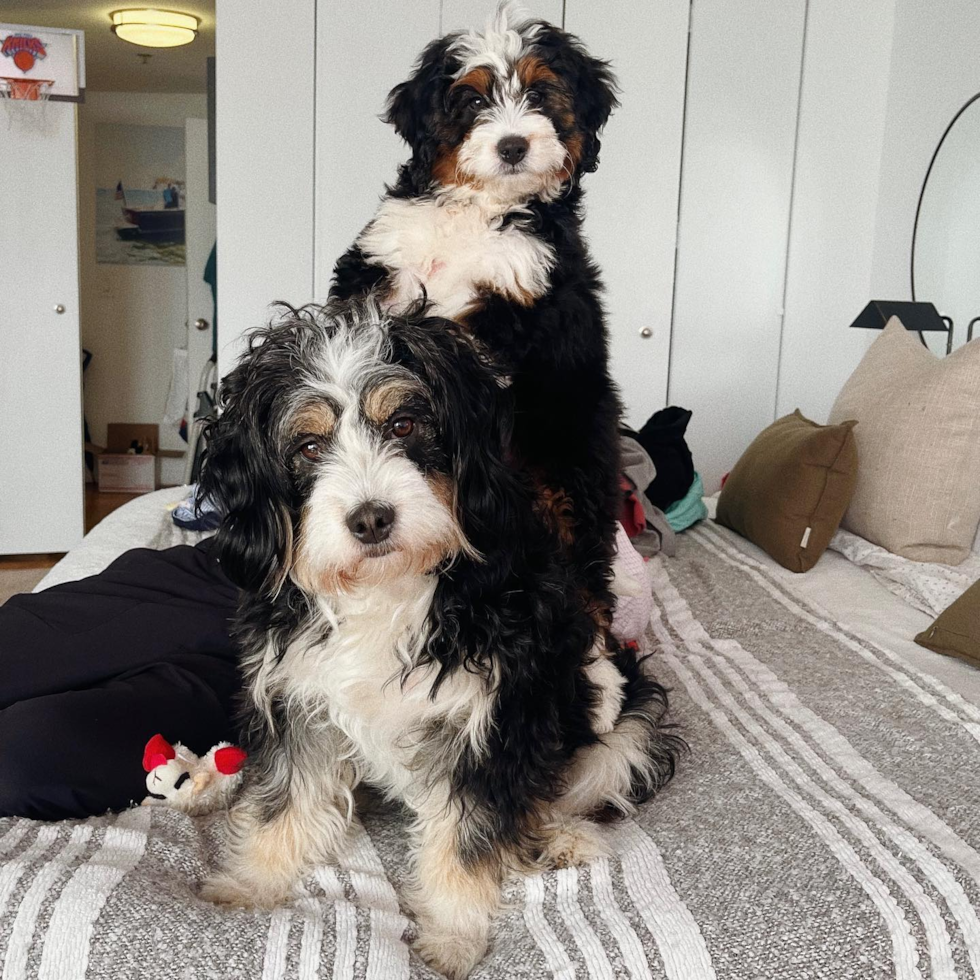
A mismatch between a dog's energy and its owner's lifestyle is one of the most common roots of behavior problems, and it is the question worth sitting with honestly before bringing a Mini Bernedoodle home.
Space matters less than people assume. Mini Bernedoodles can do beautifully in apartments as long as the walks, the brain work, and the interaction actually happen. The opposite also holds. A big house with a big yard does not raise a calm dog on its own, since a fenced yard is a place to be active, not a substitute for being active with you. An engaged family in a two-bedroom apartment routinely produces a steadier dog than an absent family on an acre.
The harder fit is time. A household where everyone leaves at 8 a.m. and returns at 6 p.m. needs a real plan, because a Mini Bernedoodle left alone and under-stimulated all day stores that energy up and unloads it the second someone walks in. Dog walkers, daycare a couple of days a week, enrichment toys, and a genuine commitment to morning and evening activity can make it work. Hoping the dog will entertain itself usually does not.
Active families and people who already like being outside tend to find this breed slots right into their routine. Hikers, joggers, weekend adventurers, and households with kids who wear the dog out through play are often the happiest Mini Bernedoodle owners. The dog becomes a built-in reason to get out the door, and the activity that feels like a chore to some owners feels like a perk to these ones. People hoping for a low-effort, self-sufficient companion that asks for little are the ones most likely to feel stretched, particularly through the first couple of years.
Final Thoughts
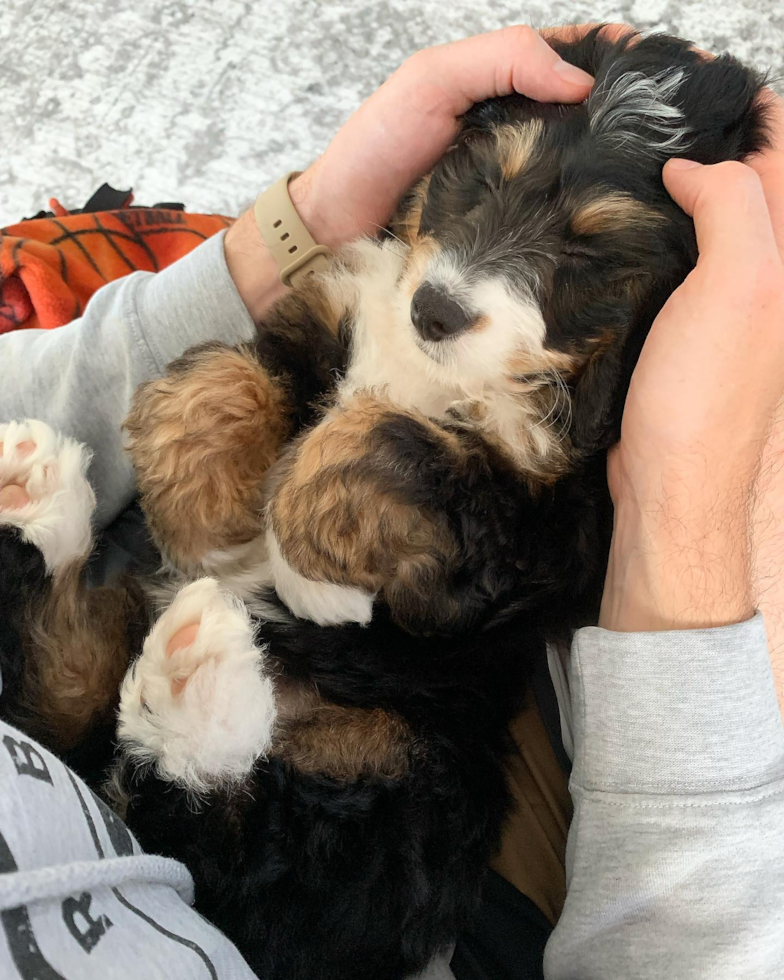
So, are Mini Bernedoodles high energy? Realistically, yes, with the usual honest asterisks. They are moderate-to-high energy dogs that lean more active than the teddy-bear image promises, they want daily physical and mental activity, and they run especially hot through puppyhood and adolescence before settling into a calmer adult somewhere around two to three years old.
The energy is also bound up in the qualities that make people fall for the breed in the first place. The athletic drive that has you out walking in the rain is the same drive that makes them brilliant hiking partners and quick, eager learners. The busy Poodle brain that demands a puzzle toy is the same brain that picks up training so fast it feels like a conversation. The playful enthusiasm that occasionally redecorates your living room is the same enthusiasm that makes daily life with them genuinely fun. The breed's broader pros and cons round out the picture beyond energy alone.
The breed rewards a particular kind of owner. Someone who can meet the activity needs consistently, who works the dog's mind as deliberately as its body, who teaches calm as a skill rather than waiting for it to appear, and who can hold steady through the adolescent stretch when none of it seems to be sticking. For that home, a Mini Bernedoodle's energy is a feature, not a burden, and the settled, affectionate adult on the other side is well worth the early years. For a home hoping for a quiet, low-maintenance dog from day one, this is worth thinking through carefully before falling for the puppy photos.
If a moderately active, people-oriented companion sounds like the right match, browse available Mini Bernedoodle puppies from the Premier Pups network of vetted breeders.
Elena R.
About The Author
Elena is a leading expert in the field of dog behavior, care, and training, with over a decade of experience in writing about dogs. As a published writer and lifelong dog enthusiast, Elena currently shares her home with three beloved canine companions. She is dedicated to staying up to date on the latest advancements in dog care and training, ensuring that her articles provide readers with accurate and valuable insights. With her extensive knowledge and passion for all things canine, Elena's contributions to the Premier Pups community offer both expertise and authority on a wide range of dog-related topics.
What To Read Next

Are Mini Bernedoodles Aggressive? What Owners and Experts Say
Mini Bernedoodles have a reputation that precedes them. Fluffy, affectionate, deeply people-oriented — the kind of dog that greets every visitor like a long-lost friend and considers your lap a permanent reservation.
Mini bernedoodles are not an aggressive... Read More
Mini Bernedoodle Pros and Cons
Mini Bernedoodles have become one of the most talked-about doodle breeds in recent years. It’s easy to understand why. They’re fluffy, expressive, affectionate, and kind of hard to ignore once you spend time around one. A lot of people picture the perfect... Read More
Frequently Asked Questions
Are Mini Bernedoodles high energy or calm? They're moderate-to-high energy and usually more active than their teddy-bear reputation suggests, especially as puppies and adolescents. Most settle into a calmer adult temperament between two and three years old, provided their daily exercise and mental needs are met along the way. Individual dogs vary based on generation, size, and how much of the Poodle versus Bernese side they inherit.
How much exercise does a Mini Bernedoodle need per day? A healthy adult does well with about 60 to 75 minutes of physical activity plus 20 to 30 minutes of mental stimulation, ideally split into two sessions. Quality matters as much as duration, so sniff-heavy walks, fetch, and off-leash play count for more than a slow stroll. Puppies need far less structured exercise, roughly five minutes per month of age, to protect developing joints.
When do Mini Bernedoodles calm down? Most begin settling noticeably between 18 months and two and a half years, with full maturity arriving around age three. The hardest stretch is adolescence, roughly six months to two years, when energy is high and the dog tests boundaries. Staying consistent with exercise and training through that phase is what produces the calm adult on the other side.
Are Mini Bernedoodles hyper? Genuine high energy is not the same as hyperactivity. A bouncing-off-the-walls Mini Bernedoodle is frequently bored, overtired, anxious, or simply never taught how to settle, rather than truly hyper. Ruling out skipped naps and unmet mental needs usually resolves what looks like hyperactivity, particularly in puppies.
Do F1 or F1B Mini Bernedoodles have more energy? F1B Mini Bernedoodles, which are around 75 percent Poodle, tend to be more energetic and driven than F1s and need more consistent engagement. F1s, a straight 50/50 cross, vary more widely, with some leaning toward the calmer Bernese side and others toward the busier Poodle side. Generation is a useful guide, but individual temperament still varies within every litter.
Why is my Mini Bernedoodle so crazy in the evening? That late-afternoon or evening meltdown is usually the "witching hour," a sign of an overtired dog rather than one with extra energy to burn. Puppies in particular get flooded with stress hormones when they miss naps, which looks like frantic zoomies and intense biting. The fix is a quiet, enforced nap in a crate, not more activity, which tends to make it worse.
Can Mini Bernedoodles live in apartments with their energy level? Yes, many do very well in apartments as long as their daily walks, mental stimulation, and interaction are reliably provided. Space matters less than engagement, and an active owner in a small apartment often raises a calmer dog than an absent owner with a large yard. The key is committing to consistent activity rather than relying on the dog to entertain itself.
Is mental or physical exercise more important for a Mini Bernedoodle? Both matter, but the Poodle-influenced brain means mental exercise is the piece most owners underuse. A dog that runs for an hour without mental engagement is often just a fitter, equally restless dog. Training sessions, puzzle feeders, scent games, and learning new skills frequently tire a Mini Bernedoodle more effectively than extra walking.
What happens if a Mini Bernedoodle doesn't get enough exercise? Unmet needs typically show up as destructive chewing, demand barking, restlessness, an inability to settle, and escalating zoomies. These are signals of an under-stimulated dog rather than personality flaws. Before adding more exercise, it is worth checking whether boredom, overtiredness, or a lack of calm training is the real driver.
Are Mini Bernedoodles good for first-time owners given their energy? They can be a good fit for first-time owners who are active and ready to commit to daily activity, training, and the adolescent phase. They're highly trainable and eager to engage, which works in a new owner's favor. The main risk is underestimating the puppy and teenage stages, so going in with realistic expectations about exercise and mental stimulation makes the biggest difference.