





Published Friday, May 22, 2026 by Elena R. in New Puppy, Popular Dogs
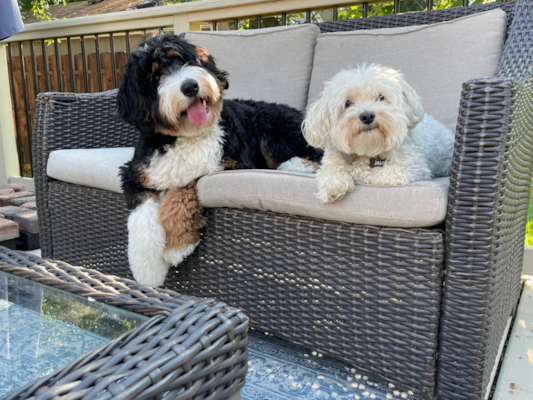
Mini Bernedoodles have become one of the most talked-about doodle breeds in recent years. It’s easy to understand why. They’re fluffy, expressive, affectionate, and kind of hard to ignore once you spend time around one. A lot of people picture the perfect mix of teddy bear looks and family-dog personality. Sometimes that’s exactly what they get.
Sometimes it’s also a dog that follows them into the bathroom, barks at delivery drivers like it’s a full-time job, and somehow tracks leaves through the entire house five minutes after grooming day.
These dogs can be incredibly loving companions with playful personalities and strong family bonds, but they also come with grooming demands, training needs, emotional sensitivity, and energy levels that surprise some first-time owners.
And because Mini Bernedoodles are a cross between a Bernese Mountain Dog and a Miniature Poodle, there’s variability too. Coat type, shedding, temperament, size, and activity level can differ more than many people expect. Two puppies from the same litter can grow into different adult dogs. That unpredictability is part of the breed’s charm for some people. For others, maybe less so after the third zoomie session around the kitchen island.
This guide breaks down the real advantages and drawbacks of Mini Bernedoodles.
Table of Contents
What Is a Mini Bernedoodle?
A Mini Bernedoodle is a cross between a Bernese Mountain Dog and a Miniature Poodle. The breed was originally developed to combine the affectionate, calm nature of the Bernese with the intelligence and lower-shedding coat qualities often associated with Poodles.
Mini Bernedoodles can vary quite a bit. Some inherit more of the Bernese Mountain Dog personality and develop into calm, deeply loyal companions that prefer staying close to their people. Others lean harder into the Poodle side and turn into highly energetic, clever dogs that need constant mental stimulation. Most fall somewhere in the middle.
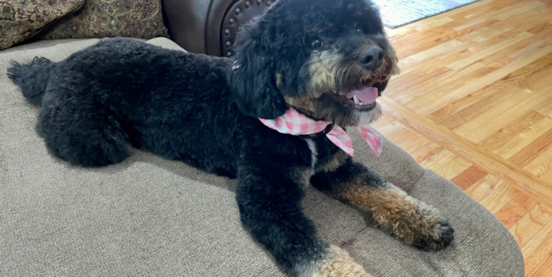
Size varies too, which catches some buyers off guard. A full grown Mini Bernedoodle typically weighs between 25 and 45 pounds, though some stay smaller and others end up pushing closer to 50 pounds depending on genetics and breeding lines. The word “mini” often creates the expectation of a tiny dog. That’s usually not the case here. These are still sturdy, athletic dogs with a decent amount of presence.
Coat types can range from loose and wavy to tight and curly. Some Mini Bernedoodles shed very little, while others shed more than expected. No breeder can fully guarantee an exact coat, shedding level, or allergy friendliness. Genetics doesn’t really work that neatly, despite what some social media captions might suggest.
Temperament is one of the biggest reasons the breed became so popular. Mini Bernedoodles are affectionate, social, playful, and highly people-oriented. They thrive in family environments and love constant interaction. At the same time, that attachment can sometimes turn into clinginess or separation anxiety if independence and confidence are not developed early.
That balance is important to understand before bringing one home. A Mini Bernedoodle usually does best as part of everyday life, not as a dog expected to quietly entertain itself in the background all day.
Mini Bernedoodle Pros
1. Mini Bernedoodles Are Extremely Affectionate

One of the biggest reasons people fall in love with Mini Bernedoodles is how emotionally connected they are to their families. These dogs genuinely enjoy being around people, not nearby in a passive sort of way. They want to participate in everything. Morning routines, movie nights, random trips to the kitchen they absolutely did not need to follow you on. It all counts.
A lot of owners describe their Mini Bernedoodle as a “velcro dog,” and that description fits many of them well. They bond deeply and show affection very openly through cuddling, leaning against people, resting nearby, or constantly checking in throughout the day.
For families looking for an affectionate companion dog, this can feel incredibly rewarding. The emotional connection is strong, and many Mini Bernedoodles become very attached to their people very quickly.
Of course, that closeness has another side to it, which we’ll get into later when we talk about separation anxiety. The same trait that makes them feel loving can also make independence harder for some dogs. Still, for many owners, this affectionate personality becomes the breed’s biggest selling point.
2. They Bond Closely With Their Families
Mini Bernedoodles are rarely distant dogs. Most prefer to stay involved with their household and build strong relationships with the people they spend time with every day.
That family-oriented temperament is one reason the breed continues to grow in popularity. Many owners say their Mini Bernedoodle quickly became part of the rhythm of the home. They follow routines closely, respond emotionally to the tone around them, and develop especially strong attachments to one or two people in the family.
This can make them feel incredibly intuitive. Some seem to notice stress, sadness, excitement, or changes in mood almost immediately. Maybe it’s part intelligence, maybe it’s simply attentiveness. Either way, owners talk about it constantly.
Mini Bernedoodles usually thrive in homes where interaction is consistent. Families who want a highly social, people-oriented dog love this trait. Families looking for a more independent “do your own thing” dog sometimes feel a little overwhelmed by it after a while.
3. Many Mini Bernedoodles Are Great With Kids
One reason families search for Mini Bernedoodles so often is their reputation for being good with children. In many cases, that reputation holds up very well.
Mini Bernedoodles have playful, gentle personalities and enjoy social interaction, which can make them excellent companions for kids. Their size also helps. They’re usually sturdy enough to handle active family life better than very small breeds, yet still manageable compared to larger doodles or giant breeds.
A well-socialized Mini Bernedoodle enjoys games, outdoor time, and general family activity. Some become almost surprisingly patient around children. Others act like oversized stuffed animals with occasional zoomies thrown into the mix.
That said, puppy behavior still matters. Young Mini Bernedoodles can become mouthy, excitable, or jumpy during play if boundaries and training are inconsistent. Like any breed, supervision around very young children is important, especially during the puppy stage.
The good news is that many Mini Bernedoodles mature into affectionate, family-friendly dogs with a strong desire to stay close to their people.
4. They Get Along Well With Other Pets
Mini Bernedoodles tend to be social dogs, especially when early socialization starts young. Many do very well with other dogs and can also adapt nicely to homes with cats or smaller pets when introductions are handled properly.
Part of this comes from temperament. Most Mini Bernedoodles are naturally curious and playful rather than overly territorial. They usually enjoy companionship, whether it comes from people or other animals.
Homes with another friendly dog see a Mini Bernedoodle settle in quickly because they enjoy interaction and activity throughout the day. Some owners say their dogs seem calmer with a companion around. Others say the two dogs simply teamed up to steal socks together. Results vary.
Socialization matters quite a bit, though. A Mini Bernedoodle that grows up isolated from other animals may become nervous or overly excitable around unfamiliar pets later. Early exposure helps build confidence and teaches appropriate behavior during play.
5. They Are Highly Intelligent
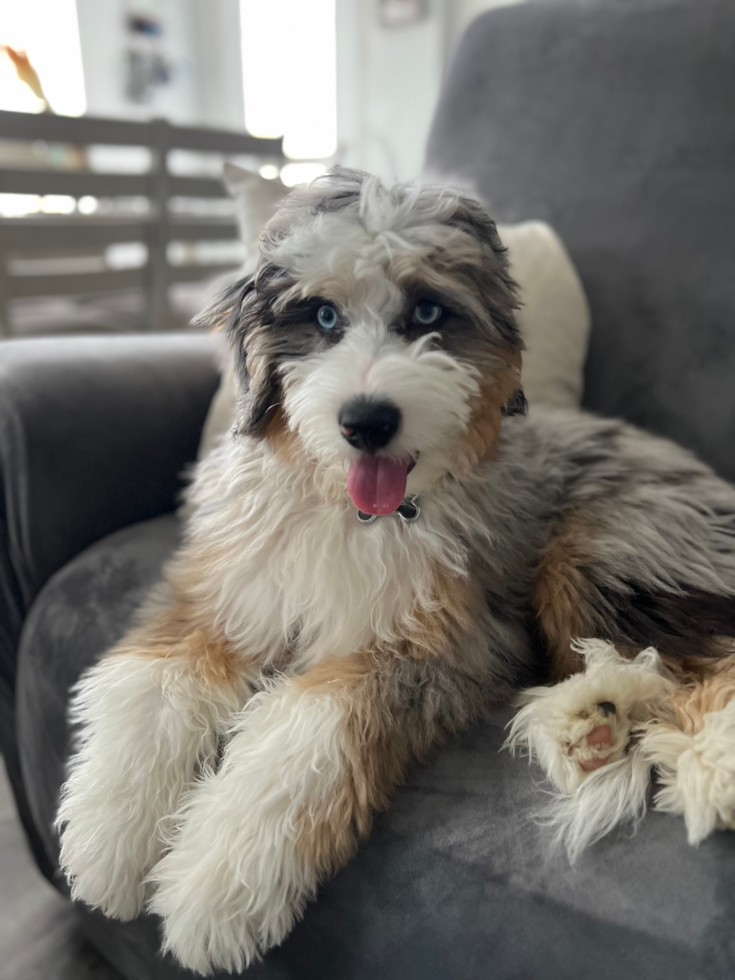
The Poodle side of the Mini Bernedoodle mix brings a high level of intelligence, and it shows quickly. These dogs learn patterns, routines, and commands fast. Sometimes a little too fast.
Many Mini Bernedoodles pick up on training cues early and respond well to positive reinforcement. They enjoy problem-solving activities, interactive games, and tasks that keep them mentally engaged. Training sessions can become something they look forward to rather than tolerate.
Their intelligence also tends to make communication easier between dog and owner. A lot of people describe feeling like their Mini Bernedoodle understands what’s happening around them unusually well.
Of course, smart dogs also notice inconsistency. If rules change depending on the day, many Mini Bernedoodles learn how to work around those rules almost immediately.
Mental stimulation matters with this breed. Without enough structure, activity, or interaction, boredom can show up quickly through barking, chewing, restlessness, or attention-seeking behavior.
RELATED: Are Mini Bernedoodles Smart? Intelligence, Trainability & Behavior
6. Training Can Be Easier Than With Some Breeds
Mini Bernedoodles are considered easier to train than other family dogs, especially when training starts early and stays consistent.
Their intelligence helps, but so does their personality. Most genuinely want interaction with their owners, which creates a strong foundation for obedience training. Praise, treats, play, and positive reinforcement usually work very well with this breed.
Many owners report success with:
- crate training
- basic obedience
- leash walking
- potty training
- simple commands
- trick training
Some Mini Bernedoodles even become excellent therapy or emotional support dogs because they respond closely to human interaction and enjoy learning routines.
That said, “easy to train” does not mean effortless. The doodle world sometimes creates unrealistic expectations around that phrase. Mini Bernedoodles still need repetition, boundaries, patience, and structure. Puppies especially test limits in the same way toddlers do. Sometimes with the same level of dramatic energy too. Consistency matters more than strictness with this breed.
7. They Have a Playful, Goofy Personality
A lot of Mini Bernedoodle owners talk about personality before they mention appearance, which says quite a bit considering how photogenic these dogs are.
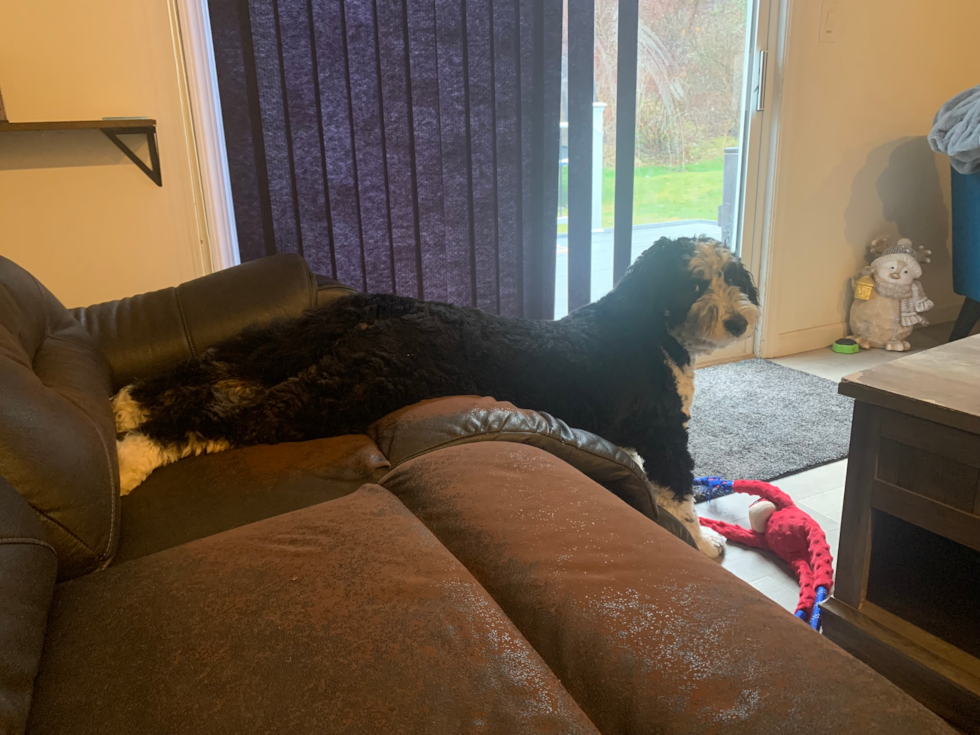
Mini Bernedoodles have playful, goofy temperaments that make daily life feel entertaining. Some bounce around the house carrying random objects for absolutely no reason. Others throw themselves dramatically onto the couch after walks like exhausted athletes returning from battle. There’s usually some level of comedy involved.
This playful side can make them especially enjoyable for active families or people who want a dog that feels socially engaged rather than emotionally distant.
Many stay playful well into adulthood. The puppy energy calms down eventually, but the goofy personality sticks around. That combination of affection, expressiveness, and silliness is a huge part of the breed’s appeal.
The important thing is that their playful nature usually needs an outlet. Mental stimulation, exercise, interaction, and routine all help channel that energy in healthy ways.
Without enough engagement, some Mini Bernedoodles create their own entertainment. Owners do not always appreciate the creativity behind those decisions.
8. Their Size Is Easier to Manage Than a Standard Bernedoodle
One major reason people choose a Mini Bernedoodle over a Standard Bernedoodle comes down to size.
A full grown Mini Bernedoodle falls somewhere between 25 and 45 pounds, though some grow larger depending on genetics. That size range gives many families what feels like a middle ground. Large enough to feel sturdy and active, but small enough to remain manageable in everyday life.
For many people, this matters more than expected once the puppy stage ends.
A smaller doodle can be easier to:
- travel with
- lift when necessary
- fit comfortably into smaller homes
- manage during walks
- transport in vehicles
- handle during grooming or vet visits
Many apartment owners or suburban families also feel more comfortable with a Mini Bernedoodle because the breed takes up less physical space than larger doodles while still retaining that fluffy “big dog personality.”
Of course, “mini” can still surprise people. Some owners expect a tiny lap dog and end up with an athletic medium-sized dog instead. That misunderstanding happens a lot with this breed.
9. Many Mini Bernedoodles Shed Less
Low-shedding coats are one of the biggest reasons people search for Mini Bernedoodles in the first place.
Many inherit coat qualities from the Poodle side of the mix, which can lead to lighter shedding compared to heavily shedding breeds. For some families, that means less visible hair around the home and fewer allergy-related concerns.
But this is also where expectations sometimes become unrealistic.
Mini Bernedoodles are described as “hypoallergenic,” though no dog is truly 100% hypoallergenic. Coat type, genetics, and individual allergy sensitivity all play a role. Some Mini Bernedoodles shed very little, while others shed more than owners expected.
Curly coats trap loose hair more effectively, which reduces the amount of fur visible around the house. The tradeoff is that trapped hair can also increase matting if brushing becomes inconsistent. So while shedding may decrease, coat maintenance usually increases.
That catches some first-time doodle owners off guard. They picture less fur and assume less work overall. Usually it’s the opposite.
10. They Can Adapt Well to Apartment Living
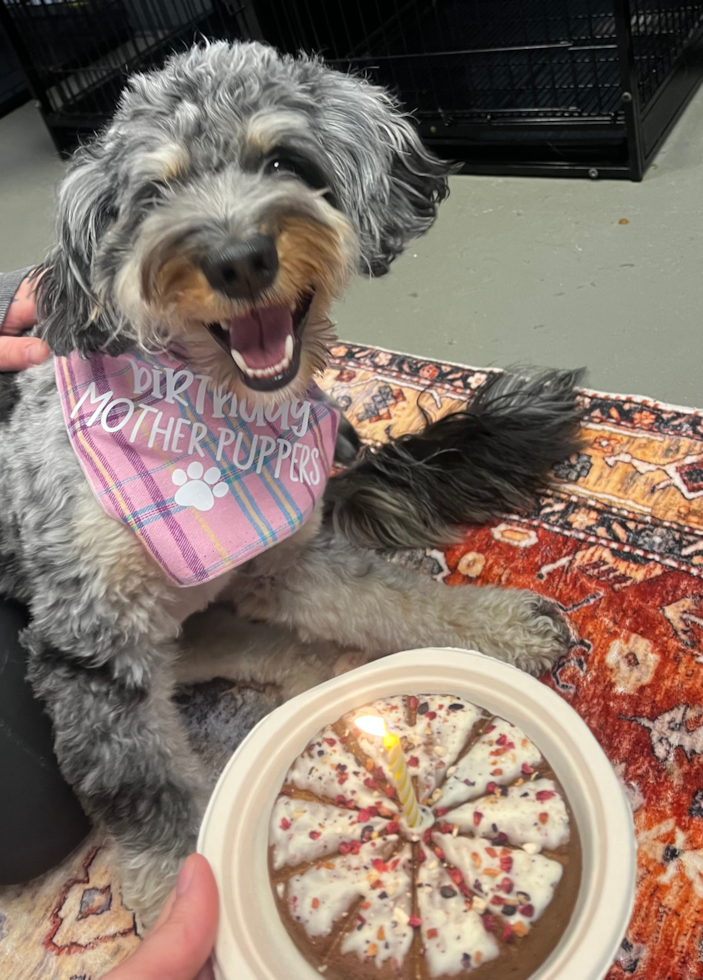
Mini Bernedoodles can adapt surprisingly well to apartment life when their exercise and social needs are met consistently.
Their smaller size compared to Standard Bernedoodles helps quite a bit here. Many families that live in apartments, condos, or town homes find that a Mini Bernedoodle fits comfortably into smaller spaces as long as the dog still receives regular walks, mental stimulation, and interaction throughout the day.
Many Mini Bernedoodles prefer staying close to their people regardless of house size. A large backyard does not automatically replace engagement, exercise, or companionship.
That said, apartment living works best for Mini Bernedoodles when owners stay proactive. A bored or under-exercised dog may develop barking habits, restlessness, or destructive behavior fairly quickly. This is not usually a breed that thrives with a couple of rushed potty breaks and very little stimulation.
A balanced routine makes all the difference. And a tired Mini Bernedoodle is an excellent apartment dog. An under-stimulated one can sound surprisingly convinced that every hallway noise is breaking news.
11. They Enjoy Social Interaction
Mini Bernedoodles enjoy being around people. Friends visiting the house, family gatherings, walks through busy neighborhoods, random conversations with strangers during potty breaks…many of these dogs genuinely seem interested in the world around them.
That social personality is part of what makes the breed feel so engaging. A lot of owners say their Mini Bernedoodle wants to participate in everything rather than simply exist nearby. Some greet visitors like long-lost relatives even if they met them once six months ago.
This trait can make socialization easier during puppyhood because many Mini Bernedoodles already lean toward curiosity and interaction. Positive exposure to new people, environments, sounds, and routines helps them grow into confident adult dogs.
Still, there’s nuance here. Not every Mini Bernedoodle becomes instantly outgoing. Some inherit a more cautious or sensitive side and need slower introductions to unfamiliar situations. Early socialization matters quite a bit with this breed because confidence usually develops through experience, not automatically through genetics.
When properly socialized, though, Mini Bernedoodles become highly adaptable social companions.
12. They Are Emotionally Intuitive
This is one of those qualities owners bring up constantly, even if it sounds a little hard to measure scientifically.
Mini Bernedoodles seem unusually tuned into the emotions and routines of their families. Some stay close during stressful moments. Others react quickly to changes in tone, energy, or mood around the house. Owners describe them as emotionally aware or deeply connected.
Part of this likely comes from how people-oriented the breed is. Mini Bernedoodles pay close attention to human interaction, which means they notice patterns and emotional shifts more than some independent breeds do.
This emotional sensitivity is one reason some Mini Bernedoodles work well as therapy or emotional support dogs. Their affectionate nature, intelligence, and desire for closeness can create very strong bonds with their owners.
Of course, emotionally sensitive dogs can also absorb stress more easily. Tension in the home, inconsistent routines, or chaotic environments sometimes affect them more than people expect.
13. Their Appearance Is a Huge Draw
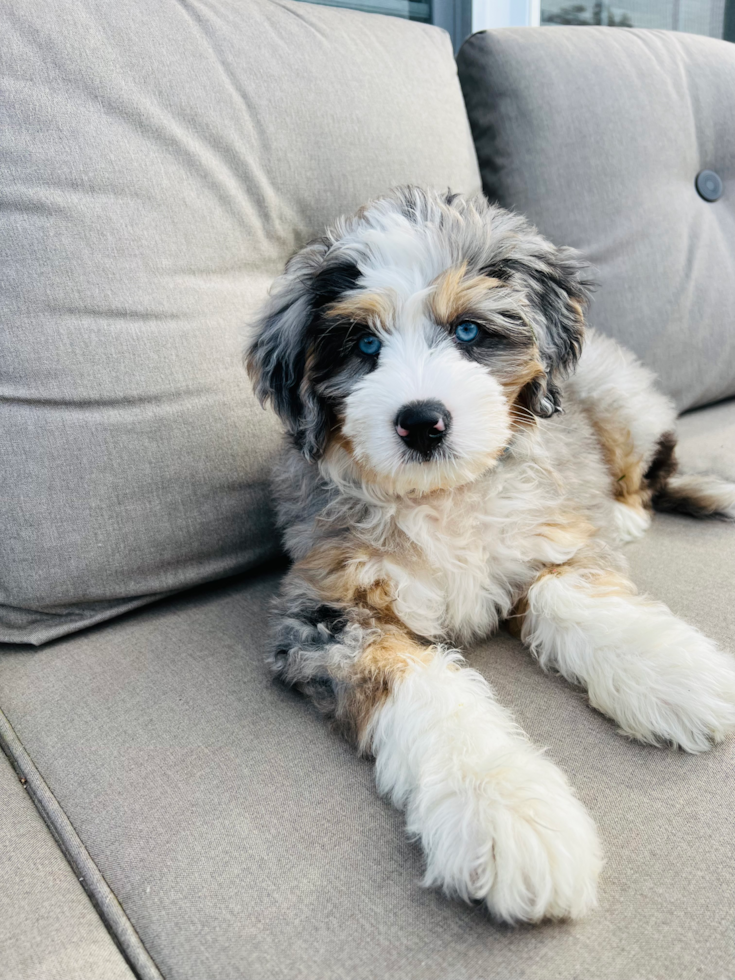
There’s really no point pretending appearance doesn’t matter here. It absolutely does.
Mini Bernedoodles became wildly popular partly because people love how they look. The teddy bear face, expressive eyes, fluffy coat, and tri-color markings create a combination that attracts attention almost everywhere they go.
Many owners say strangers stop them constantly during walks to ask about their dog. Some love that. Others eventually start taking alternate walking routes to avoid repeating the same conversation ten times a week. Both experiences seem common.
The Bernese Mountain Dog influence often brings striking color patterns, while the Poodle side contributes softer coat texture and that signature doodle appearance people search for so heavily.
Of course, appearance should never be the only reason someone chooses a breed. Cute puppies grow into real adult dogs with grooming needs, training needs, and emotional needs. Social media sometimes forgets that part entirely.
Still, it’s understandable why Mini Bernedoodles attract so much attention. They’re objectively adorable dogs. Even people who claim they “aren’t doodle people” soften a little around a fluffy tri-color puppy.
14. They Are More Manageable Than Large Doodles
For families who want a doodle without the physical size of a Standard Goldendoodle or Standard Bernedoodle, the Mini Bernedoodle feels like a comfortable middle ground.
They usually have enough size to feel sturdy and active without becoming physically overwhelming for everyday life. Many owners appreciate that balance once their puppy reaches adulthood.
A smaller doodle can simply feel easier to manage in practical ways:
- grooming appointments
- travel
- lifting when necessary
- crowded public spaces
- smaller homes
- car rides
- leash handling
This becomes especially important for first-time dog owners or families with children.
At the same time, Mini Bernedoodles still maintain the playful, athletic personality people enjoy in larger doodles. They feel substantial enough to join hikes, outdoor activities, and active family routines without feeling fragile.
That balance between manageable size and active temperament is a major reason the breed continues growing in popularity.
15. They Can Fit Many Different Lifestyles
One reason Mini Bernedoodles appeal to such a wide range of people is their adaptability.
Some thrive in active suburban households with kids and busy schedules. Others settle beautifully into quieter homes with retirees or remote workers. Many adapt well to apartment living as long as exercise and interaction remain consistent.
Their flexibility comes from their social nature. Mini Bernedoodles usually care more about being involved with their people than about the exact type of home they live in.
Of course, adaptability has limits. They still need exercise, engagement, structure, and companionship. A Mini Bernedoodle left alone for extremely long hours every day may struggle regardless of how nice the apartment or backyard looks.
But for families willing to meet the breed’s emotional and physical needs, Mini Bernedoodles adjust surprisingly well to different routines and environments. That versatility is a big advantage for modern households where schedules and lifestyles can vary a lot.
16. Many Owners Love Their Silly Personality
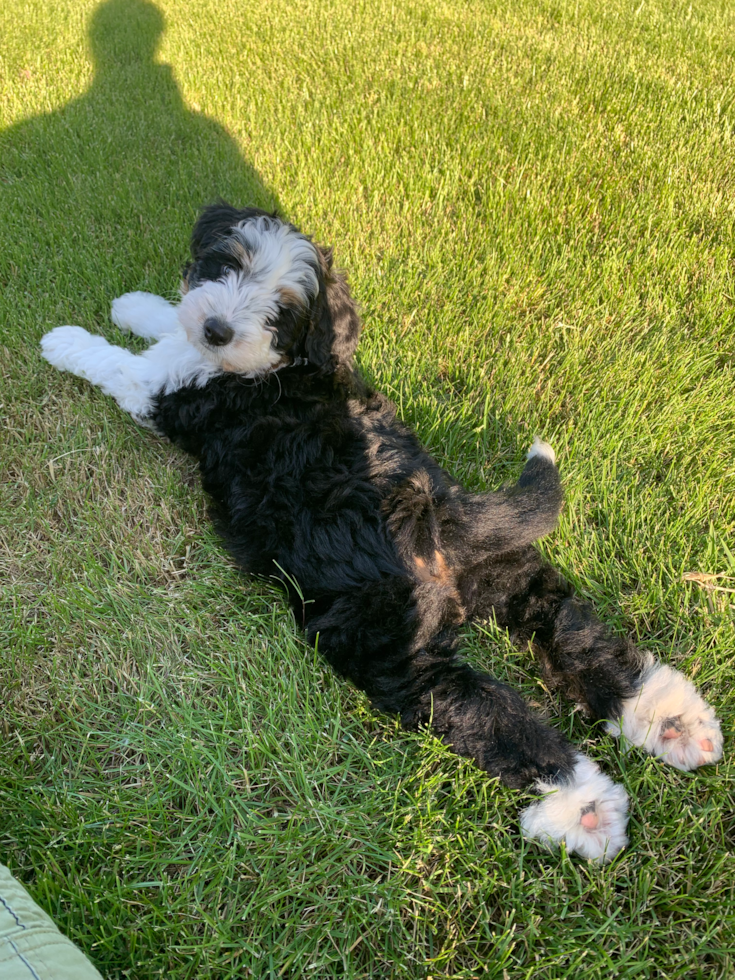
There’s a certain level of harmless chaos that comes with many Mini Bernedoodles. Owners mention it constantly.
Some spin in circles before meals like they’ve never eaten before. Others carry shoes around the house proudly without chewing them. Some become weirdly obsessed with snow, cardboard boxes, or one very specific toy they suddenly decide cannot be separated from them under any circumstances.
The breed has a playful, expressive personality that keeps daily life entertaining. And that emotional expressiveness is part of why people become so attached to them.
Mini Bernedoodles communicate a lot through body language, facial expressions, excitement, and interaction. They rarely feel emotionally distant. Many owners say their dog feels more like a quirky little companion than a pet.
This playful nature can help families connect more easily with training and routine because interaction itself becomes rewarding.
Of course, goofy personalities sometimes come with selective listening skills too. A Mini Bernedoodle pretending not to hear “leave it” while carrying a stolen paper towel away at full speed is almost a rite of passage at this point.
17. They Enjoy Outdoor Activities
Mini Bernedoodles make excellent companions for active families because many genuinely enjoy outdoor activity.
Walks, hiking trails, yard games, beach trips, camping weekends, snowy weather, neighborhood adventures…most Mini Bernedoodles seem happiest when they get both physical activity and social interaction at the same time.
The Bernese Mountain Dog influence contributes a sturdy, outdoorsy side, while the Poodle influence can bring athleticism and energy. Together, that combination creates a dog that enjoys movement and engagement rather than endless lounging indoors.
This does not necessarily mean they require extreme exercise every day. Many settle nicely after a good walk and mental stimulation, but they do best when regular activity becomes part of their routine.
Outdoor time also helps with mental enrichment, which matters quite a bit for intelligent doodle mixes. A dog that gets opportunities to explore, sniff, and engage with the environment behaves more calmly indoors afterward.
18. They Can Be Strong Emotional Companions
For people looking for companionship, Mini Bernedoodles excel in that role.
They form extremely close emotional bonds with their families and become deeply integrated into daily life. Some owners describe them as comforting, intuitive, affectionate, and constantly present in the best possible way.
This emotional closeness can feel especially meaningful for:
- remote workers
- retirees
- families with children
- people living alone
- individuals seeking emotional support companionship
Mini Bernedoodles enjoy routines centered around togetherness. Sitting nearby while someone works, following family members between rooms, curling up next to people during quiet evenings…these small behaviors happen naturally with the breed.
That emotional attachment is one reason people become fiercely loyal to Mini Bernedoodles once they own one. At the same time, emotionally dependent dogs require balance. Healthy independence should still be encouraged early so the dog develops confidence when alone.
19. They Tend to Love Human Attention
Some dog breeds tolerate attention. Mini Bernedoodles actively seek it out.
Most enjoy interaction throughout the day, whether that means cuddling on the couch, greeting visitors, joining family activities, or simply staying physically close to their people. They usually like being acknowledged and included rather than ignored in the background.
For owners who want a highly interactive companion, this trait feels incredibly rewarding. The dog seems emotionally invested in the household itself.
This also contributes to their popularity on social media because Mini Bernedoodles are expressive, engaging, and responsive during interaction. They react visibly to praise, excitement, and affection.
The important thing is understanding that dogs who love attention usually expect some level of consistency in return. Long periods of isolation or very limited interaction can become difficult for many Mini Bernedoodles emotionally. In the right home, though, this people-focused personality creates an extremely strong bond between dog and owner.
20. Many Owners Say They Feel Like a “Best Friend” Dog
This might sound overly sentimental until you talk to Mini Bernedoodle owners for a while. Then you start hearing the same phrase repeatedly in slightly different forms.
- “He’s attached to me everywhere.”
- “She’s part of everything we do.”
- “It feels like having a little shadow.”
- “He honestly feels like my best friend.”
Mini Bernedoodles create very close emotional relationships with their families because of how affectionate, expressive, social, and attentive they are. They don’t feel emotionally distant or independent in the way some breeds do.
That closeness can make everyday life feel richer for many owners. Simple routines become shared routines. Walks become events. Quiet evenings rarely stay entirely quiet because there’s usually a fluffy dog nearby dramatically sighing after repositioning itself for the fifth time.
Of course, the “best friend dog” personality also means this breed usually wants meaningful involvement in family life. Mini Bernedoodles do best in homes where companionship is genuinely part of the plan, not just a side benefit.
Mini Bernedoodle Cons
21. Grooming Can Be Expensive and Time-Consuming
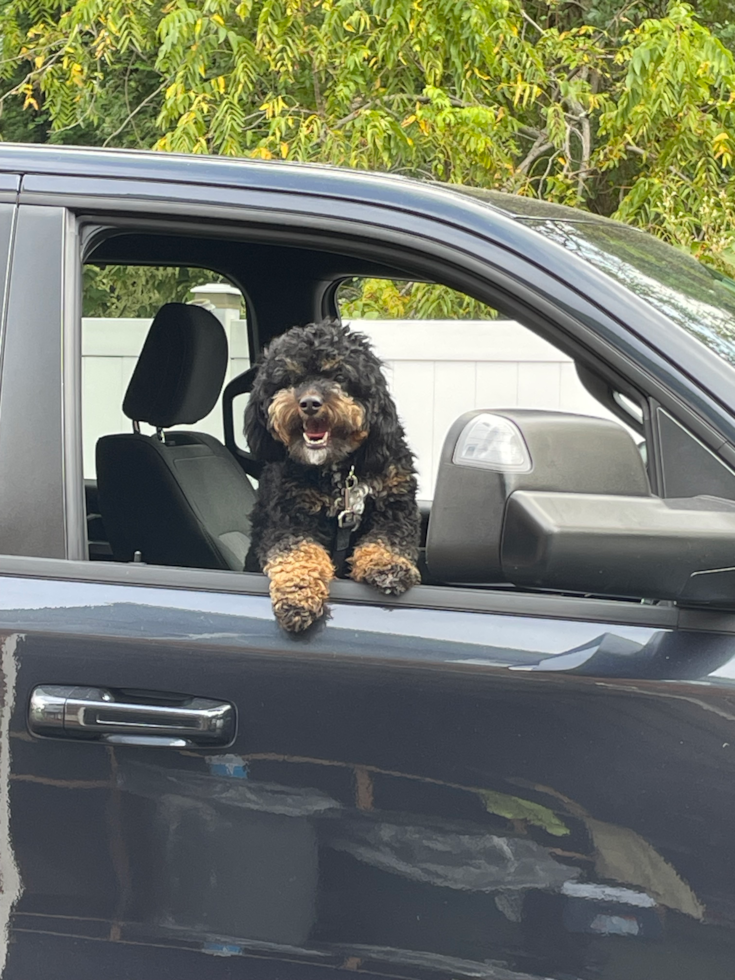
This is probably the biggest reality check for first-time Mini Bernedoodle owners.
A lot of people hear “low shedding” and assume “low maintenance.” Usually, it ends up meaning the exact opposite. Mini Bernedoodles require frequent brushing, regular coat maintenance, and professional grooming appointments throughout the year to keep their coat healthy and comfortable.
For many dogs, grooming appointments happen every 6 to 8 weeks, sometimes sooner depending on coat type and lifestyle. Costs vary by location, but grooming expenses can add up surprisingly fast over time, especially for owners who prefer longer teddy bear cuts.
And brushing matters more than people expect. Mini Bernedoodle coats can tangle underneath the surface very quickly, particularly around the ears, legs, collar area, tail, and chest. Some dogs develop mats seemingly overnight after swimming, rainy walks, or one ambitious rolling session in the yard.
Owners who stay consistent with brushing usually manage things well. Owners who skip grooming for “just another week” discover tiny knots turning into full matting projects with alarming speed. This breed is not ideal for people looking for a low-effort coat.
22. Their Coat Mats Easily Without Regular Brushing
Closely tied to grooming is the issue of matting, which many new doodle owners underestimate badly.
Mini Bernedoodles with wavy or curly coats trap loose hair inside the coat rather than shedding it onto furniture or floors. While that can reduce visible shedding around the house, it also means tangles build internally unless brushing happens consistently.
And matting is more than a cosmetic problem. Severe mats can pull painfully on the skin, trap moisture, reduce airflow, and even create irritation or infection underneath the coat. Groomers see this constantly with doodle breeds because the fluffy appearance hides how tangled the coat actually becomes beneath the surface.
The tricky part is that some Mini Bernedoodle coats look soft and manageable on the outside while knots quietly form closer to the skin.
Daily brushing is ideal for curlier coats. Wavier coats sometimes require slightly less maintenance, but consistency still matters. A proper slicker brush, metal comb, and realistic grooming routine make a huge difference with this breed.
23. They Are Not Truly Hypoallergenic
This is one of the biggest misconceptions surrounding Mini Bernedoodles.
Many are marketed as hypoallergenic dogs because they shed less than heavily shedding breeds. But no dog is completely hypoallergenic, and Mini Bernedoodles are no exception.
Allergies are triggered by proteins found in dander, saliva, and skin cells, not just fur itself. A lower-shedding coat may reduce how much hair spreads through the home, but it does not eliminate allergens entirely.
Coat type also varies significantly from dog to dog. Some Mini Bernedoodles inherit curlier, more Poodle-like coats that trap loose hair effectively. Others inherit looser or straighter coats that shed more than expected.
This unpredictability catches some families off guard, especially those choosing the breed specifically for allergies. For families with significant allergies, spending time around adult Bernedoodles before committing to a puppy will help set more realistic expectations.
24. Separation Anxiety Can Become a Problem
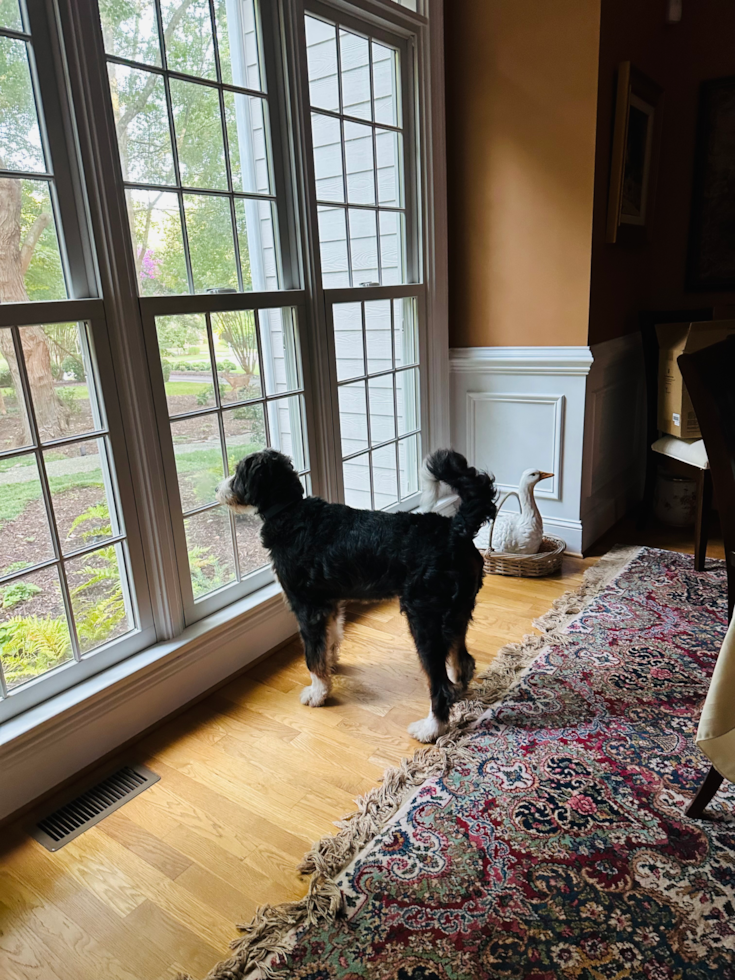
The same affectionate personality that makes Mini Bernedoodles feel emotionally connected can also create challenges when they’re left alone too often.
Many Mini Bernedoodles become deeply attached to their people and genuinely prefer constant companionship. That closeness feels wonderful in daily life, but without healthy independence training, some dogs struggle when separation becomes part of the routine.
Signs of separation anxiety may include:
- barking
- whining
- pacing
- destructive chewing
- scratching doors
- excessive attachment behaviors
- panic when owners leave
This is especially common in dogs that rarely spend time alone during puppyhood and suddenly face long workdays or major schedule changes later.
Mini Bernedoodles usually do best when independence is introduced gradually and confidently from an early age. Short departures, crate training, mental enrichment, and calm routines often help build resilience over time.
Some owners unintentionally reinforce clinginess because the breed’s affectionate personality feels so rewarding emotionally. It’s understandable. Few people resist a fluffy puppy following them room to room like a tiny emotional support assistant.
25. Some Mini Bernedoodles Bark More Than Expected
The internet sometimes paints Mini Bernedoodles as endlessly calm teddy bears. Reality tends to be a little louder.
Not every Mini Bernedoodle barks excessively, but many become fairly vocal dogs depending on personality, training, energy level, and environment. Some alert bark at noises outside. Others bark from excitement, boredom, frustration, or attention-seeking behavior.
Apartment owners especially notice this trait quickly if early training and mental stimulation fall behind.
And the bark itself usually surprises people. A Mini Bernedoodle may look soft and cuddly, then suddenly produce a deep, dramatic “someone is clearly invading the kingdom” bark because a package arrived three houses away.
Socialization and structure help. Dogs that receive enough exercise, confidence-building, and routine settle more easily than dogs left under-stimulated throughout the day. Still, people who expect an exceptionally quiet breed may find themselves surprised at how expressive some Mini Bernedoodles become.
26. Their Energy Level Can Surprise Owners
Mini Bernedoodles are described as moderate-energy dogs, which is technically true in many cases. The problem is that people interpret “moderate” very differently.
Some expect a calm lap dog that enjoys short walks and lazy afternoons. Then the puppy arrives and starts sprinting through the house with a sock at full speed after two hours of accumulated energy.
A lot of Mini Bernedoodles are playful, athletic, and mentally active dogs, especially during puppyhood and adolescence. They usually need:
- regular walks
- play sessions
- training
- mental stimulation
- social interaction
- structured routines
Without enough activity, boredom turns into barking, restlessness, chewing, or hyperactive behavior indoors.
The Poodle side of the mix contributes intelligence and energy, while the Bernese side may add bursts of playful enthusiasm despite the calmer reputation adults sometimes develop later in life.
Most Mini Bernedoodles eventually mature into balanced companions, but the early years can feel more energetic than many families expect based on social media clips of sleepy fluffy puppies.
27. Puppies Can Be Rambunctious
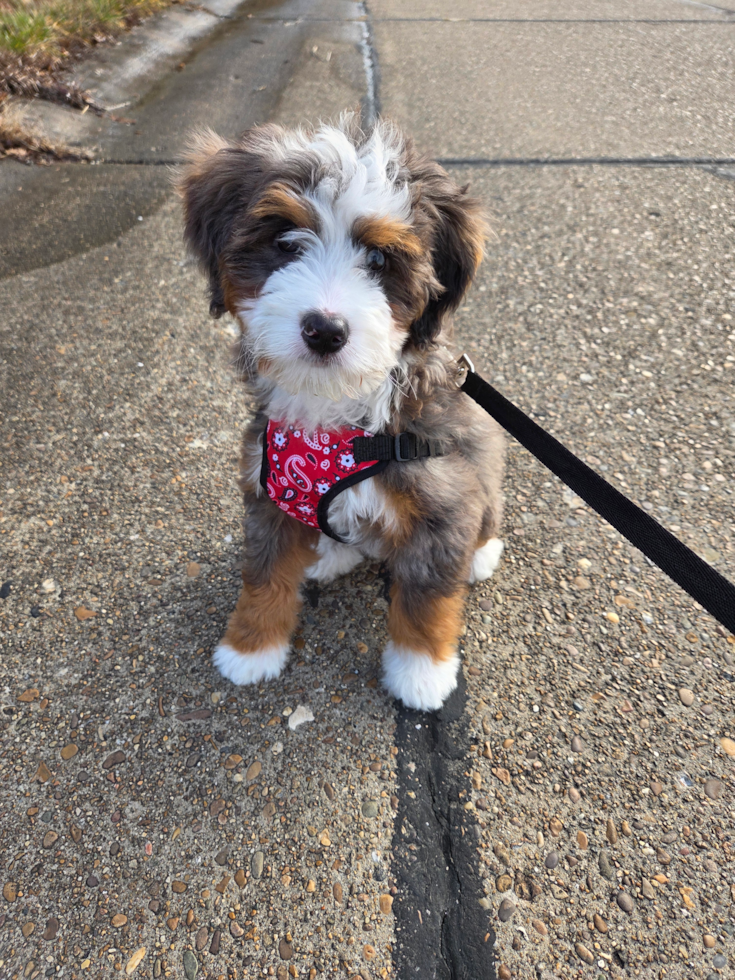
Mini Bernedoodle puppies are adorable. They are also tiny chaos machines sometimes.
The combination of intelligence, curiosity, energy, and social enthusiasm creates puppies that explore absolutely everything with full emotional commitment. Shoes, rugs, table legs, paper towels, charging cables, leaves, socks, mysterious crumbs from three days ago…all become fascinating discoveries.
A lot of owners underestimate how intense the puppy stage can feel with doodle breeds because the fluffy appearance creates the illusion of softness and calmness. In reality, manyMini Bernedoodle puppies go through very normal phases of:
- jumping
- nipping
- zoomies
- overexcitement
- selective listening
- testing boundaries
Consistency matters enormously during this stage. Training, structure, naps, exercise, and mental enrichment help puppies learn appropriate behavior gradually over time.
And honestly, enforced naps solve more puppy problems than many people realize. An overtired Mini Bernedoodle puppy can behave like a caffeinated toddler who skipped bedtime entirely. The good news is that many mature beautifully with guidance and routine.
28. Some Are Timid Without Proper Socialization
While many Mini Bernedoodles are naturally social, some inherit a more cautious or sensitive temperament that requires thoughtful socialization early in life.
A poorly socialized Mini Bernedoodle may become nervous around strangers, loud environments, new dogs, unfamiliar objects, busy public spaces, and sudden changes in routine.
Timidity does not necessarily mean aggression. In many cases, it simply shows up as hesitation, fearfulness, barking, or overstimulation in unfamiliar situations.
Early positive exposure helps build confidence gradually. Puppies that experience different environments, surfaces, sounds, people, and routines during developmental stages adjust more comfortably as adults.
This is also where breeder practices matter enormously. Puppies raised with structured socialization, gentle handling, environmental exposure, and daily interaction transition into family life more smoothly than puppies raised with very limited stimulation.
Confidence is not something that magically appears later. It usually develops step by step.
29. Their Size Is Not Always Predictable
One of the more frustrating realities with Mini Bernedoodles is that size can vary more than buyers expect.
The word “mini” creates a very specific mental image for many people. Often something small, compact, maybe easy to carry around forever. But Mini Bernedoodles are still mixed-breed dogs influenced by multiple generations of genetics, which means adult size can land outside expectations sometimes.
Some full grown Mini Bernedoodles stay around 25 pounds. Others end up closer to 45 or even 50 pounds depending on parent size, genetics, generation, breeding lines, and inherited structure.
For many families, the adult size works out perfectly fine. But owners who expect a tiny doodle realize later that a Mini Bernedoodle is still an athletic medium-sized dog in many cases.
30. Coat Type Can Vary a Lot
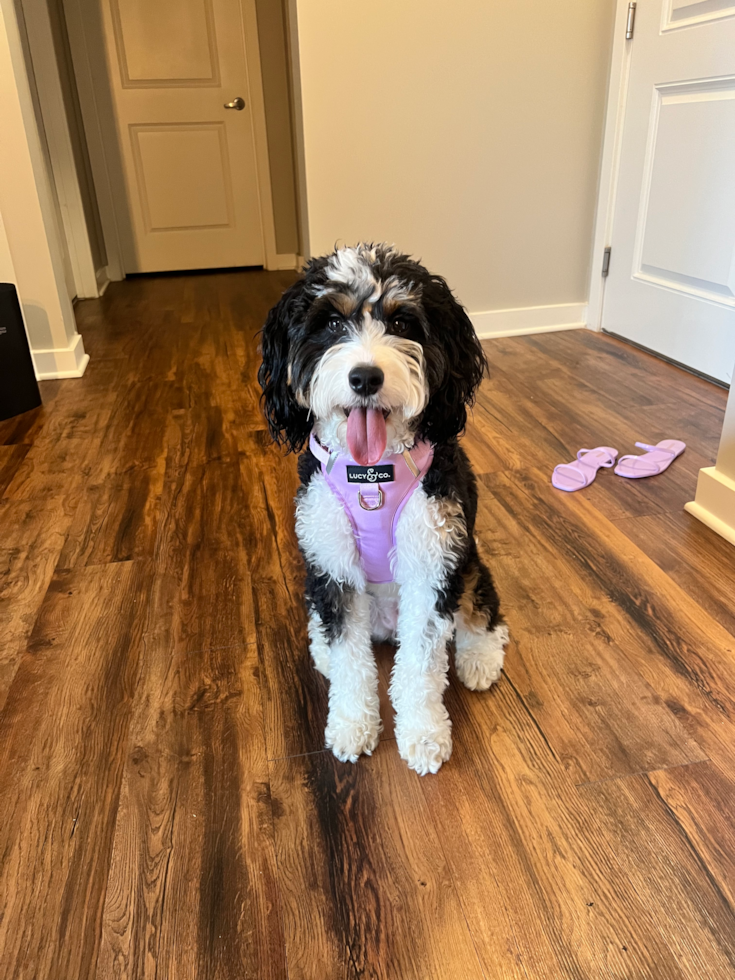
Mini Bernedoodle coats are beautiful, but they are also unpredictable. Some puppies develop tight curly coats similar to a Poodle. Others mature into loose waves. Some end up with straighter or more relaxed coats that shed more heavily than owners expected.
Color patterns vary too. Tri-color coats are extremely popular, but markings can change noticeably as puppies mature. Some dogs lighten significantly over time, especially around the face.
This variability is part of what makes mixed breeds unique, but it can also create mismatched expectations if buyers assume every Mini Bernedoodle will look identical to social media photos.
Coat type affects more than appearance as well. It influences:
- grooming needs
- brushing frequency
- shedding level
- allergy friendliness
- matting tendency
- haircut styles
A curlier coat may shed less but require more maintenance. A straighter coat may need less brushing but shed more noticeably around the home.
That balance is important to understand before choosing the breed primarily for appearance. Because eventually the adorable fluffy puppy turns into an adult dog that still needs brushing.
31. They Need Consistent Training
Mini Bernedoodles are intelligent dogs, which sounds great until that intelligence starts working against inconsistent rules.
A lot of owners assume affectionate dogs naturally become well-behaved dogs. Usually those are two completely separate things. Mini Bernedoodles learn quickly, but they also notice patterns quickly. If jumping on guests earns attention sometimes but gets corrected other times, many figure out the inconsistency almost immediately.
Training with this breed usually works best when expectations are clear and routines are steady. Positive reinforcement is especially effective because Mini Bernedoodles respond strongly to praise, interaction, and engagement with their owners.
The challenge is that smart, social dogs become skilled negotiators. Some learn exactly who allows couch privileges. Some suddenly “forget” commands outdoors when distractions appear. Others become selectively deaf the moment they discover something more exciting than recall practice. A squirrel can completely erase formal education.
Most Mini Bernedoodles genuinely want interaction and guidance. They simply do best when training is ongoing rather than stopping after puppyhood.
32. They Can Become Destructive When Bored
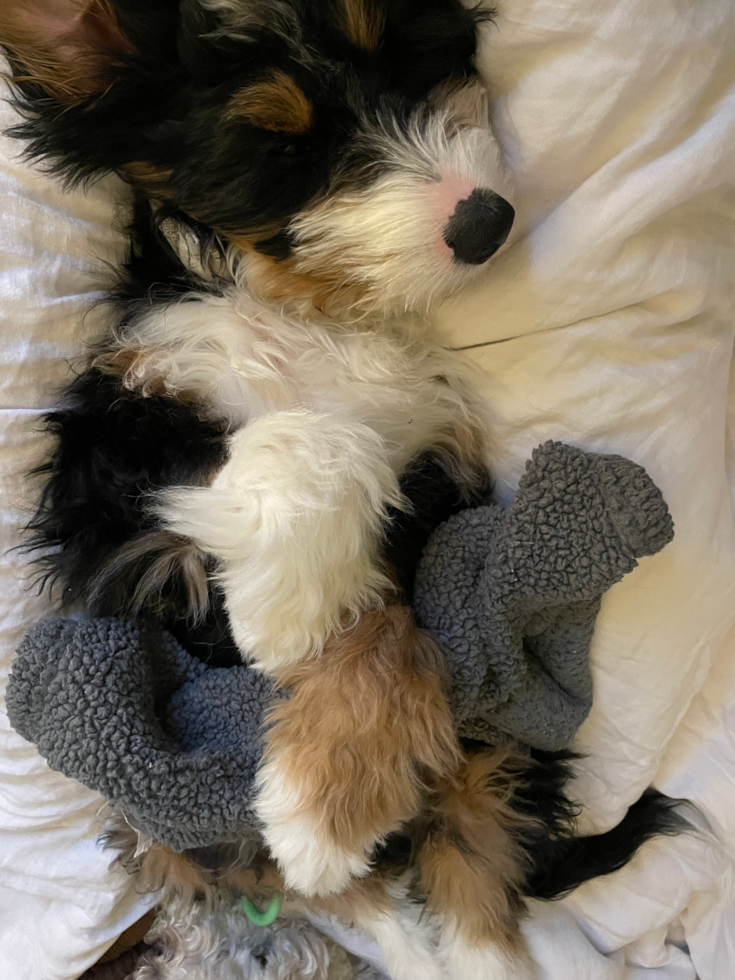
Boredom and intelligence rarely combine well in dogs, and Mini Bernedoodles have enough of both energy and curiosity to create problems when stimulation falls short.
A mentally under-stimulated Mini Bernedoodle may invent activities independently. Unfortunately, those activities involve furniture, shoes, trash cans, rugs, pillows, or objects owners hoped would remain intact.
Destructive behavior typically comes from one of three things:
- boredom
- excess energy
- anxiety
Sometimes all three show up together.
This breed needs more than physical exercise alone. Walks help, but mental stimulation matters too. Training sessions, puzzle toys, interactive games, sniffing activities, social interaction, and structured routines make a noticeable difference in behavior.
Many owners notice their Mini Bernedoodle settles much more easily after mentally engaging activities compared to physical activity alone. A twenty-minute training session can tire out some dogs more effectively than an extra walk around the block.
The good news is that most destructive phases improve significantly once routines stabilize and mental needs are met consistently. Still, the puppy and adolescent stages occasionally feel like living with a very fluffy interior designer who strongly disagrees with your decorating choices.
33. Ear Infections Can Be Common
Like many doodle breeds, Mini Bernedoodles can become prone to ear issues if ear care falls behind.
Floppy ears combined with hair growth around the ear canal may trap moisture and reduce airflow, especially after swimming, baths, rainy walks, or humid weather. Over time, that environment can increase the risk of irritation or infection.
Signs of ear problems may include:
- scratching
- head shaking
- odor
- redness
- sensitivity
- buildup inside the ears
Regular ear checks and gentle cleaning help prevent issues before they become more serious. Grooming routines are important because excess hair around the ears sometimes contributes to moisture retention.
This does not mean every Mini Bernedoodle develops chronic ear problems. Many never do. But preventative maintenance is important because doodle coats and ear structure create conditions where infections can happen more easily.
34. Some Have Sensitive Stomachs
Digestive sensitivity comes up fairly often in Mini Bernedoodle owner discussions.
Some dogs tolerate almost any food without issue. Others seem personally offended by minor dietary changes and immediately respond with stomach upset, inconsistent stool, or general digestive drama.
The breed’s sensitivity can show up through food intolerances, loose stool, picky eating, stomach irritation, and difficulty adjusting to new foods.
Stress and excitement sometimes contribute too. Some Mini Bernedoodles react physically to schedule changes, overstimulation, travel, or sudden environmental shifts more than owners expect.
A stable diet, gradual food transitions, and careful attention to ingredient quality usually help quite a bit. Many owners eventually identify foods or treats their dog handles especially well and stick closely to those routines afterward.
This is another area where breeder practices and early nutrition matter. Puppies that receive proper early care, structured feeding routines, and veterinary monitoring often transition more smoothly into new homes.
35. Ethical Breeder Selection Matters More Than People Think
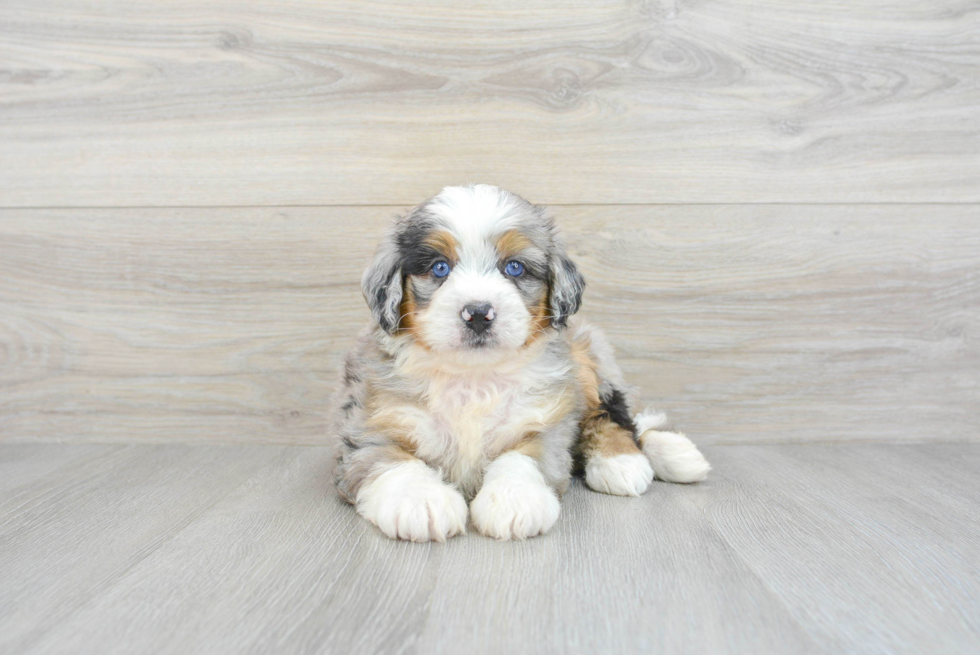
Mini Bernedoodles vary enormously depending on breeding practices, health screening, early care, socialization, and breeder standards. Two dogs that look similar online may come from completely different environments behind the scenes.
Unfortunately, the breed’s popularity created a massive increase in low-quality breeding programs focused more on demand than long-term health or temperament.
Responsible Mini Bernedoodle breeders usually prioritize:
- health testing
- genetic screening
- structured pairing decisions
- veterinary involvement
- developmental socialization
- clean environments
- documented care routines
- ongoing oversight
Those things matter because early development shapes far more than appearance alone.
Temperament, confidence, resilience, social behavior, and long-term health all connect to how puppies are raised during critical developmental stages.
A fluffy puppy photo tells buyers almost nothing about the actual quality of the breeding program behind it.
36. Poor Breeding Can Increase Health Risks
Every dog breed carries potential health concerns, but careless breeding practices increase those risks significantly.
Mini Bernedoodles may inherit health issues associated with either the Bernese Mountain Dog or the Poodle side of the mix. Depending on genetics and breeding quality, concerns may include:
- hip dysplasia
- elbow dysplasia
- eye conditions
- allergies
- joint issues
- skin sensitivities
- digestive problems
This does not mean Mini Bernedoodles are unhealthy dogs. Many live long, happy, healthy lives. But health outcomes improve dramatically when breeders make careful pairing decisions and complete breed-appropriate health evaluations before breeding takes place.
That’s why responsible breeding programs place such heavy emphasis on:
- OFA testing
- veterinary evaluation
- health history review
- structural soundness
- long-term genetic planning
The problem is that doodle popularity sometimes attracts inexperienced who prioritize demand over health structure.
37. They Can Be Expensive to Buy

Mini Bernedoodles are rarely inexpensive dogs. Initial puppy prices alone can feel high compared to many breeds, especially for puppies with highly desirable coat colors or smaller projected adult sizes. And the upfront cost is really only the beginning.
Long-term ownership expenses often include:
- grooming
- veterinary care
- food
- training
- insurance
- preventative medications
- toys
- crates
- daycare or boarding
- emergency expenses
Grooming alone becomes a recurring monthly or bi-monthly expense many people underestimate at first.
The important thing is that responsible breeding, health screening, veterinary oversight, and proper puppy development genuinely require resources and investment. Ethical breeding programs typically cost more because quality care costs more.
At the same time, extremely cheap Mini Bernedoodle puppies raise concerns about breeder standards, health practices, or developmental care behind the scenes.
The breed can absolutely be worth the investment for the right family. But people should enter ownership with realistic expectations about long-term costs rather than focusing only on the initial purchase price.
38. Some Owners Underestimate the Commitment
Mini Bernedoodles look like easy dogs online. A fluffy puppy sleeping peacefully in a basket creates a very calm impression. Daily reality usually includes brushing schedules, training sessions, exercise routines, socialization, supervision, mental stimulation, veterinary care, and occasional emotional negotiations over why socks are apparently communityproperty.
This breed thrives with involvement and structure. Owners who enjoy interacting closely with their dogs love that dynamic. Owners who hope for a low-effort companion sometimes feel overwhelmed once the novelty stage fades.
The commitment is emotional too. Mini Bernedoodles become deeply integrated into family routines because they are so people-oriented. They want attention, interaction, guidance, and companionship consistently throughout their lives.
None of this makes them “difficult” dogs necessarily. It simply means they are active participants in household life rather than decorative background pets.
39. They Do Best With Human Interaction

Mini Bernedoodles are not dogs that enjoy emotional distance from their families. Most genuinely prefer involvement, companionship, and regular interaction throughout the day. They want to stay nearby while people work, cook, relax, or move through normal routines around the house.
For many owners, this closeness is one of the breed’s best qualities. The dog feels emotionally connected and socially engaged rather than detached or indifferent.
But it also means Mini Bernedoodles struggle in homes where interaction is very limited.
Long periods of daily isolation may increase the risk of:
- boredom
- anxiety
- barking
- destructive behavior
- emotional stress
This does not mean owners can never leave the house. Healthy independence is extremely important for the breed. But overall, Mini Bernedoodles usually thrive most in environments where companionship and engagement are regular parts of life.
40. They Are Not the Right Fit for Every Household
Mini Bernedoodles can be incredible dogs, but they are not universally perfect for everyone despite how the internet sometimes presents them.
Some families absolutely thrive with this breed. Others realize later they wanted a calmer, more independent, lower-maintenance dog than a Mini Bernedoodle realistically tends to be.
This breed may not be ideal for:
- people gone all day regularly
- owners unwilling to groom consistently
- families who want a very quiet dog
- people who are expecting instant easy training
- households unable to provide exercise and interaction
- individuals who want an emotionally independent breed
At the same time, for families prepared for the commitment, Mini Bernedoodles become deeply loved companions with playful personalities and strong emotional bonds.
Final Thoughts on Mini Bernedoodle Pros and Cons

Mini Bernedoodles became popular for a reason. They’re affectionate, expressive, playful, intelligent, and deeply people-oriented dogs that form incredibly strong bonds with their families. For many owners, they are so much more than pets. That emotional connection is probably the breed’s biggest strength.
At the same time, the Mini Bernedoodle pros and cons deserve honest discussion because this is not a low-maintenance breed hidden inside a fluffy teddy bear coat. Grooming takes work. Training requires consistency. Socialization is important and mental stimulation matters. Human interaction matters quite a bit as well.
And many of the breed’s best qualities come attached to its biggest challenges.
The affectionate personality that makes Mini Bernedoodles feel so emotionally connected can also create clinginess or separation anxiety. The intelligence that makes training easier can also produce stubbornness and boredom when routines become inconsistent. The low-shedding coat people love comes with intensive brushing and grooming needs behind the scenes.
A Mini Bernedoodle is usually happiest in a home where people genuinely want an involved, interactive companion. These dogs thrive when they receive structure, attention, activity, affection, and regular engagement as part of daily life. They rarely feel emotionally distant from the people around them.
For the right family, that closeness is incredibly rewarding. A lot of owners say they cannot imagine life without their Mini Bernedoodle once that bond forms. You hear that repeatedly with this breed, and after spending time around them, it makes sense.
Browse available Mini Bernedoodle puppies for sale from the nation's top breeders.
Elena R.
About The Author
Elena is a leading expert in the field of dog behavior, care, and training, with over a decade of experience in writing about dogs. As a published writer and lifelong dog enthusiast, Elena currently shares her home with three beloved canine companions. She is dedicated to staying up to date on the latest advancements in dog care and training, ensuring that her articles provide readers with accurate and valuable insights. With her extensive knowledge and passion for all things canine, Elena's contributions to the Premier Pups community offer both expertise and authority on a wide range of dog-related topics.
What To Read Next
Do Mini Bernedoodles Shed? Coat Types and Allergies Explained
One of the biggest reasons people fall in love with Mini Bernedoodles is the coat. The fluffy teddy bear look, the soft waves, the expressive face covered in shaggy fur that somehow makes even basic eye contact feel emotionally manipulative. It’s part of... Read More

Do Mini Bernedoodles Bark a Lot? What’s Normal and What’s Not
Do Mini Bernedoodles bark a lot? Most don’t. But they are definitely not silent dogs either. Mini Bernedoodles fall somewhere in the middle. They bark when something feels important to them, whether that’s a knock at the door, excitement, frustration,... Read More
Frequently Asked Questions
Are Mini Bernedoodles high maintenance? Yes, Mini Bernedoodles are generally considered somewhat high-maintenance dogs. Most require regular grooming, frequent brushing, daily interaction, exercise, training, and mental stimulation to stay healthy and well-behaved. Their low-shedding coat needs professional grooming every 6 to 8 weeks, and their people-oriented personality means they usually do best in homes where companionship and engagement are part of daily life.
Do Mini Bernedoodles bark a lot? Mini Bernedoodles can be moderately vocal depending on personality, training, and energy level. Some bark mainly to alert their owners about noises or visitors, while others bark from boredom, excitement, or separation anxiety. Consistent exercise, mental stimulation, and early training usually help reduce excessive barking significantly.
Are Mini Bernedoodles aggressive? Mini Bernedoodles are not aggressive dogs. Most are affectionate, social, playful, and family-oriented when properly socialized and trained from an early age. Fearfulness, poor socialization, inconsistent training, or stressful environments may contribute to behavioral issues in some dogs, but aggression is not considered a defining breed trait.
Can Mini Bernedoodles be left alone? Mini Bernedoodles can handle short periods alone, but they usually do best with regular human interaction and companionship. Many become strongly attached to their families and may struggle with separation anxiety if left alone for long hours consistently. Early independence training and structured routines help build confidence and emotional balance over time.
Do Mini Bernedoodles shed? Mini Bernedoodles shed less than heavily shedding breeds, especially those with curlier Poodle-like coats, but shedding levels vary from dog to dog. Some shed very little, while others shed more noticeably depending on genetics and coat type. No Mini Bernedoodle is completely non-shedding or truly hypoallergenic.
How big do Mini Bernedoodles get? A full grown Mini Bernedoodle typically weighs between 25 and 45 pounds and stands around 18 to 22 inches tall, though some grow larger depending on genetics and breeding lines. The term “mini” can sometimes create unrealistic expectations because many still mature into athletic medium-sized dogs rather than tiny lap dogs.
What are the downsides of Mini Bernedoodles? The biggest downsides of Mini Bernedoodles usually include grooming demands, matting, separation anxiety, barking, high energy during puppyhood, and the need for consistent training and interaction. Some owners also underestimate the long-term time and financial commitment required for grooming, veterinary care, and mental stimulation.
Are Mini Bernedoodles hard to train? Mini Bernedoodles are usually considered intelligent and trainable dogs, especially when positive reinforcement and consistency are used. Most learn commands quickly and enjoy interaction during training sessions, though their intelligence can sometimes lead to stubbornness or selective listening if routines become inconsistent.
How much grooming do Mini Bernedoodles need? Mini Bernedoodles require frequent grooming to prevent tangles and matting, especially dogs with curly or wavy coats. Most benefit from brushing several times a week and professional grooming appointments every 6 to 8 weeks. Coat maintenance is one of the most important parts of caring for this breed properly.
Are Mini Bernedoodles good apartment dogs? Mini Bernedoodles can adapt well to apartment living when they receive enough exercise, mental stimulation, and daily interaction. Their smaller size compared to Standard Bernedoodles helps, but they still need regular walks, structure, and engagement to avoid boredom, barking, or destructive behavior indoors.
Why do Mini Bernedoodles get separation anxiety? Mini Bernedoodles form very strong emotional bonds with their families, which can make separation more difficult for some dogs. Without healthy independence training early on, their affectionate and people-oriented personality may develop into clinginess or anxiety when left alone too often or too suddenly.
What health problems do Mini Bernedoodles have? Mini Bernedoodles may inherit health concerns associated with either the Bernese Mountain Dog or the Poodle side of the mix, including hip dysplasia, elbow dysplasia, allergies, eye conditions, digestive sensitivity, and skin or ear issues. Responsible breeding practices, health testing, veterinary oversight, and proper early care all play an important role in reducing long-term health risks.