






Published Thursday, June 18, 2026 by Elena R. in Dog Training
Mini Bernedoodles are widely considered smart dogs. That reputation is mostly fair. But their intelligence rarely looks like a dog sitting perfectly still while you run through a trick list. It shows up in the small things. The puppy who learns your morning routine before you finish your coffee. The dog who reads your tone before they read your command. The one who seems to know a walk is coming because you grabbed your keys in a specific order — not because you said the word "walk" out loud.
For a lot of families, that mix of trainability and emotional awareness is exactly what makes the breed so rewarding. For others, the same brain turns into boundary-testing, sock theft, or a full zoomie lap around the kitchen island because the household energy shifted and nobody offered a better outlet. Usually both stories are real.
Part of this comes straight from the breed mix. Poodles bring fast learning, pattern recognition, and problem-solving. Bernese Mountain Dogs bring a gentler, more socially connected temperament. Put the two together and you get a dog that picks things up quickly and is fully tuned in.
That combination is wonderful when the dog gets structure, interaction, and mental stimulation. Without enough of those things, the same brain that learns sit in three sessions may also learn that barking at the back door eventually produces a human response — even if the human arrives annoyed. Smart dogs notice inconsistency just as fast as they notice good routines.
And because Mini Bernedoodles are a crossbreed, there is variability too. Two puppies from the same litter can grow into very different adult dogs. One may lean harder into Poodle energy and turn into a clever, stimulation-hungry companion. Another may inherit more Bernese calm and feel deeply loyal but less intensely driven. Most fall somewhere in the middle. That unpredictability shapes how intelligence shows up in daily life.
So the better question is not simply "Are Mini Bernedoodles smart?" but "What kind of smart are they, and what does that mean once they move into your house?"
This guide breaks down how Mini Bernedoodle intelligence actually works — trainability, emotional awareness, learning speed, boredom, and the ownership realities that come with all of it.
Table of Contents
- Are Mini Bernedoodles Considered Smart?
- What Kind of Intelligence Do Mini Bernedoodles Have?
- Are Mini Bernedoodles Easy to Train?
- Do Mini Bernedoodles Learn Quickly?
- The Part Many People Don't Expect: Emotional Intelligence
- Smart Dogs Still Need Structure
- Do Mini Bernedoodles Get Bored Easily?
- Are Mini Bernedoodles Smarter Than Other Doodles?
- Are Mini Bernedoodles Good for First-Time Owners?
- Pros and Cons of Mini Bernedoodle Intelligence
- So, Are Mini Bernedoodles Smart?
Are Mini Bernedoodles Considered Smart?

Yes. Mini Bernedoodles are considered smart dogs because they combine several traits people naturally associate with intelligence: quick learning, strong social awareness, adaptability, and responsiveness to human interaction.
Much of that comes from the Poodle side. Poodles learn patterns fast and respond closely to repetition, which is one reason many Mini Bernedoodles pick up routines and commands sooner than owners expect. Sometimes a little too fast.
The Bernese side adds something equally important, even if it gets discussed less directly. Bernese Mountain Dogs are not usually framed as high-drive working dogs, but they are known for gentle, people-oriented temperaments and steady social awareness. That balance creates a dog that is truly engaged rather than simply obedient.
Many owners notice their Mini Bernedoodle recognizing schedules, anticipating walks, or reacting to household patterns long before formal training covers those cues. Some seem to understand that certain words, sounds, or movements predict meals, visitors, or a change in daily activity. A lot of people describe feeling like their dog understands what is happening around them unusually well. Maybe it is part intelligence. Maybe it is simply attentiveness. Either way, owners talk about it constantly.
Mini Bernedoodles also pay close attention to tone of voice, body language, household energy, and repeated behaviors. Compared with more independent breeds, they feel unusually tuned in to the people around them. A lot of owners describe them as "velcro dogs" for a reason.
Adaptability is another reason the breed gets labeled intelligent. With consistent socialization and training, Mini Bernedoodles adjust well to different routines, family structures, and environments. They learn through observation as much as repetition, which helps explain why they settle into household patterns surprisingly fast.
At the same time, dog intelligence is never one clean label. A Mini Bernedoodle may learn a command quickly and also notice when the rules change depending on who is home, what room they are in, or whether anyone is actually paying attention. Smart dogs are observant in ways that help training and in ways that absolutely complicate it.
RELATED: Mastering Puppy Socialization: Transform Your Pup into a Confident, Sociable Adult Dog
What Kind of Intelligence Do Mini Bernedoodles Have?

Not all smart dogs express intelligence the same way. Some breeds are task-driven and intensely focused on problem-solving. Mini Bernedoodles lean more toward social, people-connected intelligence. Their smarts are tied to routines, interaction, and emotional atmosphere rather than pure working-drive intensity.
Learning ability is the most obvious piece. Mini Bernedoodles pick up commands, household patterns, and repeated behaviors quickly when training is consistent and rewarding. They recognize feeding schedules, walk timing, and small daily cues faster than owners expect.
Emotional intelligence is the part many people do not anticipate. These dogs respond strongly to tone, energy shifts, and social interaction. Some settle during quiet evenings at home. Others react quickly to tension, excitement, or sudden changes in mood. Owners sometimes say their Mini Bernedoodle seems to notice stress, sadness, or excitement almost immediately. That sensitivity is part of what makes the breed feel so connected, but it also means harsh corrections or chaotic environments can shut progress down fast.
Social intelligence shows up through observation. Mini Bernedoodles study household behavior, not just formal lessons. Over time, they become surprisingly good at anticipating what a situation means based on patterns they noticed themselves — who grabs the leash, who opens the treat jar, which shoes mean you are leaving soon.
Problem-solving appears in smaller daily moments. A clever Mini Bernedoodle may figure out how to reach a hidden toy, nudge open a partially closed door, or repeat a behavior that reliably earns attention. Owners sometimes describe them as dogs that find loopholes quickly, especially when boundaries are inconsistent. A Mini Bernedoodle pretending not to hear "leave it" while carrying a stolen paper towel away at full speed is almost a rite of passage at this point.
Adaptability is another overlooked form of intelligence. With proper introductions, Mini Bernedoodles adjust well to new routines, environments, and social settings. That flexibility is a big part of why so many owners describe them as easy to live with.
Put together, Mini Bernedoodle intelligence rarely feels one-dimensional. They are not just trick-learning dogs or obedience machines. They are observant, emotionally responsive, socially engaged dogs that keep learning from the people and routines around them — whether anyone is formally teaching them or not.
RELATED: How To Potty Train A Puppy
Are Mini Bernedoodles Easy to Train?

Mini Bernedoodles are generally considered easy to train, but not because they behave like perfectly obedient robots. What makes training rewarding with this breed is how engaged they are during the process. They watch reactions closely, pick up patterns quickly, and respond best when training feels interactive rather than repetitive and flat.
Positive reinforcement works especially well. Praise, treats, play, and routine engagement usually create faster progress than pressure-heavy methods. Mini Bernedoodles genuinely want interaction with the person training them, which gives beginners a strong foundation to work with.
That emotional sensitivity cuts both ways. Harsh correction can create hesitation, frustration, or avoidance instead of better behavior. Owners sometimes mistake that reaction for stubbornness when the dog may simply respond better to clarity and consistency. These dogs notice tone before they notice the command sometimes.
Intelligence does not automatically create perfect manners either. Smart dogs study outcomes constantly. A Mini Bernedoodle allowed on the couch sometimes but scolded for it other times learns that boundaries are flexible. The same thing happens with barking, jumping, leash pulling, and attention-seeking behavior. Many figure out exactly who allows couch privileges and who does not.
Training also changes through development. Puppies learn basic commands surprisingly fast, then hit adolescence and suddenly seem more interested in the environment than in recall practice. That stage catches a lot of people off guard because the dog clearly understands the cue. It just has better things to do at that moment. A squirrel can erase formal education in about two seconds.
The Mini Bernedoodles that usually train best are not necessarily living with the strictest owners. More often, they are the ones with patient, repetitive, emotionally steady people who keep expectations consistent. Consistency matters more than strictness with this breed. "Easy to train" does not mean effortless. The doodle world sometimes creates unrealistic expectations around that phrase.
RELATED: Are Mini Bernedoodles Good Family Dogs? What Life Really Looks Like
Do Mini Bernedoodles Learn Quickly?

Yes, most often in ways that are obvious almost immediately inside the home.
Some puppies begin recognizing repeated routines within days. Others start predicting events before owners intentionally teach them anything at all. That fast pattern recognition is one reason many people describe the breed as unusually observant.
Command learning tends to move quickly when sessions are short, consistent, and rewarding. Many Mini Bernedoodles connect words, actions, and outcomes fast once they realize certain behaviors reliably lead to praise, play, treats, outdoor time, or attention. Repetition matters, but these dogs seem to absorb more from daily interaction than their owners initially expect.
Routine learning is where their intelligence becomes especially visible. A Mini Bernedoodle may wait near the door before a scheduled walk, recognize the difference between workday mornings and weekends, or react to tiny habits that predict something exciting is about to happen. Some learn household sequences so precisely that they anticipate the next activity before anyone signals it on purpose.
House training potential is usually strong for the same reason. Dogs that recognize schedules and repeated patterns adjust more quickly to structured potty routines when owners stay consistent. Predictability accelerates learning with intelligent dogs. Constantly shifting schedules slows it down. Small-bladder setbacks after travel or routine changes can still test patience well into the first year.
Their ability to recognize repeated behaviors also explains why habits form fast — good and bad. A Mini Bernedoodle that discovers barking earns attention, or that stealing socks creates a chase scene, may repeat those behaviors simply because the pattern worked once and then worked again. Intelligent dogs are excellent at identifying what reliably changes outcomes around them.
What makes the breed interesting is that learning rarely stays confined to formal training sessions. Many seem to study the environment constantly, gradually adapting to the people, schedules, and emotional rhythms inside the home. That ongoing observation is a large part of why some owners describe them as dogs that feel connected to everyday life rather than dogs that only perform when asked.
RELATED: How To Stop A Puppy From Biting You
The Part Many People Don't Expect: Emotional Intelligence

One of the most interesting things about Mini Bernedoodles is that their intelligence feels deeply connected to people rather than detached from them. Many owners expect a dog that learns commands quickly. What surprises them later is how closely these dogs seem to follow emotional tone, social interaction, and daily household behavior.
This is one of those qualities owners bring up constantly, even if it sounds a little hard to measure scientifically. Mini Bernedoodles pay unusually close attention to facial expressions, energy shifts, voice changes, routines, and interaction patterns. Some become visibly excited when they sense familiar activities beginning. Others respond quietly to tension or stress long before anything dramatic happens outwardly.
A Mini Bernedoodle does not simply exist around the household. They actively monitor what is happening within it. They notice who leaves first in the morning, who controls certain routines, when guests are about to arrive, or when something about the day feels different from normal. Morning routines, movie nights, random trips to the kitchen they absolutely did not need to follow you on — it all counts.
Their sensitivity to tone is especially noticeable during training and daily interaction. Some respond immediately to encouragement and enthusiasm. Others shut down surprisingly fast when communication is a bit too harsh, chaotic, or emotionally inconsistent. Owners sometimes describe them as dogs that absorb the emotional atmosphere around them whether anyone intends that or not.
Social attachment also shapes how their intelligence shows up. Mini Bernedoodles strongly prefer involvement and interaction over isolation. They learn household habits partly because they pay such close attention to the people around them throughout the day. Over time, that awareness can make them feel unusually connected to family life compared with more independent breeds.
This does not mean Mini Bernedoodles think like humans or understand emotions in a human way. But many do appear highly tuned into patterns of behavior, energy, routine, and interaction within their environment. That awareness is a large part of why some owners describe them as emotionally intuitive companions rather than simply obedient dogs.
For many families, this is one of the breed's most rewarding qualities. A well-adjusted Mini Bernedoodle feels mentally present in daily life in a way that builds a very strong bond over time. Quiet evenings rarely stay entirely quiet because there is usually a fluffy dog nearby dramatically sighing after repositioning itself for the fifth time. That combination of intelligence, attentiveness, and emotional engagement is difficult to capture in simple "smart dog" rankings, but it is exactly what a lot of owners remember most.
RELATED: Are Mini Bernedoodles High Energy? An Honest Look at Daily Life
Smart Dogs Still Need Structure
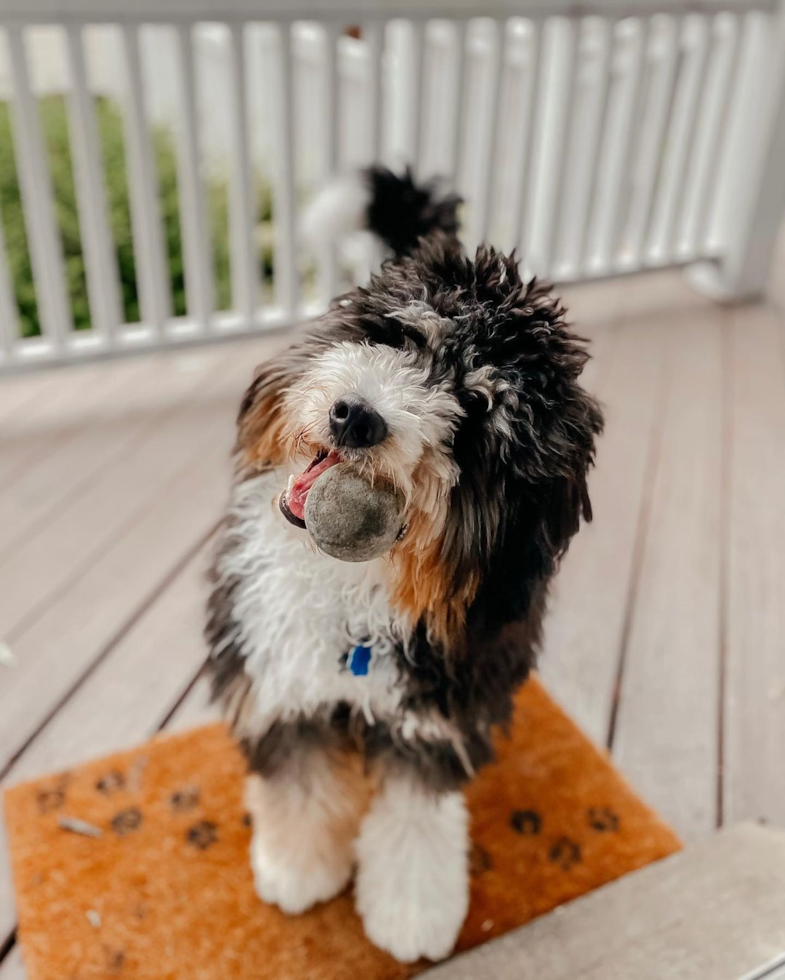
One of the biggest misconceptions about intelligent dogs is the idea that smart automatically means easy. In reality, intelligence magnifies whatever environment the dog lives in.
A Mini Bernedoodle raised with consistency, structure, and engagement may become highly responsive and adaptable. The same dog living with unclear routines and inconsistent boundaries may quickly develop frustrating habits instead. Smart does not mean low-maintenance.
This happens because intelligent dogs learn continuously, not just during formal training sessions. They notice what works, what earns attention, which rules change depending on the situation, and how people react under different circumstances. Sometimes owners unintentionally train behaviors they never meant to encourage simply because the dog recognizes patterns faster than expected.
Counter surfing is a good example. A Mini Bernedoodle that steals food once and succeeds may start checking counters regularly afterward because the behavior produced a reward before. Attention-seeking habits develop the same way. Barking, nudging, pawing, stealing objects, or interrupting conversations may continue if those behaviors consistently create interaction or excitement — even negative interaction counts.
Selective listening also becomes more common when boundaries are inconsistent. Some Mini Bernedoodles quickly realize commands are optional in certain environments or around specific people. A dog that reliably responds indoors but ignores recall outside may not lack intelligence at all. In many cases, the dog has simply learned where follow-through tends to disappear.
Boredom can create problems surprisingly fast with intelligent breeds too. A mentally under-stimulated Mini Bernedoodle may invent its own entertainment through chewing, digging, pacing, barking, or testing household boundaries. Those behaviors are not signs of a bad dog. More often, they reflect a dog looking for engagement, stimulation, or interaction in the absence of enough structure. The puppy and adolescent stages occasionally feel like living with a very fluffy interior designer who strongly disagrees with your decorating choices.
Routine matters for the same reason. Mini Bernedoodles respond extremely well to predictable expectations around walks, meals, rest, training, and household behavior. Clear patterns help intelligent dogs settle more confidently because they understand what is expected and what consistently happens next. A tired Mini Bernedoodle with enough mental engagement is a very different dog than one that received only a rushed walk and very little stimulation.
What makes Mini Bernedoodles rewarding companions is not just that they are intelligent. It is that their intelligence is highly engaged with the environment around them. But that also means owners shape behavior constantly, whether intentionally or not. Smart dogs do not simply learn commands faster. They learn life faster.
RELATED: 10 Common Dog Training Mistakes To Avoid
Do Mini Bernedoodles Get Bored Easily?

Mini Bernedoodles can get bored more easily than some expect, especially when their mental stimulation needs get overlooked. Intelligent, people-oriented dogs want more than physical exercise alone. A long walk may help release energy, but Mini Bernedoodles also need interaction, novelty, and opportunities to stay mentally engaged throughout the day.
That does not mean they require constant entertainment every hour. In most cases, boredom develops gradually when daily life becomes too repetitive or when a highly observant dog has very little meaningful engagement. Some Mini Bernedoodles begin creating their own stimulation simply because nothing else around them feels mentally interesting anymore. Owners do not always appreciate the creativity behind those decisions.
Puzzle toys, scent work, training games, hide-and-seek activities, and short learning sessions help significantly. Many seem to enjoy tasks that involve interaction and problem-solving rather than endless physical activity alone. Even small challenges — learning a new command, searching for hidden treats around the house — can channel their focus in productive ways. A twenty-minute training session can tire out some dogs more effectively than an extra walk around the block.
Enrichment also tends to reduce frustration-based behaviors. A mentally engaged Mini Bernedoodle usually settles more easily indoors than one that receives only physical exercise without enough interaction or stimulation. This is especially noticeable during adolescence, when curiosity and energy levels are at their highest.
Boredom-related behaviors usually begin subtly before becoming more disruptive. Some dogs pace more often. Others bark for attention, chew household objects, steal items, or repeatedly interrupt activity simply to create engagement. In some cases, intelligent dogs learn that certain behaviors reliably trigger reactions from people, even negative ones.
Chewing is especially common during younger stages when boredom and curiosity overlap. A Mini Bernedoodle left under-stimulated for long stretches may redirect energy into furniture corners, shoes, pillows, socks, or anything else that creates stimulation and interaction.
The good news is that most Mini Bernedoodles respond very well once mental engagement becomes part of the routine. Short training sessions, structured play, enrichment activities, and predictable interaction go a long way toward helping these dogs feel calmer and more balanced. Their intelligence tends to thrive when daily life gives them appropriate outlets for both learning and engagement.
RELATED: Are Mini Bernedoodles Aggressive? What Owners and Experts Say
Are Mini Bernedoodles Smarter Than Other Doodles?

Comparing intelligence between doodle breeds is not always straightforward because "smart" can mean very different things depending on what an owner values most. Some people think of intelligence as obedience and trainability. Others focus more on emotional awareness, adaptability, social behavior, or problem-solving ability in daily life.
Mini Bernedoodles are considered highly intelligent partly because of their Poodle influence. Poodles are widely recognized for trainability, fast learning, and responsiveness to structured interaction. That influence contributes to the Mini Bernedoodle's ability to learn routines quickly, adapt to training, and stay highly engaged with people.
At the same time, emotional temperament can differ noticeably between doodle breeds. Some doodles lean more heavily toward high-drive energy and nonstop stimulation, while Mini Bernedoodles combine intelligence with a softer and more socially connected temperament. Many owners describe them as emotionally attentive dogs that pay close attention to the people around them rather than purely task-focused dogs.
This is one reason some families feel Mini Bernedoodles are "smarter" in everyday life even if another breed may excel more strongly in technical obedience or working-drive intensity. Intelligence in companion dogs feels most noticeable through adaptability, responsiveness, communication, and social awareness inside the home.
Individual personality also matters enormously. Two Mini Bernedoodles from different lines may display intelligence very differently, just as two different doodle breeds may excel in completely different environments. Some dogs are exceptionally trainable. Others stand out more through emotional awareness, adaptability, or problem-solving behavior. Results vary quite a bit.
Rather than trying to rank doodle breeds from smartest to least intelligent, it is usually more useful to look at how their intelligence fits a particular lifestyle. Mini Bernedoodles appeal to families who want a dog that combines trainability with social engagement, emotional responsiveness, and adaptability within everyday family life.
RELATED: Top 5 Things to Know Before Getting a Mini Bernedoodle Dog
Are Mini Bernedoodles Good for First-Time Owners?

Mini Bernedoodles can be excellent dogs for first-time owners, especially for people looking for a companion that feels engaged, affectionate, and responsive to interaction. Their intelligence and trainability make the learning process feel rewarding rather than intimidating, particularly for owners willing to be patient and involved during puppyhood.
Many first-time owners appreciate how quickly Mini Bernedoodles begin recognizing routines and adapting to daily life. Their responsiveness to positive reinforcement helps beginners feel more confident during training because progress can become noticeable relatively quickly when expectations are clear and consistent.
At the same time, intelligence does not remove the need for structure. First-time owners sometimes assume a smart dog will naturally develop perfect behavior without much guidance, but Mini Bernedoodles still require boundaries, repetition, socialization, and consistent expectations throughout development. Their intelligence makes them more aware of inconsistency, not less affected by it. Affectionate dogs and well-behaved dogs are not automatically the same thing.
Their emotional sensitivity is another important part of the ownership experience. Mini Bernedoodles respond strongly to interaction, tone, routine, and household energy, which can feel deeply rewarding in the right environment. But that same sensitivity means patience and emotional steadiness usually work far better than frustration or overly harsh correction.
The breed fits best with involved owners who genuinely enjoy interaction and companionship with their dog rather than expecting a highly independent pet. Families, moderately active households, and work-from-home lifestyles adapt especially well because these environments naturally provide more engagement and routine throughout the day.
Mini Bernedoodles also do well with owners who enjoy participation in the training process itself. Many are happiest when they are learning, interacting, and feeling included in daily activity rather than being left alone without much stimulation. Puppies especially test limits in the same way toddlers do. Sometimes with the same level of dramatic energy too.
For first-time owners willing to stay engaged and consistent, Mini Bernedoodles are highly rewarding companions. Their intelligence feels less like a challenge to overcome and more like an ongoing relationship built through communication, structure, and everyday interaction.
RELATED: 15 Best Dog Breeds for First-Time Owners
Pros and Cons of Mini Bernedoodle Intelligence

Mini Bernedoodle intelligence is a large part of what makes the breed so appealing, but it also shapes the ownership experience in ways many people do not fully expect. Intelligent, emotionally engaged dogs feel incredibly rewarding to live with, though they usually require more involvement and consistency than people assume when looking only at the breed's fluffy appearance.
Understanding both sides of that intelligence helps create much more realistic expectations long term. Many of the breed's best qualities come attached to its biggest challenges.
| Pros | Cons |
| Quick learners that pick up routines and commands fast | Can become bored more easily without enough engagement |
| Highly trainable with positive reinforcement | Learn unwanted habits quickly too |
| Emotionally responsive and socially aware | May become overly dependent on constant interaction |
| Adapt well to predictable routines and family life | Require regular mental stimulation and structure |
| People-oriented and highly engaged companions | Can test inconsistent boundaries and expectations |
The intelligence that makes training easier can also produce stubbornness and boredom when routines turn inconsistent. The awareness that helps them become deeply connected companions also means they notice tension, changing rules, and understimulation very quickly.
For involved owners, this intelligence is one of the most rewarding parts of the breed. A Mini Bernedoodle that receives structure, engagement, and interaction feels mentally connected to daily life in a way many families find genuinely enjoyable. But intelligent dogs rarely stay neutral within the environment around them. They tend to absorb habits, routines, and behavioral patterns constantly, whether those patterns are intentional or not.
RELATED: Mini Bernedoodle Pros and Cons
So, Are Mini Bernedoodles Smart?

Yes. Mini Bernedoodles are highly intelligent dogs, but their intelligence shows up in more layered ways than many people initially expect. They are not simply dogs that learn tricks quickly or memorize commands fast. They are observant, emotionally responsive, socially engaged, and surprisingly adaptable within everyday family life.
Part of what makes the breed stand out is how connected that intelligence feels to interaction and companionship. Mini Bernedoodles pay close attention to routines, communication, household patterns, and the people around them. Over time, that awareness creates dogs that are highly engaged with daily life rather than emotionally distant or independent.
At the same time, intelligence alone does not automatically create an effortless dog. Smart dogs require structure, engagement, mental stimulation, and consistency to stay balanced long term. A Mini Bernedoodle that feels mentally involved and emotionally secure becomes highly rewarding to live with. Without enough guidance or stimulation, that same intelligence can easily redirect itself into boredom, frustration, or unwanted habits.
This balance shapes what living with the breed actually feels like day to day. Families looking for a socially connected, trainable, emotionally aware companion find Mini Bernedoodles deeply rewarding. People expecting a dog that naturally behaves perfectly without involvement or structure may experience something very different.
What many owners end up loving most about Mini Bernedoodles is not necessarily obedience alone. It is the sense that these dogs are paying attention all the time. They seem tuned into the rhythm of the household, the behavior of the people around them, and the routines that shape everyday life. For the right owners, that combination of intelligence, emotional awareness, adaptability, and engagement is exactly what makes Mini Bernedoodles such memorable companions.
Elena R.
About The Author
Elena is a leading expert in the field of dog behavior, care, and training, with over a decade of experience in writing about dogs. As a published writer and lifelong dog enthusiast, Elena currently shares her home with three beloved canine companions. She is dedicated to staying up to date on the latest advancements in dog care and training, ensuring that her articles provide readers with accurate and valuable insights. With her extensive knowledge and passion for all things canine, Elena's contributions to the Premier Pups community offer both expertise and authority on a wide range of dog-related topics.
What To Read Next

Top 30 Smartest Dog Breeds In The World
If you're a dog lover, you've probably heard the age-old debate: which dog breeds are the smartest? While all dogs have their own unique intelligence and personality, some breeds have proven to be consistently brilliant over time.
In this guide, we'll explore... Read More

15 Best Dog Breeds for First-Time Owners
Getting your first ever puppy is a decision that will reward you with unconditional love, friendship, and an endless supply of cuddles for many years to come. But, as a first-time puppy owner, there are a few things you need to consider before reserving your first... Read More
Frequently Asked Questions
Are Mini Bernedoodles easy to train? Yes, Mini Bernedoodles are generally considered easy to train. They tend to learn quickly and respond well to positive reinforcement, especially when training feels interactive rather than repetitive or harsh. Their people-oriented temperament helps them stay engaged with the person training them. That said, "easy to train" does not mean effortless. Smart dogs notice inconsistent rules fast, and adolescence can turn a dog that knew sit yesterday into one that suddenly has better things to do outdoors. Consistency matters more than strictness with this breed.
Do Mini Bernedoodles learn commands quickly? Many Mini Bernedoodles learn commands relatively fast, particularly when training sessions stay short, rewarding, and consistent. They recognize patterns quickly and may begin associating words, routines, and outcomes sooner than first-time owners expect. Repetition matters, but these dogs often absorb a surprising amount from daily interaction alone. Learning does not always stay confined to formal training sessions.
Are Mini Bernedoodles emotionally intelligent? Many owners describe Mini Bernedoodles as emotionally aware and highly socially responsive dogs. They pay close attention to tone of voice, household routines, interaction patterns, and the general emotional atmosphere inside the home. Some seem to notice stress, excitement, or changes in mood almost immediately. That attentiveness is part of what makes the breed feel so connected, though emotionally sensitive dogs can also shut down quickly when communication becomes harsh or chaotic.
Do Mini Bernedoodles get bored easily? Mini Bernedoodles can become bored more easily than some less mentally active breeds if they lack enough stimulation and interaction. Intelligent dogs need more than physical exercise alone. A long walk may release energy, but many also need training games, puzzle toys, enrichment activities, and structured engagement to stay mentally balanced. Without enough of that, some begin inventing their own entertainment. Owners do not always appreciate the creativity behind those decisions.
Are Mini Bernedoodles stubborn? Some Mini Bernedoodles show occasional stubborn behavior, especially during adolescence. In many cases, this comes less from defiance and more from distraction, overstimulation, or inconsistent boundaries. Intelligent dogs test patterns constantly and quickly notice when rules change depending on the situation, the room, or who is home. A dog that ignores recall outside may not lack intelligence at all. It may simply have learned where follow-through tends to disappear.
How do you mentally stimulate a Mini Bernedoodle? Mental stimulation can include puzzle toys, scent games, hide-and-seek activities, obedience training, short learning sessions, interactive play, and enrichment routines that encourage problem-solving and engagement. Many Mini Bernedoodles respond especially well to activities that involve interaction with people rather than independent play alone. Even small challenges — learning a new command or searching for hidden treats around the house — can channel their focus in productive ways.
Are Mini Bernedoodles smarter than Goldendoodles? It depends on how you define intelligence. Both breeds inherit strong trainability from the Poodle side, but their personalities and emotional temperaments can feel different in daily life. Some owners feel Mini Bernedoodles are more emotionally attentive and socially observant, while others prefer the energy and responsiveness of Goldendoodles. Individual personality matters enormously too. Two dogs from different breeds — or even the same litter — can display intelligence very differently.
Can Mini Bernedoodles be left alone? Mini Bernedoodles can usually handle reasonable periods alone once properly trained, but many prefer regular interaction and companionship throughout the day. Their emotionally connected temperament can make long stretches of isolation more difficult for some dogs, especially without enough stimulation or routine. Early independence training, crate confidence, and predictable departures usually help. Many do best in homes where someone is around more often than not.
Why do Mini Bernedoodles learn bad habits quickly? Intelligent dogs recognize patterns very fast, including patterns owners unintentionally reinforce. A Mini Bernedoodle that discovers barking earns attention, jumping creates interaction, or stealing socks triggers a chase scene may repeat those behaviors simply because they consistently produce results. Smart dogs learn life faster, not just commands faster. Clear boundaries and consistent follow-through matter enormously with this breed.
Are Mini Bernedoodles good for first-time owners? Mini Bernedoodles can be excellent dogs for first-time owners who are willing to stay patient, involved, and consistent. Their trainability and social temperament make the learning process feel rewarding, and progress often becomes noticeable relatively quickly when expectations stay clear. Their intelligence and emotional sensitivity still require structure, repetition, and engagement throughout development though. A smart dog is not automatically a low-maintenance dog.
Do Mini Bernedoodles need a lot of mental stimulation? Most Mini Bernedoodles benefit from regular mental stimulation because intelligent, observant dogs become restless when daily life lacks engagement. Training, enrichment activities, play, and social interaction usually help them stay calmer and more balanced overall. A twenty-minute training session can tire some dogs out more effectively than an extra walk around the block. Mental engagement tends to matter as much as physical exercise with this breed.
What makes Mini Bernedoodles intelligent? Their intelligence is influenced by a combination of Poodle trainability and the socially connected temperament commonly associated with Bernese Mountain Dogs. Many Mini Bernedoodles display fast learning ability, emotional responsiveness, adaptability, strong routine recognition, and close attention to human behavior in everyday life. That intelligence often feels more people-connected than purely task-driven, which is a large part of why so many owners describe them as unusually engaged companions.