





Published Friday, March 6, 2026 by Elena R. in Dog Training, New Puppy
Cockapoo training sounds straightforward… at first. Then the questions start. Are Cockapoos easy to train? Why does one Cockapoo pick up commands quickly while another ignores them the next day?Why do some puppies seem eager to learn, while others get distracted, overexcited, or stubborn during training sessions?
Cockapoos are generally easy to train, but there is an important reason why training results vary so much between dogs.
A big part of the answer comes from Cockapoo intelligence. The breed inherits much of its learning ability from the Poodle, one of the most intelligent dog breeds. Poodles consistently rank among the top working breeds for trainability, and that influence gives Cockapoos the ability to learn commands quickly and recognize patterns fast.
But intelligence alone does not make training simple. Cockapoos are also highly emotionally sensitive dogs. They pay close attention to tone, routine, and the reactions of their owners. That sensitivity can make them extremely responsive to positive reinforcement training, but it also means inconsistent rules or frustrated corrections can slow progress quickly.
This combination creates a pattern many owners notice. A Cockapoo may learn a command in a single afternoon. The next day, that same dog may ignore it if the training routine changes, the environment becomes distracting, or the rules are unclear. The issue is rarely intelligence. More often, it comes down to structure and consistency.
Early training plays a major role here. Cockapoos benefit from clear boundaries starting in puppyhood, especially during the first months when habits form quickly. Without early structure, common problems can appear, including attention-seeking barking, inconsistent house training, overexcitement, or difficulty settling when left alone.
This guide explains how to train a Cockapoo step by step, including when to start training, the full Cockapoo training timeline by age, house training strategies, and the most common training challenges owners face with this breed.
Table of Contents
- Are Cockapoos Easy to Train?
- When to Start Training a Cockapoo Puppy
- Cockapoo Training Timeline by Age
- House Training a Cockapoo
- Crate Training a Cockapoo
- Basic Commands Every Cockapoo Should Learn
- Leash Training
- Cockapoo Socialization
- Cockapoo Separation Anxiety
- Cockapoo Barking Problems
- Cockapoo Puppy Nipping and Excitement Behavior
- Cockapoo Mental Stimulation
- Common Cockapoo Training Mistakes
- Professional Training for Cockapoos: When to Get Help
Are Cockapoos Easy to Train?
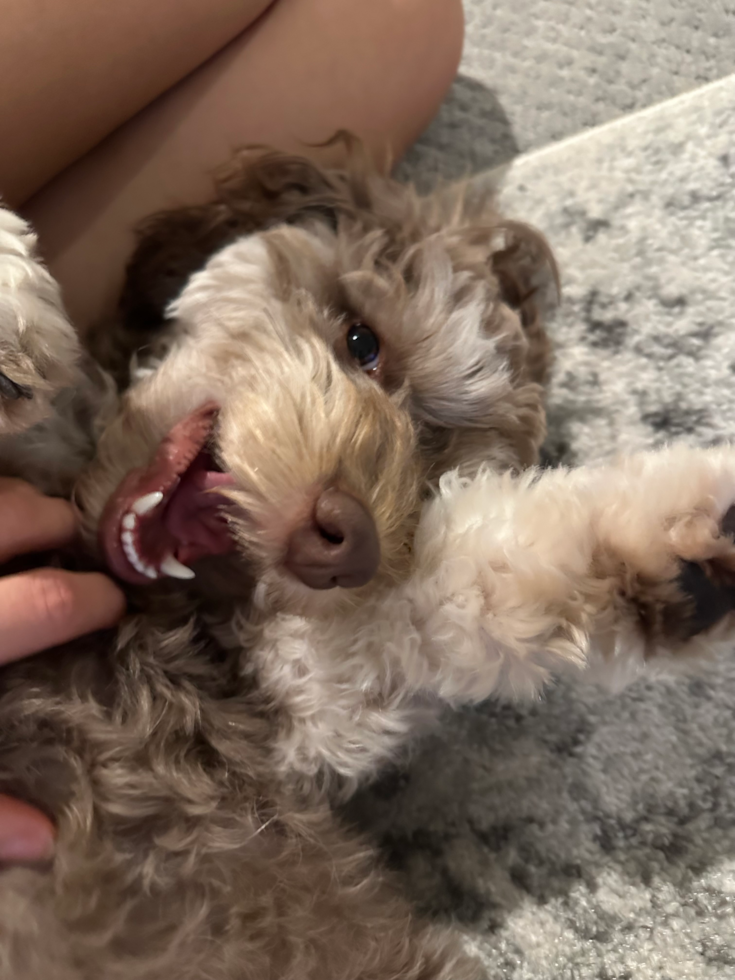
In most cases, the answer is yes. Cockapoos are generally easy to train, but their success depends on consistency and structure. When training is clear and routine-based, this breed often learns faster than many other small dogs.
The biggest reason comes from the Cockapoo’s intelligence. But intelligence also comes with a catch.
A smart dog quickly learns patterns, including the ones you don’t intend to teach. If rules change from day to day, or different family members enforce different expectations, the dog may begin to test boundaries. That’s when owners start describing their dog as stubborn. In reality, the issue is usually not stubbornness. It is inconsistency.
Cockapoos respond best when training follows a clear structure:
- The same commands every time
- The same rules from all family members
- Short, frequent training sessions
- Rewards that arrive immediately after the correct behavior
When those elements are in place, Cockapoo trainability is typically very high.
This is one area where Cockapoos often stand out compared to other small breeds. Many small companion dogs can be independent or difficult to motivate during training. Cockapoos, by contrast, usually enjoy learning because they are highly social and strongly connected to their owners. They tend to want interaction, attention, and approval. Training becomes part of that interaction.
However, this same trait explains why some owners struggle with training. Cockapoos form strong attachments to people and can become easily distracted by excitement, visitors, new environments, or emotional changes in the household. Without structure, training sessions may turn into play sessions instead of learning opportunities.
This does not mean Cockapoos are difficult dogs. It simply means they respond best to clear routines and calm, reward-based training methods.
RELATED: Learn Everything You Need To Know About Cockapoos
When to Start Training a Cockapoo Puppy
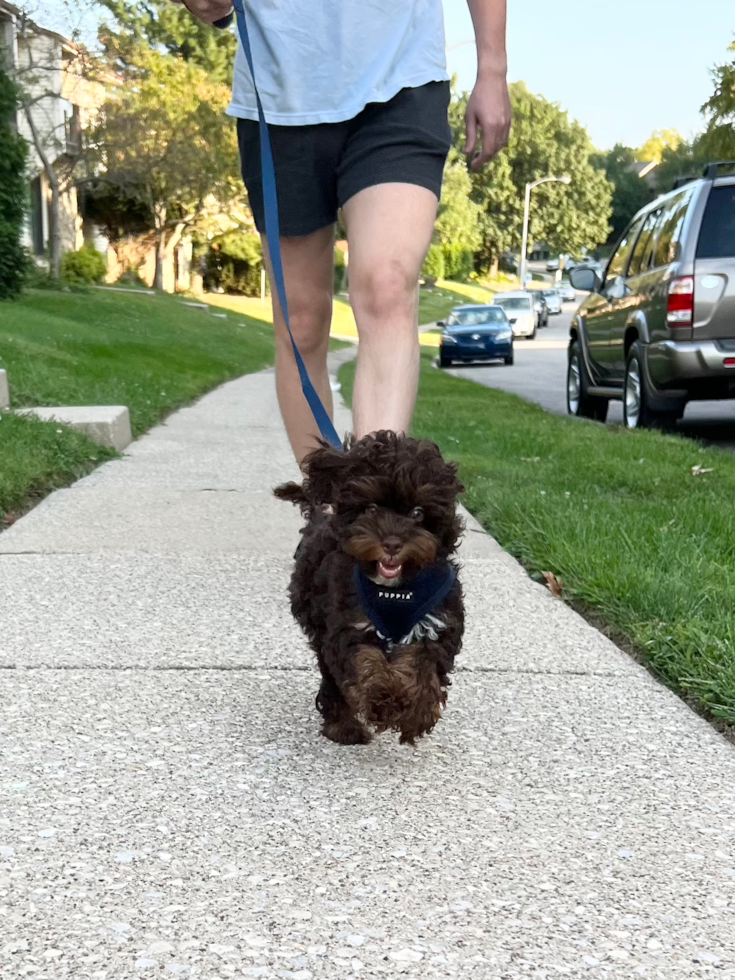
New puppy parents usually believe training should begin after a puppy settles in. Maybe after a few months. Maybe once the dog “matures.” In reality, Cockapoo puppy training should begin as early as 8 weeks old.
This is usually the age when puppies go to their new homes, and it is also when their brains are especially receptive to learning. At this stage, puppies are constantly forming associations. Every interaction, routine, and environment teaches them something, whether the owner intends it or not.
That is why early puppy training matters so much. Between 8 and 16 weeks, puppies go through what trainers often call the socialization window. This is a critical developmental period when young dogs are naturally curious and more open to new experiences. Exposure during this time helps shape how a dog reacts to people, environments, sounds, and everyday situations later in life.
Because of this, many trainers describe the 8–16 weeks critical window as the foundation stage for behavior. For Cockapoos in particular, this early period matters even more. Their intelligence allows them to learn quickly, but their emotional sensitivity means they also absorb stress, confusion, and inconsistent routines very easily. That is why early boundaries matter.
Training at this stage does not mean strict discipline or complicated obedience drills. A young puppy’s attention span is short. Instead, training focuses on simple habits and clear structure:
- Learning their name
- Following a basic potty routine
- Gentle exposure to new people and environments
- Early crate familiarity
- Calm handling for grooming and vet visits
The key is to keep training simple and predictable.
Short training sessions work best. Most Cockapoo puppies respond well to 5–10 minute sessions, repeated several times throughout the day. Puppies learn more from frequent, short training sessions than from a single long session that pushes them past their attention span.
Positive reinforcement should guide these early lessons. Treats, praise, and play rewards help puppies associate learning with positive experiences. This approach builds confidence while encouraging cooperation.
Just as important is knowing what not to do too early. Young Cockapoo puppies should not be pushed into long training drills, harsh corrections, or overwhelming environments. Their brains are still developing, and excessive pressure can create confusion or anxiety instead of learning.
At this stage, the goal of Cockapoo puppy training is not perfection. It is building routines, encouraging curiosity, and creating clear expectations.
RELATED: Top 12 Pros and Cons of Owning a Cockapoo
Cockapoo Training Timeline by Age
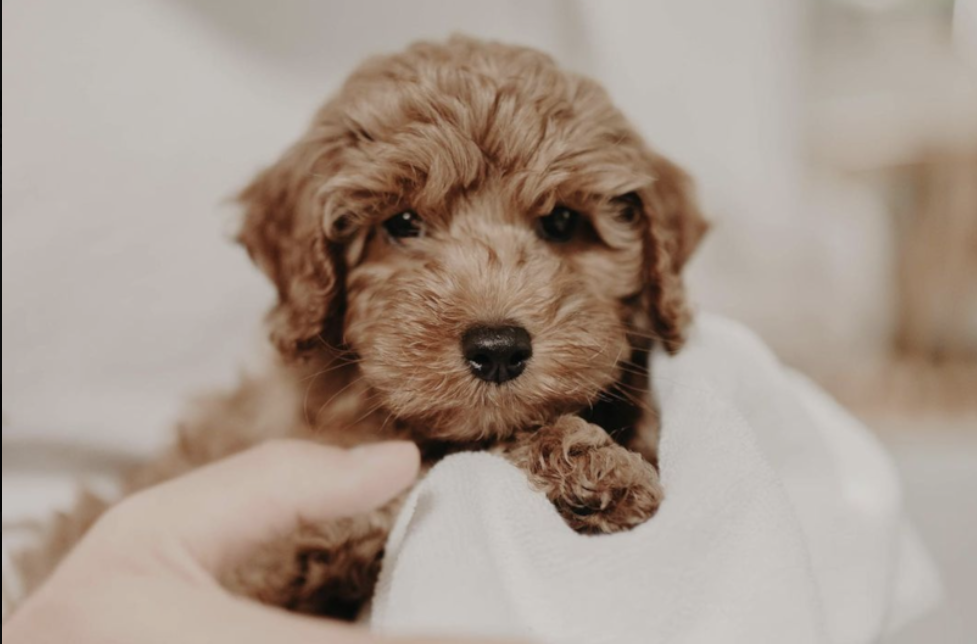
Training a Cockapoo becomes much easier when expectations match the dog’s stage of development. Puppies change quickly during their first year, and what works at one age may not work the same way a few months later.
That is why a Cockapoo training timeline helps many owners stay on track. Each stage of growth comes with different learning abilities, attention spans, and behavioral challenges.
8–12 Weeks
The 8–12 weeks stage is the beginning of structured learning. Most Cockapoo puppies arrive in their new homes around this age, and their brains are highly receptive to new routines.
Training during this stage focuses on simple foundations rather than obedience perfection. The main goal is helping the puppy understand how daily life works in the household.
Key priorities during this stage include:
- Name recognition. Puppies should quickly learn that their name signals attention and interaction.
- Potty routine. Frequent trips outside help establish early house training habits.
- Crate introduction. The crate should feel like a safe resting space rather than confinement.
- Gentle exposure. Calm introductions to people, surfaces, sounds, and environments help build confidence.
Short training sessions work best here. A young puppy learns through repetition, routine, and positive reinforcement rather than long lessons.
3–6 Months
The 3–6 months period is when structured learning expands. Puppies are becoming more coordinated, more curious, and more capable of focusing during training.
This stage is where many owners begin formal Cockapoo obedience training.
Basic commands become part of daily routines. Dogs begin learning sit, stay, come, and down, along with simple impulse control skills such as waiting for food or sitting before going through doors.
Leash training also begins during this stage. Cockapoos are naturally social and curious dogs, so early exposure to loose leash walking helps prevent pulling habits later.
Another important focus during this stage is nipping control. Puppies explore the world with their mouths, especially while teething. Redirecting biting toward toys and calmly stopping rough play helps teach appropriate behavior.
At this point in the puppy development stages, consistency matters more than complexity. Clear rules and frequent short sessions allow learning to build gradually.
6–12 Months
The 6–12 months adolescence stage is where many owners feel training suddenly becomes harder. This phase is often described as the teenage period of dog development. Physical growth increases energy levels, while confidence leads dogs to test previously learned boundaries. This is normal adolescent dog behavior.
A Cockapoo that followed commands reliably at five months may suddenly ignore them at eight months. The issue usually is not forgetting the command. Instead, the dog is exploring independence and responding to new distractions.
Training during this stage focuses heavily on reinforcement. Commands that were introduced earlier must now be practiced in different environments, around distractions, and during daily activities. Consistency prevents regression and reminds the dog that expectations remain the same.
1 Year and Older
By 1 year and older, most Cockapoos have developed the core habits that will shape their adult behavior.
Training at this stage shifts from learning new basics to refining existing skills. Commands should become reliable even in busy environments, and daily routines should feel predictable for the dog.
Many owners also begin introducing advanced training or enrichment activities during this stage. Trick training, scent games, and structured play sessions help maintain mental stimulation for an intelligent breed like the Cockapoo.
This stage is less about correction and more about engagement. Dogs that continue learning into adulthood tend to remain more responsive, confident, and mentally balanced.
RELATED: How Long Do Cockapoos Live? Cockapoo Lifespan – A Guide to Longevity
House Training a Cockapoo
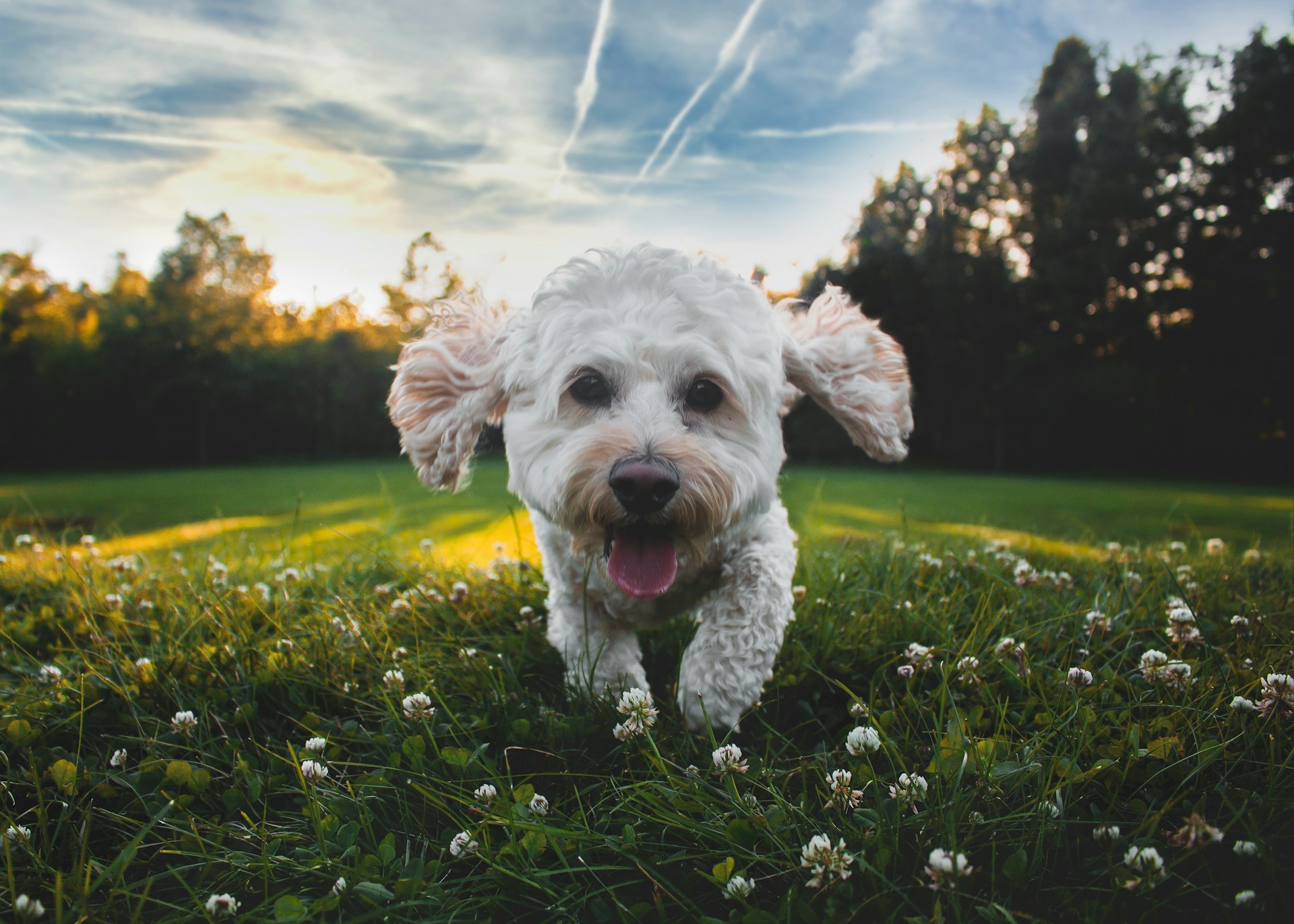
House training is usually the first major challenge owners face. Many people ask the same question within the first few weeks: How long does it take to potty train a Cockapoo?
In most homes, Cockapoo house training becomes reliable within 3–6 months, with full bladder control and maturity developing closer to 6–8 months of age. Some puppies learn faster, but expecting perfection in the first few weeks often leads to frustration.
Learning to potty train a Cockapoo puppy depends on three main factors: bladder development, routine, and supervision.
Bladder Capacity by Age
Young puppies simply cannot hold their bladder for long periods. A general guideline many trainers use looks like this:
- 8–10 weeks: about 1 hour
- 10–12 weeks: around 2 hours
- 3–4 months: about 3–4 hours
- 5–6 months: around 5–6 hours
These numbers are estimates rather than strict rules. Excitement, play, and drinking water can shorten the time significantly. After naps, meals, and play sessions, puppies usually need to go outside almost immediately.
A Simple Potty Schedule
Consistency is the most important part of Cockapoo house training. Puppies learn faster when their day follows predictable patterns.
A typical potty schedule for a young Cockapoo puppy might include trips outside:
- Immediately after waking up
- After eating or drinking
- After play sessions
- After naps
- Before bedtime
For very young puppies, this can mean going outside every 1–2 hours during the day. While it may feel repetitive, frequent opportunities to succeed are what help the habit form.
Night Training Expectations
Nighttime training improves gradually as bladder control develops. Most young Cockapoo puppies will still need one or two nighttime potty breaks during the early weeks at home. By around 12–16 weeks, many puppies can begin sleeping longer stretches without needing to go outside.
Using a crate at night can help with this process. Dogs naturally avoid soiling their sleeping area, which encourages them to hold their bladder until they are taken outside.
Signs Your Cockapoo Needs to Go
Puppies often give small signals before they have an accident. Common signals include:
- Sniffing the floor repeatedly
- Circling in one spot
- Suddenly stopping play and wandering away
- Moving toward the door
- Whining or pacing
When these signals appear, taking the puppy outside immediately reinforces the correct behavior.
How to Handle Accidents in the House
Even with careful routines, accidents in the house will happen. They are a normal part of the learning process. The most effective response is simple: interrupt calmly, take the puppy outside, and reward them if they finish in the correct location. Punishment or yelling usually causes confusion and can make a sensitive breed like the Cockapoo anxious about eliminating in front of people.
Cleaning accidents properly also matters. Using an enzymatic cleaner removes odor molecules that dogs can still detect even after normal cleaning. If the scent remains, puppies may return to the same spot again.
RELATED: How To Potty Train A Puppy
Crate Training a Cockapoo
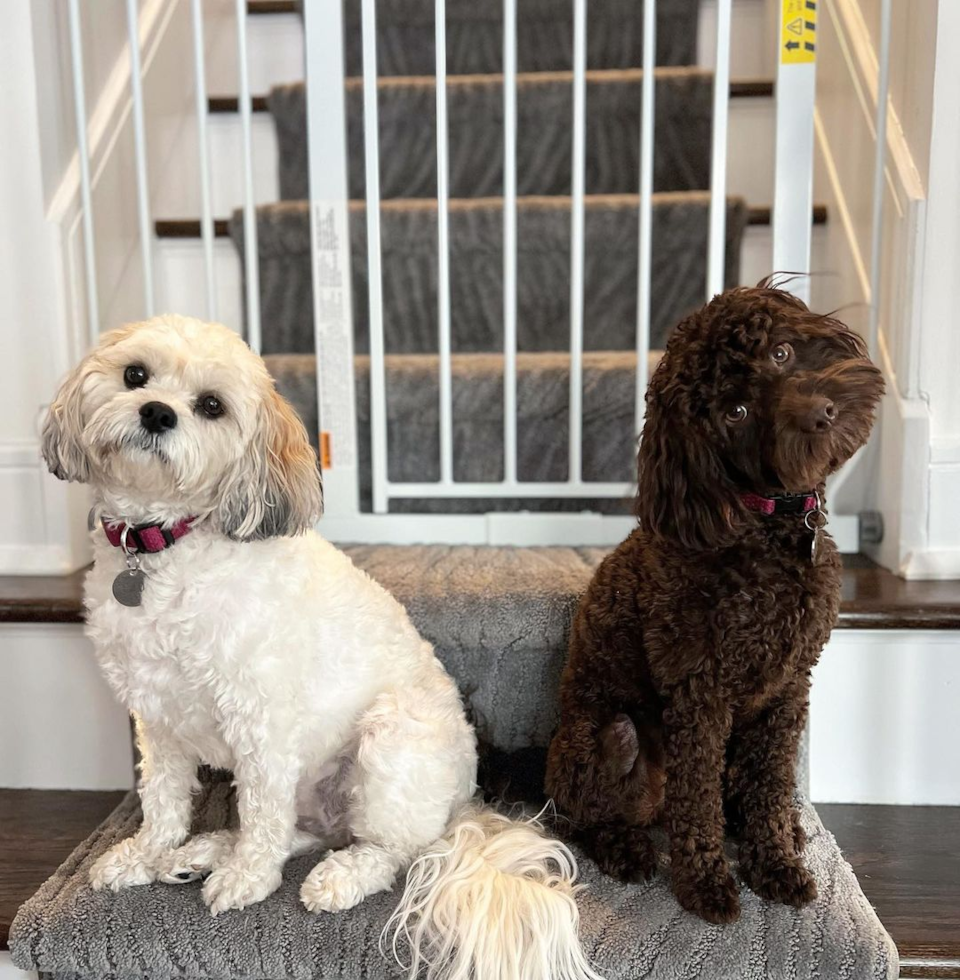
For many owners, the idea of crate training raises questions right away. Is it necessary? Will the puppy feel trapped? How long should a dog stay inside?
When used correctly, Cockapoo crate training can become one of the most helpful tools during the early months of training. A crate provides structure, supports house training, and gives the dog a predictable place to rest. The key is understanding that a crate should function as a safe den environment, not a place of confinement or punishment.
Why Cockapoos Benefit From Crates
Dogs naturally seek out small, enclosed spaces for rest and security. When introduced properly, a crate can become a calm place where a Cockapoo chooses to settle.
For puppies especially, crates help manage several early training challenges. They support house training because dogs instinctively avoid soiling their sleeping area. They also prevent destructive chewing when a puppy cannot be supervised. Most importantly, crates help young dogs learn how to relax independently rather than constantly seeking attention.
How to Introduce the Crate Positively
The first introduction should feel calm and low pressure. Place the crate in a common living area where the puppy can see people moving around. Add a soft bed or blanket and allow the puppy to explore the space freely.
Encouragement works better than forcing the dog inside. Treats, toys, or feeding meals near the crate can help build a positive association. Many puppies begin entering the crate on their own once they see it as a normal part of the environment.
How to Avoid Crate Anxiety
Most crate problems develop when the crate is introduced too quickly or used inconsistently. If a puppy is suddenly confined for long periods without preparation, crate anxiety may develop. Signs can include excessive whining, barking, scratching, or refusing to enter the crate.
Gradual introduction prevents this. Short crate sessions while the owner is still nearby help the puppy feel secure. Over time, these sessions can slowly extend as the puppy learns that the crate is simply another resting place.
How Long Can a Cockapoo Stay in a Crate?
The answer depends largely on age and bladder capacity. General guidelines often look like this:
- 8–10 weeks: about 1 hour
- 10–12 weeks: around 2 hours
- 3–4 months: about 3–4 hours
- 5–6 months: up to 5 hours
These limits align closely with the puppy’s bladder development. Keeping crate sessions within these timeframes helps prevent accidents and discomfort.
Nighttime Crate Training
Crates are especially helpful during nighttime crate training.
Placing the crate near the owner’s bed during the early weeks often helps puppies relax. They can hear familiar sounds and feel less isolated in a new environment.
Most young Cockapoo puppies will still need at least one overnight potty break during the first few weeks. As bladder control improves, these nighttime interruptions gradually decrease.
A Common Mistake to Avoid
One of the most important rules in Cockapoo crate training is simple: Never use the crate as punishment.
If a dog associates the crate with frustration or discipline, it stops feeling like a safe resting place. Instead of entering calmly, the dog may begin resisting or developing anxiety around the crate. The goal is always the opposite. The crate should remain a quiet space for rest, relaxation, and routine.
RELATED: How To Crate Train A Puppy
Basic Commands Every Cockapoo Should Learn
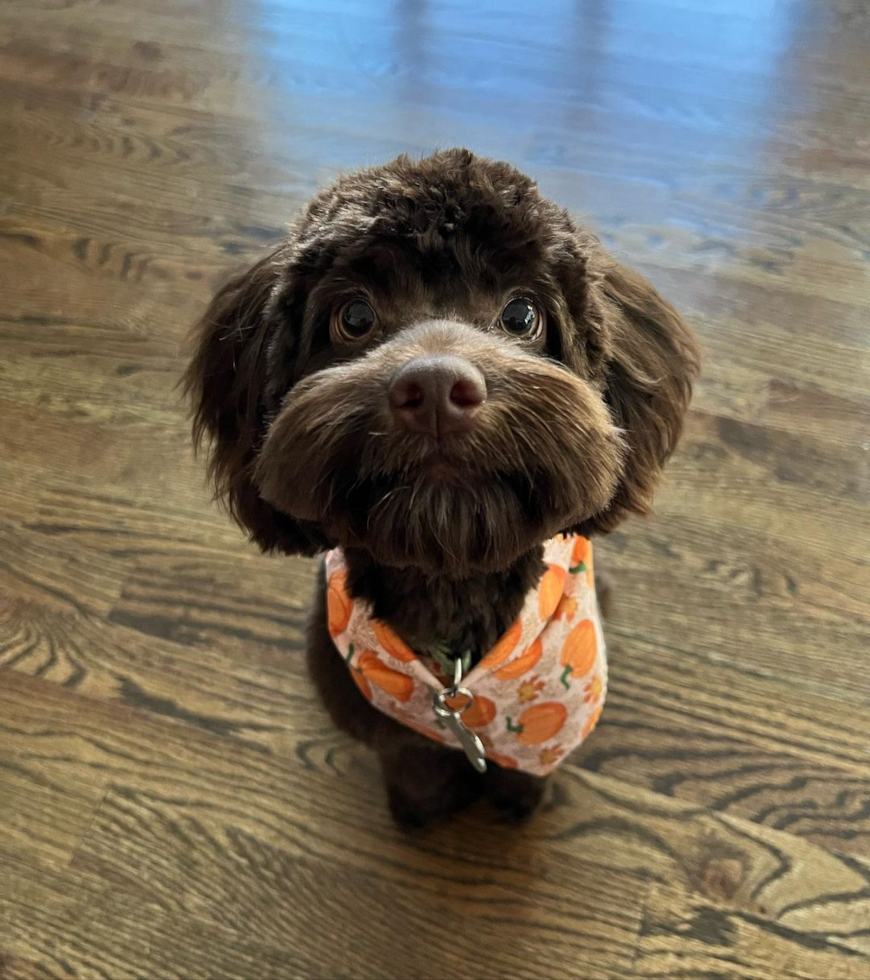
Once the early routines are in place, training begins to shift toward structured obedience. This is where many owners start focusing on the basic commands for Cockapoo puppies and young dogs.
The goal of these commands is not just obedience. Each one teaches a specific type of control that helps manage everyday situations such as greeting visitors, walking outside, settling in the home, or preventing unsafe behavior.
Sit
Sit is usually the first command many dogs learn because it is simple and easy to reward. For Cockapoos, sit matters because it teaches calm behavior before excitement takes over. It is useful before meals, before going outside, and before greeting people.
To teach it, hold a treat close to the dog’s nose and slowly move it upward and slightly back over the head. As the head follows the treat, the rear usually lowers naturally. The moment the dog sits, say sit, reward immediately, and praise calmly.
Once the movement becomes predictable, begin saying the word before guiding with the treat. After that, reduce the hand motion over time so the dog responds to the verbal cue more reliably.
Stay
Stay teaches the dog to remain in position until released. This command builds patience and focus. For an energetic Cockapoo, stay helps control excitement around guests, open doors, food, and busy environments.
Start with the dog in a sit or down position. Say stay, hold your hand up as a visual signal, take one small step back, then return and reward if the dog remains in place. The first goal is only one or two seconds of success.
From there, build gradually. Increase distance, then duration, then distractions. If all three increase at once, many Cockapoos break position quickly. Progress is usually stronger when only one difficulty level changes at a time.
Come
Come is one of the most important commands a Cockapoo can learn. Strong recall training allows the dog to return immediately when called, even when something more interesting is happening nearby. This is one of the clearest examples of why recall matters for Cockapoos. They are curious, social, and often eager to investigate new people, dogs, and scents.
To teach come, begin indoors or in a quiet enclosed space. Say the dog’s name followed by come in a cheerful tone, then move backward a few steps. Many dogs naturally move toward the owner when the owner creates motion. Reward heavily the moment the dog reaches you.
This command should build a positive association every time. Calling the dog to you and then ending play, scolding, or doing something unpleasant can weaken recall fast. In the early stages, the dog should learn that coming when called almost always leads to something good.
Down
The down command teaches the dog to lie on the ground and settle. For Cockapoos, this matters because excitement can build quickly. A dog that knows down can often shift from active behavior into a calmer state more easily.
To teach it, start from a sit. Hold a treat at the dog’s nose, then lower it slowly to the floor and move it slightly outward. As the dog follows the treat down, the elbows usually lower first. The moment the body reaches the floor, mark the behavior, reward, and praise calmly.
Leave It
Leave it teaches the dog to ignore something tempting. This command is especially useful for Cockapoos because they tend to be curious and quick to investigate objects on the floor, dropped food, or interesting items during walks. It is also a core part of impulse control training.
A simple way to teach it is to place a treat in your closed hand and let the dog sniff it. Say leave it once and wait. At first, the dog may lick, paw, or nudge your hand. The moment the dog backs off or looks away, reward with a different treat from the other hand.
Drop It
While leave it means ignore that, drop it means let go of what is already in your mouth. Cockapoos often enjoy carrying toys, socks, or random household items, so this command matters for both safety and daily management.
To teach drop it, offer the dog a toy, then present a treat close to the nose. Most dogs will release the toy to take the food. The moment the object leaves the mouth, say drop it, reward, and return the toy when appropriate.
Returning the object part of the time is useful because it prevents the dog from thinking that releasing something always means losing it forever. That small detail often makes the command easier to teach.
Heel
Heel teaches the dog to walk beside the owner with attention and control. Cockapoos are often enthusiastic walkers. They move quickly, notice everything, and can become overexcited on leash. Teaching a loose version of heel helps create better walking manners before pulling becomes a fixed habit.
To begin, hold a treat near your side and reward the dog for walking next to you for a few steps. Then stop and reset. Early practice should happen in short stretches with low distractions.
The goal is not a perfect competition-style heel. For most owners, it simply means the dog learns that staying near the handler is rewarding and that pulling does not move the walk forward.
Wait
Wait teaches the dog to pause briefly before moving forward. This is different from stay. A stay usually means remain in position until released. A wait often means pause at a threshold or before a routine event. For Cockapoos, this command helps slow down impulsive behavior at doors, gates, curbs, and food bowls.
To teach it, ask the dog to pause before something it wants. For example, before opening a door, say wait and begin opening it slightly. If the dog moves forward, close the door calmly and reset. If the dog pauses, reward and then release.
Leash Training
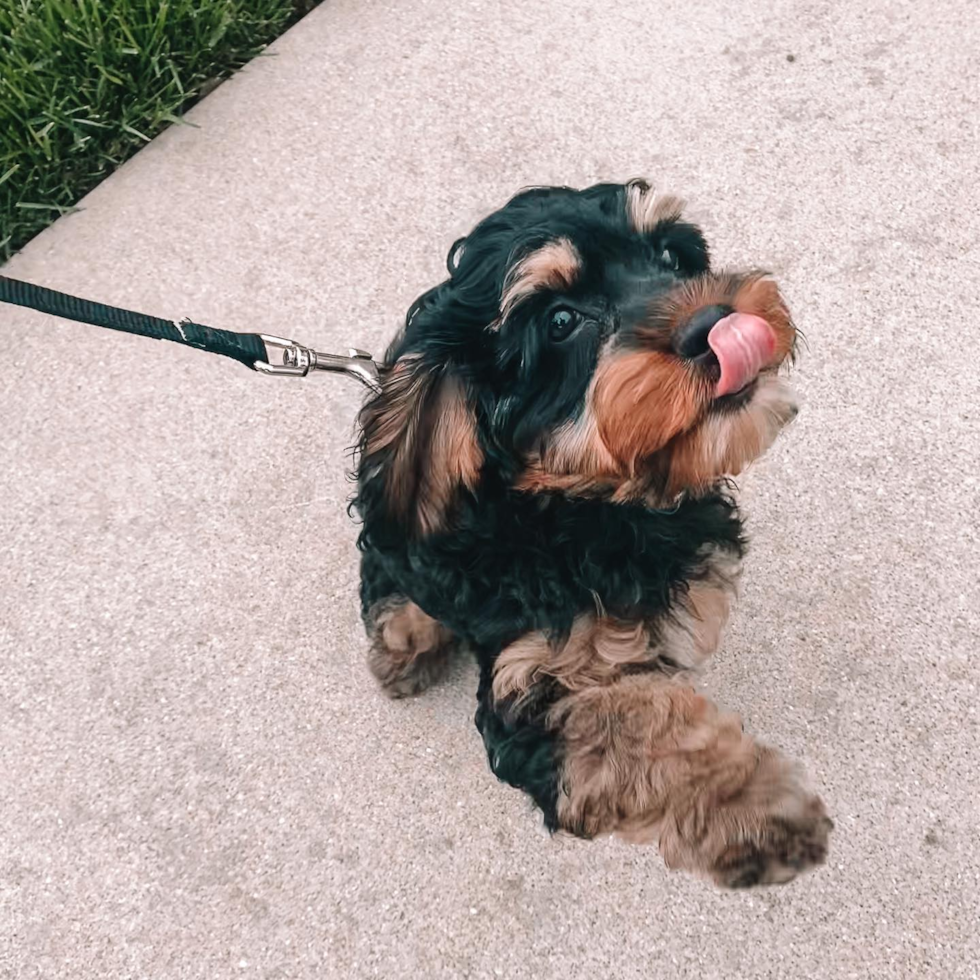
Walking a Cockapoo can feel enjoyable one moment and chaotic the next. And many owners notice the same pattern early on. The puppy walks calmly for a few minutes, then suddenly begins pulling toward a smell, another dog, or a passing person. This is common behavior for the breed.
Cockapoos are naturally social, curious, and enthusiastic walkers. They notice everything around them. New scents, moving objects, and friendly strangers can easily trigger excitement. Without structure, that excitement quickly turns into pulling.
This is why Cockapoo leash training should begin early, ideally during the first months of puppyhood.
How to Teach Loose Leash Walking
The foundation of loose leash walking is simple: reward the position you want the dog to maintain.
Start in a low-distraction environment such as a quiet sidewalk or yard. Hold the leash loosely and begin walking at a calm pace. When the dog walks beside you without tension on the leash, mark the behavior and reward. If the dog pulls forward, stop walking immediately. Wait until the leash becomes loose again before moving forward.
Most Cockapoos respond well to reward-based leash training. Treats, praise, and brief play rewards help reinforce calm walking behavior. Rewards should appear when the dog chooses the correct position. If the dog frequently receives rewards while near the handler, that position becomes more valuable than pulling ahead.
Avoid Retractable Leashes Early
Many trainers recommend that owners avoid retractable leashes during the early training stages. Retractable leashes allow the dog to move forward while tension remains on the line. This can unintentionally teach the dog that pulling is normal.
Using a standard fixed-length leash makes it easier to teach the difference between a loose leash and a tight one. Once walking manners are consistent, some owners reintroduce retractable leashes in controlled environments, but early training is usually clearer without them.
RELATED: How To Leash Train A Dog - Step-By-Step Leash Training Guide
Cockapoo Socialization
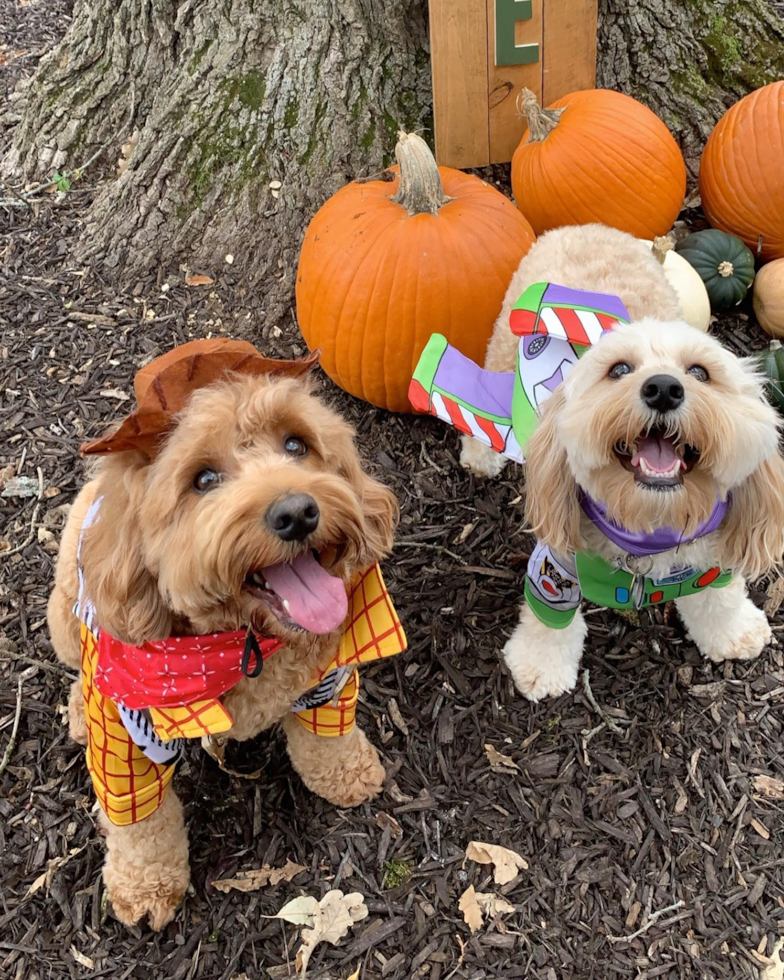
Many behavior problems that appear later in life begin very early. A Cockapoo that barks nervously at strangers, reacts to new environments, or becomes overwhelmed by everyday situations often missed an important step during puppyhood. This step is socialization.
Socialization simply means teaching a puppy that the world is safe, predictable, and manageable.
The most important time for this learning happens during the 8–16 week socialization window. During this period, a puppy’s brain is naturally open to new experiences. Curiosity is high, and fear responses are still developing. What a puppy encounters during these weeks often shapes how it reacts to similar situations later in life.
What Socialization Should Include
Effective socializing a Cockapoo puppy involves exposure to many normal parts of daily life. The goal is not overwhelming the puppy but to gradually introduce variety while keeping each experience calm and positive.
Important exposures often include:
- People. Puppies should meet individuals of different ages, appearances, and voices. Calm introductions help the dog learn that strangers are normal parts of everyday life.
- Children. Supervised interactions teach the puppy how to remain relaxed around faster movements and higher voices that often come with children.
- Other dogs. Controlled interactions with well-behaved dogs help develop appropriate play skills and communication.
- Surfaces. Walking across grass, pavement, wood floors, gravel, and other textures helps prevent hesitation later.
- Sounds. Everyday noises such as traffic, household appliances, doorbells, and city activity should gradually become familiar.
- Veterinary environments. Short positive visits to the veterinary clinic, even when no exam is needed, help puppies associate the location with normal experiences rather than fear.
These exposures form the foundation of exposure training, which simply means introducing new situations in a controlled, positive way.
RELATED: Mastering Puppy Socialization: Transform Your Pup into a Confident, Sociable Adult Dog
Cockapoo Separation Anxiety
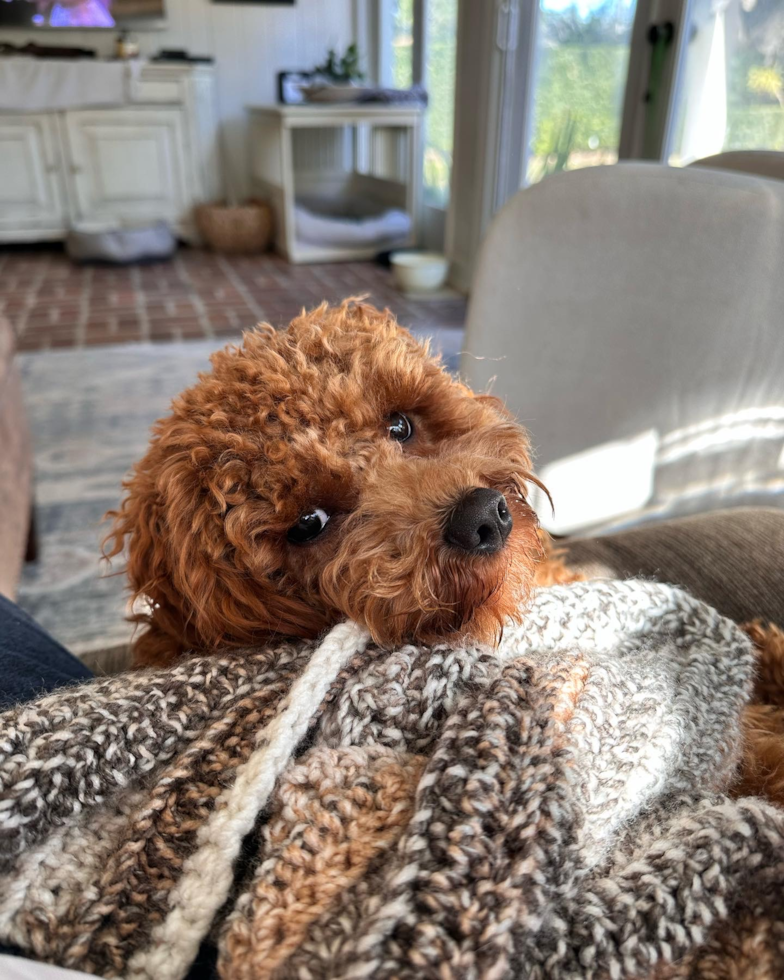
Many new owners notice a pattern soon after bringing their puppy home. The pup follows them from room to room. It settles nearby while they work. It becomes excited whenever they return after even a short absence.
At first, this attachment feels positive. Cockapoos are affectionate companion dogs, and their strong bond with people is part of their appeal. But this same trait explains why Cockapoos are prone to separation anxiety.
Cockapoos are an attachment-driven breed. They are bred for companionship and tend to stay closely connected to their owners. When a dog never learns how to relax independently, even short absences can begin to feel stressful.
Without early preparation, that stress can develop into separation anxiety.
Early Independence Training
Preventing separation anxiety begins with independence training during puppyhood. This does not mean ignoring the dog or withholding attention. Instead, it means teaching the puppy that short periods alone are normal and safe.
A common approach involves allowing the puppy to rest in a crate or quiet area while the owner moves around the home. The puppy learns that people may leave the room and return again without anything negative happening.
Gradual Departures
Instead of leaving for long periods right away, start with very short absences. Step outside for a few minutes, return calmly, and repeat the process over time. As the dog becomes comfortable, the duration can slowly increase.
The key is to keep departures calm and predictable. Long emotional goodbyes or excited greetings can unintentionally signal that separation is a major event.
Mental Enrichment Before Leaving
Mental stimulation also helps reduce anxiety before alone time. A short walk, a brief training session, or a puzzle toy before departure helps the dog release energy and settle more easily afterward. A mentally satisfied dog is more likely to rest than remain alert and stressed.
Signs of Severe Separation Anxiety
Some behaviors suggest a dog is experiencing more than mild discomfort when left alone.
Possible red flags of severe anxiety include:
- Persistent barking or howling after the owner leaves
- Destructive chewing focused on doors or windows
- Attempts to escape from crates or rooms
- Drooling, pacing, or panting excessively
- Accidents in the house despite reliable house training
When these behaviors appear consistently, they may indicate separation anxiety rather than simple boredom.
Mild attachment behavior often improves with structured routines and independence training. However, severe anxiety sometimes requires professional guidance. A qualified trainer or veterinary behaviorspecialist can evaluate the situation and design a structured plan to reduce anxiety gradually.
RELATED: How to Treat Your Dog’s Separation Anxiety
Cockapoo Barking Problems
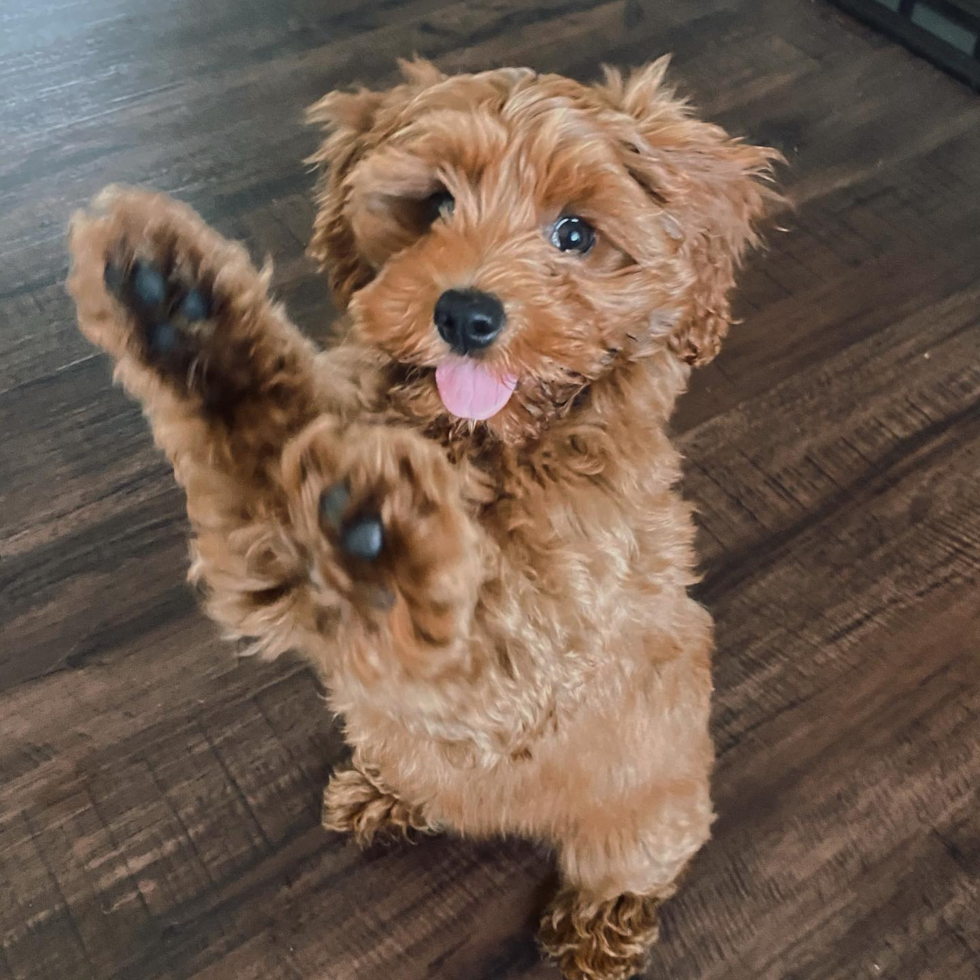
Many Cockapoo owners notice barking becoming more frequent as the dog grows. A bark at the doorbell. A bark when someone walks past the window. A bark when the dog wants attention or play.
Barking is normal communication for dogs. The goal is not to eliminate barking completely, but to understand why it happens and learn how to guide it into calmer behavior. Different types of barking usually have different causes.
Alert Barking
One of the most common forms of Cockapoo barking is alert barking. Cockapoos are attentive and aware of their surroundings. They often notice sounds or movement outside the home before their owners do. A knock on the door, footsteps outside, or a passing vehicle may trigger a quick bark to signal that something has changed.
In moderation, alert barking is normal. The issue appears when the dog continues barking long after the event has passed. In these cases, the dog may need reassurance that the situation is under control.
Demand Barking
Another pattern owners frequently see is demand barking. This happens when the dog learns that barking leads to attention, food, or play. If barking once results in a response from the owner, the dog quickly learns that barking works.
The most effective way to reduce demand barking is simple but sometimes difficult: do not reward the behavior.
Boredom Barking
Excessive barking often has a connection to boredom. Cockapoos are intelligent dogs that benefit from regular learning and enrichment. When that mental stimulation is missing, barking can become a way for the dog to release energy or seek interaction.
Training sessions, puzzle toys, scent games, and structured walks help provide outlets for this energy. When the dog’s mental needs are met, barking often decreases naturally.
When Barking Signals Anxiety
In some situations, excessive barking can indicate stress rather than simple communication. Barking that occurs when the owner leaves the home, when the dog is isolated, or when unfamiliar situations arise may suggest anxiety. In these cases, the barking is often accompanied by pacing, whining, or destructive behavior.
RELATED: Do Cockapoos Bark a Lot?
Cockapoo Puppy Nipping and Excitement Behavior
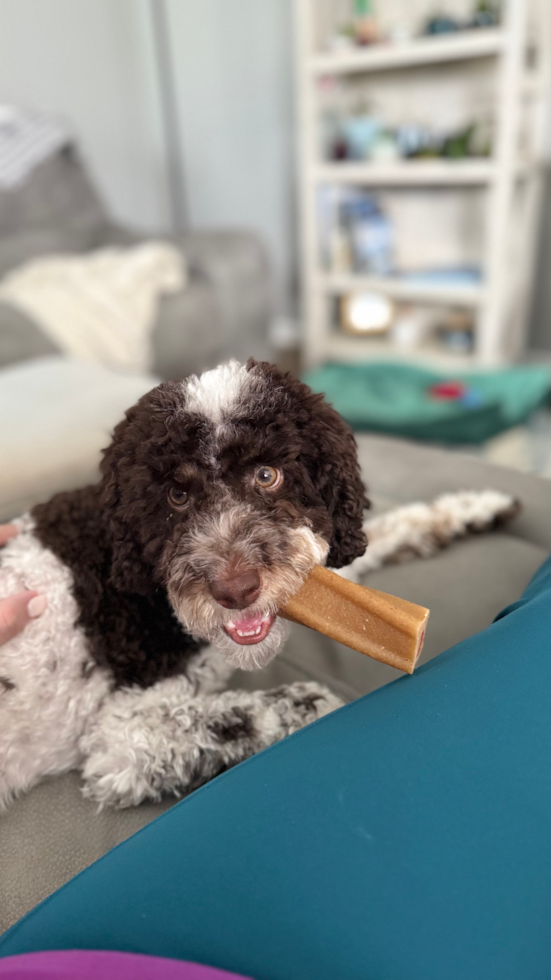
In most cases, the same behavior happens during the early months after a puppy comes home. The puppy becomes excited during play, grabs at hands or clothing, and begins to nip. Sometimes it happens during games. Other times it appears suddenly when the puppy becomes overstimulated.
This type of puppy biting is common and usually part of normal development. Most puppies explore the world with their mouths, especially during the teething phase.
The Teething Phase
Puppies begin losing their baby teeth around three to four months of age. During this teething phase, the gums can feel uncomfortable, and chewing becomes a natural way to relieve pressure.
Because Cockapoos are playful and energetic, that chewing sometimes turns into nipping during play or interaction. The puppy is usually not trying to be aggressive. The behavior is simply an outlet for discomfort, curiosity, and excitement. Providing appropriate chewing options makes a noticeable difference. Soft chew toys, rubber toys, or safe teething items give the puppy a better place to direct that energy.
Redirect Nipping Toward Toys
One of the most effective responses to nipping is redirection. When a puppy begins grabbing at hands, sleeves, or ankles, immediately introduce a toy instead. Over time, the puppy begins to associate toys with chewing and learns that human hands are not part of the game. Consistency matters here. If hands sometimes become part of play and sometimes do not, the puppy receives mixed signals.
Avoid Rough Play Escalation
Some types of play can unintentionally encourage excitement biting. Games that involve wrestling with hands, waving fingers near the puppy’s face, or allowing the puppy to chase clothing can raise the dog’s excitement level quickly. As excitement rises, self-control usually drops. Keeping play focused on toys rather than hands helps prevent this escalation.
The Time-Out Method
If nipping continues despite redirection, a calm pause can help the puppy understand that biting ends the interaction. The time-out method simply involves removing attention for a short period. If the puppy begins nipping, stand up calmly, step away, or briefly leave the room. There is no need for scolding or punishment.
Most Cockapoo nipping gradually fades as the puppy finishes teething and learns better impulse control. Training, appropriate toys, and consistent responses help speed up this process.
RELATED: How To Stop A Puppy From Biting You
Cockapoo Mental Stimulation
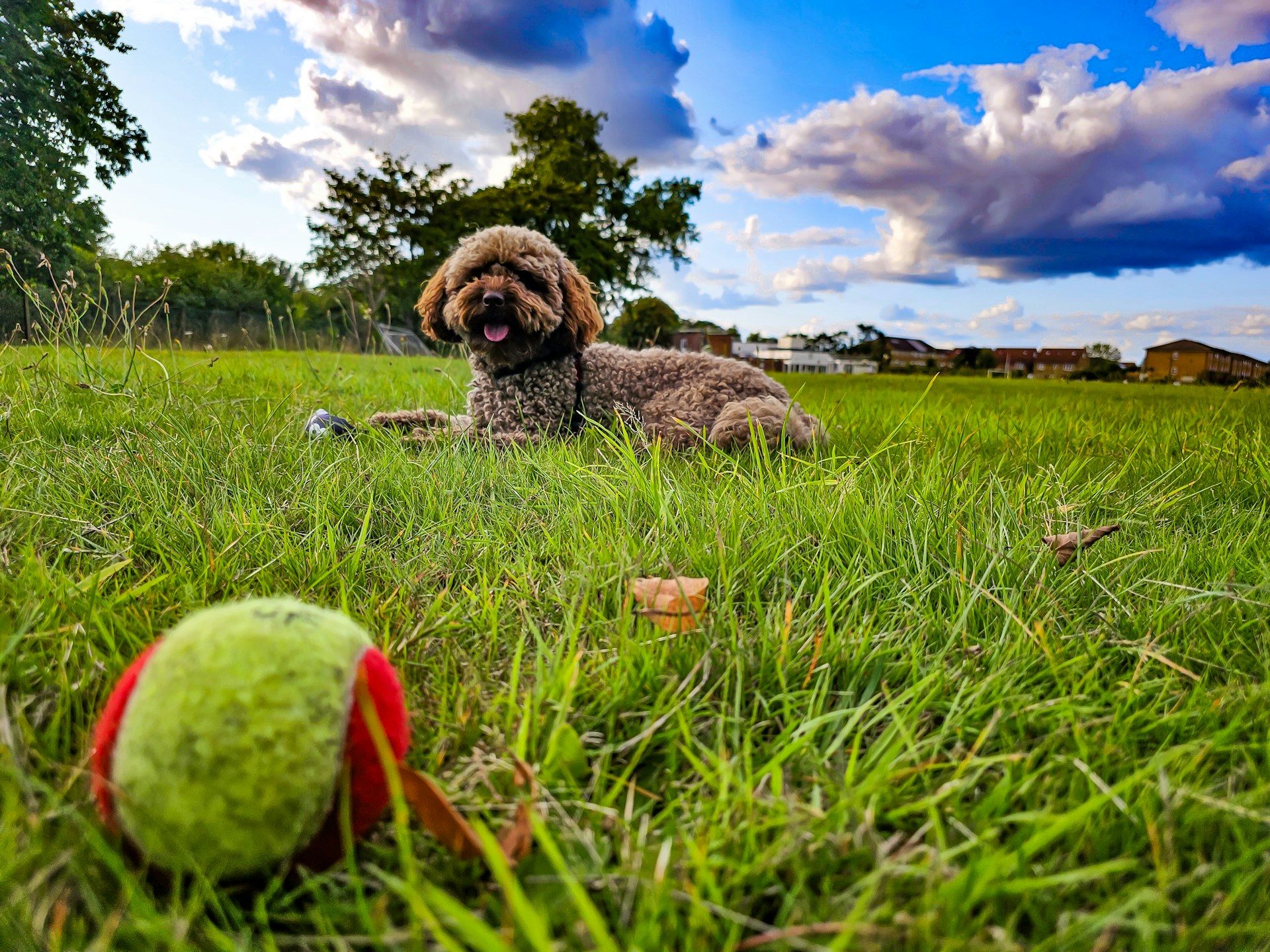
Physical exercise is important for any dog, but for Cockapoos, mental activity plays an equally large role in behavior. Cockapoos are intelligent dogs with strong learning abilities. Without enough mental engagement, they often look for their own ways to stay busy. This is where many unwanted habits begin. A bored Cockapoo becomes destructive or vocal.
Puzzle Toys and Problem Solving
One simple way to provide mental activity is through puzzle toys. These toys require the dog to figure out how to release food or treats by moving parts, lifting lids, or sliding pieces. Instead of eating quickly from a bowl, the dog must think and experiment to solve the puzzle.
This type of problem-solving activates the brain in a way that simple chewing or walking does not. Even short puzzle sessions can help a dog settle more calmly afterward.
Training Games
Training does not always need to focus on obedience commands. Many dogs benefit from training games that encourage learning in a relaxed way. Simple activities such as teaching the dog to touch a hand target, follow a treat trail, or search for a hidden toy create small challenges that keep the brain active.
Scent Games
Dogs experience the world largely through scent. Activities that use this natural ability provide strong mental engagement. Scent games can begin with simple exercises. Hide a treat in one room and allow the dog to search for it. Gradually increase the difficulty by hiding the treat behind objects or in different areas of the home.
Trick Training
Another useful form of enrichment involves teaching small tricks. Trick training encourages dogs to learn new movements and respond to cues in creative ways. Skills such as spinning in a circle, giving a paw, ringing a bell, or carrying an object provide mental variety.
Mental stimulation does not require long training periods. In fact, most Cockapoos respond best to short daily learning sessions. Five to ten minutes of focused learning repeated throughout the day often works better than one long session. These small bursts of activity keep the dog engaged without creating frustration or fatigue.
RELATED: Are Cockapoo Good Dogs?
Common Cockapoo Training Mistakes
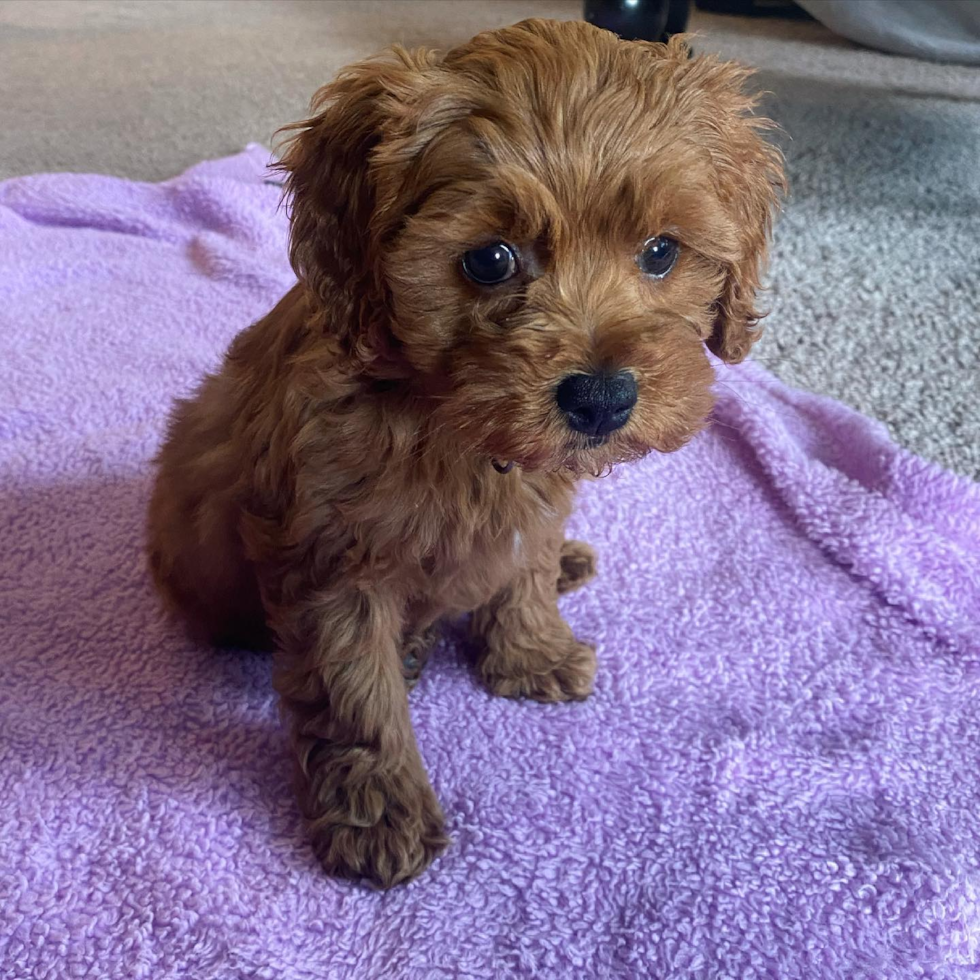
Many training problems do not come from the dog. They come from small habits that slowly shape behavior in the wrong direction.
Inconsistency Between Family Members
One of the most common mistakes when training a Cockapoo involves inconsistent rules inside the home. If one person allows the dog on the couch while another discourages it, the dog receives mixed signals. The same problem appears with commands. One family member may say “down,” while another says “off,” or one person rewards jumping while another tries to prevent it.
For a dog, this creates confusion. Cockapoos respond best when rules remain predictable. Consistency across the household helps the dog understand what behavior leads to rewards and what behaviordoes not.
Too Much Freedom Too Early
Another common issue is giving a puppy too much freedom before reliable habits are established. Young Cockapoos are curious and active. If a puppy has unrestricted access to the entire home too soon, accidents, chewing, and unwanted habits often appear.
Gradually expanding freedom usually works better. Starting with supervised areas, crates, or puppy-safe zones allows the dog to learn appropriate behavior in smaller environments first.
Overusing Treats Without Phasing Rewards
Treats are powerful tools during early training, especially for intelligent breeds that respond well to positive reinforcement. However, overusing treats without adjusting the reward system can create dependence on food.
If the dog only performs commands when food is visible, the behavior has not fully transferred to real-life situations. The solution is gradual reward variation. As the dog learns a command reliably, treats can appear less frequently while praise, play, or brief interaction become the reward instead.
Yelling or Harsh Corrections
Many owners become frustrated when training progress slows. In those moments, raised voices or harsh corrections may seem like a quick solution.
With Cockapoos, this approach often backfires. Because the breed is emotionally sensitive, yelling can create confusion or anxiety rather than improved behavior. The dog may become hesitant, distracted, or less confident during training sessions.
Calm, consistent communication tends to produce better results. Clear cues, predictable routines, and well-timed rewards help the dog understand what is expected without creating unnecessary stress.
RELATED: 10 Reasons Why Dogs Lose Interest in Training & How to Fix it
Professional Training for Cockapoos: When to Get Help
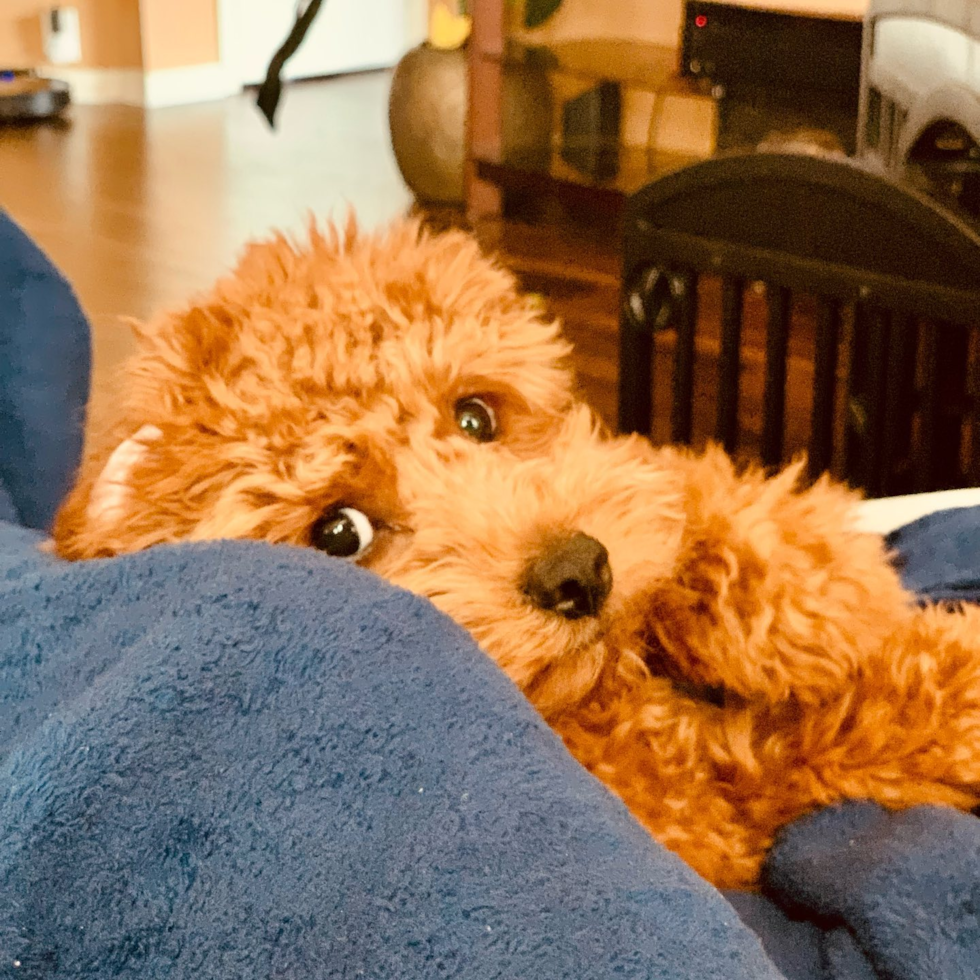
Most Cockapoos respond well to consistent home training. Their intelligence and strong connection to people often make them quick learners when routines are clear. But sometimes progress slows down.
A puppy may continue having accidents despite a consistent routine. A young dog may ignore commands outside the house. Barking, anxiety, or pulling on the leash may persist even after regular training attempts. In situations like these, professional training can provide additional structure and guidance.
Seeking help does not mean the owner has failed. In many cases, professional support simply helps identify small adjustments that improve communication between the dog and the owner.
Signs Training at Home Is Not Working
Some challenges resolve naturally with time and consistency. Others continue despite repeated effort. A few common signs that additional help may be useful include:
- Commands that the dog ignores consistently, even in low-distraction environments
- Persistent house training problems beyond the normal learning period
- Intense barking, anxiety, or destructive behavior when left alone
- Difficulty managing leash pulling or excitement around people and dogs
- Aggressive or fearful reactions toward unfamiliar situations
When these behaviors continue without improvement, working with a dog trainer can provide a clearer training plan.
Group Training Classes
One common starting point involves group training classes. These classes usually focus on basic obedience skills such as sit, stay, recall, and leash manners. The group environment also introduces mild distractions, which helps dogs practice commands outside the home.
For Cockapoos, group classes often provide two benefits at once. The dog learns structured commands while also gaining social exposure to other dogs and people.
Private Trainers
In some cases, individual training sessions work better than group classes. Private trainers observe the dog’s behavior directly within the home environment. This allows them to identify patterns that may not appear in a classroom setting.
A trainer might evaluate daily routines, household interactions, and the dog’s response to specific situations. Based on that observation, they can design a customized training plan. For issues such as separation anxiety, persistent barking, or complex behavior patterns, private training often provides more targeted support.
Behaviorists and Complex Cases
Some situations require deeper behavioral analysis.
Understanding the difference between a behaviorist vs trainer becomes important when serious anxiety, aggression, or fear responses appear. Trainers typically focus on teaching obedience skills and modifying habits. Behaviorists often address deeper emotional or psychological issues affecting behavior. Veterinary behaviorists may also evaluate whether medical factors contribute to anxiety or stress.
For Cockapoos experiencing severe behavioral challenges, this level of expertise can sometimes provide a more complete solution.
Scroll down to see FAQs about Cockapoo training.
Elena R.
About The Author
Elena is a leading expert in the field of dog behavior, care, and training, with over a decade of experience in writing about dogs. As a published writer and lifelong dog enthusiast, Elena currently shares her home with three beloved canine companions. She is dedicated to staying up to date on the latest advancements in dog care and training, ensuring that her articles provide readers with accurate and valuable insights. With her extensive knowledge and passion for all things canine, Elena's contributions to the Premier Pups community offer both expertise and authority on a wide range of dog-related topics.
What To Read Next
Do Cockapoos Bark a Lot?
Spend enough time around Cockapoos, and you start to understand how they use their voice. They don’t bark to fill silence or to get attention for no reason. They bark because something catches their attention. Sometimes it’s a sound outside, a knock... Read More

Are Cockapoo Good Dogs?
Cockapoos have become one of the most loved mixed breeds in America, and it’s easy to see why. With their expressive faces, soft coats, and cheerful personalities, they win people over in an instant. But for anyone thinking about bringing one home, a fair... Read More
Frequently Asked Questions
Are Cockapoos stubborn? Cockapoos are not usually stubborn dogs, but their intelligence can sometimes make them appear that way. Because they learn patterns quickly, they also notice when rules are inconsistent. If commands change, rewards are unclear, or routines vary between family members, a Cockapoo may ignore cues and test boundaries.
How long does it take to train a Cockapoo? Most Cockapoos begin learning basic commands within the first few weeks of training, but reliable behavior develops over several months. Basic obedience skills such as sit, come, and leash manners often become consistent during the first 3–6 months of structured training.
Are male or female Cockapoos easier to train? Both male and female Cockapoos can learn quickly and respond well to training. Differences between individual dogs usually matter more than gender.
Why does my Cockapoo bark so much? Cockapoos often bark to communicate. Common reasons include alerting owners to sounds, asking for attention, reacting to excitement, or responding to boredom. In many homes, barking increases when the dog lacks mental stimulation or when barking has previously resulted in attention. Identifying the trigger helps determine the solution.
Can Cockapoos be off leash? Some Cockapoos can learn reliable off-leash behavior, but it depends on the strength of their recall training and the environment. Before allowing off-leash freedom, dogs should demonstrate strong recall and reliable responses to commands even in distracting situations.
Are Cockapoos good for first-time owners? Cockapoos are often considered a good choice for first-time dog owners. Their intelligence, affectionate nature, and willingness to interact with people can make training more approachable for beginners.