





Published Thursday, June 18, 2026 by Elena R. in Dog Grooming
Mini Bernedoodles are described as hypoallergenic dogs, but the reality is a little more nuanced than that. While many Mini Bernedoodles inherit the low-shedding qualities of the Poodle, no dog is completely hypoallergenic. Some Mini Bernedoodles shed very little and work well for allergy-sensitive families, while others may trigger allergies more than expected depending on their coat genetics, generation, and grooming.
One owner may describe their Mini Bernedoodle as nearly non-shedding, while another may deal with noticeable hair around the house during coat transitions or seasonal changes. The good news is that Mini Bernedoodles are generally considered one of the more allergy-friendly doodle breeds, especially those with curly or furnished coats and a stronger Poodle influence. Their coats trap loose hair instead of releasing it into the environment, which may help reduce the spread of dander and allergens throughout the home. That said, coat type matters far more than people realize.
Genetics play a major role in how much a Mini Bernedoodle sheds and whether they are a good fit for allergy sufferers. Coat texture, furnishings, generation type, and even individual puppy genetics can all affect shedding levels and allergen exposure. An F1B Mini Bernedoodle with a curly furnished coat will usually have very different shedding tendencies than an unfurnished F1 Mini Bernedoodle with straighter hair.
In this guide, we’ll break down everything you need to know about Mini Bernedoodle hypoallergenic qualities, including shedding levels, coat types, furnishings, allergy triggers, grooming requirements, and which Mini Bernedoodles are most likely to work well in allergy-sensitive homes. If you’ve been trying to understand whether a Mini Bernedoodle is truly low shedding or simply marketed that way online, you’re in the right place.
What Does “Hypoallergenic” Mean?
The word “hypoallergenic” is misunderstood in the dog world. Many people assume it means a dog will not trigger allergies at all, but that is not technically true. No dog breed is completely hypoallergenic, including Poodles and Poodle mixes. Even dogs commonly described as allergy-friendly dogs still produce allergens that may affect sensitive individuals.
When people react to dogs, the cause usually is not the fur itself. Dog allergies are most commonly triggered by proteins found in dog dander, saliva, skin flakes, and urine. These microscopic allergens can cling to furniture, clothing, carpets, and floating hair throughout the home. Hair simply acts as a carrier. That distinction matters because a dog that sheds less may release fewer allergens into the environment, even though the allergens themselves are still present.
This is one reason low-shedding breeds and doodle mixes are considered more manageable for allergy sufferers. Dogs with curly or wavy coats tend to trap loose hair and dander within the coat instead of releasing it continuously around the house. In many cases, that can reduce airborne allergens and make daily life more comfortable for people with mild dog allergies.
Still, reactions vary from person to person. Someone with mild sensitivities may do perfectly well around a low-shedding Mini Bernedoodle, while another person with more severe allergies could still experience symptoms. Genetics, grooming habits, cleaning routines, coat type, and individual immune responses all influence how “allergy-friendly” a dog feels in a real-world setting.
Understanding this difference helps explain why some Mini Bernedoodles work extremely well in allergy-sensitive homes while others may not. The next step is understanding what influences those outcomes.
Are Mini Bernedoodles Hypoallergenic?
Mini Bernedoodles are considered hypoallergenic dogs because many inherit the low-shedding coat qualities of the Poodle. In practice, though, the answer is not simply yes or no. Some Mini Bernedoodles are highly allergy-friendly and shed very little, while others may shed moderately and trigger allergies more easily. The outcome depends heavily on genetics, coat type, furnishings, generation, grooming, and individual sensitivity.
The Poodle side of the mix plays a major role in why Mini Bernedoodles are frequently recommended for allergy-sensitive homes. Poodles are known for their dense, curly coats that trap loose hair and reduce shedding throughout the environment. When a Mini Bernedoodle inherits more of those coat traits, the result is a lower-shedding dog that spreads less dander around the home.
The Bernese Mountain Dog side introduces more unpredictability. Bernese Mountain Dogs have thick double coats and are naturally heavy shedders. Since Mini Bernedoodles are a cross between two very different coat types, the genetics can vary significantly from puppy to puppy. Even within the same litter, one Mini Bernedoodle may develop a curlier, low-shedding coat while another may inherit straighter hair with noticeably higher shedding levels.
This is one of the biggest misconceptions surrounding doodle breeds. Many people assume all Mini Bernedoodles are equally hypoallergenic, but coat inheritance does not work that way. Coat texture, furnishings, and generation influence shedding patterns far more than appearance alone. A puppy that looks fluffy at eight weeks old may develop a very different adult coat over time.
Generation also matters. F1B Mini Bernedoodles, which have a higher percentage of Poodle genetics, are generally considered more reliable for allergy sufferers because they are more likely to inherit curlier, low-shedding coats. F1 Mini Bernedoodles can still be allergy-friendly, but their coat outcomes are usually less predictable.
Grooming habits also affect how allergy-friendly a Mini Bernedoodle feels inside the home. Regular brushing, bathing, coat maintenance, and cleaning routines help reduce trapped dander, loose hair, and allergens before they spread throughout the environment. Even low-shedding dogs can become problematic for allergy sufferers if coat care is neglected.
Individual sensitivity is the final piece of the puzzle. Some people with dog allergies live comfortably with Mini Bernedoodles without significant symptoms. Others may still react, even to dogs with very low-shedding coats. This is why experienced breeders and veterinarians usually avoid absolute promises about hypoallergenic qualities. A Mini Bernedoodle may have a higher likelihood of being allergy-friendly, but no breeder can guarantee a completely allergen-free dog.
Do Mini Bernedoodles Shed?
Mini Bernedoodles are generally considered low-shedding dogs, especially when compared to heavy-shedding breeds like the Bernese Mountain Dog. Many owners notice less loose hair around the house than they would with traditional double-coated breeds. That lower-shedding reputation is one of the biggest reasons Mini Bernedoodles have become so popular among allergy-sensitive families.
Still, low shedding does not mean no shedding. Some Mini Bernedoodles shed very little, while others shed moderately throughout the year or during seasonal coat changes. Shedding levels depend heavily on coat genetics, generation, furnishings, and the traits a puppy inherits from each parent breed.
The Poodle side of the mix contributes the low-shedding qualities most people associate with Mini Bernedoodles. Poodles have continuously growing hair rather than a traditional shedding coat cycle, which means loose hair stays trapped within the curls instead of falling around the home. When a Mini Bernedoodle inherits more of those coat characteristics, shedding is usually much lower.
The Bernese Mountain Dog side introduces more variability. Bernese Mountain Dogs have thick double coats designed for colder climates and are known for noticeable year-round shedding, especially during seasonal coat blowouts in spring and fall. If a Mini Bernedoodle inherits more of the Bernese coat structure, shedding may become much more noticeable than people expect.
Coat type plays a major role in how much a Mini Bernedoodle sheds. Curly-coated Mini Bernedoodles typically shed the least because the curls help trap loose hair before it falls into the environment. Wavy coats fall somewhere in the middle, while straighter coats tend to release more loose hair and dander throughout the home.
Even lifestyle and health factors can influence shedding levels. Nutrition, stress, skin health, grooming routines, climate, and seasonal changes all affect coat condition. A well-groomed Mini Bernedoodle with consistent grooming and a healthy coat will usually shed less than a dog with poor coat care or underlying skin irritation.
One thing many new owners do not expect is that low-shedding coats require more maintenance, not less. Hair that stays trapped within the coat still needs to be brushed out regularly to prevent tangles, buildup, and matting. That is one of the biggest trade-offs that comes with low-shedding doodle breeds.
Mini Bernedoodle Coat Types Explained
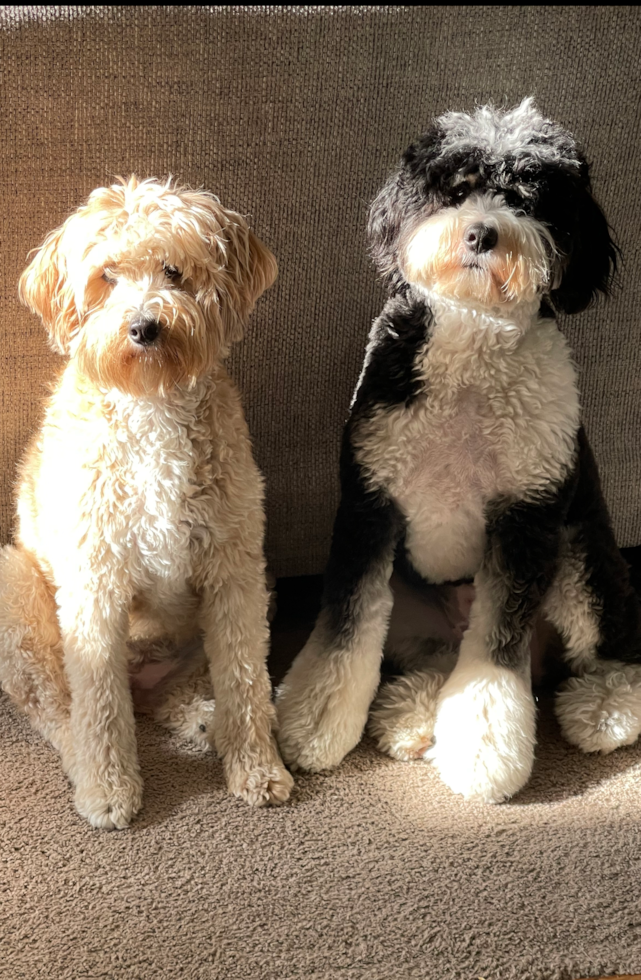
Mini Bernedoodle coat types affect more than appearance alone. Coat texture plays a major role in shedding levels, grooming needs, allergy friendliness, and overall coat maintenance. In fact, two Mini Bernedoodles can look very similar as puppies but develop completely different adult coats over time.
Most Mini Bernedoodles fall into one of three coat categories: curly, wavy, or straight. Each coat type comes with its own shedding tendencies, grooming requirements, and allergy considerations. Understanding those differences helps families set realistic expectations before bringing a puppy home.
| Coat Type | Shedding Level | Allergy Friendliness | Grooming Needs | Common Traits |
| Curly Coat | Very Low | Highest | High | Dense curls, more Poodle-like, traps loose hair and dander |
| Wavy Coat | Low to Moderate | Moderate to High | Moderate | Soft "teddy bear" look, balanced texture, more common coat type |
| Straight Coat | Moderate | Lower | Moderate to Low | More Bernese-like appearance, releases more loose hair and dander |
Curly Coat Mini Bernedoodles
Curly-coated Mini Bernedoodles are usually the most allergy-friendly and lowest-shedding of the three coat types. These coats inherit more of the Poodle’s dense curl pattern, which helps trap loose hair and dog dander within the coat instead of releasing it around the home.
This coat type is preferred by families searching for hypoallergenic dogs or lower-shedding doodle breeds. Curly coats are especially common in F1B Mini Bernedoodles because of the increased Poodle genetics.
The trade-off is maintenance. Curly coats require frequent brushing and consistent grooming because trapped hair can quickly form tangles and mats. Without regular coat care, tight curls may become difficult to manage and uncomfortable for the dog. Professional grooming every 6 to 8 weeks is common for curly-coated Mini Bernedoodles.
Wavy Coat Mini Bernedoodles
Wavy coats are considered the classic “teddy bear” Mini Bernedoodle look. They combine softer waves with a fluffy texture that falls somewhere between the Poodle’s curls and the Bernese Mountain Dog’s straighter coat.
This is one of the most common Mini Bernedoodle coat types and one of the most balanced. Wavy-coated Mini Bernedoodles usually shed less than straight-coated dogs while requiring slightly less maintenance than tighter curls. Many allergy-sensitive families find wavy coats manageable, especially when paired with regular grooming and coat maintenance.
Shedding levels can still vary quite a bit within this category. Some wavy coats behave very similarly to curly coats, while others release more loose hair depending on furnishings and overall genetics.
Straight Coat Mini Bernedoodles
Straight-coated Mini Bernedoodles inherit more characteristics from the Bernese Mountain Dog side of the mix. These coats usually have a flatter or lightly feathered appearance and are more likely to shed than curly or wavy coats.
Because straight coats release more loose hair into the environment, they are generally considered less allergy-friendly than other Mini Bernedoodle coat types. Families with moderate or severe dog allergies prefer curlier furnished coats instead.
That said, straight coats still appeal to many owners because they require less brushing and are less prone to heavy matting. Some people also prefer the more natural Bernese-like appearance that comes with straighter hair.
The important thing to remember is that coat type alone does not tell the entire story. Furnishings, genetics, and generation all influence whether a Mini Bernedoodle becomes truly low shedding or more moderate in its coat behavior over time.
Furnished vs Unfurnished Mini Bernedoodles
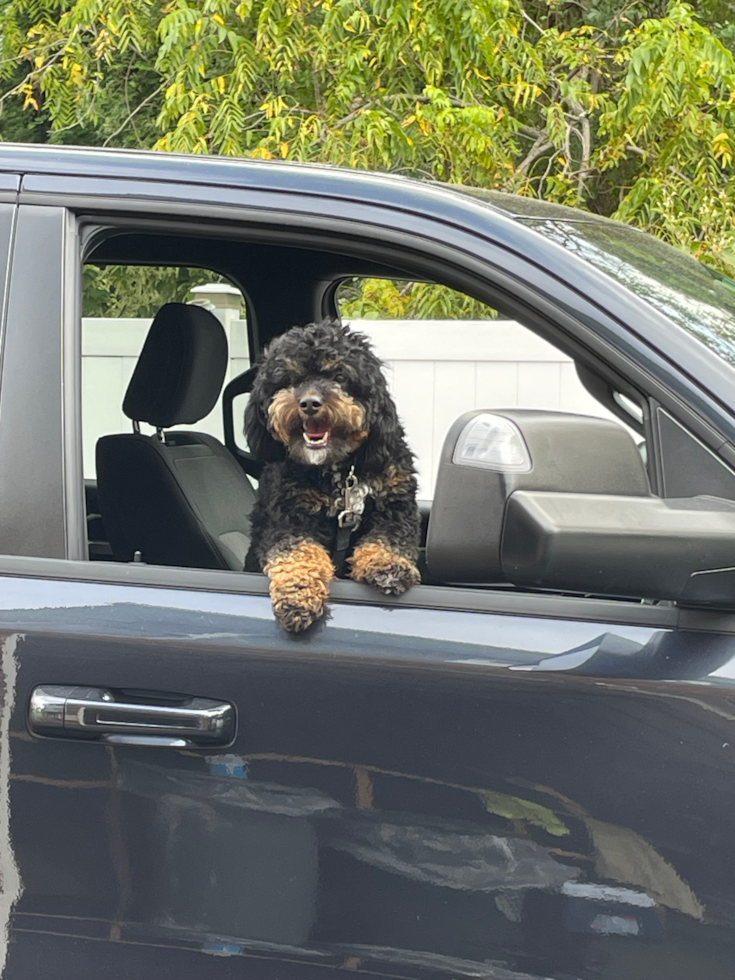
When people search for a hypoallergenic Mini Bernedoodle, they usually focus on coat texture first. Curly, wavy, or straight becomes the entire conversation. But one of the most important factors behind shedding and allergy friendliness is something barely mentioned at all: furnishings.
This is where a lot of confusion around Bernedoodles starts. Two Mini Bernedoodles can have similar-looking coats at first glance but behave very differently when it comes to shedding, dander, and allergy sensitivity because of their furnishing genetics.
In simple terms, furnishings refer to the longer facial hair traits inherited from the Poodle side of the mix. A furnished Mini Bernedoodle typically has:
- a beard or muzzle fluff
- pronounced eyebrows
- fuller facial hair
- a softer, fluffier coat texture
These traits are connected to a specific genetic pattern associated with lower shedding. Furnished coats tend to hold onto loose hair instead of releasing it freely into the environment. As a result, furnished Mini Bernedoodles are considered more allergy-friendly and lower shedding than unfurnished dogs.
Unfurnished Mini Bernedoodles usually have flatter facial hair with less beard growth and fewer pronounced eyebrows. Their coats inherit more characteristics from the Bernese Mountain Dog side of the mix, including a greater tendency to release loose hair and dog dander throughout the home.
This is where things get especially interesting and where many oversimplify the topic. Coat curl alone does not determine whether a Mini Bernedoodle is low shedding. Furnishings matter just as much, and in some cases even more.
For example, a furnished straight-coated Mini Bernedoodle may actually shed less and feel more allergy-friendly than an unfurnished curly-coated dog. That surprises many people because curly coats are automatically associated with hypoallergenic qualities online, but genetics are more nuanced than appearance alone.
Furnishing genes influence how hair behaves within the coat. Furnished coats are more likely to trap loose hair and reduce the spread of allergens around the home, while unfurnished coats release hair, dander, and debris more freely into the environment.
This also helps explain why two puppies from the same litter can develop completely different shedding patterns as they mature. One puppy may inherit stronger furnishing traits and become a noticeably lower-shedding adult, while another may develop a coat that behaves much more like the Bernese Mountain Dog side of the mix.
For allergy-sensitive families, furnishings are one of the most important details to ask about when choosing a Mini Bernedoodle puppy. They do not guarantee a completely hypoallergenic dog, but they are commonly associated with a higher likelihood of lower shedding and reduced allergen spread within the home.
Which Mini Bernedoodle Generation Is Best for Allergies?
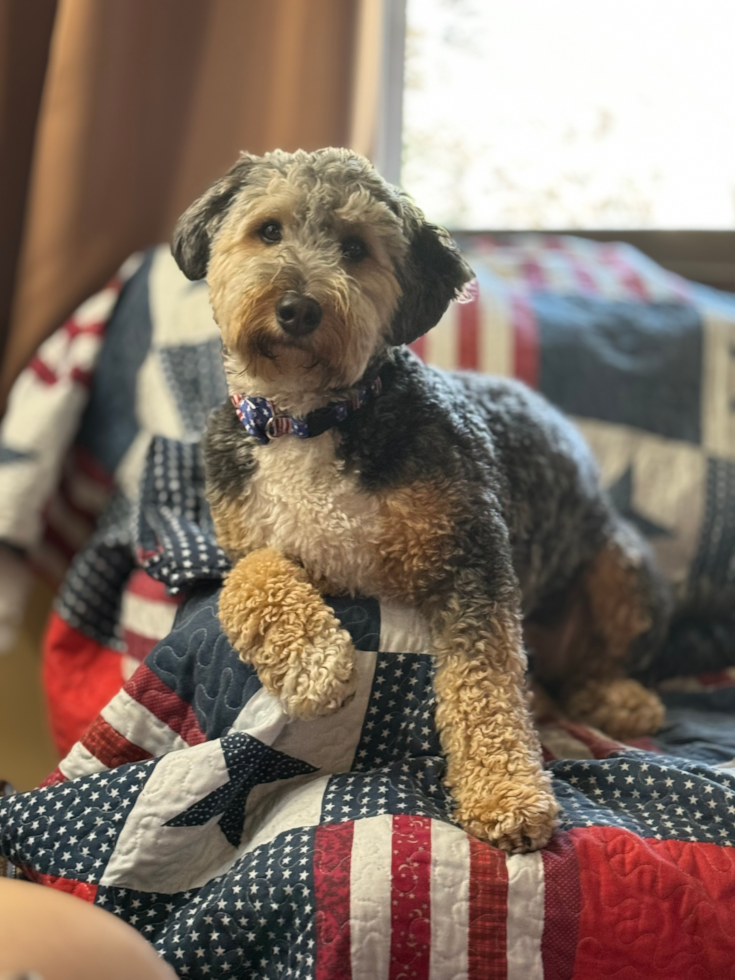
Mini Bernedoodle generation plays a major role in coat predictability, shedding tendencies, and allergy friendliness. While no generation can guarantee a completely hypoallergenic dog, some are commonly considered more reliable for families looking for lower-shedding coats and reduced allergen spread.
The reason generation matters comes down to genetics. Each generation changes the balance between Bernese Mountain Dog and Poodle traits, which directly affects coat texture, furnishings, shedding levels, and overall predictability.
F1 Mini Bernedoodle
An F1 Mini Bernedoodle is a first-generation cross between a Bernese Mountain Dog and a Poodle. This creates a 50/50 genetic mix.
F1 Mini Bernedoodles are known for their soft wavy coats and classic teddy bear appearance. Many are low shedding and can work well in allergy-sensitive homes, especially when they inherit furnished coats and stronger Poodle coat traits.
At the same time, F1 coats are usually less predictable than later generations. Because the genetic split is more balanced, puppies may inherit a wider range of coat behaviors. Some develop curlier low-shedding coats, while others inherit straighter coats with more noticeable shedding. Even puppies within the same litter can vary significantly as adults.
For this reason, F1 Mini Bernedoodles are considered moderately allergy-friendly rather than the most predictable option for severe allergy sufferers.
F1B Mini Bernedoodle
F1B Mini Bernedoodles are created by breeding an F1 Mini Bernedoodle back to a Poodle. This results in a dog that is approximately 75% Poodle and 25% Bernese Mountain Dog.
Because of the stronger Poodle influence, F1B Mini Bernedoodles are commonly considered the most reliable low-shedding and allergy-friendly generation. Their coats are more likely to be curly or heavily wavy, and they inherit stronger furnishing traits associated with reduced shedding.
This generation is frequently preferred by families with dog allergies because coat outcomes tend to be more predictable than in F1 litters. Many F1B Mini Bernedoodles release less loose hair and dog dander throughout the home, especially when paired with regular grooming and coat maintenance.
That said, genetics are never completely guaranteed. Even within F1B litters, shedding levels and allergy friendliness can still vary from dog to dog.
F2 and Multigenerational Mini Bernedoodles
F2 Mini Bernedoodles are produced by breeding two F1 Mini Bernedoodles together. Because multiple coat genetics combine at once, F2 litters can become more variable in shedding patterns, coat texture, and furnishings. Some puppies may inherit highly desirable low-shedding traits, while others may lean more heavily toward Bernese coat characteristics.
Multigenerational Mini Bernedoodles are bred over several generations with more intentional coat selection and consistency in mind. When carefully bred for furnishings, coat texture, and lower shedding tendencies, multigen Mini Bernedoodles can offer more predictable coat outcomes than earlier generations.
This is one reason many experienced breeders focus heavily on coat genetics when planning multigenerational litters. The goal is to create greater consistency in coat type, allergy friendliness, and shedding behavior over time.
For allergy-sensitive families, F1B and well-bred multigenerational Mini Bernedoodles are considered the most reliable choices. They are not completely hypoallergenic, but they usually have a higher likelihood of inheriting lower-shedding coat traits compared to more genetically variable generations.
Do Mini Bernedoodle Puppies Shed More?
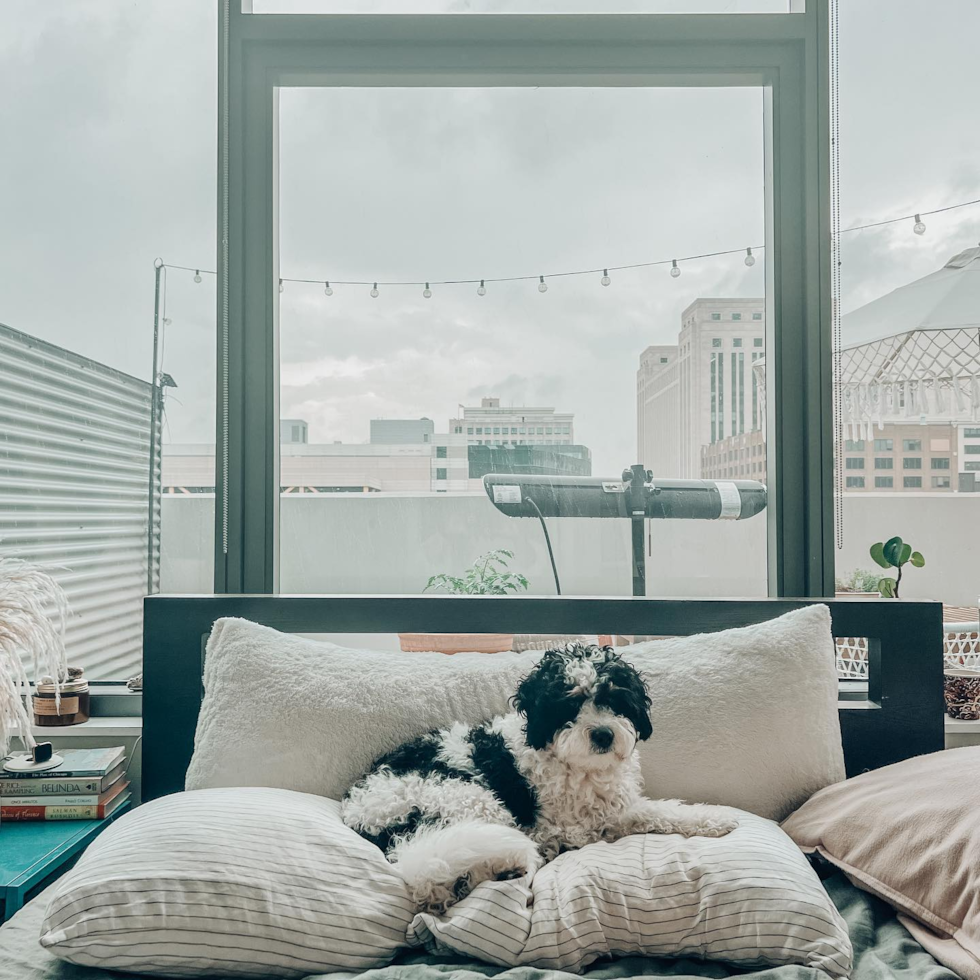
Many Mini Bernedoodle owners are surprised when their low-shedding puppy suddenly starts leaving hair around the house months later. Some even worry something is wrong with the coat or assume the dog is becoming “less hypoallergenic”. In most cases, though, what they are seeing is completely normal puppy coat transition.
Mini Bernedoodle coats change significantly during the first year of life. Between roughly 6 and 18 months of age, many puppies begin transitioning from their soft puppy coat into their mature adult coat. During this stage, temporary shedding can increase as the old coat loosens and the adult texture starts developing underneath.
This transition is especially noticeable in doodle breeds because coat genetics are more complex than in purebred dogs. A Mini Bernedoodle puppy may look very curly or fluffy at eight weeks old but develop a looser wave, tighter curls, or even straighter coat patterns as the adult coat comes in. Some coats become denser, while others release more loose hair during the transition period.
For owners who specifically chose a Mini Bernedoodle because of hypoallergenic qualities or low-shedding expectations, this stage can feel alarming. A puppy that barely shed for months may suddenly leave noticeable hair on clothing, furniture, or brushes. Online searches for things like “Why is my Mini Bernedoodle shedding?” or “Do Bernedoodles shed more as they get older?” spike during this phase.
The good news is that temporary shedding during coat transition does not necessarily predict the final adult coat. Many Mini Bernedoodles settle into lower-shedding patterns again once the mature coat fully develops. Others may end up shedding moderately depending on their genetics, furnishings, and coat type.
Curly and heavily furnished Mini Bernedoodles maintain the lowest long-term shedding levels after transition, while straighter or unfurnished coats may continue releasing more loose hair into adulthood. This is one reason coat predictability can be difficult to judge very early in puppyhood.
Regular brushing is especially important during coat transition because loose puppy hair can become trapped within the developing adult coat. Without proper grooming, this stage may lead to tangles, matting, and compacted undercoat buildup.
Understanding puppy coat transition helps set realistic expectations. Temporary shedding during adolescence is extremely common in Mini Bernedoodles and does not automatically mean a dog will become a heavy shedder long term. In many cases, it is simply part of the coat maturing process.
Why Low-Shedding Does Not Mean Low-Maintenance
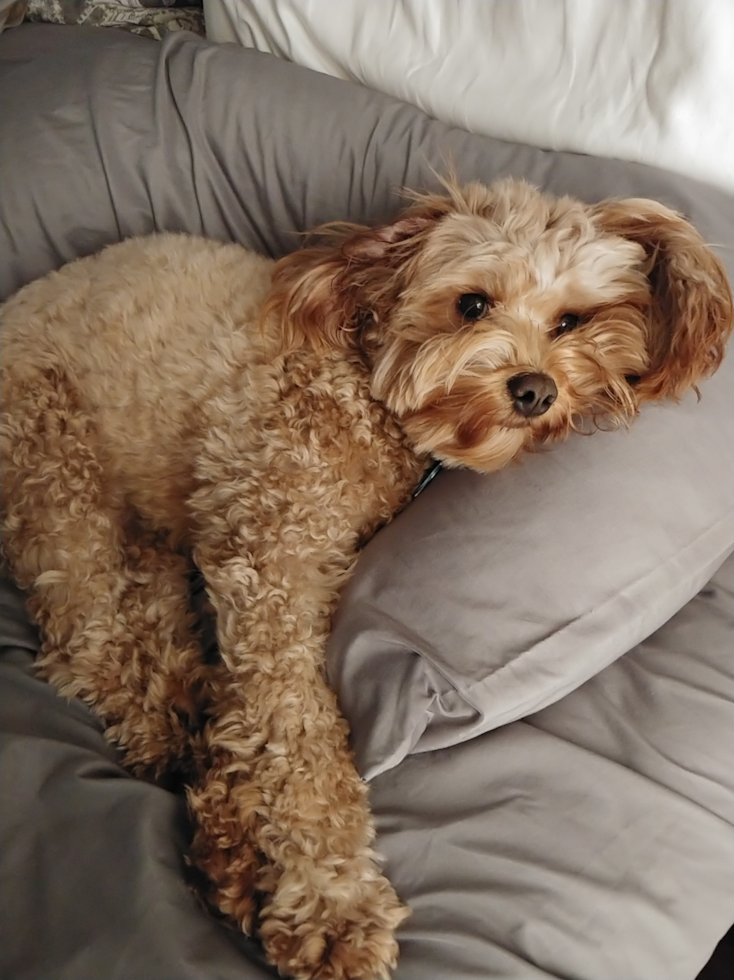
One of the biggest misconceptions about Mini Bernedoodles is that low shedding automatically means easy maintenance. In reality, the opposite is true. Many low-shedding dogs require more grooming, more brushing, and more coat care than breeds that shed heavily.
The reason comes down to how the coat handles loose hair. In high-shedding breeds, loose fur simply falls out onto floors, furniture, and clothing. In curly or wavy-coated Mini Bernedoodles, much of that loose hair becomes trapped within the coat instead of falling away naturally.
That trapped hair is one reason many Mini Bernedoodles are considered more allergy-friendly, but it also creates a new challenge: matting. Without regular brushing, loose hair tangles around surrounding curls and forms dense knots close to the skin. Over time, mats can tighten, trap moisture and debris, restrict airflow to the skin, and become uncomfortable for the dog.
Curly-coated Mini Bernedoodles usually require the most maintenance because dense curls hold onto loose hair more aggressively. Wavy coats require moderate upkeep, while straighter coats may need less brushing overall but can shed more around the home.
For most Mini Bernedoodles, brushing several times per week is considered essential. Curly coats may need daily brushing in high-friction areas such as behind the ears, around the collar, under the legs, and near the tail where tangles form quickly. A slicker brush combined with a metal comb is recommended to reach through the dense coat layers effectively.
Professional grooming is also an important part of Mini Bernedoodle coat care. Many owners schedule grooming appointments every 6 to 8 weeks to maintain coat length, reduce matting risk, and keep the coat manageable. Longer coats usually require more frequent brushing between appointments.
Ear care is another area many first-time owners underestimate. Mini Bernedoodles inherit floppy ears with dense hair around the ear canal, which can trap moisture and reduce airflow. Routine ear cleaning helps lower the risk of irritation, wax buildup, and ear infections, especially after baths or swimming.
Skin care matters too. Dry skin, irritation, or poor coat condition may increase shedding and dander levels over time. Proper nutrition, gentle bathing routines, coat-safe shampoos, and consistent grooming all help support healthier skin and coat function.
This is really the trade-off many allergy-sensitive families make with low-shedding dogs. Less hair around the home usually means more maintenance behind the scenes. And that is not necessarily a bad thing. Many owners prefer regular grooming over constant vacuuming and heavy seasonal shedding. But it is important to understand that “low shedding” and “low maintenance” are not the same thing.
How to Reduce Mini Bernedoodle Allergens at Home
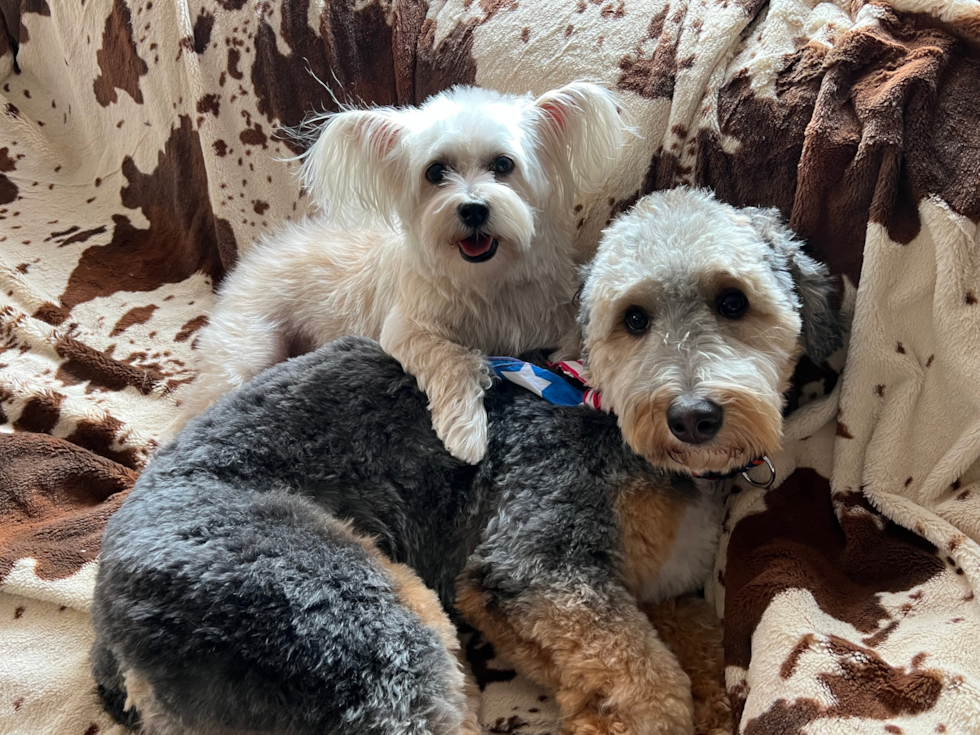
Even low-shedding Mini Bernedoodles still produce allergens, which means home care plays a major role in how allergy-friendly the environment feels day to day. For many families, the difference between manageable allergies and constant irritation comes down to grooming habits, cleaning routines, and indoor air quality rather than the dog alone.
The good news is that there are several practical ways to reduce dog dander, loose hair, and airborne allergens inside the home without compromising the bond between owner and dog.
Regular grooming is one of the most effective places to start. Frequent brushing helps remove trapped loose hair, dander, and debris before they spread throughout the environment. For curly or heavily furnished Mini Bernedoodles, brushing several times per week is usually recommended to keep the coat cleaner and reduce buildup near the skin.
Bathing also helps reduce allergen levels over time. Gentle baths remove dander, saliva residue, outdoor allergens, and oils that collect within the coat. Most Mini Bernedoodles benefit from bathing every 4 to 6 weeks, though highly active dogs or allergy-sensitive homes may prefer more frequent coat maintenance using mild dog-safe shampoos designed for sensitive skin.
Indoor air quality matters more than many people realize. HEPA air purifiers can help reduce airborne dog dander and fine allergen particles throughout the home, especially in bedrooms and living spaces where the dog spends the most time. Good air circulation and clean ventilation systems also help prevent allergens from lingering indoors.
Vacuuming frequently becomes especially important with carpet, rugs, and upholstered furniture because dander and hair settle into soft surfaces quickly. Vacuum cleaners equipped with HEPA filtration are preferred for allergy-sensitive households because they trap smaller allergen particles more effectively instead of redistributing them into the air.
Washing bedding regularly can make a noticeable difference too. Dog beds, blankets, couch covers, and even human bedding collect dander over time. Keeping these fabrics clean helps reduce allergen buildup throughout the home.
Simple habits like washing hands after playtime or avoiding face contact can also help minimize reactions for some allergy sufferers. Families with more severe dog allergies sometimes choose to keep dogs out of bedrooms entirely since reducing overnight allergen exposure may improve sleep quality and overall symptom control.
None of these steps create a completely allergen-free home, but together they can significantly reduce the amount of loose hair and dog dander circulating indoors. For many allergy-sensitive families, a combination of regular grooming, coat maintenance, and cleaner indoor air makes living with a Mini Bernedoodle much more comfortable long term.
Are Mini Bernedoodles Good for People With Allergies?
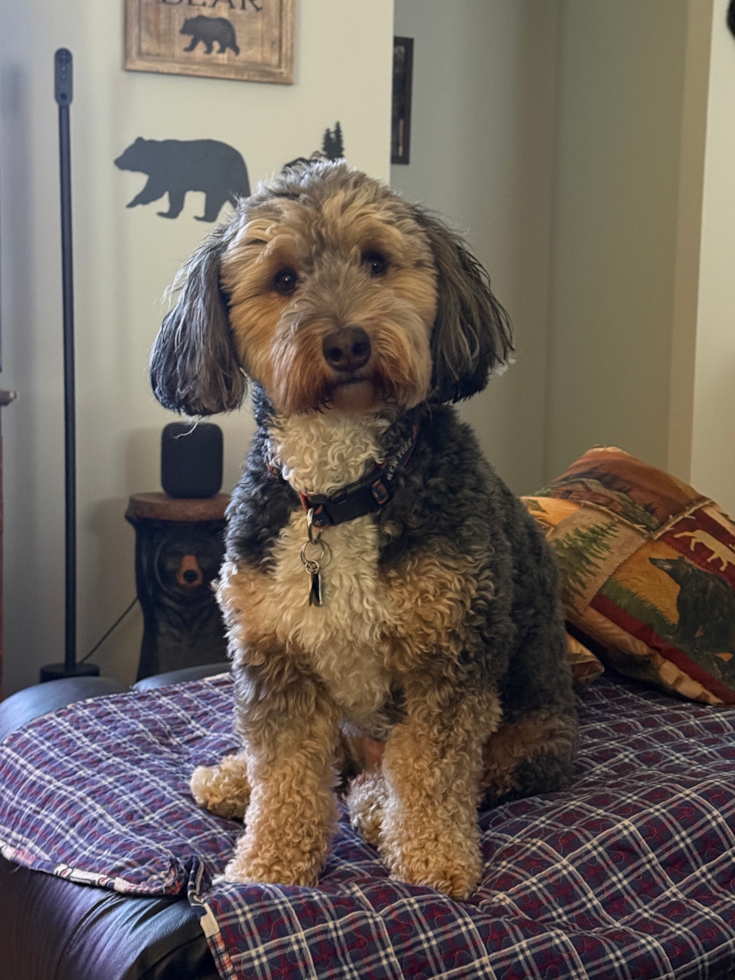
For many allergy-sensitive families, Mini Bernedoodles can be a very good fit. Their lower-shedding coats, especially in furnished F1B and multigenerational Mini Bernedoodles, release less loose hair and dog dander into the home compared to traditional heavy-shedding breeds. As a result, many people with mild or moderate dog allergies live comfortably with Mini Bernedoodles and experience far fewer issues than they expected.
That said, there is no universal answer because dog allergies are highly personal. Some people react strongly to even small amounts of dander or saliva proteins, while others tolerate low-shedding dogs with little difficulty. Two people with “dog allergies” may have completely different experiences around the same Mini Bernedoodle.
This is one reason that matters so much when discussing hypoallergenic qualities. Mini Bernedoodles are commonly considered more allergy-friendly than other breeds, but they are not completely allergen-free dogs. Furnished coats, curlier textures, and stronger Poodle genetics can increase the likelihood of lower shedding, but they cannot eliminate allergens entirely.
For families with more severe allergies, spending time around adult Mini Bernedoodles beforehand can be extremely helpful. Meeting mature dogs with similar coat types and genetics may provide a more realistic idea of how someone will react long term. This tends to be much more useful than relying on puppy photos or broad marketing claims alone.
Many experienced owners also find that consistent grooming, clean indoor air, and regular coat maintenance make a major difference in day-to-day comfort. Sometimes the environment around the dog matters just as much as the dog itself.
Mini Bernedoodles are considered one of the better options for allergy-sensitive homes because of their potential for lower shedding and reduced dander spread. For the right person, especially with a furnished F1B or well-bred multigenerational Mini Bernedoodle, they can absolutely become a comfortable and deeply rewarding companion.
Conclusion
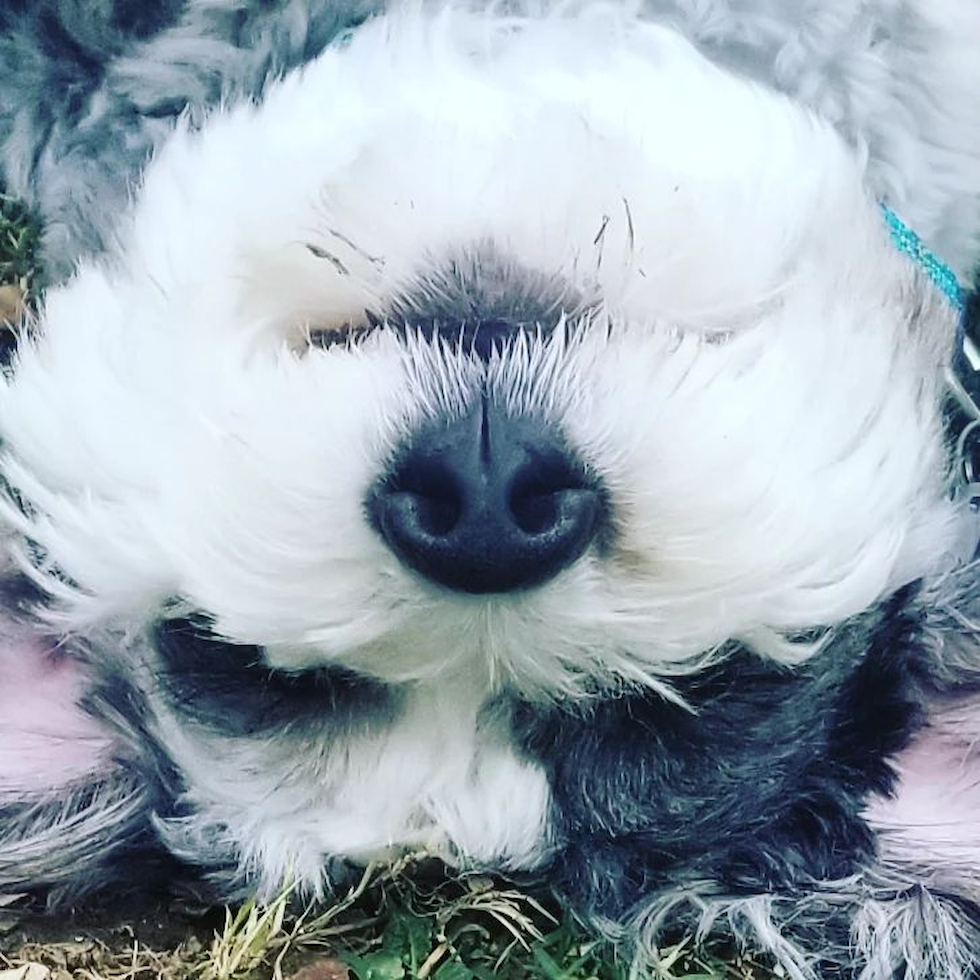
Mini Bernedoodles are described as hypoallergenic dogs, but the reality is more nuanced than a simple yes or no answer. Some Mini Bernedoodles shed very little and work extremely well in allergy-sensitive homes, while others may release more loose hair and dander depending on their coat genetics, furnishings, and generation.
That variation is exactly why understanding the breed matters so much. Coat type alone does not tell the full story. Furnishings, Poodle influence, shedding tendencies, grooming routines, and even puppy coat transitions all play an important role in how allergy-friendly a Mini Bernedoodle may feel in everyday life.
For those looking for Mini Bernedoodles, the breed can offer a very good balance between companionship, lower shedding, and manageable allergen levels. At the same time, realistic expectations remain important because no dog is completely hypoallergenic.
Elena R.
About The Author
Elena is a leading expert in the field of dog behavior, care, and training, with over a decade of experience in writing about dogs. As a published writer and lifelong dog enthusiast, Elena currently shares her home with three beloved canine companions. She is dedicated to staying up to date on the latest advancements in dog care and training, ensuring that her articles provide readers with accurate and valuable insights. With her extensive knowledge and passion for all things canine, Elena's contributions to the Premier Pups community offer both expertise and authority on a wide range of dog-related topics.
What To Read Next
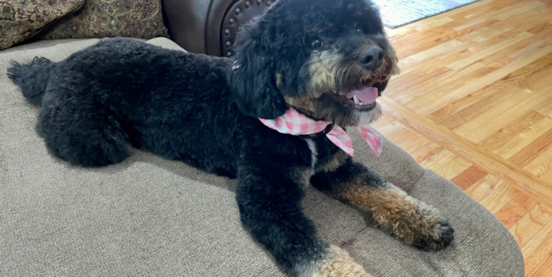
Do Mini Bernedoodles Shed? Coat Types and Allergies Explained
One of the biggest reasons people fall in love with Mini Bernedoodles is the coat. The fluffy teddy bear look, the soft waves, the expressive face covered in shaggy fur that somehow makes even basic eye contact feel emotionally manipulative. It’s part of... Read More
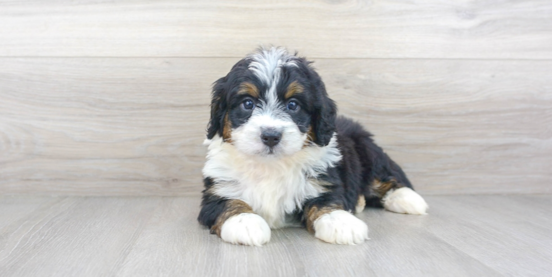
All Mini Bernedoodle Generations: F1, F1B, F2, Multigen & More
Mini Bernedoodle generations confuse almost everyone at first. One minute you’re researching adorable fluffy puppies, and the next you’re staring at terms like F1, F1B, F2, F1BB, multigen, and F3 trying to figure out whether you’re choosing a... Read More
Frequently Asked Questions
Are Mini Bernedoodles completely hypoallergenic? No, Mini Bernedoodles are not completely hypoallergenic. No dog breed is entirely allergen-free because all dogs produce proteins found in dander, saliva, and skin cells that may trigger allergies. However, many Mini Bernedoodles are considered more allergy-friendly because their coats often shed less and release fewer allergens into the environment compared to heavy-shedding breeds.
Which Mini Bernedoodle sheds the least? Furnished F1B and carefully bred multigenerational Mini Bernedoodles are commonly considered the lowest-shedding options. Curly-coated dogs with strong Poodle genetics usually trap more loose hair within the coat instead of releasing it around the home. Coat genetics and furnishings often matter more than appearance alone.
Are F1B Mini Bernedoodles better for allergies? F1B Mini Bernedoodles are often preferred for allergy-sensitive homes because they inherit a higher percentage of Poodle genetics. Their coats are more likely to be curly, furnished, and lower shedding compared to some other generations. While they are commonly considered more allergy-friendly, individual reactions can still vary from person to person.
Do Mini Bernedoodles shed year-round? Most Mini Bernedoodles shed less than traditional double-coated breeds, but some shedding can still occur throughout the year. Shedding levels depend on coat type, furnishings, genetics, grooming habits, and seasonal coat changes. Straighter coats usually shed more than curly or heavily furnished coats.
What coat type is best for allergies? Curly furnished coats are generally considered the most allergy-friendly because they tend to trap loose hair and dander more effectively. Wavy coats can also work well for many families. Straight coats usually release more loose hair into the environment and may be less suitable for people with moderate or severe dog allergies.
Do straight-coated Mini Bernedoodles shed more? Yes, straight-coated Mini Bernedoodles usually shed more than curly or wavy-coated dogs. These coats often inherit more traits from the Bernese Mountain Dog side of the mix, including a greater tendency to release loose hair and dog dander around the home.
What does furnished mean in Bernedoodles? Furnishings refer to the longer facial hair traits commonly inherited from the Poodle side of the mix. Furnished Mini Bernedoodles typically have fuller facial hair, pronounced eyebrows, and beard-like muzzle fluff. These coat genetics are strongly associated with lower shedding and greater allergy friendliness.
Do Mini Bernedoodle puppies shed more during coat transition? Yes, many Mini Bernedoodle puppies experience temporary shedding increases during coat transition between roughly 6 and 18 months of age. During this stage, the soft puppy coat begins changing into the mature adult coat. Temporary shedding during this period is common and does not always predict long-term shedding levels.
Are Mini Bernedoodles better for allergies than Goldendoodles? It depends on the individual dog and coat genetics. Many people consider Mini Bernedoodles and Goldendoodles similarly allergy-friendly when they inherit curly furnished coats and strong Poodle traits. However, Mini Bernedoodles may have slightly more coat variability because of the Bernese Mountain Dog’s heavier shedding genetics.
How often should Mini Bernedoodles be groomed? Most Mini Bernedoodles benefit from brushing several times per week and professional grooming every 6 to 8 weeks. Curly coats often require more frequent brushing to prevent matting, while straighter coats may need less maintenance but can shed more around the home. Regular grooming also helps reduce loose hair and dander buildup.
Can allergy sufferers live comfortably with a Mini Bernedoodle? Many allergy sufferers live comfortably with Mini Bernedoodles, especially lower-shedding furnished F1B or multigenerational dogs. Individual sensitivity still plays a major role, though. Spending time around adult Mini Bernedoodles beforehand may help determine whether the breed is a good fit for a particular household.
Do Mini Bernedoodles produce less dander? Mini Bernedoodles do not necessarily produce less dander than all other dogs, but lower-shedding coats may help reduce how much dander spreads throughout the home. Curly and furnished coats often trap loose hair and dander more effectively, which can make allergens easier to manage for some families.