





Published Wednesday, July 15, 2026 by Elena R. in New Puppy, Popular Dogs
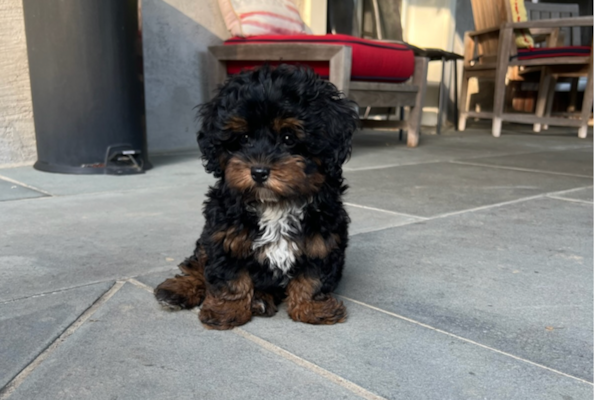
F1B Mini Bernedoodles are considered the “sweet spot” of the Bernedoodle world, especially for families who are searching for a dog with a lower-shedding coat and a more predictable doodle appearance. The “F1B” label simply means the puppy comes from an F1 Mini Bernedoodle bred back to a Mini Poodle. That extra Poodle influence plays a major role in the coat, shedding levels, and consistency many people associate with this generation.
For a lot of future owners, coat predictability matters more than they initially expect. Some families are dealing with allergies. Others simply do not want large amounts of hair around the house. And many people just love the fluffy teddy bear look that curlier Bernedoodles have. F1B Mini Bernedoodles are especially popular because they deliver more consistently in those areas compared to other Bernedoodlegenerations.
At the same time, there’s a side of F1B ownership that many gloss over far too quickly. Lower shedding does not mean low maintenance. In fact, F1B Mini Bernedoodles require even more grooming than other generations because loose hair is trapped within the coat instead of falling out naturally. The result is less hair on the couch, but usually more brushing, more grooming appointments, and a much higher chance of matting if coat care slips for even a little while.
Beyond the coat, though, the F1B Mini Bernedoodle personality is a huge reason families fall in love with this generation so quickly. These dogs are affectionate, playful, emotionally connected, and highly people-oriented. Many seem completely convinced they should be included in every part of daily life, whether that means joining a family movie night or supervising someone while they fold laundry for absolutely no reason.
In this guide, we’ll cover everything you need to know about the F1B Mini Bernedoodle, including size, shedding, coat types, grooming needs, temperament, trainability, and how this generation compares to F1 and F2 Mini Bernedoodles. Whether you’re searching for a more allergy-friendly companion or simply trying to understand why F1B Mini Bernedoodles became one of the most sought-after doodle generations, this guide will help you know what to expect before bringing one home.
Table of Contents
- What Is an F1B Mini Bernedoodle?
- F1B Mini Bernedoodle Size & Weight
- F1B Mini Bernedoodle Coat Types
- Do F1B Mini Bernedoodles Shed?
- Are F1B Mini Bernedoodles Hypoallergenic?
- F1B Mini Bernedoodle Temperament
- Are F1B Mini Bernedoodles Easy to Train?
- Grooming & Maintenance Requirements
- F1 vs F1B vs F2 Mini Bernedoodle
- Who Is an F1B Mini Bernedoodle Best For?
- Final Thoughts
What Is an F1B Mini Bernedoodle?
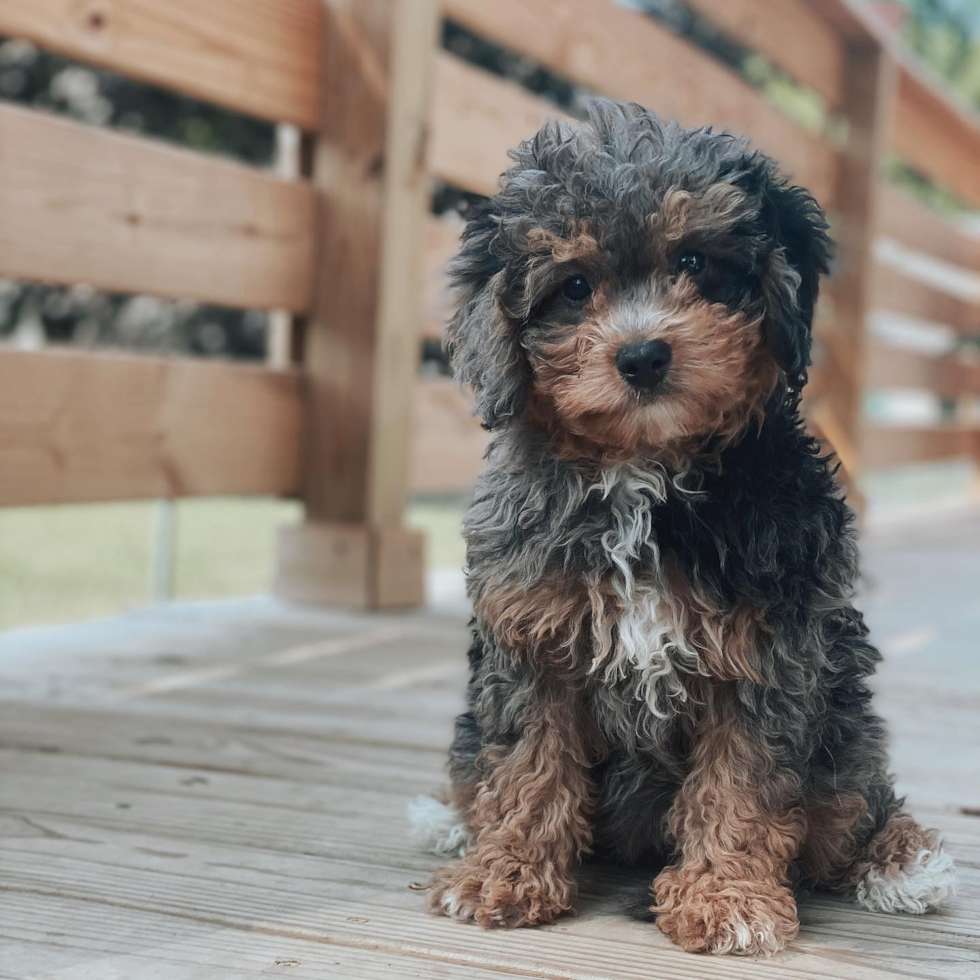
An F1B Mini Bernedoodle is created by breeding an F1 Mini Bernedoodle back to a Mini Poodle. The “B” in F1B stands for backcross, which simply means one parent is a first-generation Bernedoodle while the other is a purebred Poodle.
This pairing changes the genetic balance quite a bit compared to a standard F1 Mini Bernedoodle. While an F1 Mini Bernedoodle is typically a 50/50 mix between a Bernese Mountain Dog and a Mini Poodle, an F1B Mini Bernedoodle usually carries around 75% Poodle genetics and 25% Bernese Mountain Dog genetics. That extra Poodle influence is the main reason this generation tends to have curlier coats, lower shedding levels, and a more predictable doodle appearance. And predictability is a huge reason so many families specifically search for F1B Mini Bernedoodles instead of just “Mini Bernedoodles”.
With other Bernedoodle generations, coat outcomes can vary quite a bit from one puppy to another. One may inherit a loose wavy coat with minimal shedding, while another may develop a straighter coat that sheds more noticeably throughout the year. F1B Mini Bernedoodles are usually more consistent because the additional Poodle genetics strengthen the traits most doodle owners are hoping for, particularly curlier coats and lower shedding potential.
That does not mean every F1B Mini Bernedoodle looks identical or sheds exactly the same. Genetics still vary, and coat type can still fall somewhere between soft waves and tighter curls. But compared to F1 and F2 Bernedoodles, the F1B generation generally offers a much narrower range of outcomes when it comes to coat texture and shedding tendencies.
This is also why F1B Mini Bernedoodles are recommended for families who are looking for a more allergy-friendly doodle. The stronger Poodle influence usually leads to denser furnished coats that trap more loose hair instead of releasing it throughout the home. Of course, that lower shedding comes with its own tradeoff, which is grooming. A lot of grooming. We’ll get to that part soon enough.
RELATED: Mini Bernedoodle Pros and Cons
F1B Mini Bernedoodle Size & Weight
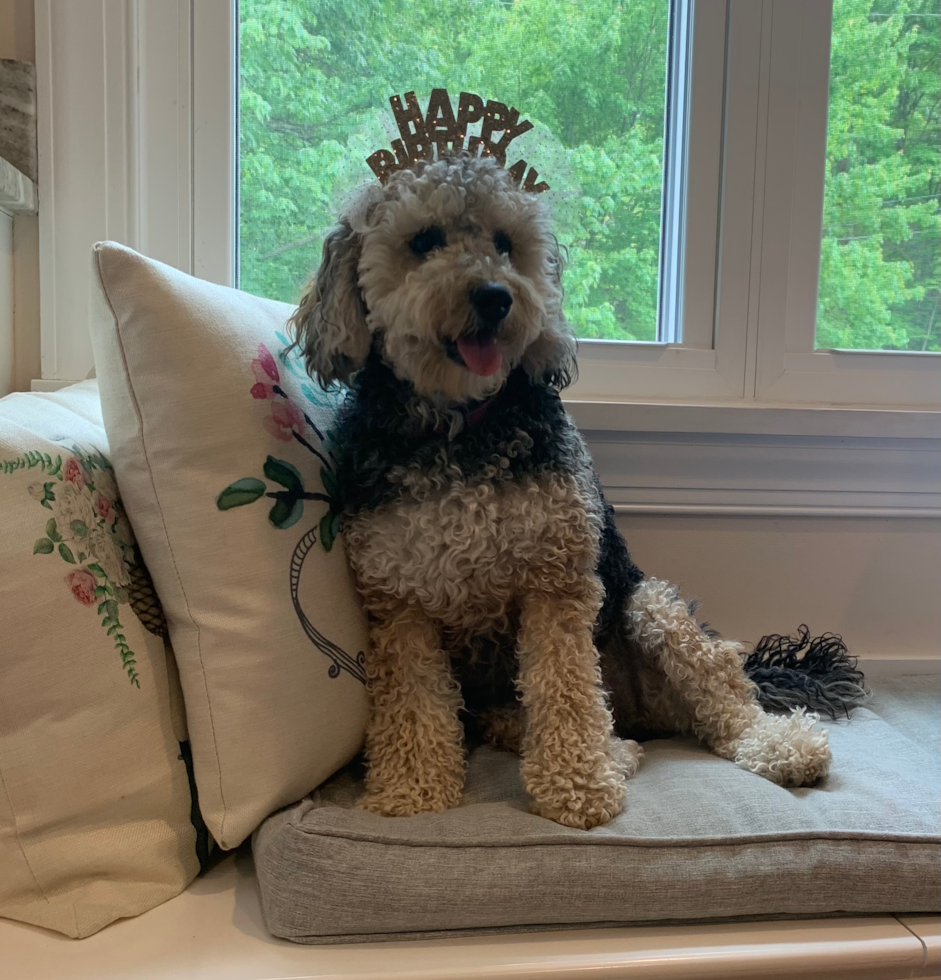
F1B Mini Bernedoodles are usually medium-sized dogs with a compact but sturdy build. Most fully grown adults stand between 18 and 22 inches tall and weigh somewhere between 25 and 50 pounds, though individual size can still vary depending on genetics and parent lines.
Because this generation carries a stronger percentage of Mini Poodle genetics, many F1B Mini Bernedoodles end up slightly leaner and more refined in structure compared to F1 Bernedoodles that inherit a heavier Bernese frame. At the same time, they still keep the soft expression, fluffy coat, and affectionate personality people love about Bernedoodles.
Male F1B Mini Bernedoodles are usually a bit taller and heavier than females, though the difference is moderate rather than dramatic.
| Gender | Height | Weight |
| Male F1B Mini Bernedoodle | 20–22 inches | 35–50 pounds |
| Female F1B Mini Bernedoodle | 18–21 inches | 25–45 pounds |
Size variation comes down to the parents themselves, especially the size of the Mini Poodle used in the pairing. Some breeders work toward smaller and more compact Bernedoodles, while others prefer a sturdier build that keeps more of the Bernese Mountain Dog presence.
Most F1B Mini Bernedoodles grow quickly during the first year and reach close to their adult height by around 10 to 12 months old. After that, they usually continue filling out and developing muscle until roughly 18 months of age. This is also the stage where many suddenly develop those long doodle legs that somehow make them look both elegant and deeply awkward at the exact same time. It’s a very real phase.
F1B Mini Bernedoodle Coat Types
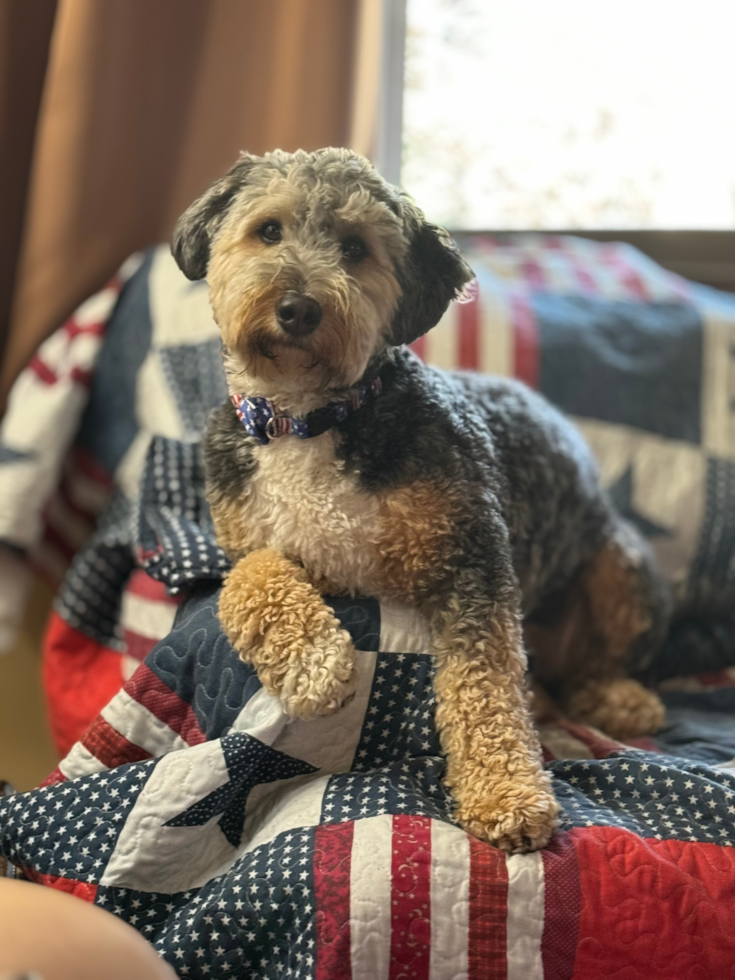
The coat is one of the defining features of the F1B Mini Bernedoodle and probably the biggest reason this generation became so popular in the first place. Thanks to the stronger Poodle influence, F1B Mini Bernedoodles usually inherit curlier, denser, and more furnished coats compared to F1 or F2 Bernedoodles.
Most F1B Mini Bernedoodles fall somewhere between wavy and curly, though the exact texture can still vary from one dog to another. Some develop loose, plush waves that create a softer teddy bear look, while others inherit tighter curls that appear much more Poodle-like. Straight coats are far less common in this generation because the additional Poodle genetics strengthen the curl and furnishing traits associated with lower shedding.
Curly-coated F1B Mini Bernedoodles are usually the most allergy friendly and the lowest shedding, but they also require the most maintenance. Their dense coats trap loose hair rather than releasing it naturally, which means regular brushing is essential to prevent tangles and matting from forming close to the skin.
Wavy coats land somewhere in the middle. Many owners love this texture because it combines a softer, fluffier appearance with slightly easier maintenance compared to tighter curls. Wavy-coated F1B Mini Bernedoodles can still mat if brushing is neglected, but the coat sometimes feels a bit more forgiving.
Coat density also plays a major role in maintenance. Some F1B Mini Bernedoodles inherit extremely thick coats that become surprisingly high maintenance once the adult coat fully develops. Others have a lighter, airier texture that is easier to manage day to day. Even within the same generation, coat density can vary more than people expect.
Furnishings are another important piece of the puzzle. This term refers to the longer facial hair and fluffy features commonly associated with doodles, including the beard, eyebrows, and softer facial expression. F1B Mini Bernedoodles usually inherit strong furnishings because of the increased Poodle genetics, which contributes to both the classic doodle appearance and the lower shedding reputation this generation is known for.
Do F1B Mini Bernedoodles Shed?
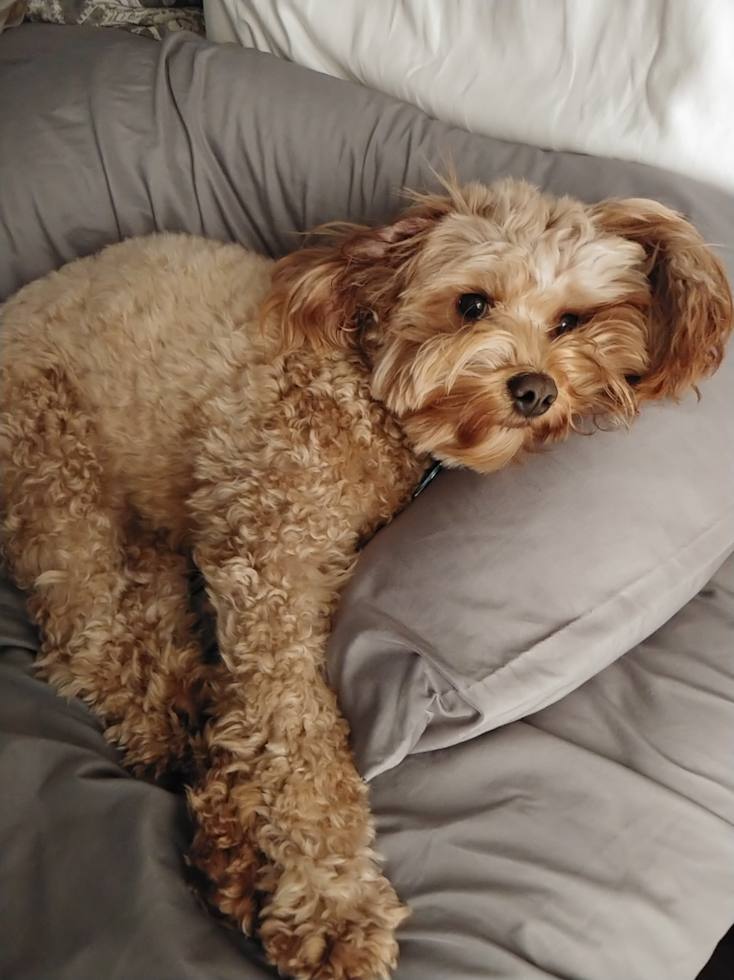
F1B Mini Bernedoodles are widely known for being one of the lower-shedding Bernedoodle generations, and in many cases, that reputation is deserved. Thanks to their stronger Poodle genetics, most F1B Mini Bernedoodles shed significantly less than F1 or F2 Bernedoodles. That lower shedding is one of the main reasons this generation became so popular with allergy-sensitive families and owners who simply do not want dog hair covering every surface in the house.
The reason F1B Mini Bernedoodles usually shed less comes down largely to coat genetics and furnishings. Because this generation is typically around 75% Poodle, many inherit the dense, curly, furnished coats associated with lower shedding breeds.
Lower shedding does not necessarily mean the dog is losing less hair. In many cases, the hair is simply trapped within the curls and waves rather than falling onto furniture, clothing, or floors. That’s why brushing matters so much with F1B Mini Bernedoodles. Without regular grooming, trapped hair can quickly turn into tangles and mats hidden beneath the surface of the coat.
Compared to F1 and F2 Mini Bernedoodles, F1Bs are generally much more predictable when it comes to shedding. F1 Bernedoodles show a wider mix of coat traits because they inherit an even 50/50 balance of Bernese Mountain Dog and Poodle genetics. F2 Bernedoodles can vary even more because both parents already carry mixed traits. F1B Mini Bernedoodles usually land closer to the lower-shedding side of the spectrum because the additional Poodle influence strengthens those coat characteristics.
That said, the idea that F1B Mini Bernedoodles are completely “non-shedding” is not entirely accurate. No Bernedoodle generation is truly shed-free. Some F1B Mini Bernedoodles still lose small amounts of hair throughout the year, especially dogs with looser wavy coats rather than tight curls. Seasonal shedding can also happen, though it is lighter and less noticeable compared to heavier-shedding breeds.
Owners are sometimes surprised by this because the internet tends to treat doodles as magical zero-maintenance unicorn dogs that somehow never shed, never smell, and wake up already professionally groomed. Real life tends to be a little different. Most F1B Mini Bernedoodles shed less than other dogs, but regular brushing, grooming, and coat care are essential parts of keeping that beautiful coat healthy and manageable.
RELATED: Do Mini Bernedoodles Shed? Coat Types and Allergies Explained
Are F1B Mini Bernedoodles Hypoallergenic?
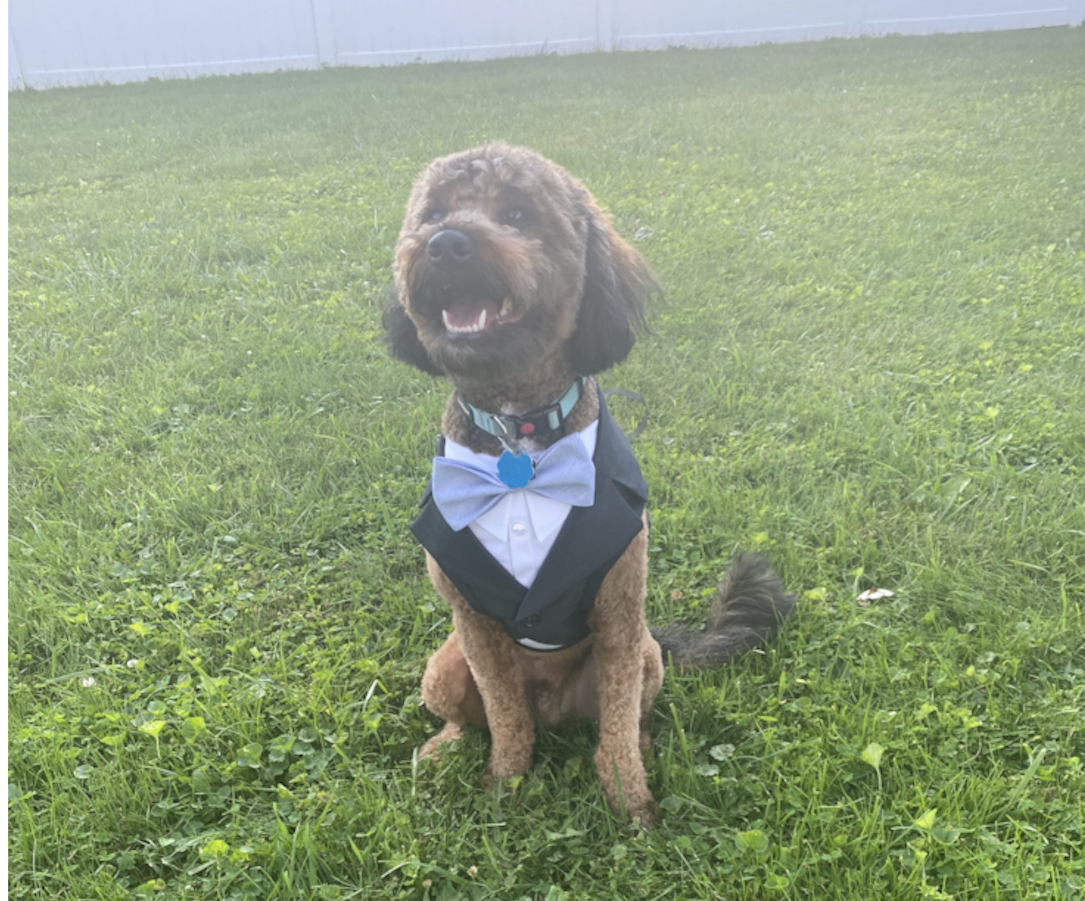
F1B Mini Bernedoodles are considered one of the more allergy-friendly Bernedoodle generations, but it’s important to understand what that realistically means. No dog is truly 100% hypoallergenic, including F1B Mini Bernedoodles. Even dogs that shed very little still produce allergens through dander, saliva, and skin oils.
What makes F1B Mini Bernedoodles more suitable for allergy-sensitive households is their lower-shedding coat. Because they inherit a stronger percentage of Poodle genetics, most develop curlier or denser furnished coats that release less loose hair and dander into the environment. For some allergy sufferers, that reduction can make a noticeable difference.
Coat type plays a major role here. Curly-coated F1B Mini Bernedoodles are usually considered the most allergy friendly because they trap more loose hair within the coat itself. Wavy coats can also work well for many families, though they sometimes release slightly more hair depending on texture and density.
Still, allergy responses vary a lot from person to person. One individual may live comfortably with an F1B Mini Bernedoodle, while another still experiences symptoms despite the dog having a low-shedding coat. That unpredictability is one reason responsible breeders avoid guaranteeing that any puppy will be completely hypoallergenic. Genetics can influence shedding tendencies, but human allergy responses are much harder to predict with certainty.
Regular grooming also affects allergy management more than many realize. Brushing, bathing, coat maintenance, and keeping the home clean can help reduce dander buildup over time. Neglected coats trap debris, loose hair, and allergens more easily, especially in dense curly coats.
For families with moderate or severe allergies, spending time around the breed before committing is usually the smartest approach. Some people do perfectly well with F1B Mini Bernedoodles. Others discover they still react despite the lower shedding reputation. It’s one of those situations where realistic expectations matter a lot more than internet buzzwords.
RELATED: Are Mini Bernedoodles Hypoallergenic? Shedding, Allergies & More
F1B Mini Bernedoodle Temperament
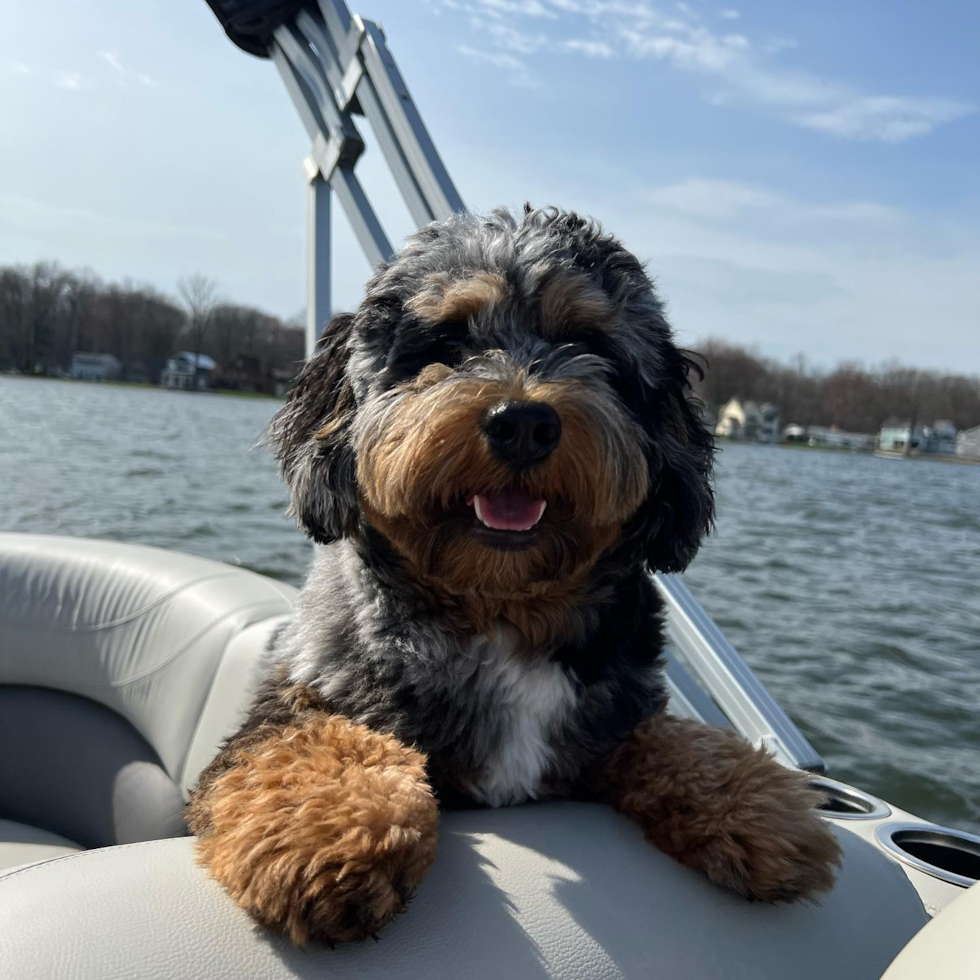
F1B Mini Bernedoodles are known for having affectionate, playful, and deeply people-oriented personalities. Most thrive on interaction and naturally want to stay close to their families throughout the day. They are the kind of dogs that follow their favorite person from room to room with complete confidence that their supervision is both necessary and appreciated.
One of the reasons this generation is so loved is the balance it creates between intelligence and emotional warmth. The stronger Poodle influence usually contributes a high level of trainability and mental sharpness, while the Bernese Mountain Dog side helps preserve the gentle and affectionate temperament Bernedoodles are known for.
Many owners describe F1B Mini Bernedoodles as emotionally intelligent dogs, and that description feels surprisingly accurate once you spend time around them. They pick up on routines, moods, energy shifts, and emotional patterns within the household very quickly. Some seem to instinctively know when someone wants to play, when someone feels stressed, or when it’s the perfect moment to quietly curl up beside their person on the couch.
Socially, F1B Mini Bernedoodles usually do very well with families, children, and other pets when properly socialized from a young age. Their playful side stays strong well into adulthood, though most gradually settle into a calmer rhythm as they mature. They typically enjoy being involved in daily activities and rarely like feeling excluded from whatever is happening around them.
At the same time, their strong attachment to people can sometimes create clinginess or separation sensitivity if independence is not encouraged early on. Dogs that become overly dependent on constant attention may struggle when left alone for longer periods. Some express that stress through barking, pacing, chewing, or other anxious behaviors.
Mental stimulation also matters quite a bit with this generation. F1B Mini Bernedoodles are intelligent dogs that need more than short walks and a few toys tossed around the living room. Training sessions, puzzle toys, interactive play, and regular engagement help keep their minds occupied and their energy balanced. Without enough stimulation, many become bored surprisingly fast, and bored doodles become extremely creative in ways owners usually regret later.
RELATED: Are Mini Bernedoodles Good Family Dogs? What Life Really Looks Like
Are F1B Mini Bernedoodles Easy to Train?
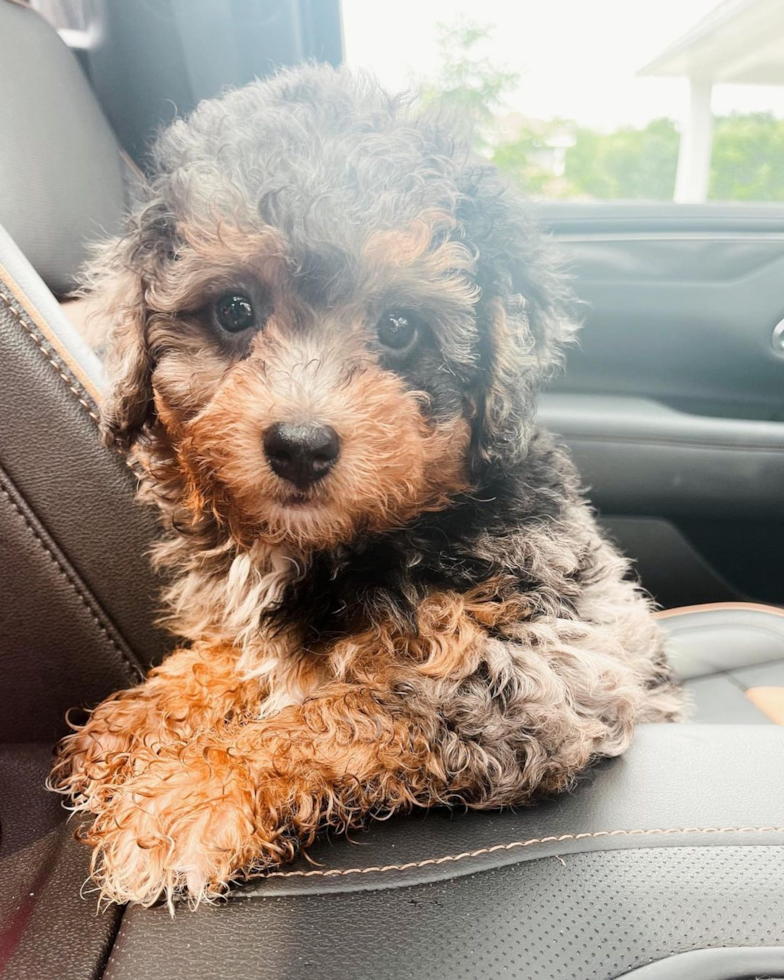
F1B Mini Bernedoodles are considered highly trainable dogs, and a big part of that comes from their combination of intelligence and emotional responsiveness. They learn quickly, pay close attention to their people, and genuinely enjoy interaction, which makes training feel less like a battle and more like an ongoing conversation most of the time.
The stronger Poodle influence in this generation shows up clearly during training. Many F1B Mini Bernedoodles pick up commands fast, notice patterns quickly, and start connecting routines surprisingly early. Some owners joke that their puppy learned exactly where the treat drawer was located before fully understanding basic obedience commands, which feels pretty believable once you spend enough time around doodles.
At the same time, intelligence can sometimes create its own challenges. F1B Mini Bernedoodles are smart enough to recognize inconsistency very quickly. If a rule changes depending on the day, they usually notice. If begging at the table works once, they remember. If jumping gets attention from guests, they decide it’s now part of their official greeting routine forever. They learn habits fast, including the ones owners never intended to teach.
That’s why consistency matters so much with this breed. Clear expectations, repetition, and structure produce the best results. Positive reinforcement tends to work especially well because F1B Mini Bernedoodles are sensitive dogs that respond far better to encouragement than harsh correction. Praise, treats, play, and engagement create faster progress than strict training methods.
Potty training is manageable when routines are predictable. Frequent bathroom breaks, crate training, and consistency during the first several months help puppies settle into a routine fairly quickly. Like many intelligent breeds, they understand what owners want long before they fully develop the impulse control to follow through every single time.
Leash training can take patience, especially during adolescence when curiosity levels suddenly seem to triple overnight. Many F1B Mini Bernedoodles become enthusiastic greeters, determined sniff investigators, or dramatic leaf chasers once walks become exciting. Early leash manners make a huge difference because these habits become much harder to undo later on.
The puppy phase itself can feel surprisingly chaotic for first-time owners who expected a calm teddy bear from day one. Between four and twelve months, many F1B Mini Bernedoodles go through a stage where attention spans disappear, energy levels spike, and selective hearing suddenly becomes very real. It’s usually temporary, though it may not feel temporary while your puppy sprints through the living room carrying a sock they absolutely know they are not supposed to have.
With patience, structure, and enough mental stimulation, most mature into highly responsive adult dogs that genuinely enjoy learning and interacting with their families. That combination of intelligence and emotional connection is a big reason so many owners end up describing them as one of the most rewarding breeds they’ve trained.
RELATED: Are Mini Bernedoodles Smart? Intelligence, Trainability & Behavior
Grooming & Maintenance Requirements
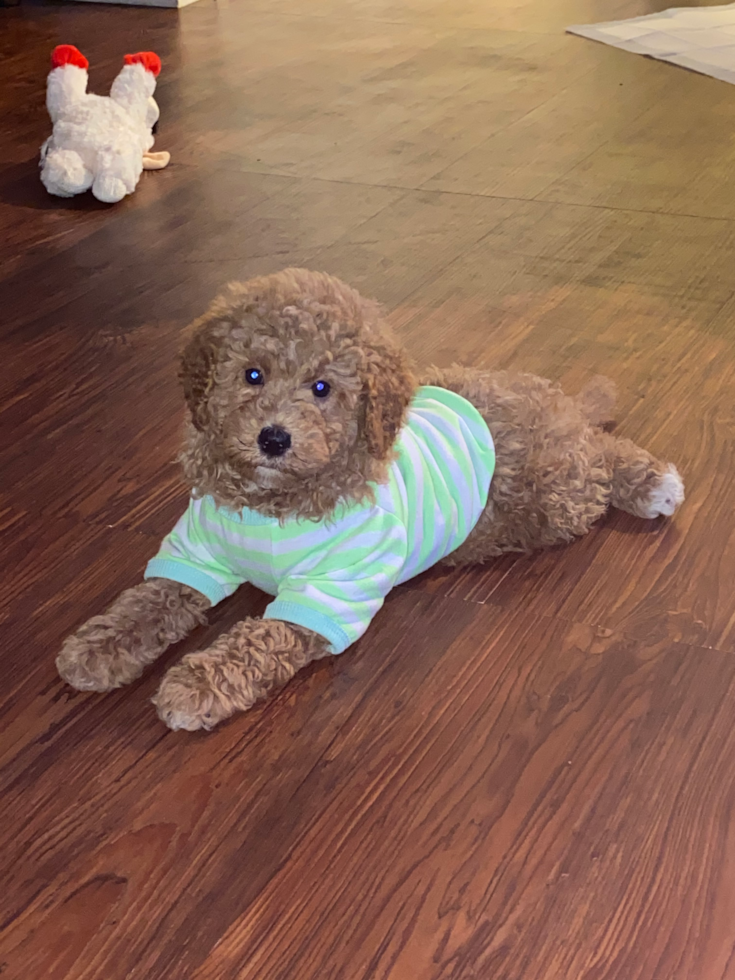
If there’s one part of F1B Mini Bernedoodle ownership that catches people off guard most often, it’s grooming. The fluffy low-shedding coat looks beautiful, soft, and almost unreal in photos, but maintainingthat coat takes far more work than many first-time doodle owners expect.
This is the reality people usually discover very quickly: low shedding does not mean low maintenance. In fact, F1B Mini Bernedoodles require more grooming than heavier-shedding breeds because loose hair is trapped within the curls and waves instead of falling out naturally. Without regular brushing, that trapped hair starts twisting together beneath the surface of the coat, creating tangles and mats that can form surprisingly fast.
Most F1B Mini Bernedoodles need brushing at least 3 to 5 times per week, though tighter curly coats benefit from daily brushing to stay fully manageable. Areas like behind the ears, under the collar, around the legs, and near the tail mat the fastest because of friction and movement throughout the day.
Professional grooming is usually necessary every 6 to 8 weeks for most F1B Mini Bernedoodles. Regular grooming appointments help maintain coat health, prevent severe matting, trim nails, clean sanitary areas, and keep the coat easier to manage. Many owners eventually settle into shorter trims simply because they are much more practical for daily maintenance.
Ear care matters quite a bit with this generation too. Floppy ears combined with dense hair around the ear canal can trap moisture and debris more easily, which increases the risk of irritation or infections. Regular ear cleaning is an important part of the routine, especially after baths or swimming.
Nail trimming is another area that sometimes gets overlooked. Long nails can affect posture and walking comfort, particularly for active dogs that spend most of their time indoors on softer surfaces where nails do not naturally wear down very much.
One of the hardest stages for many owners is the coat transition phase. Around 6 to 12 months old, many F1B Mini Bernedoodles begin losing the soft puppy coat while the adult coat starts growing in underneath. During this period, matting increases dramatically because the two coat textures tangle together extremely easily. A puppy that brushed out effortlessly one month may suddenly develop knots overnight seemingly out of nowhere. This is usually the moment many doodle owners realize grooming is no longer an occasional task. It becomes part of the lifestyle. The dogs are absolutely worth it for most families, but the maintenance side of doodle ownership is very real, especially with dense curly-coated F1B Mini Bernedoodles.
F1 vs F1B vs F2 Mini Bernedoodle
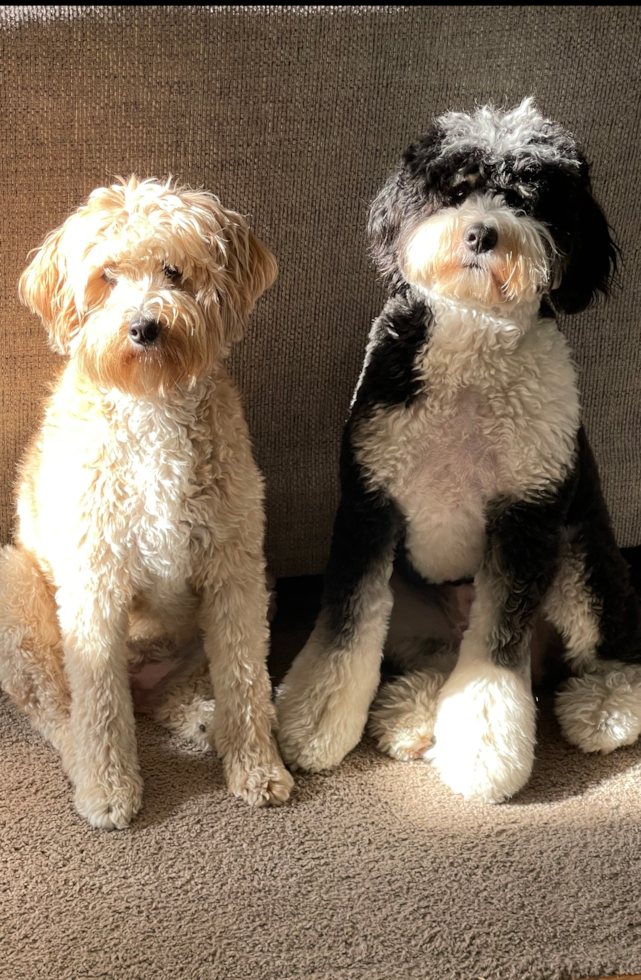
One of the biggest questions future owners ask is which Mini Bernedoodle generation is “best.” The truth is that each generation offers a slightly different balance of coat predictability, shedding tendencies, grooming requirements, and personality traits. The better fit usually depends on what matters most to the individual family.
F1 Mini Bernedoodles are chosen by families looking for a balanced mix between the Bernese Mountain Dog and Mini Poodle. F2 Mini Bernedoodles offer more variety and individuality, while F1B Mini Bernedoodles are usually preferred by owners prioritizing lower shedding and stronger allergy friendliness.
Here’s a clearer breakdown of the differences:
| Trait | F1 Mini Bernedoodle | F1B Mini Bernedoodle | F2 Mini Bernedoodle |
| Generation | Bernese Mountain Dog × Mini Poodle | F1 Mini Bernedoodle × Mini Poodle | F1 Mini Bernedoodle × F1 Mini Bernedoodle |
| Shedding | Low to moderate | Usually lowest shedding | Low to moderate, less predictable |
| Predictability | Moderate | Highest predictability | Lowest predictability |
| Common Coat Types | Wavy, curly, straight | Mostly curly or wavy | Curly, wavy, straight |
| Allergy Friendliness | Moderate | Usually highest | Varies significantly |
| Grooming | Moderate to high | Highest maintenance | Moderate to high |
| Appearance Consistency | Fairly balanced | More uniform doodle appearance | Most visual variation |
| Personality | Affectionate, social, playful | Intelligent, attached, emotionally responsive | Goofy, affectionate, highly social |
F1B Mini Bernedoodles are usually the most predictable generation when it comes to lower shedding and coat texture. Families searching specifically for a more allergy-friendly Bernedoodle gravitate toward this generation because the additional Poodle genetics strengthen the traits most associated with lower shedding coats.
F1 Mini Bernedoodles sit somewhere in the middle. They typically maintain a balanced blend of Bernese Mountain Dog and Mini Poodle traits, though coat outcomes can still vary more noticeably than with F1Bs.
F2 Mini Bernedoodles usually show the widest range of coat textures, appearances, and shedding tendencies because both parents already carry mixed genetics. Some families love that uniqueness, while others prefer the consistency that comes with F1B pairings.
Personality-wise, all three generations are affectionate, playful, and strongly connected to family life. Differences in temperament depend more on the individual dog, upbringing, and socialization than the generation itself.
This is where many future owners overthink things a little too much. Generation absolutely matters, especially for coat predictability and shedding expectations, but chemistry with the individual puppy matters too. Sometimes the “perfect generation on paper” ends up mattering less than the dog that simply fits naturally into someone’s life.
RELATED: F1 Mini Bernedoodle: Size, Temperament, Shedding & More
Who Is an F1B Mini Bernedoodle Best For?
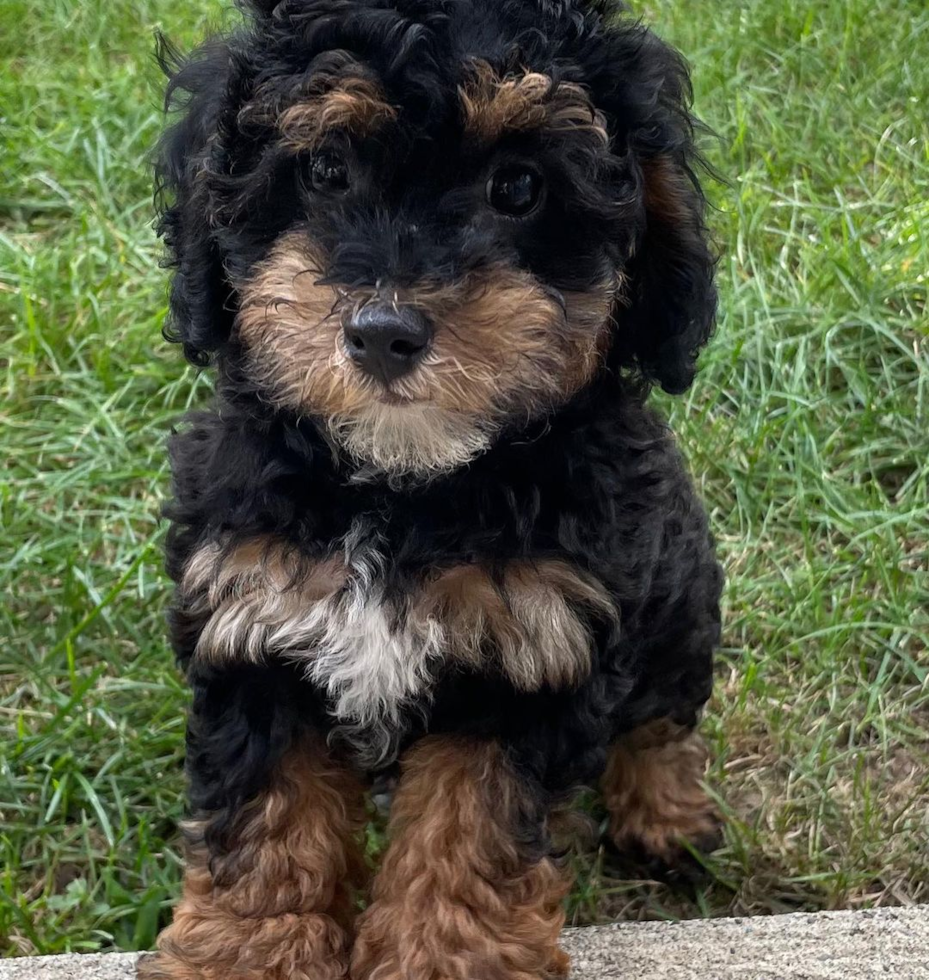
F1B Mini Bernedoodles fit best in homes where the dog will be treated like an actual part of daily life rather than simply a pet that exists somewhere in the background. These dogs are deeply people-oriented and usually happiest when they feel involved in whatever their family is doing, even if that “involvement” mostly consists of quietly following someone from the kitchen to the couch and back again for the seventh time that afternoon.
For allergy-sensitive households, the F1B generation is one of the most appealing Bernedoodle options. Their lower-shedding coats and stronger Poodle influence usually make them more manageable for families dealing with mild dog allergies. That said, realistic expectations still matter here. Some people do extremely well with F1B Mini Bernedoodles, while others may still react despite the lower shedding reputation.
Families do especially well with this generation because F1B Mini Bernedoodles combine playfulness with a very affectionate and emotionally connected temperament. Most genuinely enjoy being around people and adapt nicely to family routines when properly trained and socialized. They bond closely with children and thrive in homes where interaction, structure, and companionship are part of everyday life.
Work-from-home lifestyles can also be a great match. Because these dogs form strong attachments to their people, they enjoy environments where someone is present more consistently throughout the day. Many owners say their F1B Mini Bernedoodle naturally settles nearby during work hours, almost like a fluffy little coworker who contributes absolutely nothing to the meeting but still insists on supervising it.
Active owners usually fit well with this breed too. F1B Mini Bernedoodles are not nonstop high-drive dogs, but they do benefit from regular walks, engagement, training, and mental stimulation. They enjoy having a routine that includes both activity and downtime rather than spending long stretches bored or under-stimulated.
For first-time doodle owners, the F1B Mini Bernedoodle can be both rewarding and eye-opening at the same time. Their trainability and affectionate personality make them approachable for newer owners, but the grooming side of doodle ownership surprises a lot of people. Families who go into the experience fully prepared for regular brushing, professional grooming, coat maintenance, and ongoing upkeep usually adjust well. Families who expect a completely effortless low-shedding dog struggle more than they anticipated.
F1B Mini Bernedoodles thrive in homes where people understand both sides of the breed. They’re affectionate, intelligent, beautiful dogs with a personality that is deeply woven into family life, but they also require time, consistency, grooming, and genuine involvement from their owners.
RELATED: Are Mini Bernedoodles High Energy? An Honest Look at Daily Life
Final Thoughts
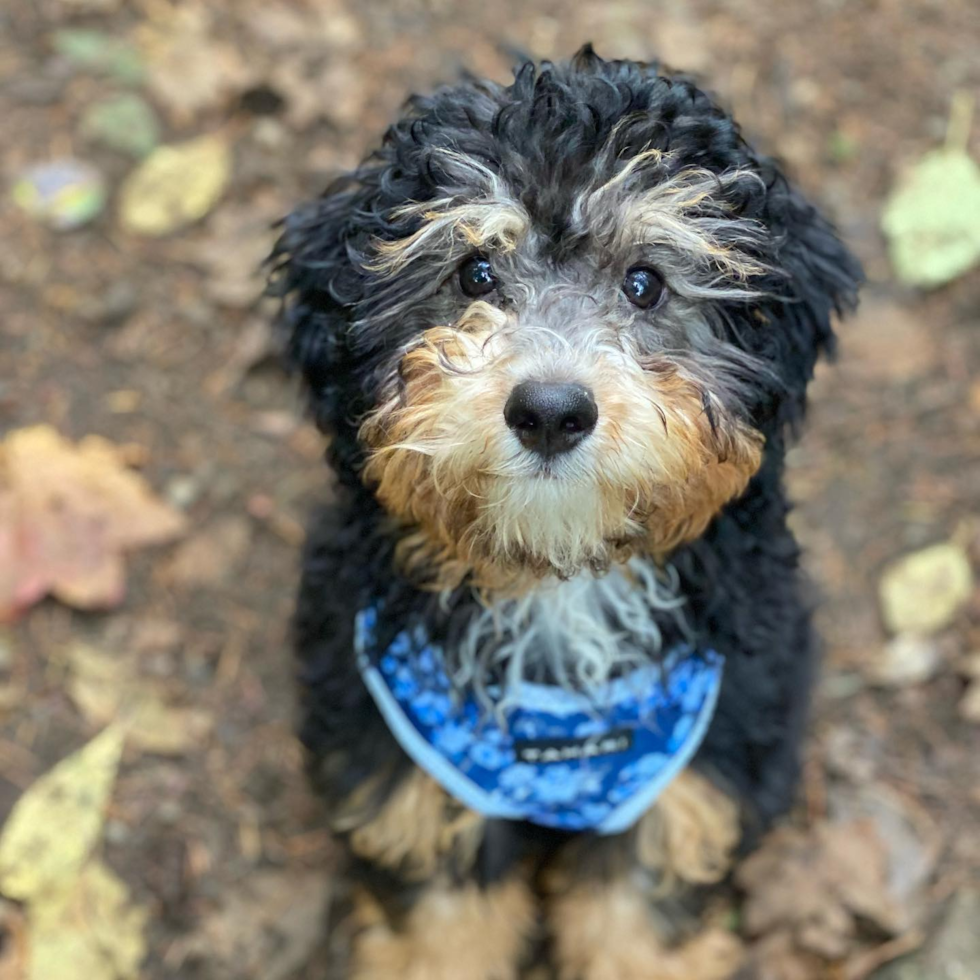
The F1B Mini Bernedoodle became one of the most sought-after Bernedoodle generations for good reason. These dogs combine the affectionate and family-oriented nature people love about Bernedoodleswith the lower-shedding coat and intelligence many families hope for when choosing a doodle. They’re playful without being overwhelming, emotionally connected without losing their personality, and highly trainable while still keeping that goofy charm Bernedoodle owners adore so much.
At the same time, the reality behind the breed matters just as much as the appeal. F1B Mini Bernedoodles may shed less, but they are far from low maintenance. Their coats require regular brushing, consistent grooming, and much more upkeep than many first-time owners expect. The beautiful fluffy curls that make people stop and stare on walks are usually the exact same curls that demand an impressive amount of effort behind the scenes.
Still, for families prepared for that commitment, F1B Mini Bernedoodle puppies can be incredibly rewarding companions. They bond deeply with their people, adapt well to family life, and bring a warmth into the home that feels both comforting and oddly entertaining at the same time. One minute they’re curled up quietly beside you, and the next they’re sprinting through the living room because someone accidentally said the word “outside” a little too enthusiastically. That balance is part of what makes the breed so easy to love.
The F1B Mini Bernedoodle is not the right fit for every household, especially for owners who are looking for a completely effortless dog. But for people willing to embrace the grooming, training, and daily involvement that come with this generation, they become part of the rhythm of the home itself.
Elena R.
About The Author
Elena is a leading expert in the field of dog behavior, care, and training, with over a decade of experience in writing about dogs. As a published writer and lifelong dog enthusiast, Elena currently shares her home with three beloved canine companions. She is dedicated to staying up to date on the latest advancements in dog care and training, ensuring that her articles provide readers with accurate and valuable insights. With her extensive knowledge and passion for all things canine, Elena's contributions to the Premier Pups community offer both expertise and authority on a wide range of dog-related topics.
What To Read Next
Are Mini Bernedoodles Hypoallergenic? Shedding, Allergies & More
Mini Bernedoodles are described as hypoallergenic dogs, but the reality is a little more nuanced than that. While many Mini Bernedoodles inherit the low-shedding qualities of the Poodle, no dog is completely hypoallergenic. Some Mini Bernedoodles shed... Read More
F2 Mini Bernedoodle Guide: Coat Types, Shedding, Grooming & More
F2 Mini Bernedoodles spark a lot of curiosity, and a lot of confusion too. Most people understand what a Mini Bernedoodle is, but the moment generations like F1, F1B, and F2 enter the conversation, things suddenly feel more complicated than they need to be. The... Read More
Frequently Asked Questions
What is an F1B Mini Bernedoodle? An F1B Mini Bernedoodle is a cross between an F1 Mini Bernedoodle and a Mini Poodle. This generation is typically around 75% Poodle and 25% Bernese Mountain Dog, which leads to curlier coats, lower shedding, and a more predictable doodle appearance.
Do F1B Mini Bernedoodles shed? F1B Mini Bernedoodles are generally considered low-shedding dogs, especially compared to F1 or F2 Bernedoodles. Most lose far less hair around the home because loose hair is trapped within the coat instead of falling freely onto furniture and clothing. That said, no Bernedoodle generation is completely non-shedding.
Are F1B Mini Bernedoodles hypoallergenic? F1B Mini Bernedoodles are more allergy friendly because of their stronger Poodle genetics and lower-shedding coats. However, no dog is truly 100% hypoallergenic. Allergy responses vary from person to person depending on dander, saliva, coat type, and sensitivity.
How big do F1B Mini Bernedoodles get? Most F1B Mini Bernedoodles grow to around 18 to 22 inches tall and weigh between 25 and 50 pounds once fully grown. Size can vary depending on genetics, parent size, and the specific Mini Poodle used in the pairing.
Are F1B Mini Bernedoodles calmer than F1? Some owners feel F1B Mini Bernedoodles are slightly calmer or more emotionally settled, while others notice more energy because of the stronger Poodle influence. In reality, personality depends more on the individual dog, training, and socialization than generation alone.
Which is better, F1 or F1B Mini Bernedoodle? Neither generation is automatically better. F1 Mini Bernedoodles offer a more balanced mix of Bernese Mountain Dog and Poodle traits, while F1B Mini Bernedoodles are usually more predictable for lower shedding and curlier coats. The right fit depends on the owner’s priorities and lifestyle.
Are F1B Mini Bernedoodles good family dogs? Yes, F1B Mini Bernedoodles are generally excellent family dogs. They are affectionate, social, playful, and highly connected to their people. Most adapt very well to family life and usually do especially well in homes where they receive regular interaction and attention.
How often should an F1B Mini Bernedoodle be groomed? Most F1B Mini Bernedoodles require brushing several times per week and professional grooming every 6 to 8 weeks. Curly coats need the most maintenance because they trap loose hair and mat more easily when brushing is inconsistent.
Are F1B Mini Bernedoodles easy to train? F1B Mini Bernedoodles are usually highly trainable thanks to their intelligence and eagerness to interact with people. Positive reinforcement, consistency, and early training work very well with this breed. Like many intelligent dogs, they can also develop stubborn habits quickly if boundaries are inconsistent.
Why are F1B Mini Bernedoodles more expensive? F1B Mini Bernedoodles are more expensive because of the high demand for lower-shedding and more allergy-friendly doodle generations. Responsible breeding, health testing, veterinary care, grooming preparation, and coat predictability also contribute to pricing differences.
Do F1B Mini Bernedoodles bark a lot? Most F1B Mini Bernedoodles are not excessive barkers, though they can become vocal when bored, anxious, or overly excited. Proper training, mental stimulation, and socialization usually help keep barking manageable.
Are F1B Mini Bernedoodles cuddly? Very much so. Many F1B Mini Bernedoodles form strong emotional bonds with their families and naturally seek out physical closeness. A lot of owners end up with a permanent fluffy shadow that insists on sitting nearby no matter what they’re doing.
What coat type do F1B Mini Bernedoodles have? Most F1B Mini Bernedoodles inherit curly or wavy coats because of the stronger Poodle genetics in this generation. Straight coats are much less common compared to F1 or F2 Bernedoodles.
How much exercise do F1B Mini Bernedoodles need? Most F1B Mini Bernedoodles benefit from around 45 to 90 minutes of daily activity depending on age and energy level. Walks, play sessions, training, and mental stimulation all help keep them balanced and engaged.
Are F1B Mini Bernedoodles high maintenance? Yes, especially when it comes to grooming. While they usually shed less, their coats require regular brushing, grooming appointments, and consistent upkeep to prevent tangles and matting. Their emotional attachment to people also means they thrive with regular interaction and involvement in daily life.
What is the lifespan of an F1B Mini Bernedoodle? The average lifespan of an F1B Mini Bernedoodle is usually around 12 to 17 years. Genetics, nutrition, exercise, veterinary care, and lifestyle all play a role in long-term health and longevity.