


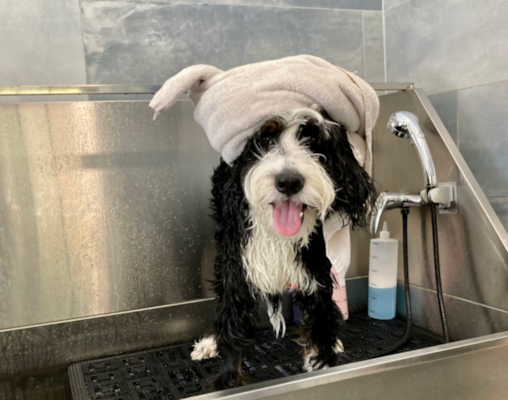
Published Friday, November 6, 2026 by Elena R. in Dog Grooming
Mini Bernedoodles have the kind of coats that make people want to reach out and pet them before they have even said hello. The soft waves, fluffy legs, rounded faces, and slightly untidy eyebrows give these dogs much of their teddy bear appeal. Keeping that look comfortable and manageable, though, takes considerably more work than a quick brush before company arrives.
The surprise is usually how little the outside of the coat tells you. A Mini Bernedoodle can look beautifully fluffy after a week of walks, naps, and backyard adventures while small tangles are building behind the ears and close to the skin. A dog that sheds very little can actually need more brushing, because loose hair stays caught in the coat rather than drifting onto the floor. The sofa might look wonderful. The grooming comb may tell a different story.
The good news is that Mini Bernedoodle grooming becomes much easier once you understand the coat in front of you. Curly, wavy, and straighter coats don't behave exactly alike, and a young puppy may need a different routine from the same dog a year later. This guide covers how often to brush and bathe, the tools that actually help, haircuts and professional appointments, mat prevention, and the small habits that keep grooming from taking over your week.
Table of Contents
- How Much Grooming Does a Mini Bernedoodle Really Need?
- Why Mini Bernedoodle Coat Type Changes the Routine
- The Tools That Make Mini Bernedoodle Grooming Easier
- How to Brush a Mini Bernedoodle Properly
- Why Mini Bernedoodles Mat So Easily
- How Often Should You Bathe a Mini Bernedoodle?
- Mini Bernedoodle Haircuts: Finding a Style You Can Maintain
- The Puppy Coat Change Can Make Grooming Suddenly Harder
- How to Introduce Grooming to a Mini Bernedoodle Puppy
- The Grooming Jobs Beyond the Coat
- How Much Does Professional Mini Bernedoodle Grooming Cost?
- A Grooming Routine That Works in Real Life
- Final Thoughts on Mini Bernedoodle Grooming
How Much Grooming Does a Mini Bernedoodle Really Need?
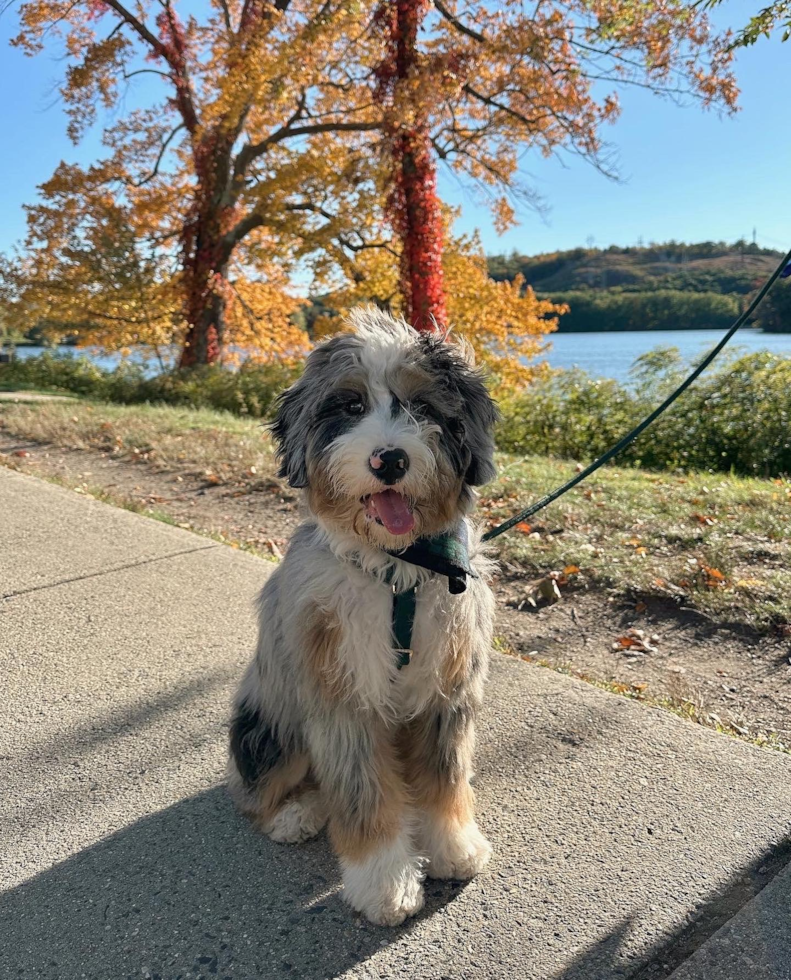
Most Mini Bernedoodles need frequent brushing at home and regular professional grooming to keep their coats clean, free of painful tangles, and comfortable at their chosen length. For many, that means a full brushing and combing session several times a week, daily attention for longer or curlier coats, and a professional appointment roughly every six to eight weeks. Some need visits sooner, particularly when owners prefer a long, fluffy finish or the coat mats easily.
That may sound like a lot for a dog described as low shedding, but shedding and coat maintenance are two separate things. A curly coat can hold onto loose hair instead of releasing it around the house. Unless someone brushes that hair out, it mixes with the surrounding curls, catches near the roots, and slowly tightens. A straighter coat may leave more hair on your clothes while being less difficult to comb through, although that depends on its density and length.
The easiest routine also isn't necessarily the one with the fewest grooming appointments. Keeping the coat shorter can reduce daily brushing time, while letting it grow into a long teddy bear shape demands more work between trims. Neither choice is wrong. The best grooming schedule is one you can maintain during a busy week, a rainy month, and the occasional stretch when your dog decides every patch of damp grass deserves a full-body inspection.
RELATED: Learn Everything You Need To Know About Mini Bernedoodles
Why Mini Bernedoodle Coat Type Changes the Routine
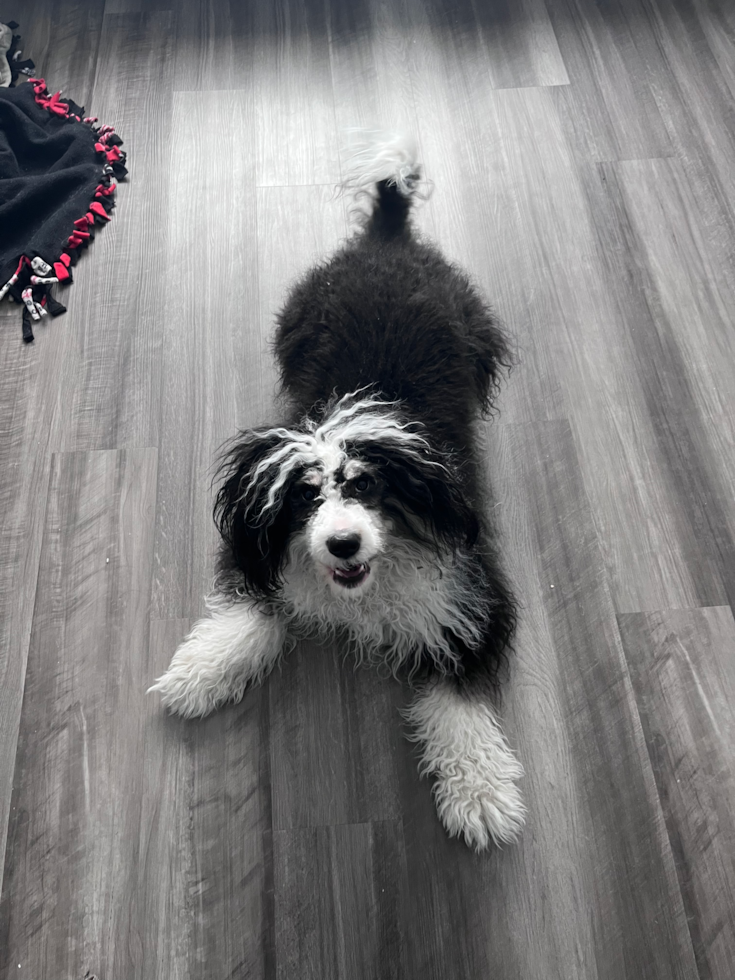
Mini Bernedoodles come from Bernese Mountain Dog and Poodle ancestry, and their coats can vary substantially. Some inherit defined curls, others develop loose waves, and a smaller number have straighter hair that shows more of the Bernese influence. Coat length, thickness, furnishings around the face, and the amount of hair released during shedding can differ even between littermates. That's why a grooming schedule based only on the breed name can miss what an individual dog needs.
Curly Mini Bernedoodle Coats
A curly Mini Bernedoodle can look plush and beautifully shaped after grooming, with hair that springs back instead of lying flat. These coats commonly release less visible hair into the home, but the same curl pattern can catch loose strands and turn small snags into mats. Dense curls also hide problems surprisingly well. You may feel a smooth coat when you pet the dog's back, then discover tangles at the base of the ears or inside the front legs.
Curly coats generally need the most consistent brushing and combing, particularly when kept longer. Daily work is a sensible goal for many, and the comb matters as much as the brush because it reveals knots closer to the skin. A shorter professional trim can make the routine much more realistic for owners who love the breed but don't have time for a lengthy coat session every evening.
Wavy Mini Bernedoodle Coats
Wavy coats are common and can range from loose, flowing waves to a thicker fleece-like texture. Many owners find them somewhat easier to maintain than tight curls, especially when the coat is clipped to a moderate length. Still, waves can tangle wherever hair rubs against hair, fabric, or the dog's body. The chest, armpits, thighs, and base of the ears deserve particular attention, even when the top of the back looks almost effortless.
A thorough brush and comb every other day may be enough for some shorter wavy coats, while longer or denser ones need daily work. The mistake is assuming that loose waves will always stay loose. Once a few strands twist together under a collar or harness, everyday movement can tighten them into a knot that becomes harder to remove with each passing day.
Straight or Looser Mini Bernedoodle Coats
Straighter-coated Mini Bernedoodles may shed more visibly, particularly when their coat carries more of the Bernese texture or undercoat. Depending on density, some are easier to comb than curly dogs, while others need regular brushing to remove loose hair and prevent packed areas. A dog with a fuller, layered coat can collect a surprising amount of hair around the hindquarters and neck during a shedding period.
These dogs may benefit from tools selected for a shedding or layered coat rather than automatically using the same routine designed for dense Poodle-like curls. A groomer can help identify whether the coat needs gentle removal of loose undercoat, careful detangling, or both. The aim is to maintain its natural texture without scraping the skin or using aggressive de-shedding tools that pull out healthy hair.
Does Generation Predict Grooming Needs?
You will see F1, F1B, F2, and multigenerational Mini Bernedoodles described as though each label comes with an exact coat. Generation can offer clues about ancestry and possible coat traits, but it cannot tell you precisely how a puppy will shed or how much brushing the adult coat will need. Two dogs with the same generation label may have noticeably different textures, coat density, and maintenance needs.
For grooming purposes, the coat growing on your dog matters more than the percentage printed beside its name. Watch how quickly tangles form, how easily a comb moves through the hair, and what changes as the puppy matures. Those details will give you a much more useful schedule than relying on generation alone.
RELATED: All Mini Bernedoodle Generations: F1, F1B, F2, Multigen & More
The Tools That Make Mini Bernedoodle Grooming Easier
A cupboard full of grooming products isn't necessary, but the right few tools make an enormous difference. For a wavy or curly Mini Bernedoodle, the essentials are usually a suitable slicker brush and a stainless-steel comb with both wider and finer-spaced teeth. The brush separates the coat and lifts out loose hair, while the comb checks whether the hair is actually free of tangles from near the skin outward. They do different jobs, and neither completely replaces the other.
Choose a slicker that suits the coat's length and your dog's size, with pins that can work through the hair without scraping the skin. A metal comb with rounded tips is useful for checking behind the ears, along the legs, under the chest, and around the tail. For small knots, a dog-safe conditioning or detangling spray may help reduce pulling. A non-slip surface, a few small treats, and decent lighting are less exciting purchases, but they can make the whole experience calmer for both of you.
You may also need dog-formulated shampoo and conditioner, absorbent towels, a dryer used on an appropriate gentle setting, nail-care tools, and products recommended by your veterinarian for specific ear or skin needs. The exact kit depends on how much grooming you plan to handle at home. If you use a professional for bathing and clipping, a good brush and comb may do more for your dog's daily comfort than an expensive collection of gadgets ever will.
RELATED: Do Mini Bernedoodles Shed? Coat Types and Allergies Explained
How to Brush a Mini Bernedoodle Properly
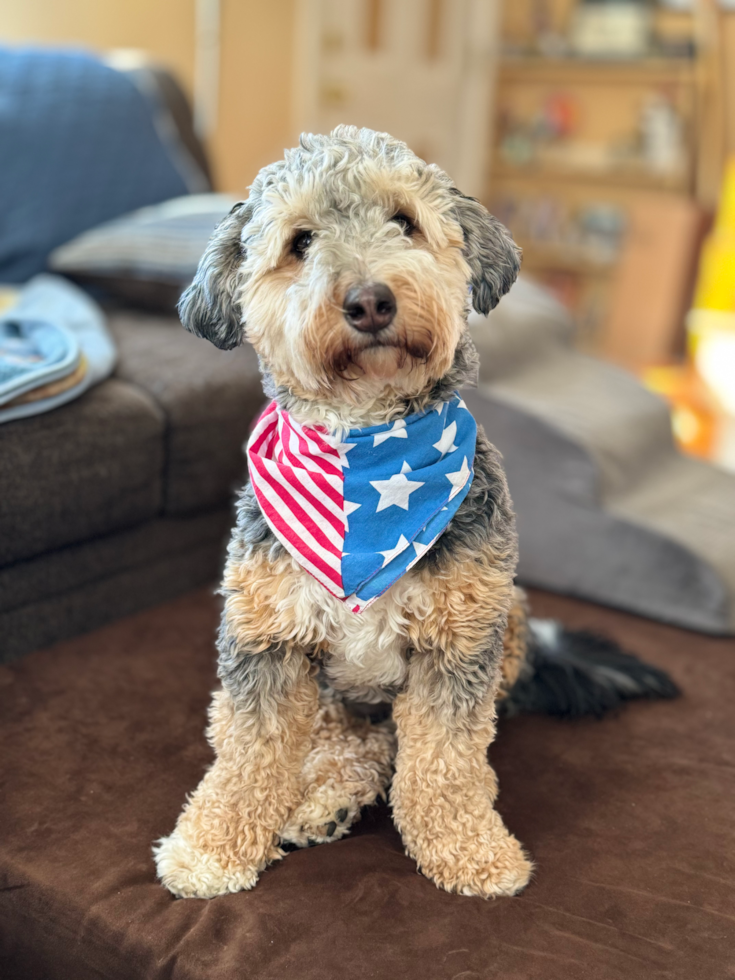
Many owners brush their Mini Bernedoodle regularly and still end up with mats. Usually, the problem isn't a lack of effort. It's that brushing the visible surface can fluff the coat without reaching the tangles underneath. A dog may look freshly brushed while the comb catches immediately near the roots. Learning to work through the coat in small sections changes that.
Start With Small Sections, Not the Whole Dog at Once
Settle your dog on a secure, non-slip surface and work in a calm spot with good light. Use one hand to gently separate a small layer of hair so you can see toward the skin, then brush the exposed section with light, controlled strokes. Move to the next layer only when that part of the coat is free of tangles. Groomers commonly call this line brushing, and it is especially useful for dense wavy and curly coats.
Work methodically rather than brushing wherever your dog happens to offer a patch of fluff. You might start at a back leg, move through the body, then finish with the chest, front legs, neck, and head. The order matters less than making sure no area is repeatedly missed. Keep the brush moving gently and avoid repeated hard strokes over the same patch of skin, which can cause irritation even when the coat itself looks fine.
Use the Comb to Check Your Work
After brushing a section, pass the metal comb through it in the direction the hair grows. The comb should travel comfortably through the coat without catching on hidden knots. If it stops, don't yank it through or pull harder. Go back to that small area with the brush, use a little suitable detangling product if needed, and try the comb again once the strands have loosened.
The comb test is particularly helpful after a grooming session that seemed successful. A slicker can make the outer coat look full and tidy while an untouched layer remains underneath. Checking several small sections, especially around the legs and chest, gives you a more honest picture of whether the coat is ready for another few days of normal life.
Give Extra Time to the Spots That Tangle First
The areas that mat most readily are usually the ones that move or rub throughout the day. Behind the ears, beneath the collar, inside the front legs, around the groin, and where a harness rests are common trouble spots. The tail base and lower legs can collect tangles too, especially after walks through wet grass or brush. None of those places is particularly glamorous, but they're where a few careful minutes can save a difficult appointment later.
Handle sensitive areas gently. Support a leg rather than pulling it into an awkward position, and avoid digging at the skin under an armpit or behind an ear. If your dog becomes uncomfortable, take a break and finish in another short session. Good grooming builds cooperation over time; turning every knot into a wrestling match makes the next session harder before it even starts.
RELATED: Are Mini Bernedoodles Hypoallergenic? Shedding, Allergies & More
Why Mini Bernedoodles Mat So Easily
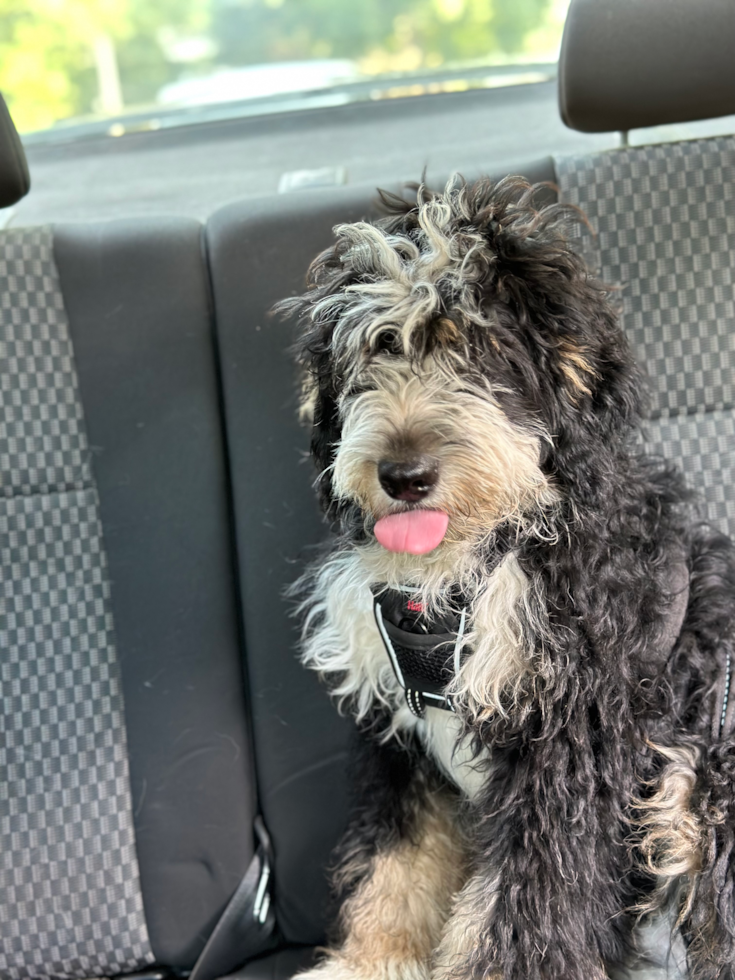
Matting begins when loose hair and surrounding strands twist together. Friction tightens those small tangles, and moisture can make the problem worse. In a dense curly coat, the loose hair may stay trapped rather than fall away, so the knots grow quietly underneath the fluffy surface. By the time you can feel a solid patch with your fingers, the hair may already be pulling against the skin.
A mat is different from an ordinary little tangle. A small knot that separates easily with a comb is usually manageable at home, provided your dog is comfortable. A dense, tight mat close to the skin may be painful to pull apart and can hide irritation underneath. Large mats can also limit normal movement, especially in the armpits or between the legs. This is why mat prevention is about comfort, not about keeping a particular haircut looking pretty.
The most effective prevention is consistent combing, prompt attention to small knots, and a coat length you can realistically care for. After swimming, bathing, or a rainy outing, check the areas that stayed damp and make sure the coat dries thoroughly. Watch for sudden scratching, a reluctance to be touched, or a dog that flinches when you reach under the chest. Those reactions may mean the coat or skin needs closer attention.
If you find a tight mat, resist the urge to cut it out with household scissors. Dog skin can be pulled up into a mat and is easy to injure, even when the hair looks thick enough to protect it. Extensive or painful matting needs a professional groomer or veterinarian, who may recommend clipping the coat short rather than trying to save the length. That can be disappointing if you love the fluffy look, but leaving a painful mat in place is a much worse tradeoff.
RELATED: Mini Bernedoodle Colors: Complete Guide to Coat Colors & Patterns
How Often Should You Bathe a Mini Bernedoodle?
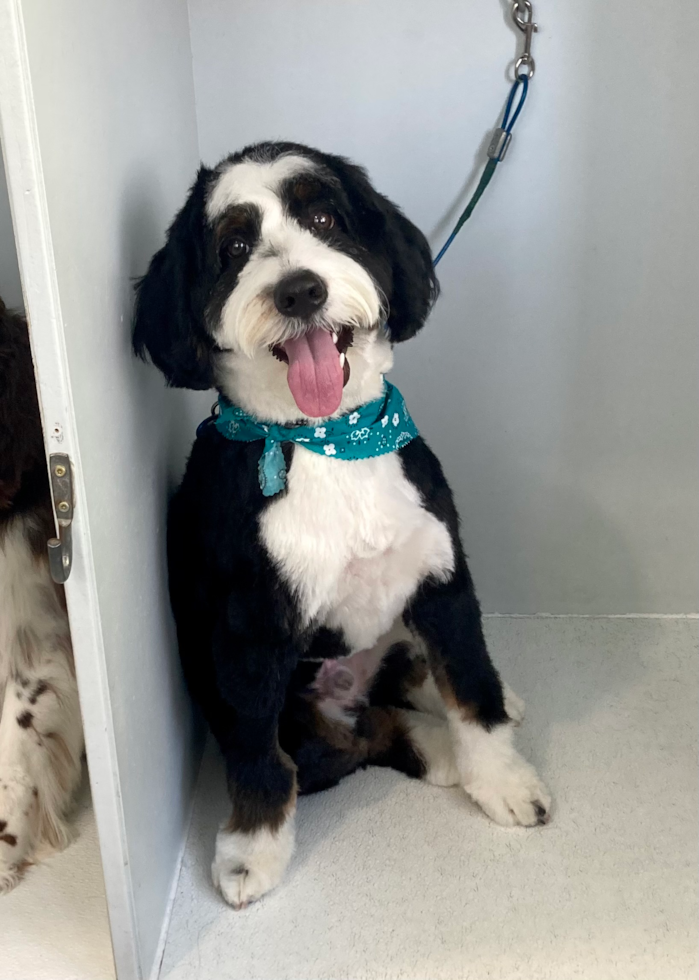
For many healthy Mini Bernedoodles, bathing about every four to eight weeks is a reasonable starting point. A dog that spends its afternoons rolling in dirt or exploring muddy trails may need cleaning sooner, while another with a shorter, well-maintained coat may stay comfortable for longer. There isn't a single calendar interval that suits every coat and lifestyle. The goal is to keep the dog clean without irritating the skin through unnecessary washing.
Brush and comb the coat before bath time, taking care of tangles while the hair is still dry and manageable. Wetting a tangled coat can make knots tighter and harder to remove, especially when shampoo and rubbing work loose hairs into them. If the coat is heavily matted, skip the home bath and arrange professional help first. Soap and a good soak cannot undo a mat that has already tightened near the skin.
Use lukewarm water and shampoo made for dogs, then rinse until the coat is free of residue. Dense curls may need extra attention around the chest, legs, and underside because shampoo can hide deep in the hair. A suitable dog conditioner may help with softness and combing, particularly if your groomer recommends one for the coat. Keep shampoo and water out of the eyes and ears, and take your time rather than trying to rush through a nervous dog's first few baths.
Drying matters almost as much as washing. Towels remove the first layer of moisture, but a thick Mini Bernedoodle coat can stay damp close to the skin long after the outer hair feels dry. Use an appropriate pet dryer or a hair dryer on a gentle, comfortably cool or low-warm setting, keeping the airflow moving and watching your dog's reaction. A professional groomer can show you how to dry and gently separate the coat without overheating the skin or frightening the dog. Once everything is dry, a final comb-through will help you catch knots before the next walk brings the yard back indoors.
RELATED: How Often Should You Bathe Your Dog? A Comprehensive Guide
Mini Bernedoodle Haircuts: Finding a Style You Can Maintain
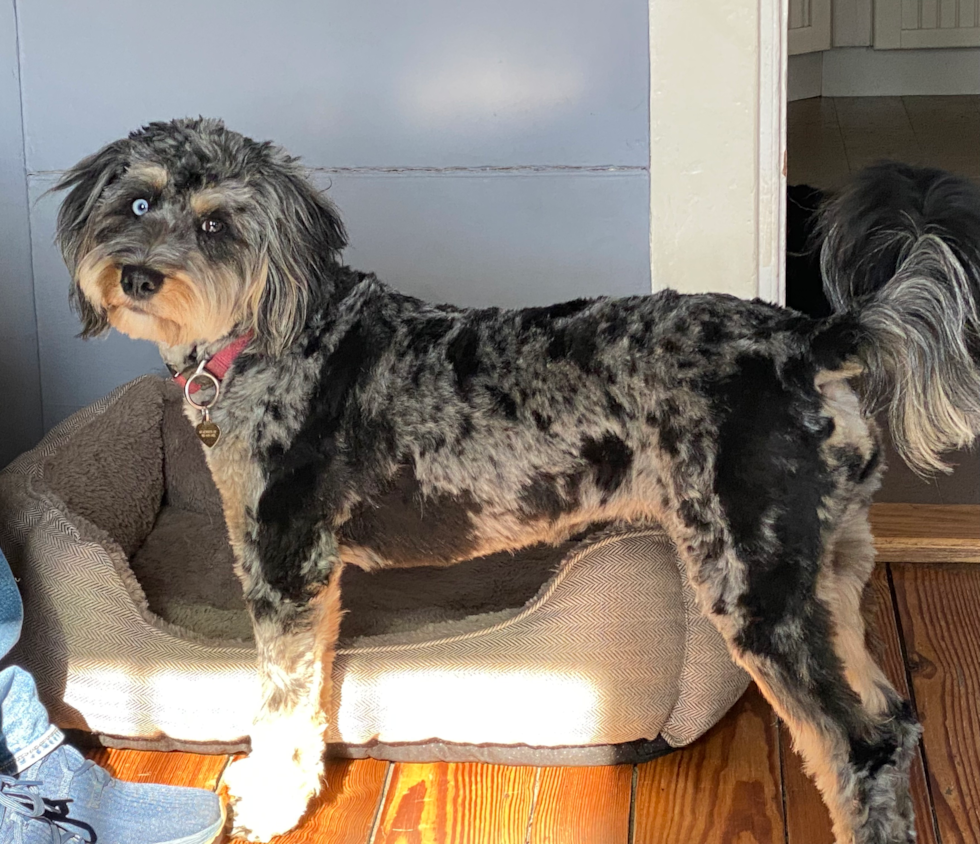
There is no single required Mini Bernedoodle haircut. The breed doesn't have an official coat style that every dog must wear, and owners choose different lengths based on appearance, comfort, climate, and the time they can devote to brushing. The most important part of the decision is understanding what the haircut will demand after the dog leaves the grooming table. The long, rounded face that looks wonderful in a photo still needs regular attention around the muzzle, ears, and eyes.
The Teddy Bear Cut
The teddy bear cut is popular because it keeps the Mini Bernedoodle's soft, rounded appearance. Groomers usually shape the face into a plush circle, blend the ears, and leave enough length on the body and legs to show off the coat's texture. There is no universal measurement for a teddy bear cut, so one groomer's version may be considerably longer than another's. A reference photo and a conversation about maintenance are more useful than the name alone.
The tradeoff is brushing time. Longer legs, fluffy feet, and a fuller face catch food, moisture, and outdoor debris, while body hair can mat anywhere it rubs. This style works beautifully for owners who enjoy grooming or have the time to keep up with it. If you struggle to comb through the coat between appointments, asking for a slightly shorter version can make an enormous difference without losing the look you love.
The Puppy Cut or Short All-Over Trim
A puppy cut generally means a soft, fairly even trim, but the term isn't standardized either. Some groomers leave a plush inch or more, while others interpret it as a shorter, practical style. Explain how much hair you want left on the body, what you like around the face, and whether your main priority is a rounded look or easier care. Clear instructions prevent the classic moment when an owner asks for a puppy cut and meets a very different puppy at pickup.
A shorter all-over trim is usually the simplest choice for busy households, active dogs, or coats that mat quickly. It reduces the amount of hair that can twist together and makes it easier to see what your brush is doing. Short hair still needs checking around the ears, collar, paws, and legs, but daily upkeep generally feels more manageable than maintaining a long fluffy coat.
Face, Feet, and Sanitary Trims
Between full haircuts, many Mini Bernedoodles benefit from smaller touch-ups around the eyes, muzzle, paw pads, and sanitary areas. Hair that grows over the eyes can interfere with clear vision or collect moisture, while long paw-pad hair can trap debris and reduce traction on smooth floors.
Keeping these areas tidy makes everyday life more comfortable and helps the rest of the haircut last.
The face and paw pads are delicate places to work with scissors or clippers, especially on a dog that moves suddenly. A professional groomer is usually the safest choice if you aren't experienced with this kind of trimming. At home, you can help by gently wiping food from the muzzle, checking the feet after walks, and teaching your dog to accept careful handling of those sensitive areas.
Should the Hair Be Shorter in Summer or Longer in Winter?
A shorter summer trim can make brushing, drying, and cleaning easier, particularly for a dog that swims or spends time outdoors. But shaving extremely close to the skin isn't a shortcut to keeping a dog cool. Skin exposed by a very close cut can be more vulnerable to sunburn, and dogs still depend on shade, drinking water, and appropriate activity limits during hot weather. Ask your groomer to choose a sensible coat length for your particular dog's texture and climate.
In winter, extra length may offer some comfort, but a long coat that stays wet, packed with snow, or badly tangled isn't doing your dog any favors. Dry the legs and belly after wet walks, and pay attention to ice or debris caught around the paws. The best seasonal haircut balances protection and comfort with a length you can actually keep clean and free of mats.
RELATED: Merle Mini Bernedoodle: Blue Merle, Chocolate Merle & Blue Eyes
The Puppy Coat Change Can Make Grooming Suddenly Harder
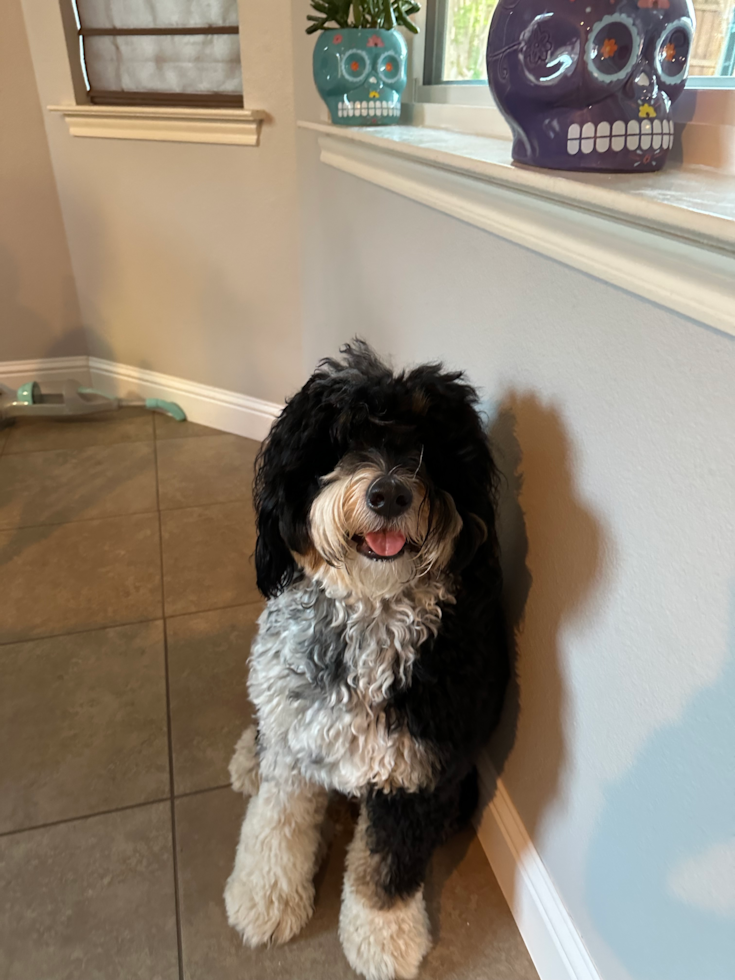
One of the most frustrating Mini Bernedoodle grooming surprises happens when a puppy that was easy to brush starts tangling almost overnight. The soft early coat gradually gives way to a more mature texture, sometimes with thicker curls, a different wave pattern, or greater density. This transition commonly develops during the first year and can continue into the second, although the timing varies by dog. The changes aren't always dramatic to look at, but your brush may notice long before you do.
During the transition, loose puppy hair can catch in the adult coat as it grows through, making tangles appear much faster than they did a month earlier. Areas that once needed a quick pass every few days may suddenly require careful daily combing. Owners sometimes think they've forgotten how to groom their dog because their usual routine stops working. The coat has changed, so the routine needs to change with it.
This is a good time to shorten the haircut temporarily, book grooming appointments a little closer together, and pay extra attention to line brushing. You can return to a longer style later if the mature coat and your schedule allow it. There is no prize for getting through a difficult coat transition with the longest possible hair. A comfortable puppy that accepts grooming calmly is a much better outcome.
RELATED: Phantom & Sable Mini Bernedoodles: Coat Patterns & How They Change
How to Introduce Grooming to a Mini Bernedoodle Puppy
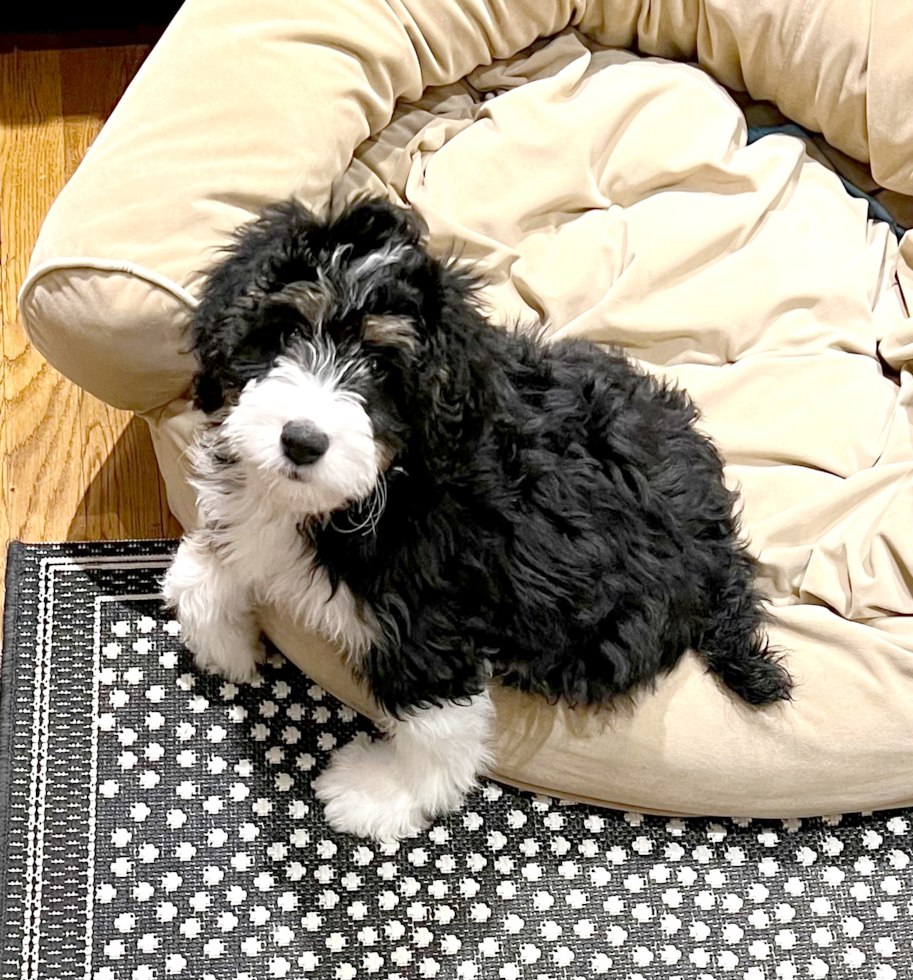
Mini Bernedoodle puppies are affectionate and curious, but that doesn't mean they arrive ready to stand still while someone combs their armpits. Grooming is a skill they learn through repeated, gentle experiences. Start with small moments: touch a paw, lift an ear flap, run a soft brush over the back, offer a treat, and finish before the puppy becomes overwhelmed. Those short sessions help build a puppy that expects grooming to be ordinary rather than something to escape.
As the puppy becomes comfortable, add the metal comb, gentle face handling, brief exposure to the sound of a dryer, and practice standing on a secure surface. Reward calm behavior instead of trying to complete an entire grooming job at once. A puppy that tolerates thirty relaxed seconds today can learn to manage several minutes later. The aim is steady trust, not a perfectly styled eight-week-old.
Professional grooming should begin as an introduction rather than a major event after months of no handling. Depending on the puppy's coat, comfort, vaccination status, and your veterinarian's guidance, an early visit may focus on a bath, nail trim, or small face and paw tidy before a full haircut is needed. Tell the groomer that your dog is young and still learning. Patient handling during those first appointments can make years of future visits much easier.
Grooming also gives owners a quiet chance to notice the puppy as an individual. Some love having their back brushed but dislike their paws being held. Others are fine with the comb and deeply suspicious of the dryer. Work gradually around those preferences instead of forcing the whole routine into one session. A cooperative adult dog is built through plenty of ordinary, uneventful puppy experiences.
RELATED: Are Mini Bernedoodles Good Family Dogs? What Life Really Looks Like
The Grooming Jobs Beyond the Coat
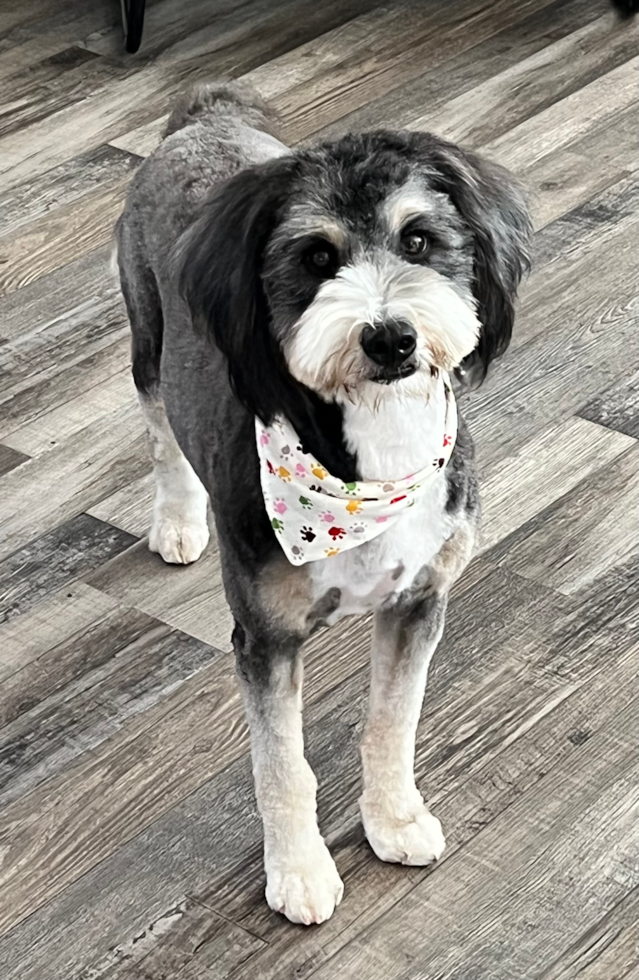
Brushing takes most of the attention, but a complete Mini Bernedoodle grooming routine includes ears, nails, paws, eyes, and teeth. These little checks are easier to handle when they become familiar parts of the week. They also help you notice changes early, before a small issue turns into a painful one.
Ears
Mini Bernedoodles have floppy ears, and some grow considerable hair around the opening. Check them regularly for redness, unusual odor, discharge, or discomfort, particularly after swimming and bathing. Dry the outside gently when wet, but don't assume every ear needs routine deep cleaning. Over-cleaning can irritate the ear canal, and a sore, smelly, or inflamed ear should be assessed by a veterinarian before you try to clean it.
If your veterinarian recommends an ear cleaner, use it as directed and avoid pushing cotton swabs down the canal. Hair around the ear opening may occasionally need careful trimming, but routine plucking is not necessary for every dog and can cause irritation. A groomer and veterinarian can help decide what is appropriate for your dog's ears rather than following a one-size-fits-all doodle rule.
Nails and Paw Pads
Many dogs need nail checks every couple of weeks and trimming or grinding whenever the nails become too long. The exact interval depends on nail growth, activity, and how much natural wear occurs on walks. Nails that constantly tap hard floors or begin to change the way a dog stands deserve attention, though sound alone isn't a perfect measure. If you're unsure where the quick ends, ask a groomer or veterinary professional to show you before trimming at home.
The paws deserve a look after outdoor adventures too. Long hair between the pads can trap grit, burrs, mud, and winter ice, while hidden tangles may form around the toes. Keeping the paw-pad hair tidy and checking for redness or sore spots makes walking more comfortable. For a dog that treats every puddle like a personal invitation, this small habit can save the carpet as well.
Eyes, Muzzle, and Teeth
Fluffy facial hair gives a Mini Bernedoodle much of its expression, but hair around the eyes should stay clear of the line of sight. Gently remove ordinary crust or debris with a damp soft cloth, using a clean area for each eye. Persistent tearing, squinting, redness, or discharge needs veterinary attention rather than repeated cosmetic wiping. The aim is a comfortable face, not an immaculate photo-ready one at all times.
Food and water can linger in a longer beard, so a quick wipe after meals helps keep the muzzle fresh and reduces tangling. Dental care belongs in the routine as well, ideally with regular brushing using toothpaste made for dogs. Human toothpaste is not appropriate for pets. If you build these habits while your Mini Bernedoodle is young, they're much easier to maintain once the dog has decided it has more interesting plans for the evening.
RELATED: Mini Bernedoodle Pros and Cons
How Much Does Professional Mini Bernedoodle Grooming Cost?
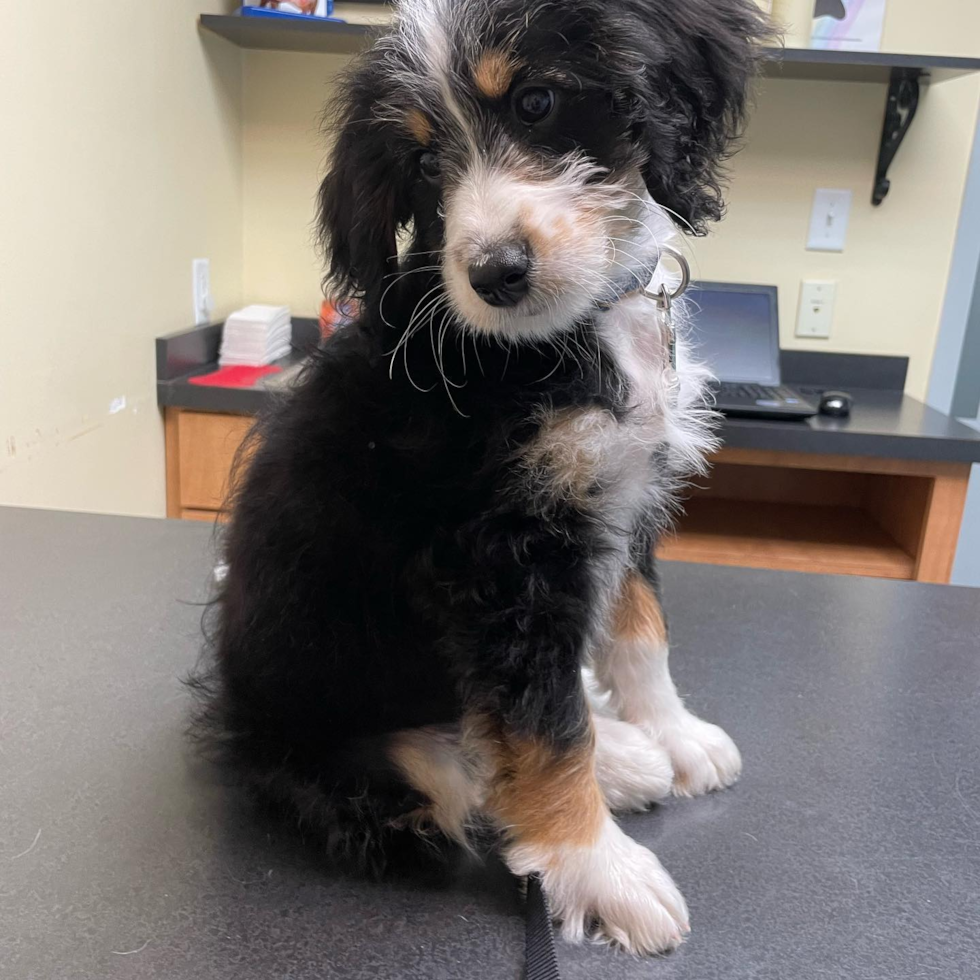
Professional grooming is an ongoing ownership expense, not an occasional luxury reserved for special occasions. The price of an appointment varies with location, coat length, the dog's size, how much work the coat needs, and which services are included. A well-maintained dog arriving for a routine bath and trim usually presents a different job from a dog with extensive matting that requires extra time, specialized handling, or a very short clip. The grooming cost can go from $50 to several hundred dollars depending on the above mentioned.
If your Mini Bernedoodle visits every six to eight weeks, that works out to roughly six to nine appointments over a year, depending on the exact spacing. Some owners schedule more frequent visits to maintain a longer style or get help during the puppy coat transition. Others keep the haircut short, do thorough maintenance at home, and use their groomer for major trims and the more delicate work. Either approach can be sensible as long as the dog stays comfortable between appointments.
Budget for the routine rather than hoping grooming will somehow become optional after puppyhood. Ask your groomer what the quoted service includes, whether mat removal is charged separately, and how the price changes with coat condition. Clear expectations help avoid an unpleasant surprise at pickup, especially when the groomer has had to spend much of the appointment dealing with tangles that could have been prevented at home.
RELATED: Top 5 Things to Know Before Getting a Mini Bernedoodle Dog
A Grooming Routine That Works in Real Life
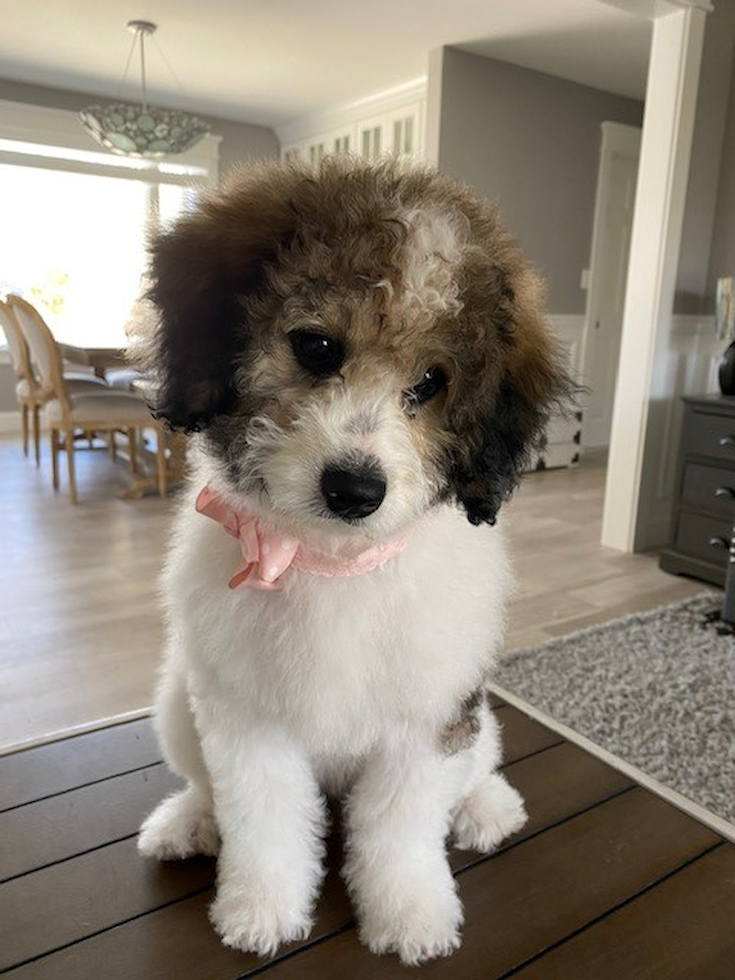
The most sustainable Mini Bernedoodle grooming plan uses small, regular habits rather than a heroic two-hour session after weeks of doing nothing. On most days, take a minute to check behind the ears, under the collar, and around the legs. After wet walks, remove debris and dry the areas where moisture lingers. A more thorough line-brushing session can then focus on the entire coat at an interval that suits its length and texture, daily for many long or curly coats and several times weekly for some shorter, looser ones.
Build a little flexibility into the schedule. A dog wearing a harness for long walks may need extra attention across the chest and armpits. A puppy changing coats may suddenly need more frequent combing, while a freshly clipped adult might be quicker to maintain for a few weeks. If the routine begins to feel impossible, talk to your groomer about a shorter cut before mats begin to form. Reducing coat length is a practical decision, not a failure of dedication.
Your dog's behavior can help you judge whether the routine is working. Calmly accepting a brush and comb, moving comfortably, and having a coat you can part and check near the skin are good signs. Repeated pulling, flinching, tight knots, or a dog that suddenly resists being touched deserve attention. Grooming should become a normal part of life together, something your Mini Bernedoodle can learn to tolerate and perhaps even enjoy, rather than a weekly test of everyone's patience.
RELATED: Grooming your Dog at Home Guide
Final Thoughts on Mini Bernedoodle Grooming
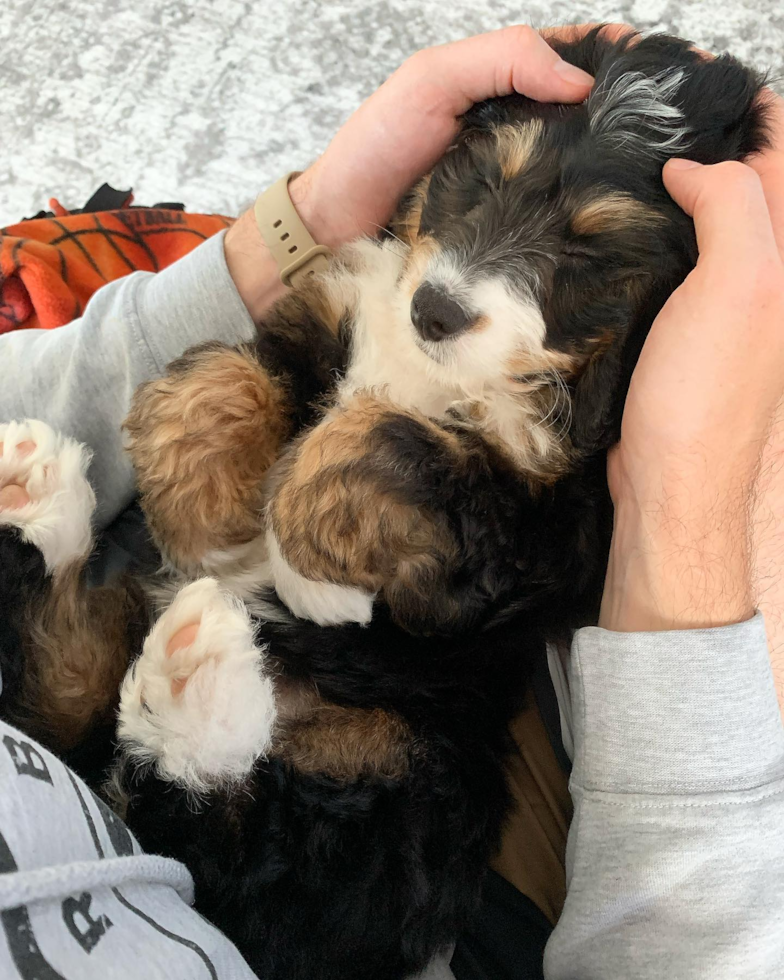
The Mini Bernedoodle's coat is part of what makes the breed so appealing, and there is real pleasure in keeping it soft, clean, and comfortable. But the gorgeous teddy bear appearance comes with a responsibility that doesn't disappear because the dog sheds less than expected. Curls can hide loose hair. Long legs and fluffy ears collect tangles. Puppy coats change, rainy walks happen, and sometimes the haircut you loved in a picture turns out to be more work than your actual week can hold.
Fortunately, great Mini Bernedoodle grooming isn't about achieving a perfect finish every day. It's about knowing your dog's coat, brushing all the way through it without hurting the skin, choosing a length you can keep up with, and getting professional help before small problems become painful ones. A short, comfortable haircut on a happy dog is far better than a beautiful long coat full of hidden mats.
For many owners, grooming eventually becomes one of those quiet routines that belongs to life with their dog. There is a brush kept within reach, a familiar spot where the dog stands for a comb-through, and maybe a little negotiation over the front paws. The work is real, but so is the reward: a Mini Bernedoodle that feels as good in that fluffy coat as it looks.
Elena R.
About The Author
Elena is a leading expert in the field of dog behavior, care, and training, with over a decade of experience in writing about dogs. As a published writer and lifelong dog enthusiast, Elena currently shares her home with three beloved canine companions. She is dedicated to staying up to date on the latest advancements in dog care and training, ensuring that her articles provide readers with accurate and valuable insights. With her extensive knowledge and passion for all things canine, Elena's contributions to the Premier Pups community offer both expertise and authority on a wide range of dog-related topics.
What To Read Next
Are Mini Bernedoodles Hypoallergenic? Shedding, Allergies & More
Mini Bernedoodles are described as hypoallergenic dogs, but the reality is a little more nuanced than that. While many Mini Bernedoodles inherit the low-shedding qualities of the Poodle, no dog is completely hypoallergenic. Some Mini Bernedoodles shed... Read More
Do Mini Bernedoodles Shed? Coat Types and Allergies Explained
One of the biggest reasons people fall in love with Mini Bernedoodles is the coat. The fluffy teddy bear look, the soft waves, the expressive face covered in shaggy fur that somehow makes even basic eye contact feel emotionally manipulative. It’s part of... Read More
Frequently Asked Questions
How often should a Mini Bernedoodle go to the groomer? Most Mini Bernedoodles benefit from a professional grooming appointment about every six to eight weeks, although longer or curlier coats may need shorter intervals. The right schedule depends on coat length, how easily it tangles, and how thoroughly the dog is brushed at home.
Do Mini Bernedoodles need to be brushed every day? Many do, especially dogs with long, curly, or dense coats. Some shorter or looser coats can manage with thorough brushing several times a week, but high-friction areas such as behind the ears and under the collar deserve a quick daily check.
At what age should a Mini Bernedoodle get its first haircut? A puppy can start getting comfortable with gentle brushing and handling as soon as it comes home. The first professional visit is usually a gradual introduction that may include a bath, face or paw trim, and nail care; the timing and extent of a full haircut depend on coat growth, the puppy's comfort, and veterinary advice about visits outside the home.
Can I groom my Mini Bernedoodle at home? You can handle much of the routine care at home, including brushing, combing, bathing, and checking the paws and ears. Full-body clipping and removing tight mats take more skill, so many owners use a professional groomer for haircuts and maintain the coat between visits.
Should I brush my Mini Bernedoodle before or after a bath? Brush and comb out loose tangles before the bath, since wetting a knotted coat can make mats harder to manage. Once the coat is fully rinsed and carefully dried, a gentle comb-through helps find any areas that still need attention.
What is the easiest Mini Bernedoodle haircut to maintain? A short, even trim is usually simpler to brush than a long, rounded teddy bear style. It still needs regular care, particularly around the ears, legs, armpits, and collar, but it gives busy owners more room between major tangles.
Why does my Mini Bernedoodle mat even though I brush it? The brush may be smoothing the top layer while tangles form closer to the skin. Use a suitable metal comb to check your work in small sections, especially behind the ears, on the legs, and around the harness area; if the comb catches, that section needs more attention.
Does shaving a Mini Bernedoodle ruin its coat? A necessary close clip for severe matting is usually the safest way to relieve a painful, tightly tangled coat. Hair may look different as it grows back, particularly during the puppy-to-adult transition, but there is no good reason to leave painful mats in place to preserve a haircut.
How often should I bathe my Mini Bernedoodle? For many healthy dogs, a bath every four to eight weeks is a reasonable starting point, with adjustments for outdoor activity, coat length, and skin needs. Use dog-formulated products, rinse thoroughly, and dry the dense coat well rather than leaving moisture trapped underneath.
Why is my Mini Bernedoodle's coat getting harder to brush? The soft puppy coat may be changing into a denser adult coat, which creates more tangles for a while. A longer haircut, seasonal outdoor activity, friction from harnesses, and missed comb-throughs can also increase the workload.
Should I shave my Mini Bernedoodle in summer? A shorter, manageable haircut may help with comfort and cleanup in warm weather, but shaving extremely close exposes skin to the sun. Ask your groomer to choose a practical length for your dog's coat and conditions, and continue to provide shade, water, and sensible activity breaks.
What if my Mini Bernedoodle hates being brushed? Start with very short sessions, reward relaxed behavior, and work on an area the dog can tolerate before gradually increasing the time. If brushing is suddenly painful or the dog reacts strongly to a particular spot, stop and check for mats or skin problems with a groomer or veterinarian.