





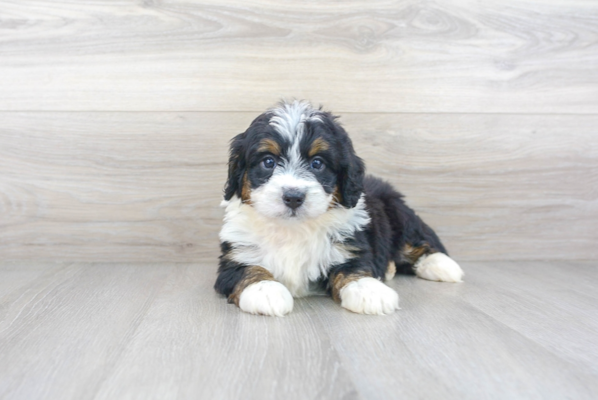
Published Wednesday, March 22, 2023 by Elena R. in Popular Dogs, New Puppy
Mini Bernedoodle generations confuse almost everyone at first. One minute you’re researching adorable fluffy puppies, and the next you’re staring at terms like F1, F1B, F2, F1BB, multigen, and F3 trying to figure out whether you’re choosing a dog or decoding a science project. It gets overwhelming quickly, especially because so many articles either oversimplify the topic or explain it in a way that somehow makes it even more confusing.
The good news is that Bernedoodle generations are much easier to understand once you know what they are really describing. At their core, these labels exist to explain how a Bernedoodle was bred and how predictable certain traits may become across different generations. That predictability is what drives almost the entire conversation around Bernedoodle generations.
Most future owners are not truly searching for a specific letter combination. They’re searching for answers to much more practical questions.
- Will this dog shed?
- How curly will the coat actually be?
- Is this generation more allergy friendly?
- How much grooming am I realistically signing up for?
- Will the puppy keep that fluffy teddy bear look?
- Does one generation have a calmer temperament than another?
That’s why generations matter.
Different Bernedoodle generations can influence coat texture, furnishings, shedding tendencies, grooming intensity, and overall consistency. Earlier generations show more variation in coat and appearance, while later generations are bred with greater predictability in mind, especially around lower shedding and coat consistency. At the same time, lower shedding comes with heavier grooming demands, which is one of the biggest realities first-time doodle owners do not fully expect until they’re brushing knots out of a suddenly very opinionated adolescent puppy at 10 PM.
Coats are a huge part of this conversation, but they’re not the only part. Furnishings, coat density, temperament, emotional sensitivity, trainability, activity level, and lifestyle compatibility all start becoming part of the equation too. Some families prioritize lower shedding because of allergies. Others care more about easier maintenance, calmer energy levels, or simply want a dog that fits naturally into daily family life.
No single Bernedoodle generation is automatically “best.” Every generation comes with tradeoffs, strengths, and different ownership realities. The right fit depends far more on the household itself than whichever generation happens to be trending online at the moment.
In this guide, we’ll break down every major Mini Bernedoodle generation, including F1, F1B, F2, F1BB, F2B, multigen, and F3 Bernedoodles. We’ll cover coat types, shedding, furnishings, grooming expectations, temperament differences, allergy friendliness, and what each generation may realistically look like in everyday life. Whether you’re trying to narrow down the best generation for your family or simply want the entire topic explained in a way that finally makes sense, this guide will walk you through it step by step.
Table of Contents
- What Do Bernedoodle Generations Mean?
- F1 Mini Bernedoodle
- F1B Mini Bernedoodle
- F2 Mini Bernedoodle
- F1BB, F2B & F3 Bernedoodles
- Multigen Bernedoodles Explained
- Bernedoodle Coat Types Explained
- Which Bernedoodle Generations Shed The Least?
- Which Bernedoodle Generations Are Most Hypoallergenic?
- Grooming Expectations Across Generations
- Temperament Differences Between Bernedoodle Generations
- Which Generation Is Best For Your Lifestyle?
- Final Thoughts
What Do Bernedoodle Generations Mean?
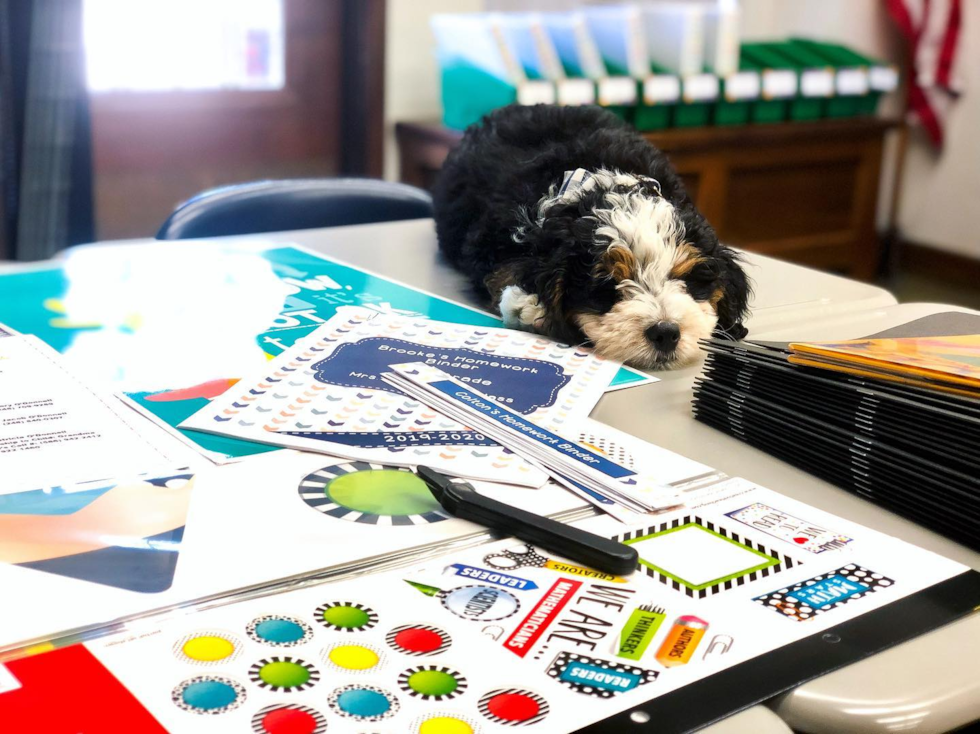
Bernedoodle generations are simply a way of describing how a Bernedoodle was bred and what genetic influences may be stronger within that particular dog. The labels can look intimidating, but once you understand the basic structure behind them, the entire topic becomes much easier to follow.
The letter “F” stands for filial generation, which refers to how many generations removed the dog is from the original Bernese Mountain Dog and Poodle cross.
For example:
- An F1 Bernedoodle is a first-generation cross between a Bernese Mountain Dog and a Poodle.
- An F2 Bernedoodle comes from two F1 Bernedoodle parents.
- An F3 Bernedoodle comes from multiple generations of Bernedoodle-to-Bernedoodle breeding and is generally considered fully multigenerational.
The “B” stands for backcross. This means a Bernedoodle has been bred back to a Poodle again in order to strengthen certain Poodle-related traits, usually curlier coats, stronger furnishings, and lower shedding tendencies.
For example:
- An F1B Bernedoodle is an F1 Bernedoodle bred back to a Poodle.
- An F1BB Bernedoodle takes that process even further by breeding an F1B Bernedoodle back to a Poodle again.
Then there’s the term multigen, which refers to Bernedoodles produced from several generations of Bernedoodle-to-Bernedoodle breeding rather than direct purebred pairings. Multigen breeding focuses on improving consistency across traits like coat type, shedding tendencies, furnishings, temperament, and overall predictability.
This is also where many people get overly focused on percentages. You’ll often see generations described by approximate Poodle percentages, like 75% Poodle or 87.5% Poodle. Those numbers can provide a rough idea of likely coat tendencies, but they do not fully determine how an individual dog will look, shed, or behave.
Traits matter more than percentages alone. A dog with stronger furnishings and denser curl genetics may shed less than another dog with technically similar percentages. Likewise, temperament, coat texture, and grooming needs can still vary within the same generation because genetics are never perfectly uniform.
F1 Mini Bernedoodle
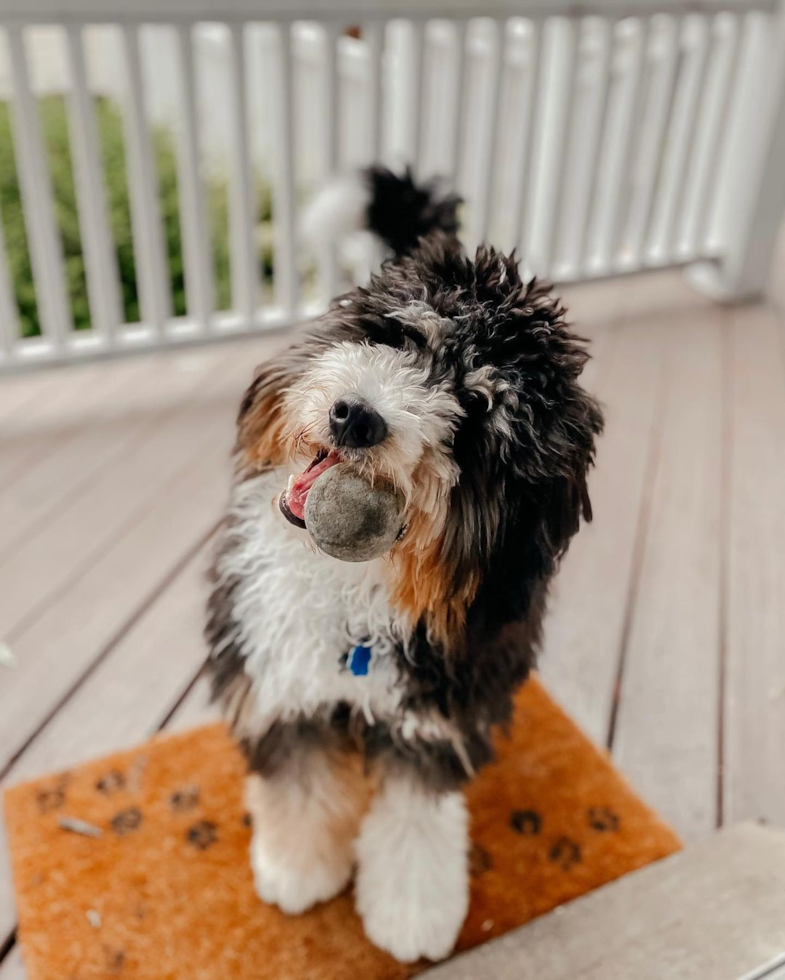
The F1 Mini Bernedoodle is the original Bernedoodle cross, created by breeding a Bernese Mountain Dog with a Mini Poodle. This generation is considered the most balanced mix between the two breeds because the genetics are split directly between purebred parents.
For many people, the F1 generation represents the classic Bernedoodle look and personality that first made the breed so popular. These dogs have soft expressive faces, playful personalities, and a relaxed teddy bear appearance that sits somewhere between the Bernese Mountain Dog and the Poodle.
At the same time, F1 Mini Bernedoodles also show the highest level of variation. Because this is the first-generation cross, coat texture, shedding tendencies, size, and even facial structure can vary quite a bit from one puppy to another. Some F1 Mini Bernedoodles inherit loose wavy coats with very little shedding, while others develop straighter coats that release more hair throughout the year. Curly coats are possible too, though they are usually less predictable compared to later generations bred more heavily toward Poodle traits.
This variability is part of what some owners love about F1 Bernedoodles. They have a slightly softer and more natural appearance compared to tighter-curled later generations. Others, however, prefer more predictability when it comes to shedding and coat maintenance.
Shedding tends to be one of the biggest question marks with F1 Mini Bernedoodles. Some shed minimally, while others shed more noticeably depending on coat type and furnishings. This generation is generally less predictable for allergy friendliness than F1B, F1BB, or multigen Bernedoodles.
Personality-wise, F1 Mini Bernedoodles combine the affectionate and easygoing nature of the Bernese Mountain Dog with the intelligence and social personality of the Poodle. Most are highly people-oriented dogs that thrive on interaction and become deeply connected to their families.
This generation appeals most to people who are comfortable embracing a little unpredictability. Some owners love the fact that no two F1 Bernedoodles look exactly the same. Others quickly realize they would rather have more consistency once grooming, shedding, and coat maintenance enter the picture.
RELATED: F1 Mini Bernedoodle: Size, Temperament, Shedding & More
F1B Mini Bernedoodle
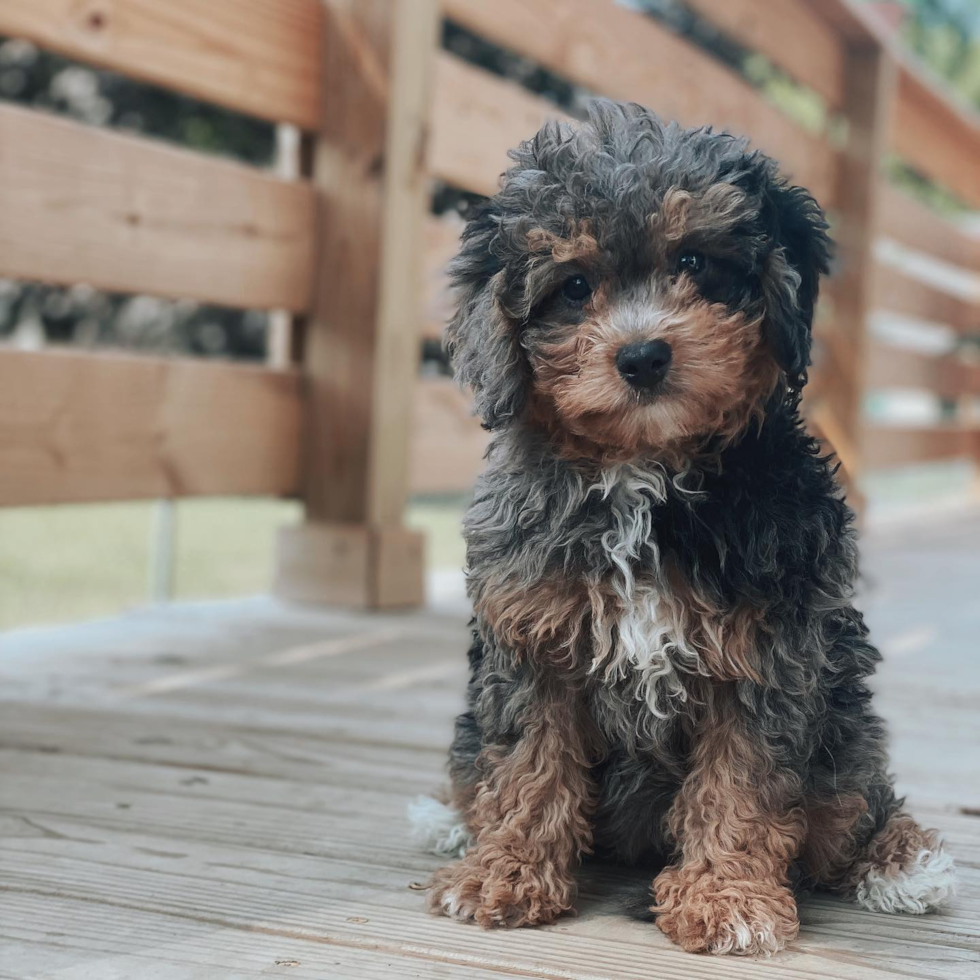
The F1B Mini Bernedoodle is created by breeding an F1 Mini Bernedoodle back to a Mini Poodle. This generation is around 75% Poodle and 25% Bernese Mountain Dog, which strengthens many of the coat traits people associate most strongly with doodles.
Compared to F1 Bernedoodles, F1Bs are more predictable when it comes to coat texture and shedding tendencies. Most inherit curlier or denser wavy coats along with stronger furnishings, including the fluffy beard, eyebrows, and softer facial features commonly associated with teddy bear-style doodles.
This stronger Poodle influence is one of the main reasons F1B Mini Bernedoodles became so popular with allergy-sensitive families. Many shed significantly less than F1 Bernedoodles, particularly dogs with tighter curls and strong furnishings.
But lower shedding comes with a tradeoff. F1B Mini Bernedoodles are one of the more grooming-intensive generations because dense low-shedding coats trap loose hair within the curls instead of releasing it naturally. Without consistent brushing, tangles and mats can form surprisingly quickly beneath the surface of the coat.
This is the part many first-time doodle owners do not fully expect. The coat may leave less hair on the furniture, but it demands much more maintenance behind the scenes. Regular brushing, professional grooming every 6 to 8 weeks, and coat upkeep become part of everyday life with F1B Bernedoodles.
Temperament-wise, F1Bs inherit high intelligence, emotional responsiveness, and strong people-oriented personalities. Some also show slightly stronger Poodle-like energy and trainability compared to earlier generations. Many owners describe them as affectionate little shadows that somehow always know exactly where their humans are.
RELATED: What Is an F1B Mini Bernedoodle? Size, Coat Type & More
F2 Mini Bernedoodle
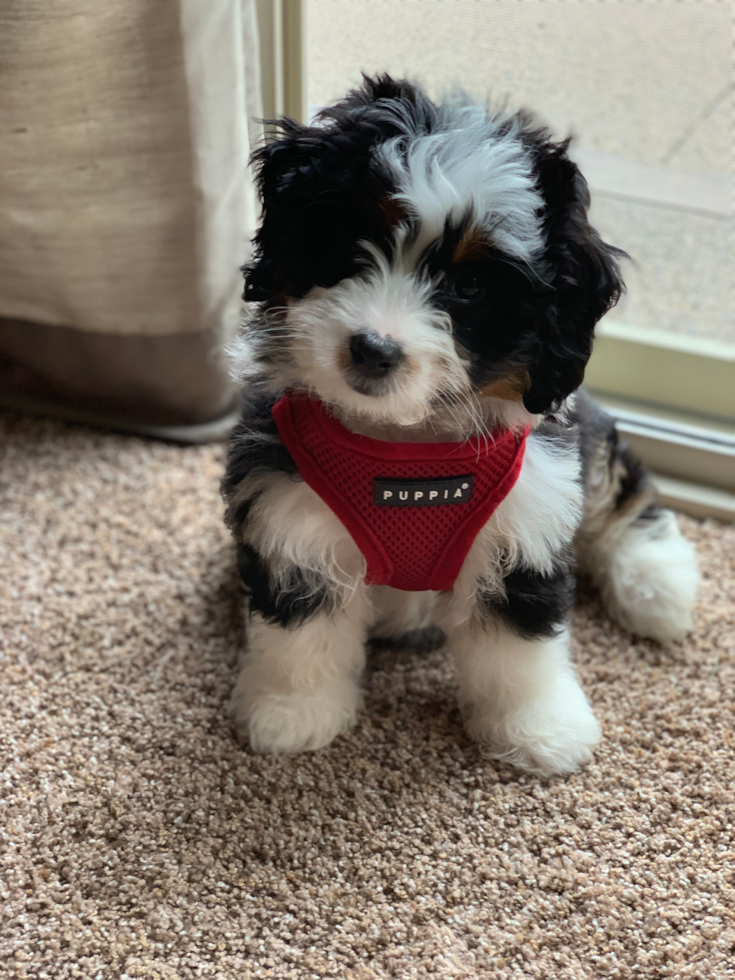
The F2 Mini Bernedoodle is created by breeding two F1 Mini Bernedoodles together. Unlike the F1 generation, which comes directly from two purebred parents, the F2 generation inherits traits from parents that already carry mixed Bernese Mountain Dog and Poodle genetics.
F2 Mini Bernedoodles are known for individuality because coat texture, shedding tendencies, furnishings, size, and appearance can vary significantly even within the same litter. Some puppies inherit curlier low-shedding coats, while others develop looser waves or straighter coats that shed more noticeably.
For some families, that unpredictability feels exciting and unique. Others find it more difficult because coat outcomes are harder to predict compared to generations like F1B or multigen Bernedoodles.
F2 Mini Bernedoodles still have the affectionate, social, and emotionally connected temperament Bernedoodles are loved for. Many owners love the slightly more relaxed and natural look this generation sometimes develops compared to tighter-curled later generations.
At the same time, F2s are not the generation most people choose when maximum predictability is the priority. Coat consistency and shedding tendencies can vary widely, which is why many breeders later moved toward more selective multigenerational breeding programs.
This generation appeals most to people who care less about achieving a perfectly specific coat type and more about simply finding a Bernedoodle personality they connect with.
RELATED: F2 Mini Bernedoodle Guide: Coat Types, Shedding, Grooming & More
F1BB, F2B & F3 Bernedoodles
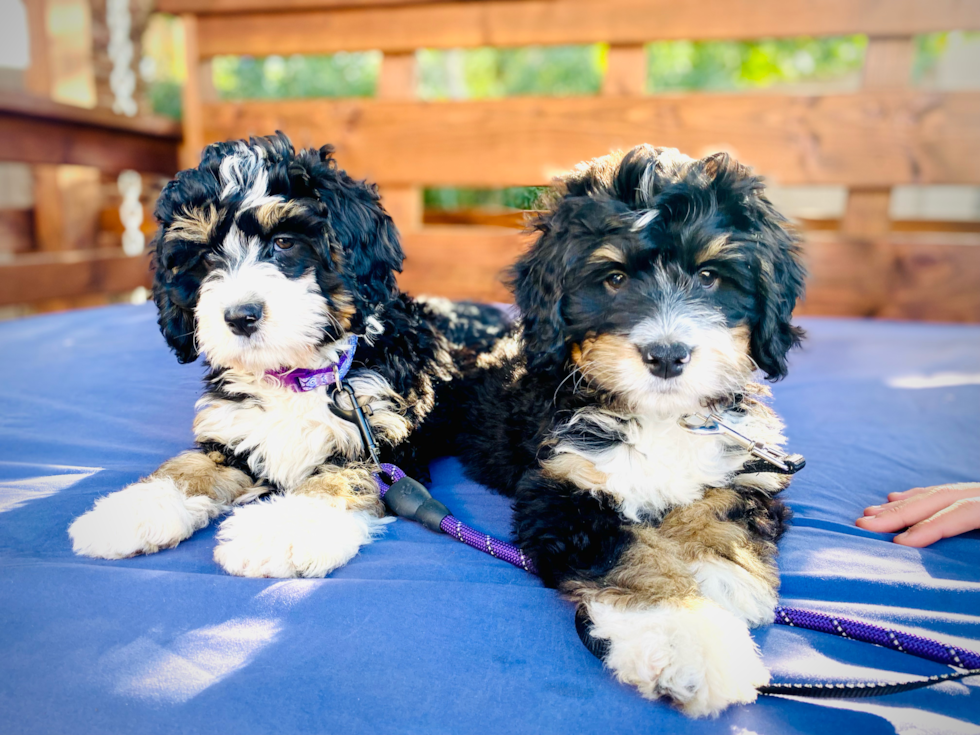
As Bernedoodle breeding continued developing, later generations like F1BB, F2B, and F3 Bernedoodles became increasingly focused on refinement and predictability. Rather than simply creating the original mix, these generations are bred more intentionally around coat consistency, furnishings, lower shedding tendencies, and stable temperament traits.
F1BB Bernedoodles are among the most Poodle-influenced generations. Created by breeding an F1B Bernedoodle back to a Poodle again, they inherit very curly dense coats, strong furnishings, and extremely low shedding tendencies. These dogs are frequently chosen by families prioritizing allergy friendliness and coat predictability, though they also require some of the highest grooming commitment.
F2B Bernedoodles usually sit somewhere between F2 and F1BB generations in terms of predictability and coat balance. They inherit lower shedding tendencies than standard F2 Bernedoodles while still keeping a somewhat softer and less intensely curly appearance compared to very Poodle-heavy generations.
F3 Bernedoodles are considered fully multigenerational. At this stage, breeders are selectively pairing Bernedoodles with specific coat traits, furnishings, temperament, and structure in hopes of creating more consistent results across future litters.
This is where Bernedoodle breeding starts feeling less random and more refined. Many later-generation Bernedoodles are intentionally bred for:
- lower shedding,
- stronger furnishings,
- more reliable coat textures,
- and greater consistency in temperament and appearance.
At the same time, these generations also require the most coat maintenance because the dense low-shedding coats trap loose hair internally instead of releasing it naturally.
Multigen Bernedoodles Explained
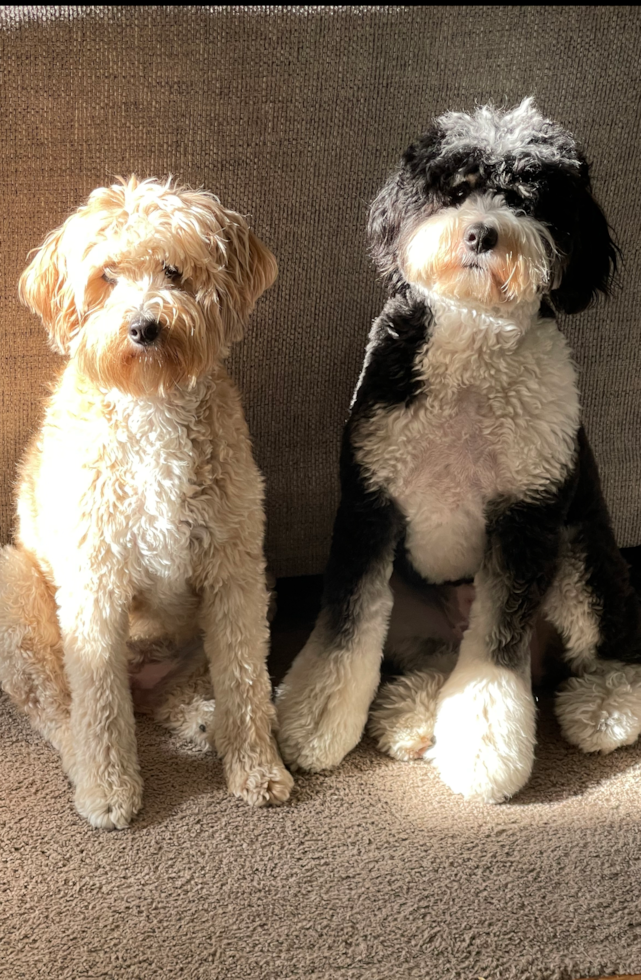
The term multigen Bernedoodle refers to Bernedoodles produced from several generations of Bernedoodle-to-Bernedoodle breeding rather than direct pairings with purebred Bernese Mountain Dogs or Poodles.
In many ways, multigen breeding is where Bernedoodle programs become most intentional. Instead of simply combining two breeds and seeing which traits appear, multigenerational breeding focuses on refining specific characteristics over time. Breeders may selectively pair dogs with strong furnishings, lower shedding coats, stable temperaments, consistent structure, and desirable personality traits in hopes of producing more predictable outcomes across future generations.
Coat consistency is one of the biggest goals behind multigen Bernedoodles. Earlier generations can produce a fairly wide range of coat textures and shedding tendencies, while multigen breeding aims to narrow that range and create more reliable coat outcomes.
Furnishing selection is also very important here. Dogs with stronger furnishings are more likely to inherit the fluffy facial hair, denser coats, and lower-shedding traits many Bernedoodle owners are looking for. Over multiple generations, breeders may selectively reinforce those traits to improve consistency.
Temperament refinement is part of the conversation too. While every Bernedoodle still has an individual personality, multigen breeding programs may intentionally select for traits like emotional stability, social confidence, trainability, and adaptability to family life.
This is one reason experienced Bernedoodle owners start paying attention to breeding programs and bloodlines as much as generation labels themselves. By the time Bernedoodles reach fully multigenerational stages, the long-term consistency behind the breeding program can matter just as much as the generation name attached to the puppy.
RELATED: Mini Bernedoodle Generations: Multigen, F1BB, F2B & F3 & more
Bernedoodle Coat Types Explained
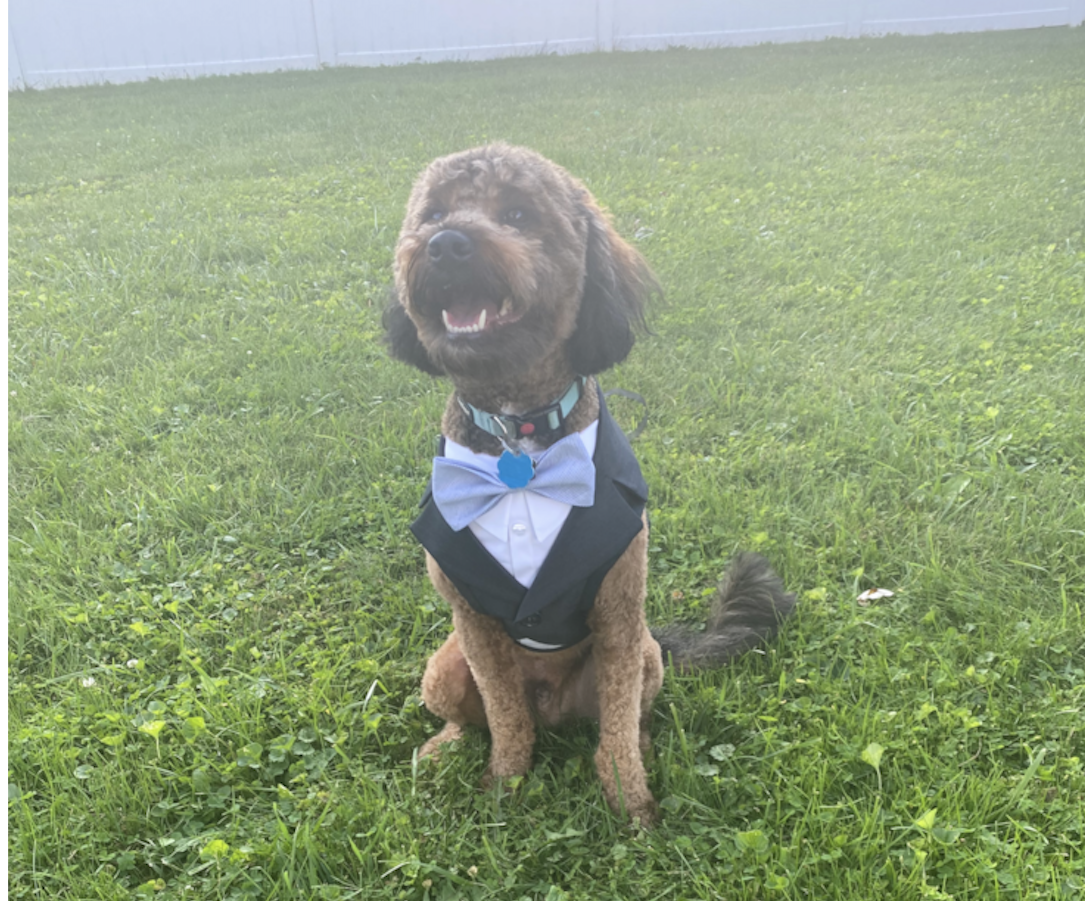
Coat type is probably the single biggest factor driving the entire Bernedoodle generation conversation. Most people searching for a specific generation are ultimately trying to predict what the coat will actually look like, how much it may shed, how difficult it will be to maintain, and whether it will fit their lifestyle realistically long term.
Bernedoodle coats can vary significantly depending on genetics, furnishings, coat density, and generation. Even puppies from the same litter can sometimes develop very different coats as they mature. Understanding the main coat types helps make the entire topic far less confusing.
Curly Coats
Curly Bernedoodle coats inherit the strongest Poodle influence. These coats feel dense, plush, and tightly textured with very little visible shedding. Curly coats are especially common in F1B, F1BB, and many multigen Bernedoodles because later generations are selectively bred toward stronger low-shedding coat traits.
Many families specifically seek out curly Bernedoodles because they are considered the most allergy friendly. At the same time, curly coats are the highest maintenance. Loose hair is trapped inside the curls instead of falling out naturally, which increases the risk of tangles and matting when brushing is inconsistent.
Wavy Coats
Wavy coats are probably the most recognizable Bernedoodle look. They sit somewhere between straight and curly, creating the fluffy teddy bear appearance many people picture when they imagine a Bernedoodle.
These coats combine softer texture with moderate shedding tendencies and slightly easier maintenance compared to tighter curls. Some wavy coats shed very little, while others release more hair depending on furnishings and coat genetics.
A lot of owners love wavy coats because they balance appearance, softness, and manageability fairly well. Still, they absolutely require regular grooming and brushing, especially once the adult coat develops.
Straight Coats
Straight Bernedoodle coats inherit more traits from the Bernese Mountain Dog side genetically. These coats appear flatter, looser, and less textured than curly or wavy coats. Straight coats are much more common in earlier generations like F1s and some F2 Bernedoodles.
Compared to curly coats, straight coats shed more noticeably throughout the year and are considered less allergy friendly. However, they sometimes require slightly less brushing because the coat is less prone to severe matting.
Some owners prefer straighter coats because they feel more natural and slightly less “styled” compared to dense doodle curls. Others specifically want the fluffier furnished look associated with stronger Poodle influence.
Furnishings, Weak Furnishings & Unfurnished Coats
Furnishings are one of the most important and least understood parts of Bernedoodle coat genetics.
A furnished Bernedoodle has the fluffy beard, eyebrows, facial hair, and softer coat texture commonly associated with doodles. Furnishings are strongly connected to lower shedding tendencies and are especially common in later generations bred more heavily toward Poodle traits.
Weak furnishings sit somewhere in the middle. These dogs may have partial facial furnishings and softer coats but still shed more noticeably than strongly furnished Bernedoodles. Coat texture can vary quite a bit in this category.
Unfurnished Bernedoodles usually lack the fluffy doodle facial hair entirely. Their coats resemble the Bernese Mountain Dog side more closely and typically shed more throughout the year. Many people are surprised to learn that not every Bernedoodle automatically inherits the classic teddy bear appearance they see online.
Dense Coats
Coat density matters just as much as curl pattern. Some Bernedoodles inherit extremely thick dense coats that feel plush and luxurious but require a significant amount of maintenance. Dense coats tend to trap loose hair, debris, and tangles more easily, especially in heavily furnished dogs.
Coat density is one of the biggest reasons some Bernedoodles become much more grooming-intensive than owners originally expected. A dense wavy coat can sometimes require just as much maintenance as tighter curls.
The Coat Transition Phase
One of the biggest surprises for many Bernedoodle owners happens during adolescence when the puppy coat begins transitioning into the adult coat. This usually occurs somewhere between 6 and 12 months of age.
During this phase, the soft puppy coat starts shedding out while the denser adult coat grows in underneath. Matting increases dramatically because the two textures tangle together very easily. Puppies that brushed easily one month may suddenly develop knots seemingly overnight.
This is also the stage where coat texture sometimes changes significantly. A puppy with loose soft waves may develop tighter curls later on, while coat color and density can shift noticeably as the adult coat matures.
RELATED: Mini Bernedoodle Pros and Cons
Which Bernedoodle Generations Shed The Least?
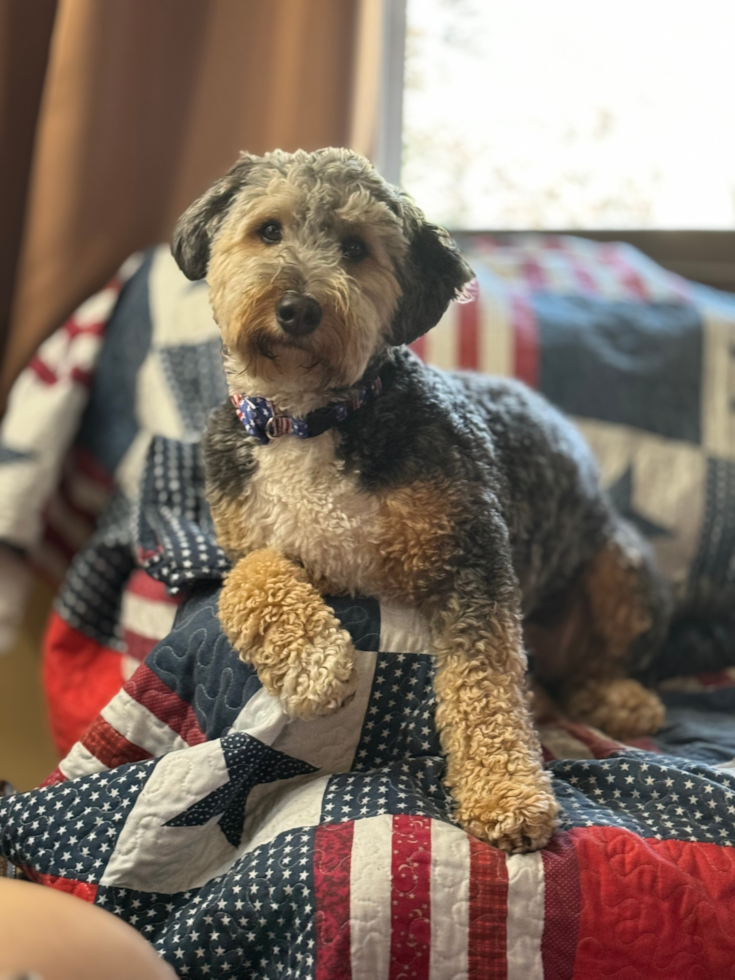
This is probably the most searched Bernedoodle question online, and it’s also one of the most misunderstood.
The first thing worth clarifying is that low shedding and non-shedding are not the same thing. No Bernedoodle generation is completely shed-free. Even the lowest-shedding Bernedoodles still lose some hair naturally over time. The difference usually comes down to how much hair is released and whether it falls freely around the home or remains trapped within the coat itself.
In general, F1BB and multigen Bernedoodles are considered the lowest-shedding generations because they inherit the strongest Poodle coat traits, dense furnishings, and curlier coat textures. Many F1B Bernedoodles also shed very little compared to earlier generations.
Furnishings play a huge role here. Bernedoodles with strong furnishings inherit lower-shedding coat characteristics because the hair becomes trapped within the curls and waves instead of releasing naturally throughout the environment. Dogs with weak furnishings or unfurnished coats are generally more likely to shed.
This trapped-hair concept is where many people get confused. A low-shedding Bernedoodle may still lose hair regularly, but the hair stays caught inside the coat rather than collecting visibly on clothing, floors, and furniture. That’s why these coats require so much brushing. Without regular grooming, trapped hair gradually forms tangles and mats beneath the surface.
And this is the tradeoff many first-time doodle owners do not expect: the generations that usually shed the least are the generations that require the most maintenance.
F1 Bernedoodles and some F2 Bernedoodles show the widest shedding variability because coat traits are less predictable. Some shed minimally, while others release much more hair depending on furnishings and coat texture.
Later generations like F1BB, F3, and multigen Bernedoodles are bred more intentionally toward lower-shedding coats and stronger furnishings, which is why many families looking for more predictable shedding outcomes gravitate toward them.
RELATED: Do Mini Bernedoodles Shed? Coat Types and Allergies Explained
Which Bernedoodle Generations Are Most Hypoallergenic?
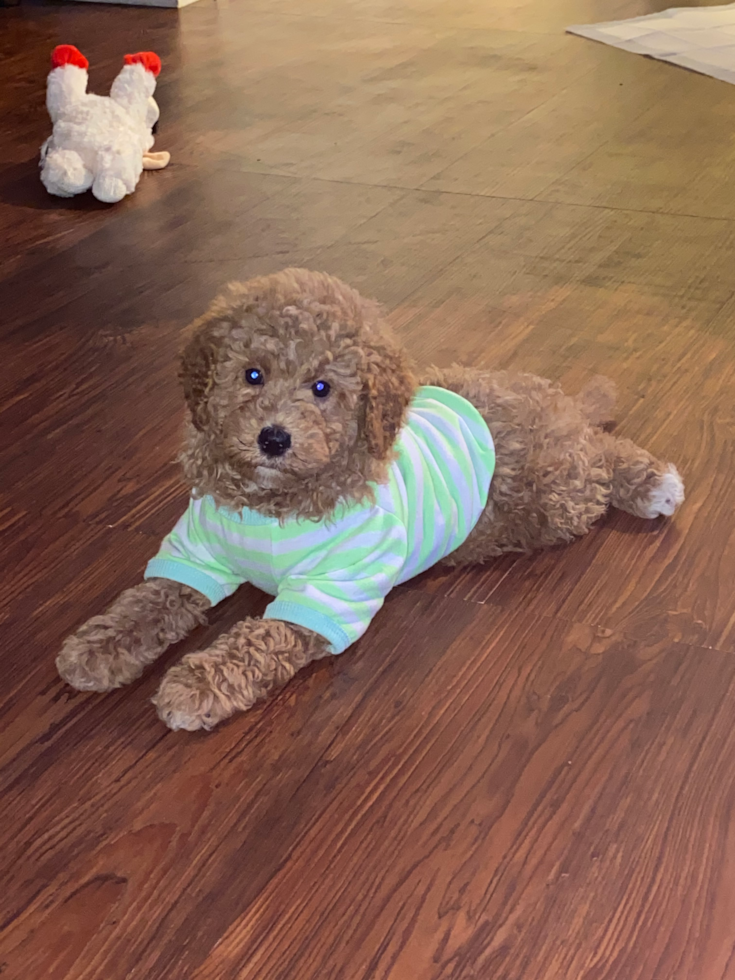
No Bernedoodle generation is fully hypoallergenic. In fact, no dog breed is truly 100% hypoallergenic. Dog allergies are triggered by proteins found in dander, saliva, and skin oils rather than the hair itself.
That said, some Bernedoodle generations are considered more allergy friendly than others. F1BB, F1B, F3, and many multigen Bernedoodles are viewed as the most allergy-friendly generations because they inherit curlier low-shedding coats along with stronger furnishings. These traits reduce the amount of loose hair and dander released into the environment compared to straighter or less furnished coats.
At the same time, allergy responses are highly individual. One person may do perfectly well around a multigen Bernedoodle, while another still reacts despite the lower-shedding coat. Coat type, grooming routines, home cleanliness, and the individual dog itself can all influence how allergy friendly a Bernedoodle feels in real life.
This is one reason responsible breeders avoid promising that any Bernedoodle is completely hypoallergenic. Later generations can improve the likelihood of allergy friendliness, but no generation can fully eliminate allergens altogether.
RELATED: Are Mini Bernedoodles Hypoallergenic? Shedding, Allergies & More
Grooming Expectations Across Generations
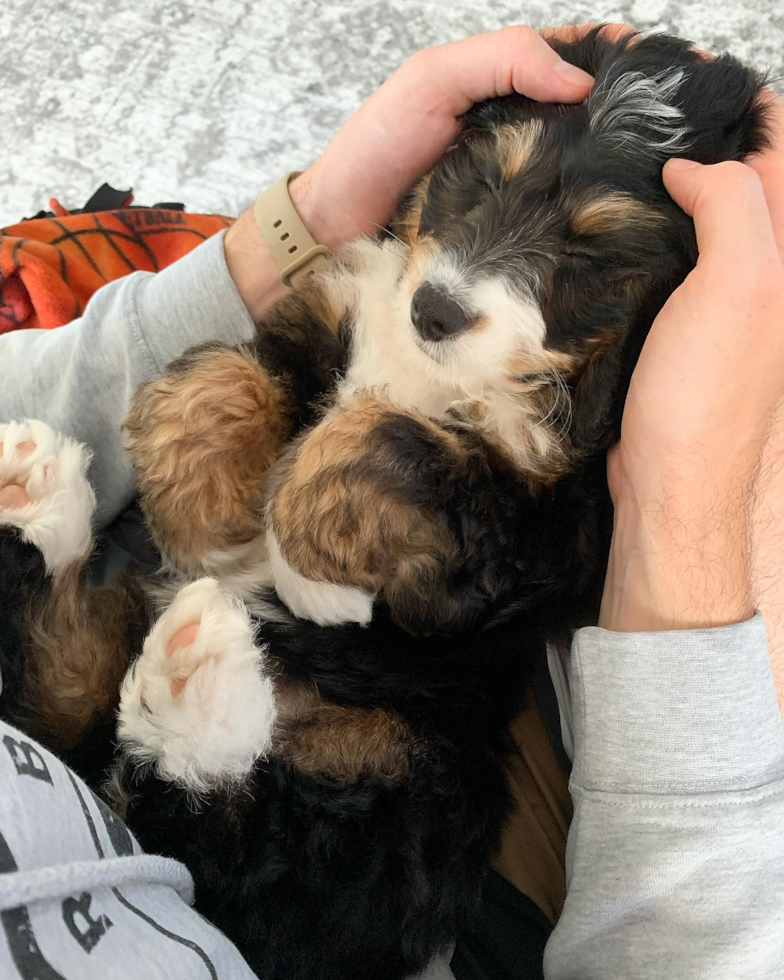
If there’s one reality almost every Bernedoodle owner eventually learns, it’s that lower shedding usually means more grooming.
That tradeoff sits at the center of nearly every Bernedoodle generation discussion. Families choose later generations because of the softer low-shedding coats, but those same coats usually require much more brushing, maintenance, and professional grooming than people initially expect.
Most Bernedoodles need brushing several times per week at minimum, while dense curly coats benefit from daily brushing to prevent tangles and mats from forming beneath the surface. Areas like behind the ears, under the collar, around the legs, and near the tail tend to mat the fastest because of friction throughout the day.
Professional grooming every 6 to 8 weeks is part of long-term Bernedoodle ownership as well. Grooming appointments help support coat health, trim nails, clean sanitary areas, reduce matting, and keep the coat manageable. Many owners eventually choose shorter trims simply because they are easier to keep realistically between appointments.
The coat transition phase is where grooming becomes significantly more difficult. Around 6 to 12 months old, many Bernedoodles begin losing the soft puppy coat while the denser adult coat grows in underneath. During this stage, tangles and mats can form much faster because the two coat textures catch against each other very easily.
Ear cleaning matters too, especially in heavily furnished Bernedoodles with floppy ears and dense facial hair around the ear canal. Moisture and debris can become trapped more easily, which increases the risk of irritation or infections if ear care becomes inconsistent.
Nail care also plays a bigger role than many people realize. Long nails can affect posture, movement, and walking comfort over time, particularly for active dogs living mostly indoors on softer flooring.
Temperament Differences Between Bernedoodle Generations
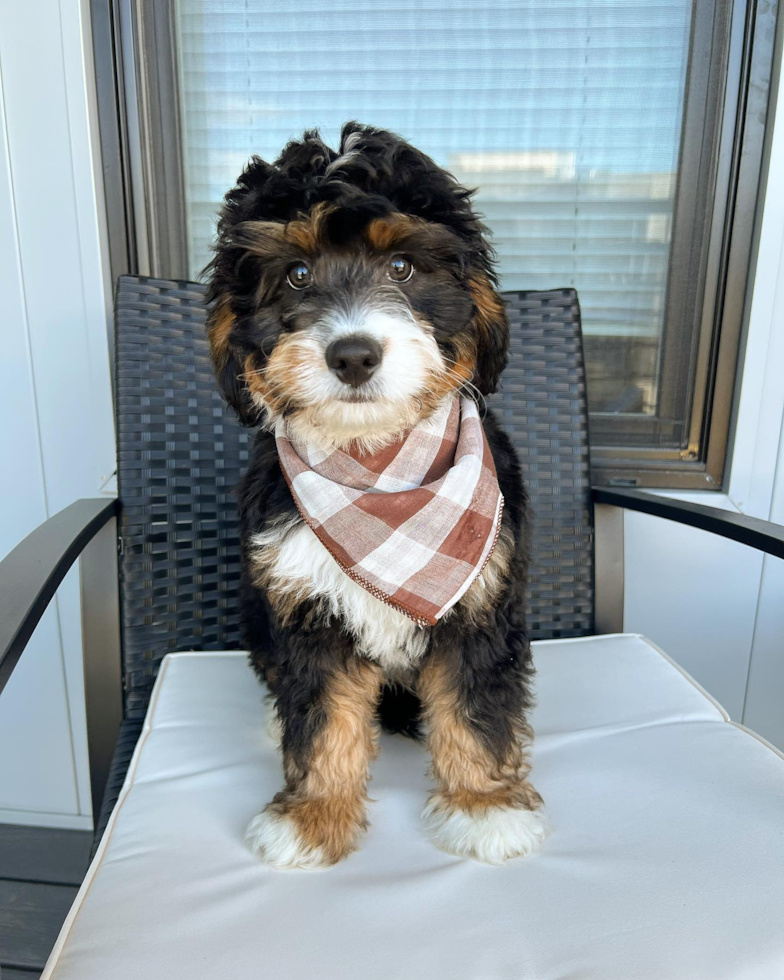
When people compare Bernedoodle generations, the conversation usually revolves around coats, shedding, and grooming. Temperament gets reduced to a few generic phrases like “friendly” or “good family dog,” even though personality is what shapes daily life with the dog far more than coat texture ever will.
The first thing worth understanding is that no Bernedoodle generation guarantees a specific personality. Every dog is still an individual influenced by genetics, training, socialization, environment, and life experiences. At the same time, certain tendencies can appear more often across different generations, especially as breeding becomes more selective over time.
F1 Bernedoodles show the greatest personality variability because they are the original cross between a Bernese Mountain Dog and a Poodle. Some inherit a calmer and more laid-back Bernese influence, while others lean more heavily toward the sharper intelligence and higher mental stimulation needs commonly associated with Poodles.
That unpredictability is part of the appeal for some owners. F1s feel very balanced emotionally and preserve a softer mix of traits from both breeds. At the same time, one F1 puppy may mature into a relaxed easygoing companion while another becomes much more energetic and mentally demanding than the family expected.
F1BB Bernedoodles show stronger Poodle-like tendencies both physically and behaviorally. Many owners describe them as highly intelligent, emotionally aware, eager to learn, and extremely attached to their people. They pick up routines quickly and respond very well to training and interaction.
But that intelligence also means they need more mental stimulation than people initially realize. Without enough engagement, many Bernedoodles become bored surprisingly fast, especially heavily Poodle-influenced generations. Boredom can show up as barking, chewing, pacing, attention-seeking behavior, or the sudden decision that stealing socks has become an exciting personal hobby.
Clinginess is another common theme across Bernedoodle ownership in general, though it can feel especially strong in some later generations. Bernedoodles form deep emotional attachments to their families and genuinely prefer being close to their people throughout the day. Some owners love this constant companionship. Others quickly realize they have not used the bathroom alone in several months.
Multigen and F3 Bernedoodles are where temperament refinement becomes more intentional. Established breeding programs may selectively pair dogs with stable social temperaments, emotional resilience, trainability, and strong family compatibility in hopes of creating more consistent personality patterns over time.
That does not mean every multigen Bernedoodle behaves identically. It simply means the breeding process becomes more focused on long-term consistency rather than broad variability.
Across nearly all generations, though, Bernedoodles share a few core personality traits that made the breed so popular in the first place. Most are affectionate, socially connected, emotionally responsive, and highly integrated into family life. They want to participate in everything happening around them, whether they are invited to participate or not.
RELATED: Are Mini Bernedoodles Smart? Intelligence, Trainability & Behavior
Which Generation Is Best For Your Lifestyle?
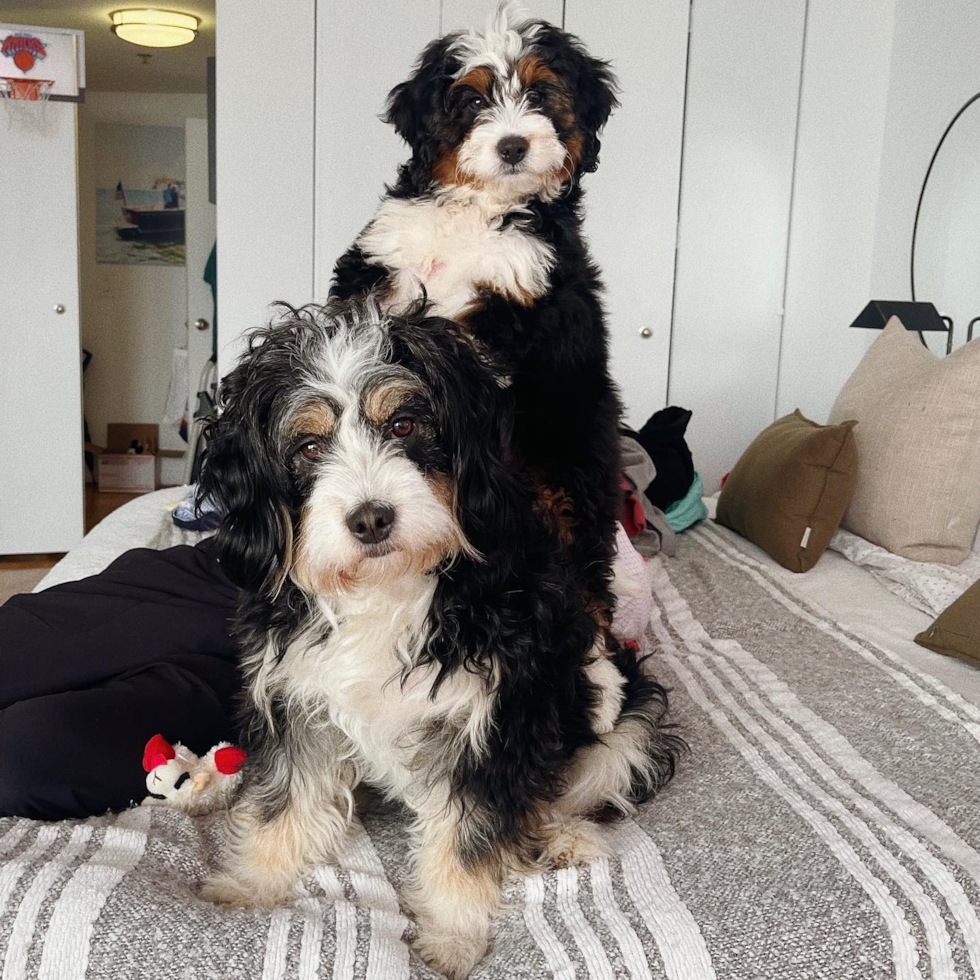
The best Bernedoodle generation is usually the one that fits naturally into your actual lifestyle, not the one currently getting the most attention online.
A lot of future owners approach generations as if there’s a universally “best” option somewhere hidden in the charts, but Bernedoodles are full of tradeoffs. The generation that works perfectly for one family may feel overwhelming or impractical for another.
For families dealing with allergies, later generations like F1B, F1BB, F3, and multigen Bernedoodles are the most appealing because they inherit stronger furnishings and lower-shedding coats. These generations are more predictable when it comes to allergy friendliness. Still, no Bernedoodle is fully hypoallergenic, and individual reactions can vary quite a bit from person to person.
Families with children do well across multiple generations because Bernedoodles as a whole tend to be affectionate, playful, and highly people-oriented dogs. Many naturally integrate themselves into daily family life very quickly. That said, energy level, training, and socialization matter more than generation alone when it comes to family compatibility.
First-time owners gravitate toward later generations because the predictability feels reassuring. More consistent coats, stronger furnishings, and lower-shedding tendencies can help reduce some uncertainty. At the same time, first-time doodle owners also need to understand that lower shedding means significantly more grooming and maintenance.
This is where grooming tolerance becomes incredibly important. Families willing to commit to regular brushing, professional grooming appointments, and coat maintenance do very well with F1B, F1BB, and multigen Bernedoodles. Families hoping for a more relaxed maintenance routine may sometimes prefer a generation with a slightly looser coat and a little more natural shedding.
Active households fit well with Bernedoodles overall because most generations benefit from regular exercise, interaction, and mental stimulation. More Poodle-influenced generations sometimes show slightly sharper trainability and higher engagement needs, while some earlier generations may feel a little calmer or softer in energy level.
Predictability preferences matter too. Some owners genuinely enjoy the uniqueness and individuality that comes with earlier generations like F1s and F2s. Others strongly prefer the consistency that later generations and multigen breeding programs aim to provide. Neither approach is wrong. It depends entirely on what feels realistic and enjoyable for the household itself.
RELATED: Are Mini Bernedoodles Good Family Dogs? What Life Really Looks Like
Final Thoughts
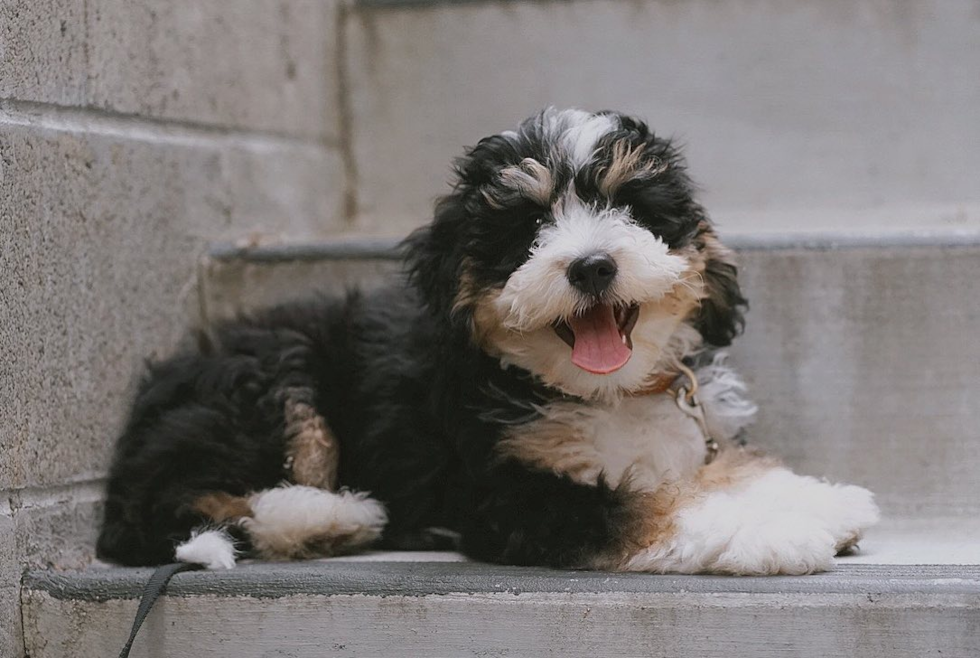
Bernedoodle generations can seem confusing at first, but underneath all the letters and percentages, the conversation comes down to a few very practical things: shedding, coat predictability, grooming expectations, personality tendencies, and lifestyle fit.
That’s really what people are trying to figure out when they research F1, F1B, F2, F1BB, multigen, and F3 Bernedoodles. They’re trying to understand what daily life with the dog may realistically feel like once the excitement of bringing a puppy home settles into everyday routine.
Earlier generations offer more variation and individuality, while later generations are bred with greater consistency and predictability in mind. Many multigen Bernedoodles inherit stronger furnishings, lower-shedding coats, and more refined coat consistency. At the same time, those same traits create much heavier grooming demands than people initially expect.
That tradeoff sits at the center of almost the entire Bernedoodle world. The fluffier, curlier, lower-shedding coats people love most are the coats that require the most upkeep behind the scenes. The generations bred most intentionally toward predictability are also the generations that demand the highest level of grooming commitment.
Still, for many families, the personality side of Bernedoodle ownership makes all of it feel worth it. These dogs are affectionate, emotionally connected, playful, highly social, and deeply woven into family life. Many owners eventually stop thinking about generations altogether because the dog simply becomes part of the rhythm of the home itself.
No generation is automatically perfect, and no chart can fully predict the experience of an individual dog. But understanding the differences between Bernedoodle generations can make the process far less overwhelming and help families choose a dog whose needs, coat type, and personality fit naturally into their life.
Elena R.
About The Author
Elena is a leading expert in the field of dog behavior, care, and training, with over a decade of experience in writing about dogs. As a published writer and lifelong dog enthusiast, Elena currently shares her home with three beloved canine companions. She is dedicated to staying up to date on the latest advancements in dog care and training, ensuring that her articles provide readers with accurate and valuable insights. With her extensive knowledge and passion for all things canine, Elena's contributions to the Premier Pups community offer both expertise and authority on a wide range of dog-related topics.
What To Read Next
Mini Bernedoodle Multigen Generations: F1BB, F2B & F3 & more
Bernedoodle generations can feel confusing surprisingly fast. Most people start out thinking they’re simply choosing between different puppies, and then suddenly they’re staring at terms like F1B, F1BB, F2B, multigen, and F3 wondering if they accidentally... Read More
Are Mini Bernedoodles Hypoallergenic? Shedding, Allergies & More
Mini Bernedoodles are described as hypoallergenic dogs, but the reality is a little more nuanced than that. While many Mini Bernedoodles inherit the low-shedding qualities of the Poodle, no dog is completely hypoallergenic. Some Mini Bernedoodles shed... Read More
Frequently Asked Questions
What is the best Bernedoodle generation? There is no single “best” Bernedoodle generation for everyone. The right generation depends on what matters most to the owner, including shedding expectations, grooming tolerance, coat preferences, allergy concerns, and lifestyle fit. Some families prefer the individuality of F1 Bernedoodles, while others prioritize the predictability seen in F1B, F1BB, or multigen generations.
Which Bernedoodle sheds the least? F1BB, F1B, F3, and multigen Bernedoodles are generally considered the lowest-shedding generations because they inherit stronger furnishings and curlier Poodle-like coats. However, no Bernedoodle generation is completely non-shedding.
What is an F1B Bernedoodle? An F1B Bernedoodle is created by breeding an F1 Bernedoodle back to a Poodle. This generation is around 75% Poodle and 25% Bernese Mountain Dog, which usually leads to curlier coats, lower shedding tendencies, and stronger furnishings.
What is a multigen Bernedoodle? A multigen Bernedoodle comes from several generations of Bernedoodle-to-Bernedoodle breeding rather than direct purebred pairings. Multigen breeding focuses on improving predictability around coat type, furnishings, shedding tendencies, and temperament consistency over time.
Are Bernedoodles hypoallergenic? No Bernedoodle is fully hypoallergenic. Even low-shedding dogs still produce allergens through dander, saliva, and skin oils. That said, many Bernedoodles, especially later generations with stronger furnishings and curlier coats, are considered more allergy friendly than heavier-shedding breeds.
What does furnished mean? A furnished Bernedoodle has the fluffy facial hair, beard, eyebrows, and softer doodle-style coat texture commonly associated with Bernedoodles. Furnishings are strongly connected to lower shedding tendencies and are especially common in later generations bred more heavily toward Poodle coat traits.
Do F1 Bernedoodles shed? Some F1 Bernedoodles shed very little, while others shed more noticeably depending on coat type and furnishings. Because F1s are the original Bernese Mountain Dog and Poodle cross, coat outcomes tend to be less predictable compared to later generations like F1B or multigen Bernedoodles.
Which Bernedoodle generation is easiest to groom? There is no completely low-maintenance Bernedoodle generation, but straighter or less dense coats sometimes require slightly less brushing than very curly low-shedding coats. In many cases, the generations that shed the least, like F1BB and multigen Bernedoodles, are actually the most grooming intensive because trapped hair increases matting risk.
Are multigen Bernedoodles better? Not necessarily better, just more predictable. Multigen breeding focuses on coat consistency, lower shedding tendencies, furnishings, and temperament refinement. Some families prefer that predictability, while others enjoy the individuality and softer variability commonly seen in earlier generations like F1s.
Why are Bernedoodle generations important? Bernedoodle generations help explain how a dog was bred and what traits may be more likely to appear. Generations can influence coat texture, shedding tendencies, furnishings, grooming intensity, and overall predictability. They help future owners understand what to realistically expect from different Bernedoodle lines.
Which Bernedoodle generation is best for allergies? F1B, F1BB, F3, and many multigen Bernedoodles are considered the most allergy-friendly generations because they inherit curlier coats, stronger furnishings, and lower shedding tendencies. Still, allergy responses vary from person to person, and no generation can guarantee a completely allergy-free experience.
What coat type is best? The best coat type depends entirely on the owner’s preferences and lifestyle. Curly coats shed the least but require the most grooming. Wavy coats balance softness and manageability, while straighter coats may shed more but sometimes require slightly less maintenance. There is no universally perfect coat type, only the one that best fits the household itself.