





Published Thursday, June 18, 2026 by Elena R. in Dog Grooming
One of the biggest reasons people fall in love with Mini Bernedoodles is the coat. The fluffy teddy bear look, the soft waves, the expressive face covered in shaggy fur that somehow makes even basic eye contact feel emotionally manipulative. It’s part of the breed’s appeal. Probably a huge part of it. And somewhere along the way, most people hear the same thing: “Mini Bernedoodles don’t shed." That’s where things start getting oversimplified.
The truth is that Mini Bernedoodles can shed. Some shed very little. Some shed moderately. A few shed much more than their new owners expected. Coat genetics play a massive role, and no breeder can guarantee a completely non-shedding dog every single time.
That surprises a lot of first-time doodle owners because the internet tends to treat shedding like a simple yes-or-no question. With Mini Bernedoodles, it really isn’t.
A Mini Bernedoodle’s shedding level depends on several factors, including coat type, generation, furnishings, genetics, and how much influence comes from the Bernese Mountain Dog side versus the Poodle side of the mix. Two puppies from the same litter can even end up with noticeably different coats as adults. One may barely leave hair around the house. Another may quietly coat dark clothing in fuzz for the next 14 years.
The other thing people often misunderstand is that low shedding does not mean low maintenance. In fact, the Mini Bernedoodles that shed the least often require the most grooming. Curly and wavy coats tend to trap loose hair instead of dropping it around the home, which sounds great until brushing falls behind and small tangles suddenly turn into mats hiding underneath all the fluff.
So when people ask, “Do Mini Bernedoodles shed?” they are usually asking several questions at once:
- Will my house be covered in fur?
- Are they good for allergies?
- Which coat sheds the least?
- Does generation matter?
- How much grooming will this realistically take?
Those are the questions that matter, and they deserve better answers than the generic “low-shedding family dog” description most provide.
This guide breaks down the real answer behind Mini Bernedoodle shedding, including how coat genetics work, why some dogs shed more than others, which generations are usually lower shedding, whether Mini Bernedoodles are truly hypoallergenic, and what owners should realistically expect once the puppy coat starts changing into an adult coat. Because with this breed, shedding is only one part of the story. The coat itself comes with its own entire personality sometimes.
Table of Contents
- Why Some Mini Bernedoodles Shed More Than Others
- Mini Bernedoodle Coat Types and Shedding
- Does Generation Affect Mini Bernedoodle Shedding?
- Are Mini Bernedoodles Hypoallergenic?
- Why Low-Shedding Does Not Mean Low-Maintenance
- Do Mini Bernedoodle Puppies Shed More?
- How to Reduce Mini Bernedoodle Shedding at Home
- How to Choose a Lower-Shedding Mini Bernedoodle
- Final Thoughts on Mini Bernedoodle Shedding
Why Some Mini Bernedoodles Shed More Than Others
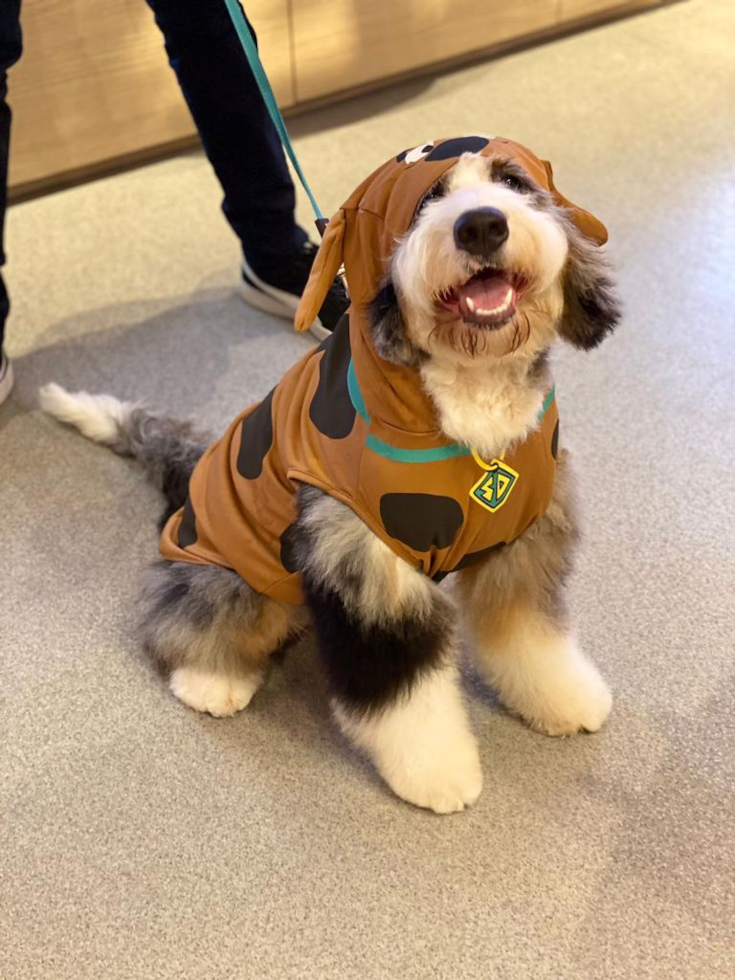
One of the most confusing things about the Mini Bernedoodle breed is that two dogs can look almost identical as puppies and grow into completely different coats. One barely sheds at all. The other leaves little tumbleweeds of fluff under the dining room chairs by year two. Genetics can be weird like that.
This is where the conversation gets much more interesting. A Mini Bernedoodle’s shedding level is heavily influenced by which parent breed traits become dominant in the coat. The Bernese Mountain Dog side naturally carries a thicker shedding coat designed for colder climates, while the Poodle side contributes curl, texture, and lower-shedding coat qualities.
The more Poodle influence a dog inherits in coat genetics, the lower the shedding usually becomes. The more Bernese influence shows through, the higher the chance of visible shedding around the home. But curl alone does not tell the whole story.
This is where furnishings come in. Furnishings refer to the longer facial hair and coat traits commonly associated with doodle breeds, including the beard, eyebrows, and fluffy facial appearance people love so much. Dogs with stronger furnishing genetics often shed less because loose hair stays trapped inside the coat rather than falling freely around the house.
That trapped hair sounds great in theory until brushing gets skipped for a few days and the coat quietly starts turning into a hidden network of tangles underneath.
Generation matters too, which we’ll get into more later. In general, F1B and multigenerational Mini Bernedoodles often have stronger Poodle coat influence and lower shedding overall compared to some F1 Bernedoodles. But even then, there are no absolute guarantees because mixed-breed genetics do not divide themselves neatly down the middle.
And this is probably the biggest thing buyers should understand before bringing one home: A Mini Bernedoodle can be low-shedding without being non-shedding. Those are not the same thing.
A lot of owners still find fur occasionally on furniture, clothing, blankets, or floors even with dogs considered “minimal shedders.” Usually it’s far less than what families experience with traditional double-coated breeds, but it’s rarely zero. That matters because unrealistic expectations are usually what disappoint people later, not the dog itself.
Mini Bernedoodle Coat Types and Shedding
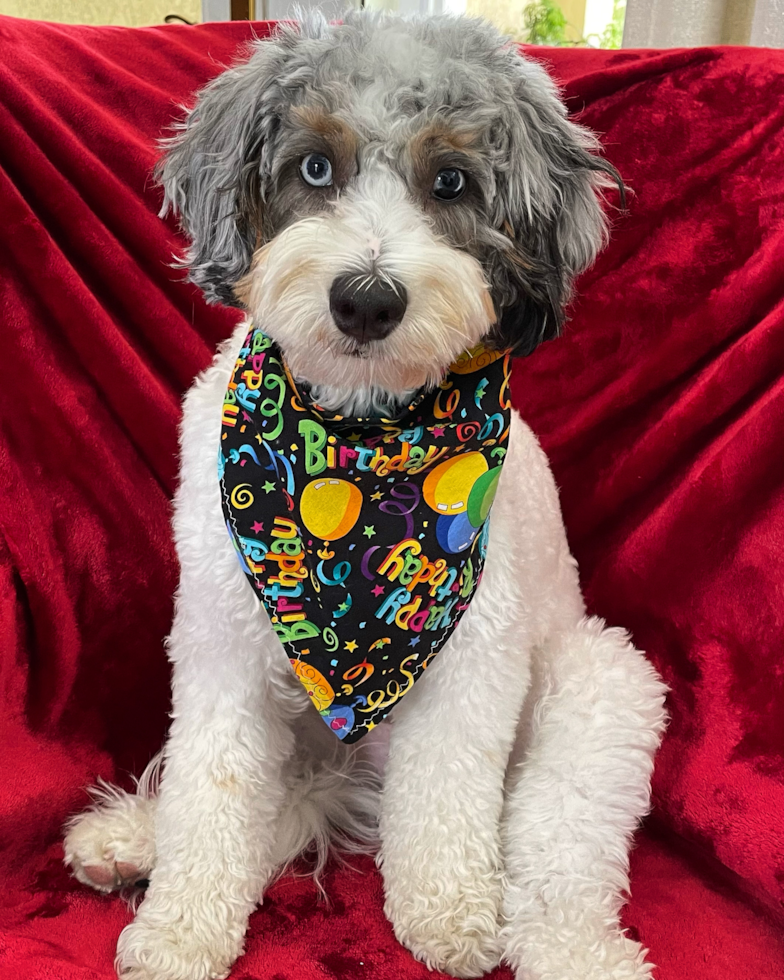
Mini Bernedoodle coats usually fall into three general categories: straight, wavy, or curly. And while appearance changes quite a bit between them, shedding often changes too.
Straight Coat Mini Bernedoodles
Straight-coated Mini Bernedoodles typically shed the most out of the three coat types. These coats inherit more influence from the Bernese Mountain Dog side of the mix and may look fluffier, smoother, or slightly more relaxed compared to curlier doodle coats.
Some owners prefer this look because it feels more natural and less “styled” than tighter curls. The tradeoff is that straight coats usually release loose fur more easily around the home instead of trapping it inside the coat.
That means more visible shedding on floors, furniture, blankets, and dark clothing. Usually not extreme shedding like a full Bernese Mountain Dog, but definitely noticeable compared to lower-shedding doodle coats.
Straight coats also tend to mat a little less aggressively than tight curls, which some owners appreciate once grooming routines become part of everyday life.
Wavy Coat Mini Bernedoodles
Wavy coats are considered the middle ground in the Mini Bernedoodle world. They usually have the soft shaggy “teddy bear” appearance many families want while still shedding less than straighter coats.
A lot of people searching for low-shedding Mini Bernedoodles end up hoping for this exact coat type without realizing it. Wavy-coated Mini Bernedoodles shed lightly to moderately depending on genetics, furnishings, and overall coat texture. Loose hair stays caught within the waves more than straight coats, though not as tightly as curly coats.
Many wavy coats are also easier to brush than tight curls while still keeping visible shedding relatively manageable around the home. Of course, “manageable” becomes a flexible term once rainy weather, mud season, or stick collection hobbies enter the picture.
And yes, many Mini Bernedoodles seem personally committed to bringing half the outdoors back inside with them after walks.
Curly Coat Mini Bernedoodles
Curly-coated Mini Bernedoodles shed the least. These coats inherit stronger Poodle genetics, which helps trap loose hair inside the curls instead of releasing it throughout the house.
For allergy-sensitive families, this coat type is the most appealing option because it produces less visible fur around the environment.
But there’s a catch. Curly coats require the most grooming, brushing, and maintenance of all three coat types. Loose hair may stay trapped inside the coat rather than shedding freely, but that same trapped hair creates ideal conditions for tangles and matting if brushing becomes inconsistent.
And matting can happen surprisingly fast. Especially around:
- ears
- collar areas
- legs
- tail
- armpits
- chest
Some owners discover this the hard way after one innocent-looking swim or a week of procrastinating on brushing.
Curly Mini Bernedoodles are the closest thing to “low-shedding” the breed offers, but low shedding and low maintenance are very different conversations. They’re almost opposite conversations sometimes.
Does Generation Affect Mini Bernedoodle Shedding?
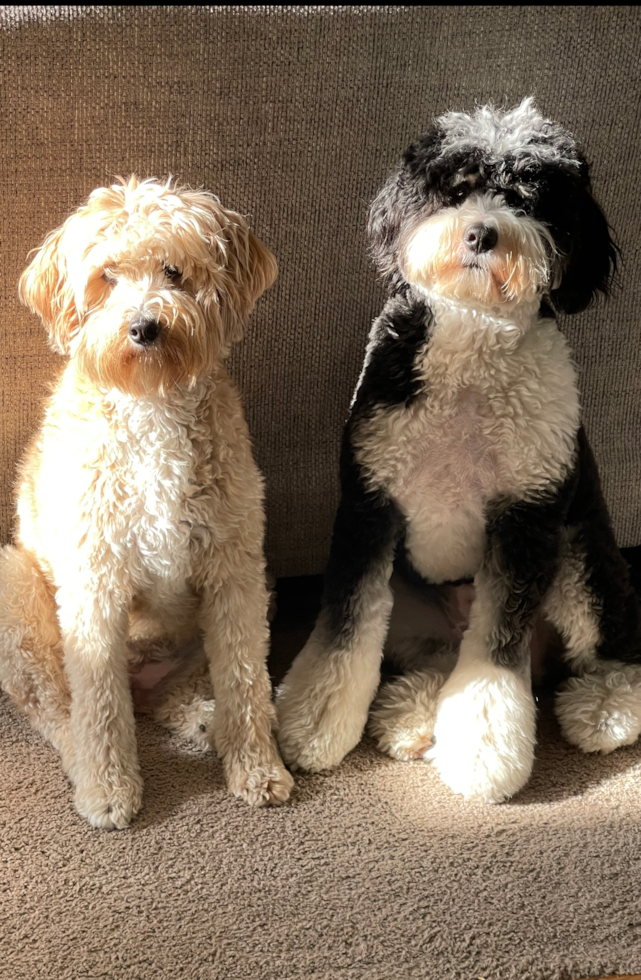
Yes, generation can affect Mini Bernedoodle shedding quite a bit, though maybe not as predictably as people hope.
A lot of families start researching generations because they want the best chance at a lower-shedding coat. And that makes sense. Once someone has spent enough time pulling fur off black leggings or vacuuming dog hair out of corners for years, “low shedding” starts sounding less like a luxury and more like a lifestyle goal.
F1 Mini Bernedoodles
An F1 Mini Bernedoodle is a first-generation cross between a Bernese Mountain Dog and a Miniature Poodle. Since the mix is roughly 50/50, coat outcomes can vary a lot.
Some F1 Mini Bernedoodles inherit curlier, lower-shedding coats closer to the Poodle side. Others lean more heavily toward the Bernese coat and shed more noticeably around the home.
This unpredictability is part of why F1 coats can range so widely even within the same litter. Two puppies may start out looking nearly identical and end up with very different adult coats once the puppy fur transitions.
A lot of owners love F1 Mini Bernedoodles because they have a softer, more natural teddy bear appearance. But from a shedding standpoint, they are usually less predictable than later generations.
F1B Mini Bernedoodles
F1B Mini Bernedoodles are often the go-to choice for families specifically searching for lower-shedding coats.
An F1B usually comes from breeding an F1 Bernedoodle back to a Poodle, which increases the percentage of Poodle genetics in the coat. That stronger Poodle influence leads to curlier coats, more furnishings, and lower visible shedding overall.
For allergy-sensitive households, F1B Mini Bernedoodles are commonly considered one of the safer options within the breed. The tradeoff, though, is grooming.
Lower-shedding F1B coats require more brushing and coat maintenance because loose hair stays trapped inside the curls instead of falling out naturally. Owners sometimes celebrate the lack of fur on the couch right up until they discover hidden mats behind the ears after skipping brushing for a week.
F2 Mini Bernedoodles
F2 Mini Bernedoodles come from breeding two first-generation Bernedoodles together, which can increase coat unpredictability again.
Some F2 dogs inherit beautiful low-shedding coats. Others develop straighter coats with more noticeable shedding. Genetics become a little harder to predict because there are more possible combinations happening beneath the surface.
This does not make F2 Mini Bernedoodles worse by any means. Some are absolutely wonderful. But when families specifically prioritize low shedding or allergy-friendliness, later generations with stronger Poodle influence often provide more consistency.
Multigenerational Mini Bernedoodles
Multigenerational Mini Bernedoodles come from several generations of Bernedoodle-to-Bernedoodle pairings carefully selected for specific coat traits, structure, temperament, and shedding goals.
These breeding programs aim for greater coat consistency, especially regarding low-shedding traits and furnishings. As a result, many multigen Mini Bernedoodles have more predictable coats compared to some earlier generations.
Still, no generation completely eliminates shedding because Bernedoodles are mixed-breed dogs at the end of the day. Genetics can still surprise. That’s probably one of the healthiest expectations to have going into doodle ownership. Better odds? Absolutely. Perfect guarantees? Usually not.
Are Mini Bernedoodles Hypoallergenic?
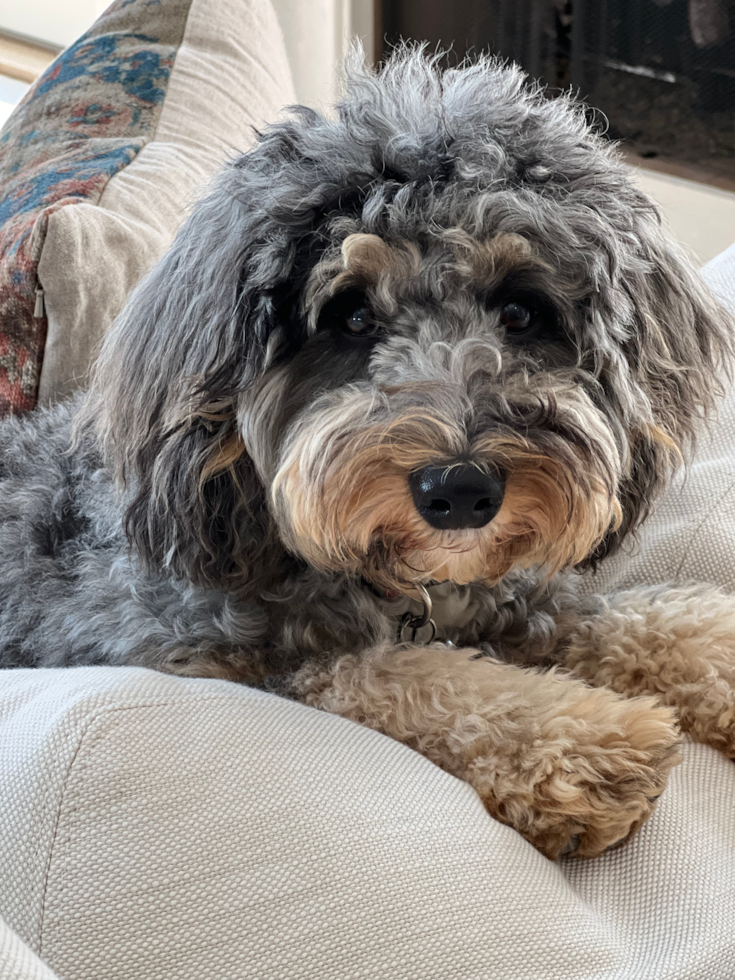
Mini Bernedoodles are sometimes described as hypoallergenic, but the honest answer is more complicated than a simple yes or no.
No dog is truly 100% hypoallergenic. Dog allergies are not caused by fur alone. Most allergic reactions come from proteins found in dander, saliva, skin cells, and oils produced naturally by the dog. Even dogs that shed very little still produce those allergens to some degree. What Mini Bernedoodles offer is a more allergy-friendly coat compared to heavily shedding breeds.
Dogs with curlier coats, strong furnishings, and more Poodle influence usually release less loose hair and dander into the environment because much of it stays trapped inside the coat instead of spreading freely around the home. For some allergy-sensitive people, that difference feels significant. For others, unfortunately, it may not be enough.
And this is where families sometimes get disappointed after hearing the word “hypoallergenic” repeated too confidently. A Mini Bernedoodle that works perfectly for one allergic person may still trigger symptoms for someone else. Individual sensitivity varies a lot.
Coat type matters here too. Curly-coated F1B or multigenerational Mini Bernedoodles are considered the most allergy-friendly because they combine lower shedding with stronger furnishing genetics. Straighter coats with heavier Bernese influence release more fur and dander overall. But even within the same generation, there are still differences from dog to dog.
The safest approach for allergy-sensitive families is spending real time around adult Bernedoodles before committing to a puppy whenever possible. Internet promises only go so far once actual allergies enter the conversation. And this is probably the most important thing people should understand: Low shedding does not automatically equal hypoallergenic. Those two phrases get treated like synonyms, but they are not the same thing.
Why Low-Shedding Does Not Mean Low-Maintenance
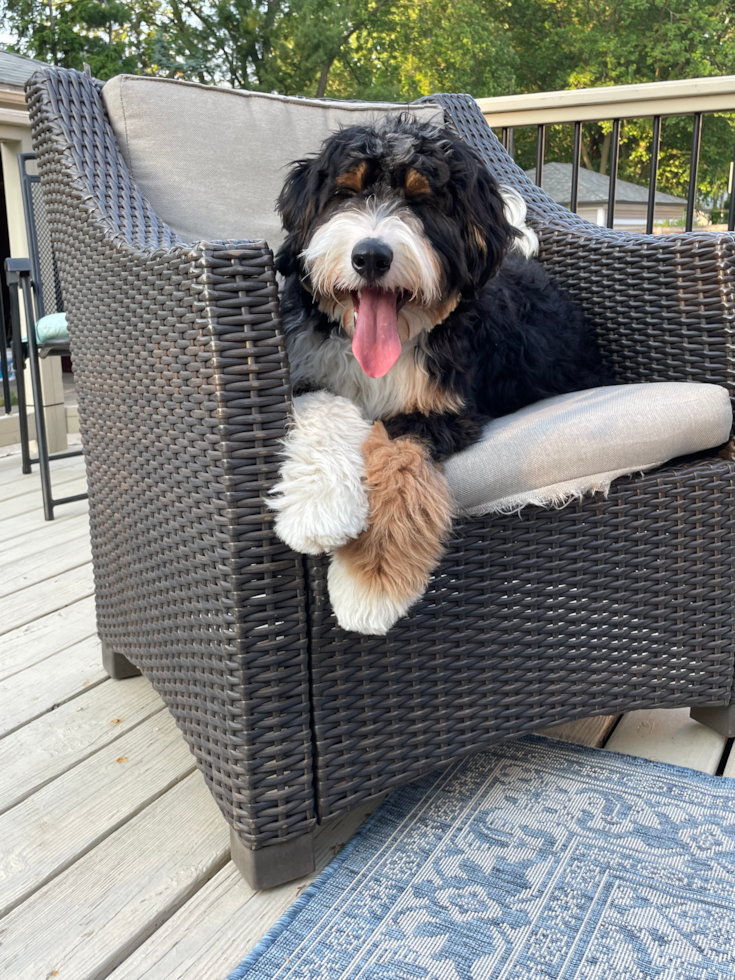
This is probably the single biggest misunderstanding people have about Mini Bernedoodle coats.
A lot of families hear “low shedding” and immediately picture an easy dog. Less fur on the couch. Less vacuuming. Less mess overall. And yes, sometimes that part is true. But what many people do not realize is that low-shedding coats require significantly more maintenance, not less. The hair has to go somewhere.
In heavily shedding breeds, loose fur falls out naturally onto floors, furniture, clothes, and basically every black hoodie someone owns. In lower-shedding Mini Bernedoodles, much of that loose hair stays trapped inside the coat instead. That reduces visible shedding around the home, but it also creates ideal conditions for tangles and matting if brushing falls behind.
And matting can happen fast. Much faster than most first-time doodle owners expect. A coat may still look fluffy and soft on the surface while dense knots quietly form underneath around the ears, collar areas, legs, tail, chest, and armpits.
Some owners don't realize there’s a problem until a groomer starts pointing out mats hidden close to the skin during an appointment.
The grooming routine itself can become fairly involved too. Many Mini Bernedoodles need:
- brushing several times a week
- regular bathing
- professional grooming every 6 to 8 weeks
- ear cleaning
- coat trimming
- detangling maintenance
Curly-coated dogs need the most upkeep overall because tighter curls trap loose hair more effectively. And this is where a lot of social media content becomes misleading. A perfectly groomed teddy bear haircut looks adorable online. What people don't see is the brushing schedule, grooming appointments, drying time after rainy walks, or the owner carefully removing sticks from leg fur after every outdoor adventure. Low shedding is real for many Mini Bernedoodles. Low maintenance usually is not.
Do Mini Bernedoodle Puppies Shed More?
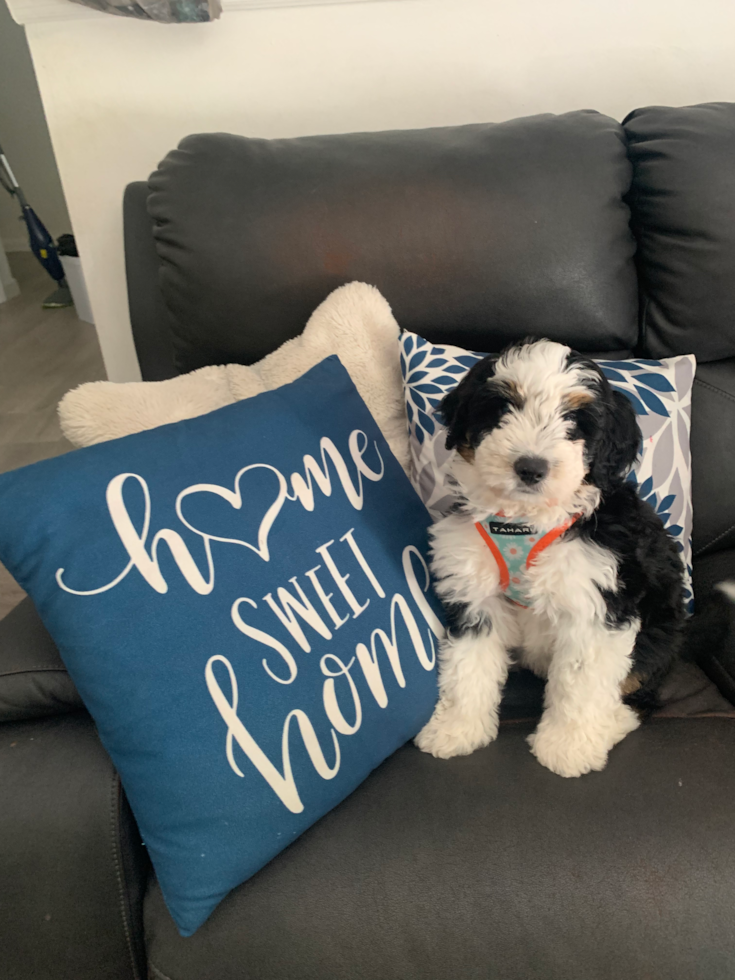
Mini Bernedoodle puppies confuse people when it comes to shedding because puppy coats can behave very differently from adult coats.
Many puppies shed very little at first. Their early coat usually feels softer, fluffier, and lighter than the adult coat that develops later. Then somewhere between several months and roughly a year old, the coat starts changing.
During the puppy-to-adult coat change, some Mini Bernedoodles temporarily appear to shed more as the softer puppy fur loosens and the mature coat begins coming in underneath. People sometimes panic during this stage because they assume the dog suddenly became “high shedding” overnight.
Usually that is not what’s happening. The adult coat is simply replacing the puppy coat, and during that process, brushing becomes even more important because loose fur, tangles, and texture changes start happening simultaneously. Some coats become curlier during this stage. Others relax into waves. A few straighten out more than expected.
This is also the point where many owners finally see the dog’s true adult coat genetics starting to show more clearly. Coat transition periods can look a little awkward sometimes. Some Mini Bernedoodles suddenly develop random textures, uneven fluff patterns, or strange fuzzy phases where the coat cannot seem to decide what it wants to become yet. It usually sorts itself out eventually.
The important thing is not assuming a puppy’s coat fully predicts the adult coat right away. A puppy that barely sheds at four months old may develop a more moderate-shedding adult coat later. Another puppy may become dramatically curlier and lower-shedding with age. Genetics continue unfolding as the dog matures, which is part of why experienced breeders speak in probabilities rather than guarantees when discussing shedding.
How to Reduce Mini Bernedoodle Shedding at Home
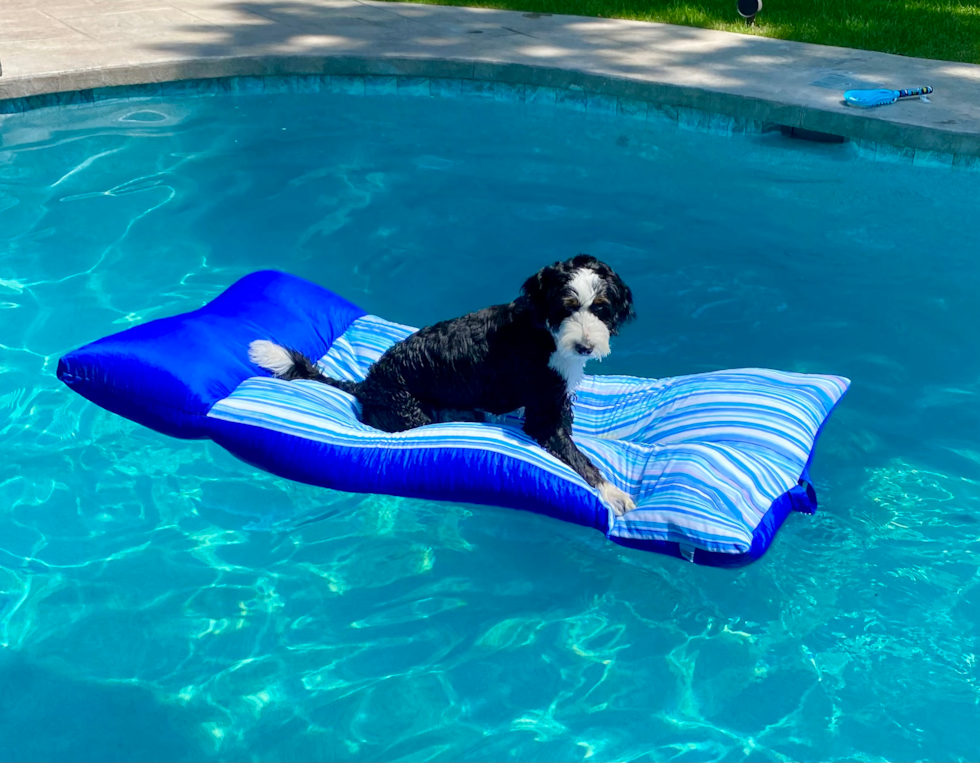
Even though many Mini Bernedoodles are considered low-shedding dogs, coat maintenance still plays a huge role in how much fur owners notice around the house.
Regular brushing is probably the most important habit. Brushing helps remove loose hair before it spreads onto furniture, clothing, and floors, while also preventing tangles from tightening into mats deeper in the coat. For many Mini Bernedoodles, brushing several times a week works well. Curly coats need even more consistency.
Cconsistency matters more than marathon grooming sessions once every two weeks. A quick ten-minute brush-out several times a week usually works far better than trying to rescue a tangled coat after skipping brushing for days.
Professional grooming also helps reduce excess shedding and coat buildup. Regular grooming appointments keep the coat cleaner, lighter, and easier to maintain while removing trapped hair that would otherwise stay buried inside the coat.
Bathing matters too, though balance is important. A properly cleaned and conditioned coat usually sheds less than a dirty or dry coat, but excessive bathing may irritate the skin or dry the coat out unnecessarily. Quality grooming products designed for dogs help maintain healthier skin and coat condition over time.
Diet influences shedding more than many owners realize as well. Poor nutrition sometimes shows up directly through dull coat texture, dry skin, or increased shedding. Healthy fats, balanced nutrition, hydration, and consistent veterinary care all support healthier skin and coat function.
And then there’s mat prevention, which becomes part of everyday life with many doodle coats. Mats trap loose hair inside the coat and make shedding appear worse once brushing finally pulls everything out at once. Keeping the coat detangled helps hair release more naturally during grooming instead of building up underneath.
Most Mini Bernedoodle owners eventually develop their own routine somewhere between “organized grooming system” and “slightly chaotic brush collection near the couch.” Usually a little trial and error happens first.
How to Choose a Lower-Shedding Mini Bernedoodle
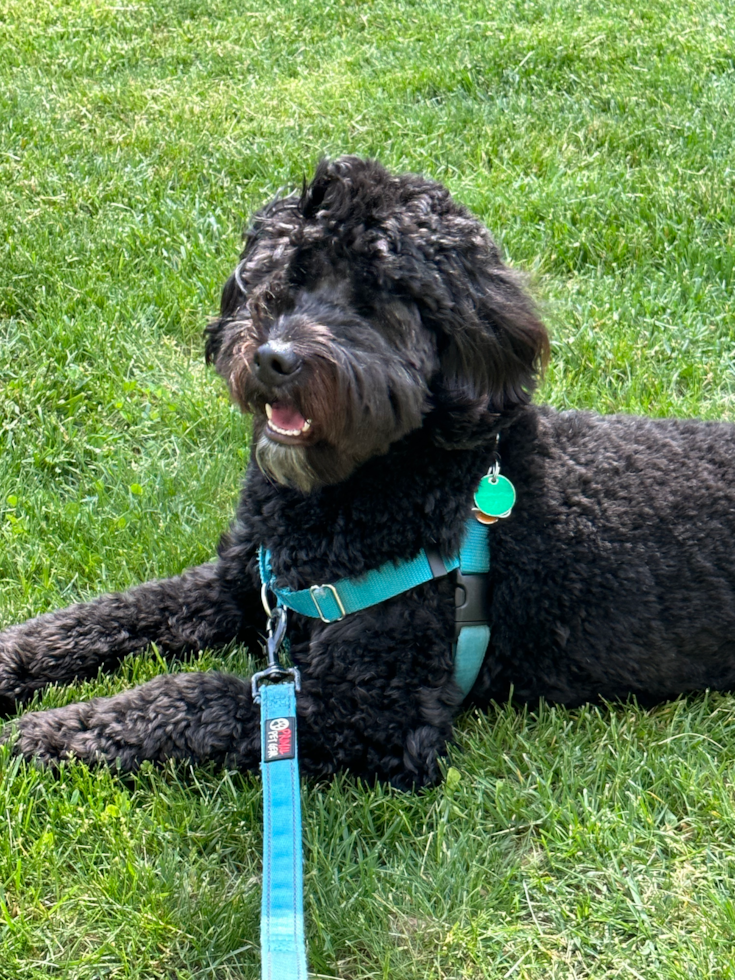
For families specifically looking for a lower-shedding Mini Bernedoodle, asking the right questions matters much more than simply choosing the fluffiest puppy in photos. Because shedding predictions should come from genetics and coat structure, not marketing phrases.
One of the first things worth asking about is generation. F1B and multigenerational Mini Bernedoodles have stronger Poodle coat influence, which may increase the chances of lower shedding. That does not guarantee a completely non-shedding coat, but it can improve predictability compared to some earlier generations.
Coat type matters too. Curly and heavily furnished coats are usually associated with lower visible shedding because loose hair stays trapped within the coat rather than falling freely around the environment.
Families with stronger allergy concerns should also spend time around adult Bernedoodles whenever possible before committing to a puppy. Real-world exposure tells people far more than online descriptions alone.
This is probably the healthiest mindset going into the process: Look for better odds, not impossible guarantees.
A thoughtfully bred Mini Bernedoodle with strong furnishings, curlier coat genetics, and heavier Poodle influence may absolutely become a very low-shedding dog. But realistic expectations usually lead to much happier ownership experiences than chasing the idea of a perfectly maintenance-free, completely hypoallergenic doodle that never leaves behind a single hair for the next 15 years.
Final Thoughts on Mini Bernedoodle Shedding
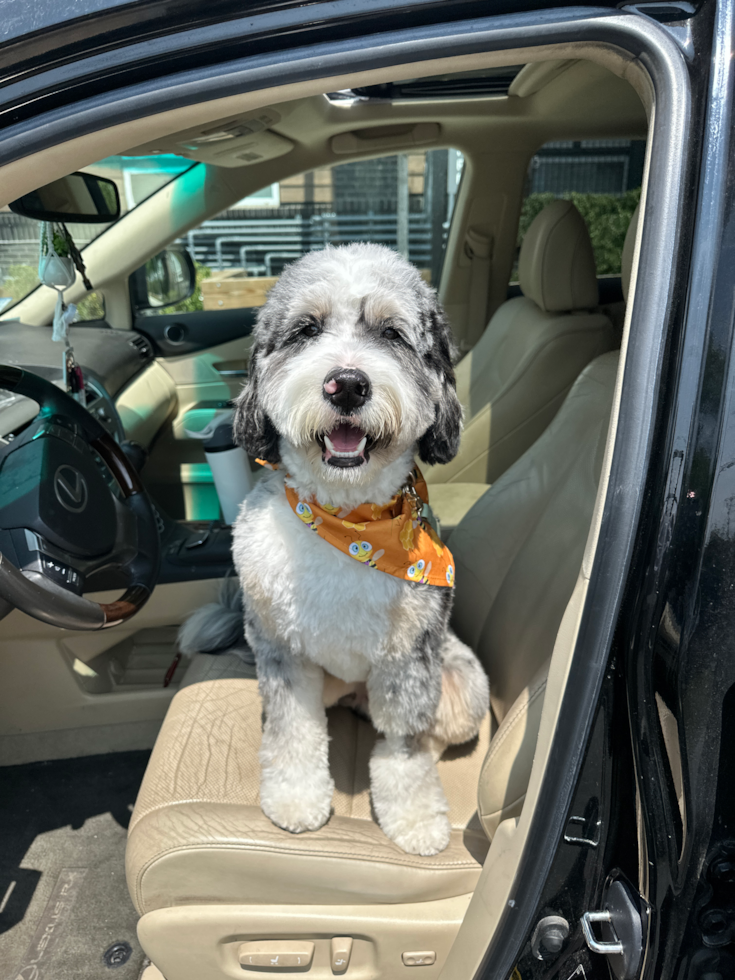
So, do Mini Bernedoodles shed? Yes. Most do at least a little. But for many families, the amount is far lower than what they would experience with heavily shedding breeds.
The more important question is usually how the coat behaves. Some Mini Bernedoodles leave very little visible fur around the home because loose hair stays trapped inside the coat instead of falling freely onto furniture and clothing. Others shed more noticeably, especially dogs with straighter coats or stronger Bernese Mountain Dog influence. Coat genetics, generation, furnishings, and texture all shape the final outcome in ways that are not always fully predictable during puppyhood.
That unpredictability is part of owning a mixed breed. Sometimes the coat develops exactly the way people hoped. Sometimes it surprises them a little along the way. And this is probably the biggest takeaway from the entire conversation: Low shedding does not mean low maintenance.
Many of the Mini Bernedoodles that shed the least require the most grooming, brushing, coat care, and maintenance over time. The fluffy teddy bear appearance people love comes attached to regular upkeep behind the scenes. Mats do not care how cute the dog looks. They just quietly form underneath the ears while everyone pretends they will brush tomorrow instead.
Still, for many owners, the tradeoff feels completely worth it. A well-groomed Mini Bernedoodle coat can stay soft, beautiful, and relatively manageable compared to traditional heavy-shedding breeds. And for allergy-sensitive families, the lower-shedding coat qualities make a meaningful difference, even if no Bernedoodle is truly 100% hypoallergenic.
The key is going into the breed with realistic expectations. Responsible breeders can improve the odds of lower shedding through thoughtful pairing decisions, coat genetics, furnishings, and generation planning, but honest breeders also understand that no mixed breed comes with absolute guarantees. Genetics are still genetics. Nature occasionally likes reminding people of that.
That balance is part of what makes Mini Bernedoodles feel so real as a breed. They are not perfectly manufactured teddy bears designed in a lab somewhere. They are affectionate, intelligent, slightly chaotic dogs with coats that sometimes behave beautifully and sometimes collect half the backyard after rainstorms. Usually both within the same week.
For families who are willing to keep up with grooming and maintenance, though, Mini Bernedoodles offer something many people feel is worth the effort: the lovable Bernese personality in a smaller, lower-shedding dog that becomes deeply woven into everyday life surprisingly fast.
Elena R.
About The Author
Elena is a leading expert in the field of dog behavior, care, and training, with over a decade of experience in writing about dogs. As a published writer and lifelong dog enthusiast, Elena currently shares her home with three beloved canine companions. She is dedicated to staying up to date on the latest advancements in dog care and training, ensuring that her articles provide readers with accurate and valuable insights. With her extensive knowledge and passion for all things canine, Elena's contributions to the Premier Pups community offer both expertise and authority on a wide range of dog-related topics.
What To Read Next
Are Mini Bernedoodles Hypoallergenic? Shedding, Allergies & More
Mini Bernedoodles are described as hypoallergenic dogs, but the reality is a little more nuanced than that. While many Mini Bernedoodles inherit the low-shedding qualities of the Poodle, no dog is completely hypoallergenic. Some Mini Bernedoodles shed... Read More
Mini Bernedoodle Pros and Cons
Mini Bernedoodles have become one of the most talked-about doodle breeds in recent years. It’s easy to understand why. They’re fluffy, expressive, affectionate, and kind of hard to ignore once you spend time around one. A lot of people picture the perfect... Read More
Frequently Asked Questions
Do Mini Bernedoodles shed a lot? Most Mini Bernedoodles do not shed heavily compared to traditional double-coated breeds, but shedding levels vary depending on coat genetics, generation, and coat type. Some shed very little, while others with straighter coats or stronger Bernese influence may shed more noticeably around the home.
Are Mini Bernedoodles non-shedding? No, Mini Bernedoodles are not completely non-shedding dogs. Many are considered low-shedding, especially dogs with curlier coats and stronger Poodle genetics, but no Mini Bernedoodle is guaranteed to shed absolutely nothing.
Are Mini Bernedoodles hypoallergenic? Mini Bernedoodles are often more allergy-friendly than heavily shedding breeds, but they are not truly hypoallergenic. Allergies come from dander, saliva, and skin proteins rather than fur alone, so individual reactions can still vary from person to person.
Which Mini Bernedoodle coat sheds the least? Curly-coated Mini Bernedoodles usually shed the least because loose hair tends to stay trapped inside the curls rather than falling around the house. Wavy coats often shed lightly as well, while straight coats typically shed the most.
Do F1B Mini Bernedoodles shed less? Yes, F1B Mini Bernedoodles often shed less than F1 Mini Bernedoodles because they usually inherit more Poodle coat influence. Curlier coats and stronger furnishings are more common in F1B dogs, which often leads to lower visible shedding overall.
Do Mini Bernedoodle puppies shed more as they grow? Some Mini Bernedoodle puppies appear to shed more during the transition from puppy coat to adult coat. This stage may happen between several months and roughly a year old as the softer puppy fur sheds out and the mature coat develops underneath.
Why is my Mini Bernedoodle shedding more than expected? A Mini Bernedoodle may shed more because of coat genetics, seasonal changes, stress, poor nutrition, skin irritation, or stronger Bernese Mountain Dog coat influence. Puppies may also shed more temporarily during coat transition stages.
How can I reduce Mini Bernedoodle shedding? Regular brushing, professional grooming, healthy nutrition, proper bathing routines, and preventative veterinary care all help reduce shedding and maintain healthier skin and coat condition. Keeping the coat free of tangles and mats also helps remove trapped loose hair more effectively.
Do straight-haired Mini Bernedoodles shed more? Yes, straight-coated Mini Bernedoodles usually shed more than wavy or curly-coated dogs because the coat releases loose fur more freely instead of trapping it inside curls or waves.
Do Mini Bernedoodles shed seasonally? Some Mini Bernedoodles experience mild seasonal shedding, especially dogs with straighter coats or more Bernese influence. Curly-coated dogs often show less obvious seasonal shedding because loose hair remains trapped within the coat.
Does grooming reduce Mini Bernedoodle shedding? Yes, regular grooming helps reduce visible shedding by removing loose hair before it spreads around the home. Professional grooming also helps maintain coat health, reduce buildup, and prevent matting that traps excess fur inside the coat.
Are Mini Bernedoodles good for people with allergies? Some allergy-sensitive people tolerate Mini Bernedoodles better than heavily shedding breeds, especially lower-shedding F1B or multigenerational dogs with curly coats. However, no Mini Bernedoodle can guarantee a completely allergy-free experience because all dogs still produce allergens to some extent.