





Published Wednesday, July 15, 2026 by Elena R. in New Puppy, Popular Dogs
Bernedoodle generations can feel confusing surprisingly fast. Most people start out thinking they’re simply choosing between different puppies, and then suddenly they’re staring at terms like F1B, F1BB, F2B, multigen, and F3 wondering if they accidentally signed up for a genetics course instead of researching a family dog.
The good news is that these labels are much simpler than they first appear. More importantly, they exist for a reason. Bernedoodle generations help describe how a dog was bred and what traits may be more likely to appear, especially when it comes to coat type, shedding levels, furnishings, and overall predictability.
That predictability matters more than future owners initially realize. Some families are searching for a lower-shedding dog because of allergies. Others want a more consistent coat type or a more reliable idea of what grooming may realistically look like long term. And some simply want to avoid surprises after bringing home a puppy they expect to look and behave a certain way as an adult.
This is one of the biggest reasons later-generation Bernedoodles became increasingly popular. Generations like F1BB, F2B, F3, and multigen Bernedoodles are bred with greater consistency in mind. Breeders may selectively pair dogs to strengthen specific traits, including curlier coats, lower shedding tendencies, stronger furnishings, and more predictable temperaments. The goal is not to create a “perfect” dog, but rather to reduce some of the variability commonly seen in earlier generations.
At the same time, more predictability usually comes with tradeoffs too, especially when grooming enters the picture. Lower-shedding coats require significantly more maintenance, more brushing, and more professional grooming than many first-time doodle owners expect. The fluffy teddy bear appearance people love so much does not happen accidentally. Behind almost every beautifully groomed Bernedoodle is a brush, a grooming routine, and at least one owner trying to figure out how the ears tangled again overnight.
Temperament is also part of the conversation with later generations. While every dog is still an individual, some multigenerational Bernedoodles are intentionally bred for greater consistency in personality, trainability, emotional responsiveness, and family compatibility. That does not mean every F3 or multigen Bernedoodle behaves exactly the same, but selective breeding can help create more reliable patterns over time.
In this guide, we’ll break down the differences between multigen, F1BB, F2B, and F3 Mini Bernedoodles in a way that makes sense. We’ll cover coat types, shedding, allergy friendliness, grooming expectations, temperament, and what each generation may realistically look like in everyday life. Whether you’re searching for a lower-shedding companion, trying to understand which generation fits your lifestyle best, or simply attempting to decode the alphabet soup of Bernedoodle genetics, this guide will help make the entire topic feel much clearer.
Table of Contents
- What Is a Multigen Mini Bernedoodle?
- What Is an F1BB Mini Bernedoodle?
- What Is an F2B Mini Bernedoodle?
- What Is an F3 Mini Bernedoodle?
- Coat Types & Shedding Differences
- Which Bernedoodle Generation Is Most Hypoallergenic?
- Grooming & Maintenance Expectations
- Temperament Differences Between Generations
- Which Generation Is Best For Your Lifestyle?
- Final Thoughts
What Is a Multigen Mini Bernedoodle?
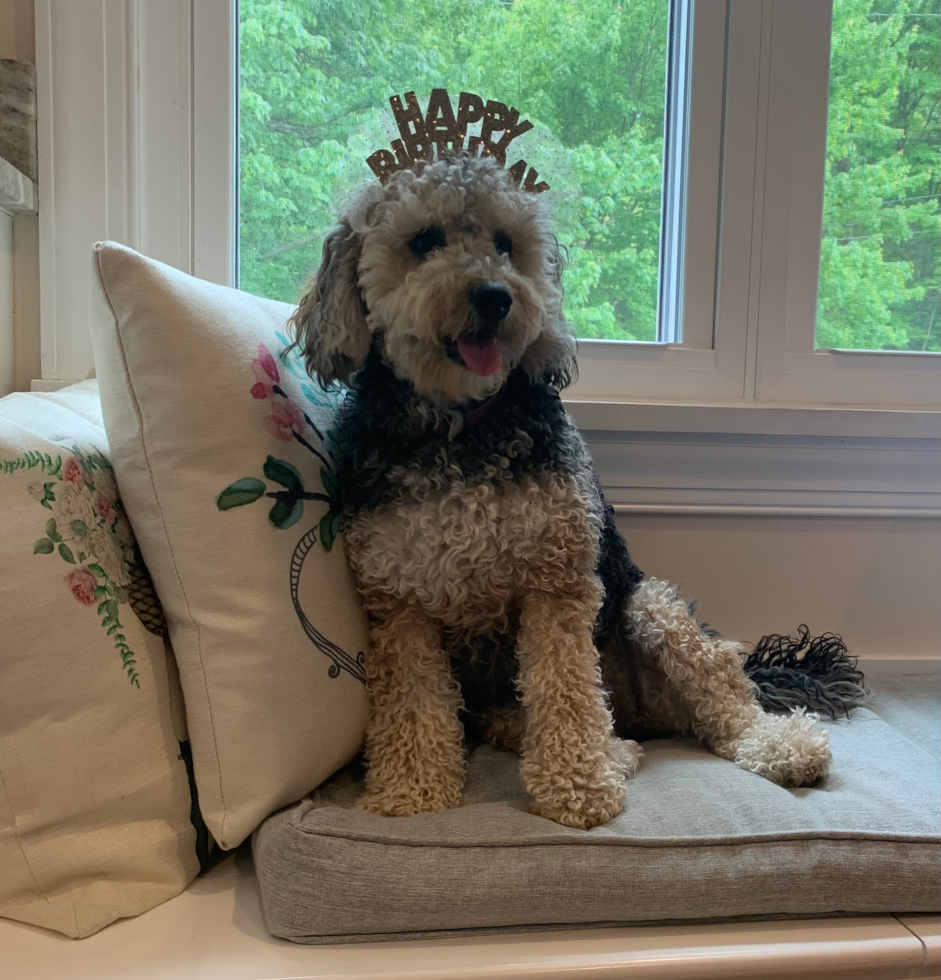
A multigen Mini Bernedoodle is a Bernedoodle that comes from multiple generations of Bernedoodle-to-Bernedoodle breeding rather than a direct cross between a Bernese Mountain Dog and a Poodle. In simple terms, the dog’s parents, grandparents, and earlier generations are already Bernedoodles themselves.
This is where Bernedoodle breeding starts being less about creating the original mix and more about refining specific traits over time. With early generations like F1 Bernedoodles, there can be a fairly widerange of outcomes when it comes to coat texture, shedding, size, furnishings, and even temperament. Some puppies inherit stronger Poodle traits, while others lean more toward the Bernese Mountain Dog side. That variability is completely normal in first-generation crosses.
Multigenerational breeding aims to reduce some of that unpredictability. Breeders may selectively pair Bernedoodles with certain coat traits, temperaments, furnishing genes, or shedding tendencies in hopes of producing more consistent results across future litters. Over time, this can create dogs with more reliable coat textures, stronger low-shedding tendencies, and more uniform appearances.
This is one reason multigen Mini Bernedoodles became increasingly popular among families looking for more predictability. People searching specifically for curlier coats, stronger allergy friendliness, or more consistent doodle features gravitate toward later-generation Bernedoodles because the outcomes are usually less variable than in earlier generations.
That does not mean every multigen Bernedoodle looks or behaves exactly the same. Genetics still vary, and no responsible breeder can guarantee identical coats or personalities across an entire litter. But compared to earlier generations, multigen Bernedoodles are bred with greater intentionality around consistency.
RELATED: F1 Mini Bernedoodle: Size, Temperament, Shedding & More
What Is an F1BB Mini Bernedoodle?
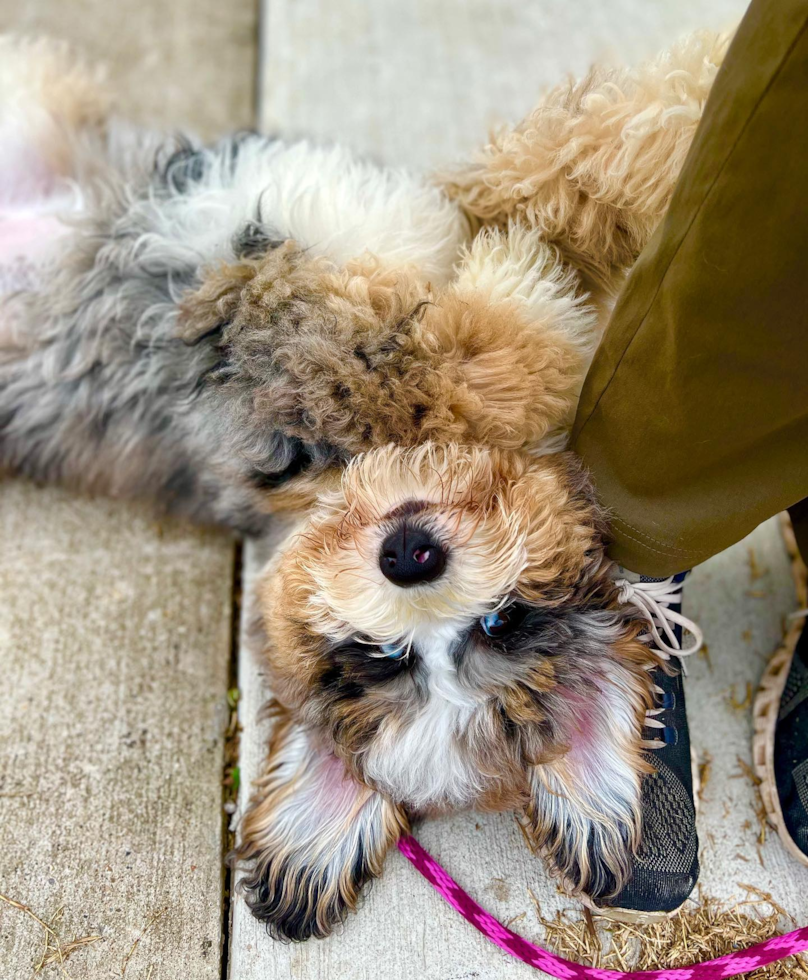
An F1BB Mini Bernedoodle is created by breeding an F1B Mini Bernedoodle back to a Poodle again. This generation carries around 87.5% Poodle genetics and 12.5% Bernese Mountain Dog genetics, which makes it one of the most Poodle-influenced Bernedoodle generations commonly available.
That stronger Poodle influence shows up most clearly in the coat. F1BB Mini Bernedoodles develop very curly, dense coats with stronger furnishings and extremely low shedding tendencies. For families prioritizing allergy friendliness or minimal loose hair around the house, this generation can sound appealing on paper. And to be fair, many F1BB Mini Bernedoodles do shed very little.
At the same time, lower shedding comes with a tradeoff that first-time doodle owners underestimate. Dense curly coats tend to trap loose hair within the coat itself rather than releasing it naturally. Without frequent brushing, that trapped hair can quickly create tangles and mats close to the skin. As a result, F1BB Mini Bernedoodles are among the highest-maintenance Bernedoodle generations when it comes to grooming.
This is also where furnishings are especially strong. Furnishings refer to the fluffy facial hair and softer coat texture commonly associated with doodles, including the beard, eyebrows, and plush teddy bear appearance many families love. F1BB Mini Bernedoodles inherit very prominent furnishings because of the heavier Poodle genetics behind the generation. Still, more Poodle does not automatically mean “better.”
Some families absolutely love the tighter curls, lower shedding, and more Poodle-like appearance that F1BB Mini Bernedoodles often develop. Others prefer the softer waves or slightly more relaxed Bernese influence seen in earlier generations. Personality, grooming, activity level, and coat preferences all matter when deciding which generation fits best.
RELATED: What Is an F1B Mini Bernedoodle? Size, Coat Type & More
What Is an F2B Mini Bernedoodle?
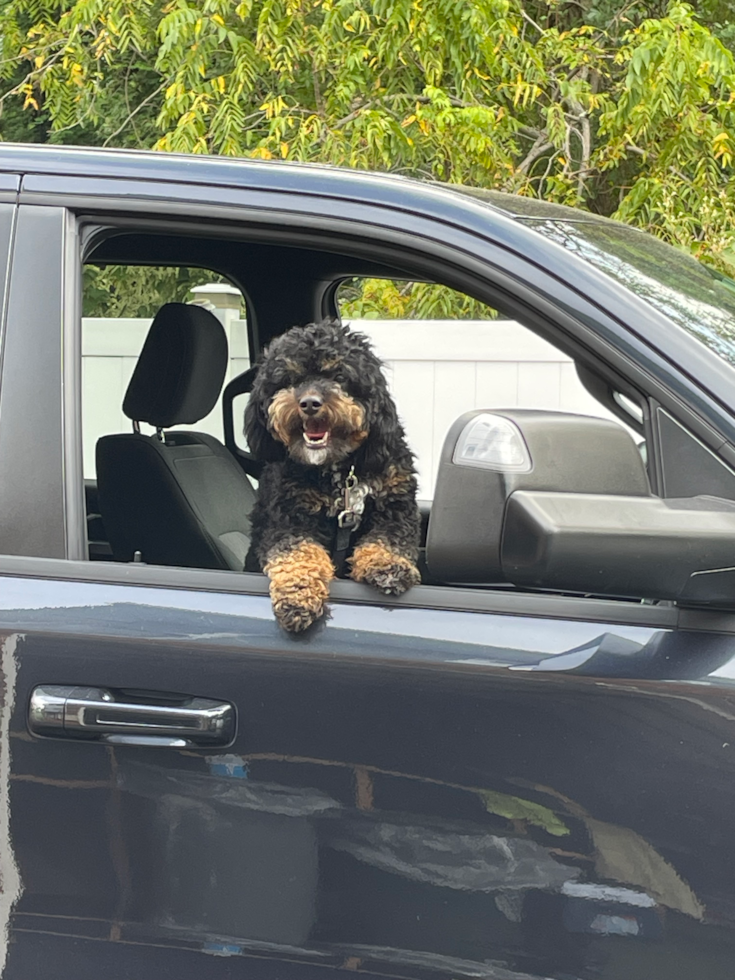
An F2B Mini Bernedoodle is created by breeding an F2 Mini Bernedoodle back to a Poodle. This generation usually carries a little more Poodle influence than an F2 Bernedoodle while still keeping a somewhat balanced mix of Bernese Mountain Dog and Poodle traits.
In many ways, F2B Mini Bernedoodles sit somewhere in the middle of the Bernedoodle spectrum.
Compared to standard F2 Bernedoodles, F2Bs are often bred for lower shedding and improved coat consistency. The additional Poodle genetics usually strengthen furnishings and increase the likelihood of curlier or wavier low-shedding coats. At the same time, many F2B Mini Bernedoodles retain some of the softer, looser coat textures and more varied appearance patterns that people enjoy in F2 generations.
F1BB Mini Bernedoodles lean heavily toward dense curls and maximum low-shedding potential, while F2B Mini Bernedoodles sometimes offer a slightly softer middle ground. Many still inherit lower-shedding coats, but the overall look may feel a little less tightly curled or intensely Poodle-like depending on the individual dog.
Temperament-wise, F2B Mini Bernedoodles continue showing the affectionate, social, and emotionally responsive personality Bernedoodles are known for. Because genetics are somewhat more balanced compared to very Poodle-heavy generations, some owners feel F2Bs preserve a slightly softer blend between the playful intelligence of the Poodle and the calmer emotional warmth commonly associated with Bernese Mountain Dogs.
Of course, personality still varies significantly from dog to dog. Generation can influence tendencies, but upbringing, training, socialization, and the individual puppy matter just as much.
RELATED: F2 Mini Bernedoodle Guide: Coat Types, Shedding, Grooming & More
What Is an F3 Mini Bernedoodle?
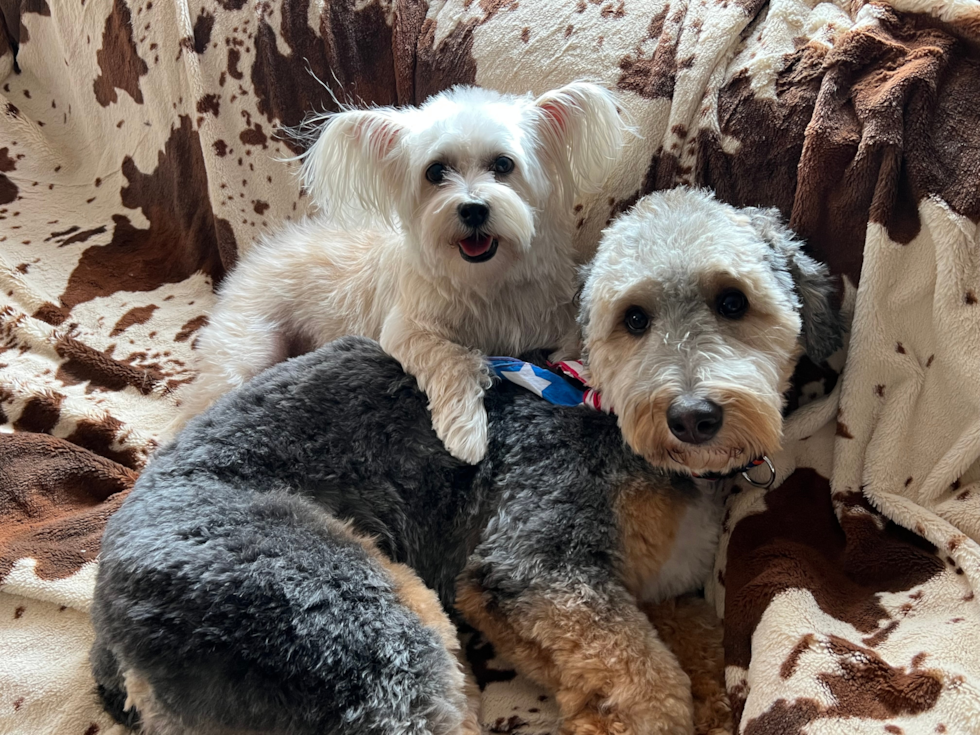
An F3 Mini Bernedoodle is generally considered a third-generation Bernedoodle and is fully multigenerational. At this stage, the dog comes from several generations of Bernedoodle-to-Bernedoodle breeding rather than direct pairings with purebred Bernese Mountain Dogs or Poodles.
This is where Bernedoodle breeding becomes more intentional and refined. Rather than simply creating the original mix, breeders working with F3 and other multigenerational lines are selecting for greater consistency in coat type, furnishings, shedding tendencies, structure, and temperament. The goal is usually to produce Bernedoodles that feel more predictable from litter to litter while still preserving the personality and appearance families love about the breed.
One of the biggest advantages of F3 Mini Bernedoodles is coat consistency. Many multigenerational breeding programs selectively pair dogs with stronger low-shedding traits, furnished coats, and more stable textures in hopes of reducing the wide variation sometimes seen in earlier generations. As a result, F3 Mini Bernedoodles develop more reliable wavy or curly coats with lower shedding potential.
Temperament consistency also becomes part of the conversation at this stage. While every dog is still an individual, some breeders intentionally select for traits like trainability, social confidence, emotional responsiveness, and adaptability to family life. Over time, those patterns can become more stable within established multigenerational lines.
That said, refinement does not eliminate maintenance. F3 Mini Bernedoodles inherit dense, heavily furnished coats that still require regular brushing, professional grooming, and ongoing upkeep. In many cases, the very traits families love most about later-generation Bernedoodles, especially the fluffy low-shedding coats, are also the traits that demand the highest level of grooming commitment.
Coat Types & Shedding Differences
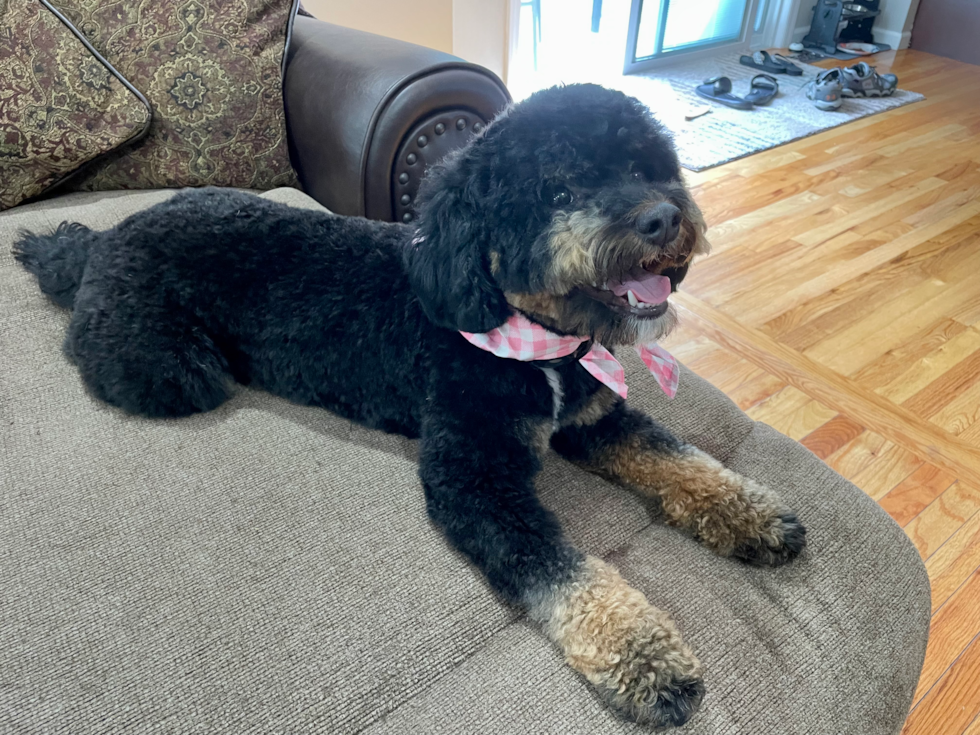
Coat type is one of the biggest reasons Bernedoodle generations matter so much in the first place. When people compare F1BB, F2B, F3, and multigen Bernedoodles, they are usually trying to predict one thing above all else: how the dog’s coat will actually look, feel, and shed once adulthood fully kicks in.
Coat type affects more than appearance alone. It influences grooming needs, allergy friendliness, maintenance expectations, and even daily life inside the home. Most later-generation Bernedoodles fall somewhere between wavy and curly, though the exact texture still varies depending on genetics and selective breeding choices. As Bernedoodle lines become more multigenerational and more heavily influenced by furnished low-shedding traits, coats become denser, curlier, and more predictable.
Curly coats are usually the lowest shedding. These coats inherit strong Poodle influence, tighter curl patterns, and dense furnishings that trap loose hair within the coat instead of releasing it throughout the home. This is why generations like F1BB and some multigen Bernedoodles are commonly recommended for families looking for lower shedding or greater allergy friendliness.
At the same time, curly coats are also the most grooming intensive. The same dense texture that helps reduce visible shedding also creates the highest risk for tangles and matting when brushing is inconsistent. Loose hair is trapped inside the curls, where it gradually twists together beneath the surface of the coat.
Wavy coats sit somewhere in the middle. Many owners love them because they keep the soft fluffy doodle appearance while sometimes feeling a bit easier to maintain than extremely tight curls. Wavy coats can still shed lightly, though usually less than straighter coats seen in earlier generations.
Dense coats add another layer to the conversation. Some later-generation Bernedoodles inherit extremely thick coats that feel plush and soft but require much more upkeep than people initially expect. Coat density matters just as much as curl pattern when it comes to grooming workload. A very dense wavy coat can sometimes become just as demanding as tighter curls.
Furnishings also play a major role in shedding differences. Furnishings refer to the beard, eyebrows, and fuller facial hair commonly associated with doodles. Dogs with stronger furnishings inherit more low-shedding coat traits. Bernedoodles with weak furnishings or improper coats are more likely to shed because the coat behaves more similarly to the Bernese Mountain Dog side genetically.
This is also where one of the biggest misconceptions around Bernedoodles starts showing up online. Low shedding does not mean non-shedding. No Bernedoodle generation is completely shed-free. Even later-generation Bernedoodles with strong furnishings and dense curly coats still lose some hair naturally. The difference is that the hair is trapped inside the coat instead of collecting visibly around the home.
And that’s the tradeoff future owners really need to understand. Later generations shed less because the coats retain more loose hair internally, but that same trait also increases grooming demands significantly. In many cases, the dogs with the lowest visible shedding are also the dogs that require the most brushing, the most grooming appointments, and the highest coat maintenance.
RELATED: Do Mini Bernedoodles Shed? Coat Types and Allergies Explained
Which Bernedoodle Generation Is Most Hypoallergenic?
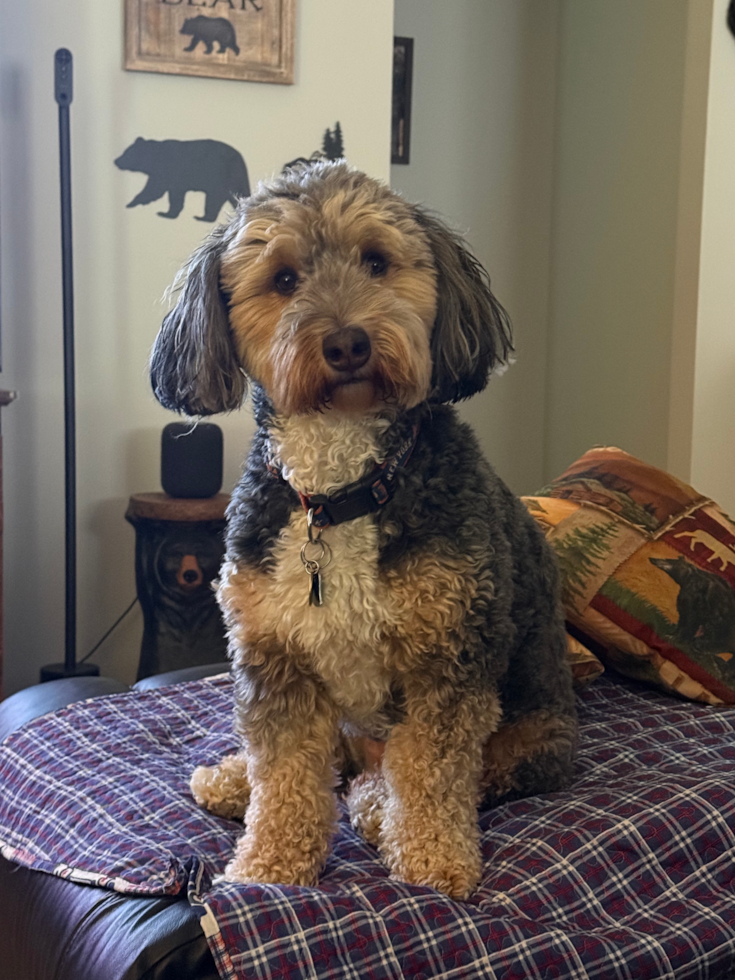
This is probably one of the most searched and most misunderstood questions in the entire Bernedoodle world.
The first thing worth clarifying is that no Bernedoodle generation is truly 100% hypoallergenic. In fact, no dog breed is completely hypoallergenic. Dog allergies are triggered by proteins found in dander, saliva, and skin oils rather than the hair itself. Even dogs that shed very little can still produce allergens that affect sensitive individuals.
That said, some Bernedoodle generations are generally considered more allergy friendly than others.
F1BB and multigen Bernedoodles are viewed as the most allergy-friendly options because they inherit stronger furnished coats, denser curls, and lower shedding tendencies. The heavier Poodle influence in these generations increases the likelihood of coats that trap loose hair and dander more effectively instead of releasing them freely into the environment.
Still, genetics can only predict so much. Two dogs from the same generation can still affect allergy sufferers differently depending on coat type, shedding levels, grooming routines, and individual sensitivity. One person may do perfectly well around a multigen Bernedoodle, while another still experiences symptoms despite the lower-shedding coat.
That unpredictability is exactly why responsible breeders avoid guaranteeing that any Bernedoodle will be completely hypoallergenic. The goal is to increase the likelihood of allergy friendliness, not to promise something that cannot realistically be guaranteed for every person.
Regular grooming also affects allergy management more than many people realize. Brushing, bathing, coat maintenance, and keeping the home clean can all help reduce dander buildup. A neglected low-shedding coat may trap more allergens than people expect because loose hair, debris, and dander remain caught inside the coat itself.
RELATED: Are Mini Bernedoodles Hypoallergenic? Shedding, Allergies & More
Grooming & Maintenance Expectations
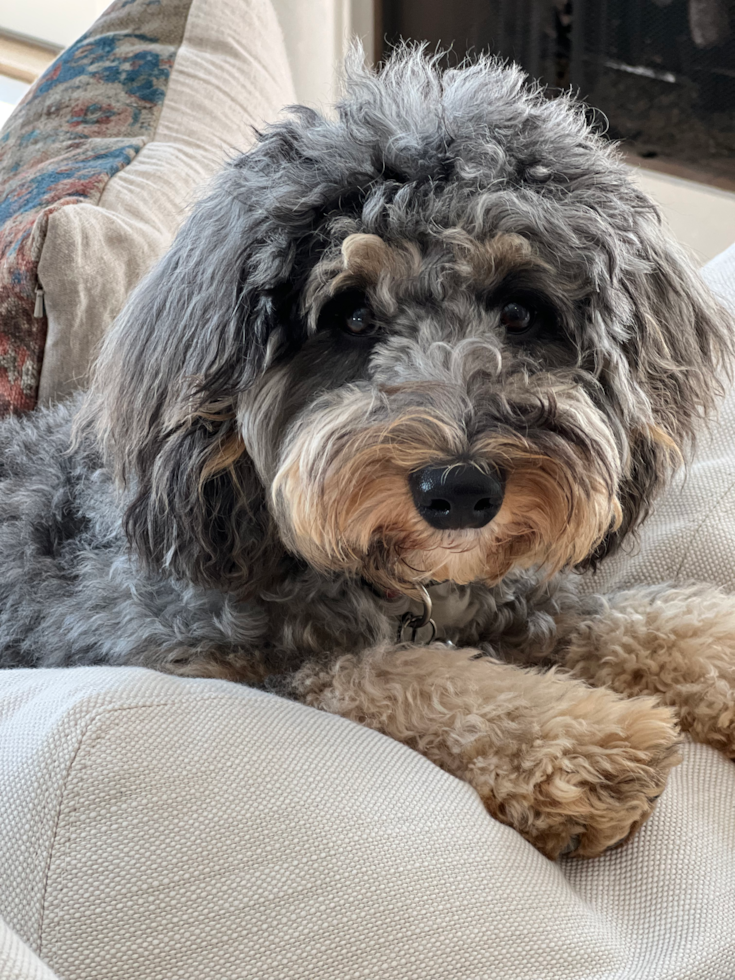
If there’s one consistent reality across nearly every later-generation Bernedoodle, it’s this: lower shedding often means more grooming.
That tradeoff sits at the center of almost every conversation about multigen, F1BB, F2B, and F3 Bernedoodles. Families are drawn to these generations because of the softer low-shedding coats, but many are surprised by how much maintenance those coats require once the puppy starts growing into its adult coat.
Most later-generation Bernedoodles need brushing several times per week at minimum, while denser curly coats often benefit from daily brushing to prevent tangles from forming beneath the surface. Areas like behind the ears, under the collar, around the legs, and near the tail tend to mat the fastest because of friction and movement throughout the day.
Professional grooming every 6 to 8 weeks is part of long-term Bernedoodle ownership as well. Regular grooming appointments help maintain coat health, reduce matting, trim nails, clean sanitary areas, and keep the coat manageable between brushing sessions. Many owners eventually choose shorter trims simply because they are easier to keep realistically.
One of the biggest grooming challenges happens during the coat transition phase. Around 6 to 12 months old, Bernedoodles begin losing the soft puppy coat while the adult coat grows in underneath. During this period, matting increases dramatically because the two textures tangle together very easily. Puppies that brushed easily one month may suddenly develop knots almost overnight.
This is the phase where many first-time doodle owners realize coat care is not optional maintenance you occasionally remember to do. It becomes part of the weekly routine whether you planned for it or not.
Ear cleaning matters too, especially for heavily furnished Bernedoodles with floppy ears and dense facial hair around the ear canal. Moisture and debris can become trapped more easily, which increases the risk of irritation or infections if ear care gets neglected.
Nail care is another area that matters more than people expect. Long nails can affect posture, walking comfort, and movement patterns, particularly for active dogs who spend most of their time indoors on softer flooring surfaces.
The reality is that later-generation Bernedoodles require a fairly significant grooming commitment, particularly the generations bred most heavily toward low shedding and coat consistency. The fluffy teddy bear appearance people love so much comes from a combination of genetics, regular maintenance, and a surprisingly large amount of brushing behind the scenes.
Temperament Differences Between Generations
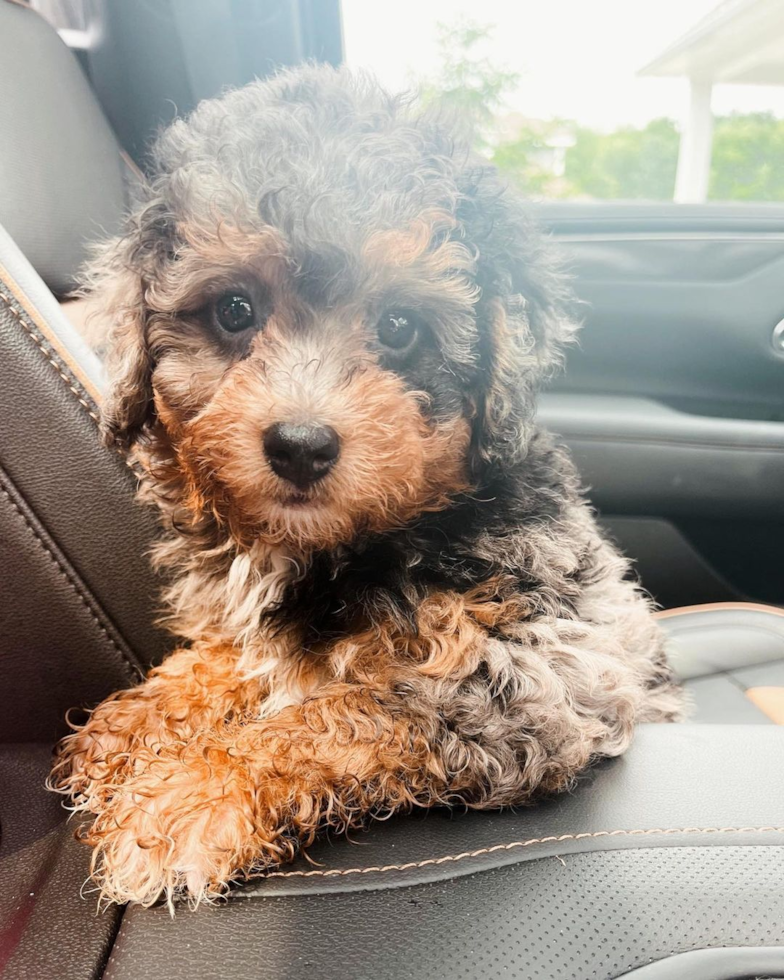
When people compare Bernedoodle generations, the conversation usually focuses almost entirely on coats and shedding. Temperament tends to get treated like an afterthought, even though it’s one of the biggest parts of daily life once the excitement of bringing home a puppy settles down.
The important thing to understand is that generation does not guarantee personality. Every Bernedoodle is still an individual dog with its own temperament, energy level, sensitivities, and quirks. Training, socialization, environment, and genetics all shape behavior together.
Still, some general tendencies can appear across different generations.
F1 Bernedoodles show the widest range of personality variation because they are the original cross between a Bernese Mountain Dog and a Poodle. Some inherit a calmer and more easygoing Bernese-like temperament, while others lean more toward the sharper intelligence and higher mental stimulation needs commonly associated with Poodles. That variability is part of the reason F1 Bernedoodles can feel a little less predictable, both in coat and personality.
F1BB Bernedoodles show stronger Poodle influence behaviorally as well as physically. Many owners describe them as highly intelligent, emotionally aware, playful, and extremely people-focused. They learn quickly and thrive on interaction, but they may also require more mental stimulation and engagement compared to calmer lower-energy dogs. Some become very attached to their families and can develop clingy tendencies if independence is not encouraged early on.
Multigen and F3 Bernedoodles are where temperament selection becomes more intentional. In established breeding programs, breeders may selectively pair dogs with stable social temperaments, strong trainability, emotional responsiveness, and adaptability to family life. The goal is not to create identical personalities, because that’s unrealistic, but rather to reduce some of the unpredictability that naturally exists in earlier generations.
This is one reason many experienced Bernedoodle owners start paying closer attention to breeding lines and temperament history rather than focusing only on generation labels. By the time dogs reach fully multigenerational stages, consistency comes as much from careful long-term selection as from the generation name attached to the puppy.
Across nearly all generations, though, Bernedoodles share a few core personality traits that made the breed so popular in the first place. They are affectionate, social, emotionally connected to their people, and highly integrated into family life. They want to participate in everything happening around them, whether anyone asked for that participation or not.
RELATED: Are Mini Bernedoodles Good Family Dogs? What Life Really Looks Like
Which Generation Is Best For Your Lifestyle?
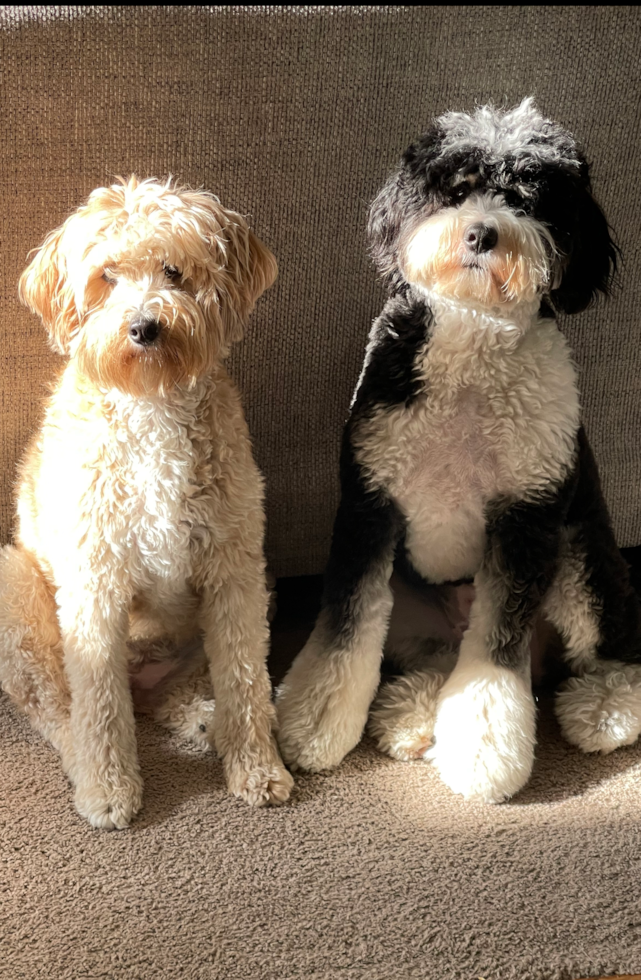
The “best” Bernedoodle generation depends less on trends and more on how honestly someone evaluates their own lifestyle, grooming tolerance, and long-term expectations.
For allergy-sensitive homes, later generations like F1BB and multigen Bernedoodles are the most appealing because they inherit curlier furnished coats with lower shedding tendencies. These generations are usually more predictable when it comes to allergy friendliness, though no generation can guarantee a completely hypoallergenic dog.
First-time owners gravitate toward later generations sometimes too because the predictability can feel reassuring. More consistent coat types, lower shedding tendencies, and carefully selected temperaments make the experience feel a little less uncertain. At the same time, first-time doodle owners also need to understand that lower shedding comes with higher grooming demands. The coat may leave less hair around the house, but it requires much more maintenance behind the scenes.
For active households, most Bernedoodle generations can fit well as long as the family is prepared for regular exercise, engagement, and mental stimulation. F1BB and some multigen Bernedoodles may show slightly stronger Poodle-like energy and trainability, while certain earlier generations sometimes inherit a somewhat calmer Bernese influence. Still, individual personality matters more than generation alone when it comes to energy level.
Families hoping for a lower-maintenance coat honestly need to think carefully before automatically choosing the lowest-shedding generation available. This is one of the biggest misunderstandings around doodles. Many people assume less shedding equals easier ownership, when in reality the opposite is true. Dense low-shedding coats require the highest level of brushing, grooming, and maintenance.
That’s why grooming matters so much when choosing a generation. Families willing to commit to regular brushing, professional grooming appointments, and coat maintenance do extremely well with F1BB and multigen Bernedoodles. Families hoping for a more relaxed grooming routine may sometimes prefer a generation with slightly looser coat texture and a little more natural shedding.
Predictability preferences also play a role. Some people love the uniqueness and slight variability that can come with earlier generations like F1s. Others feel more comfortable choosing later generations specifically because the outcomes feel more consistent. Neither preference is wrong. It really comes down to what feels like the best fit for the household itself.
Final Thoughts
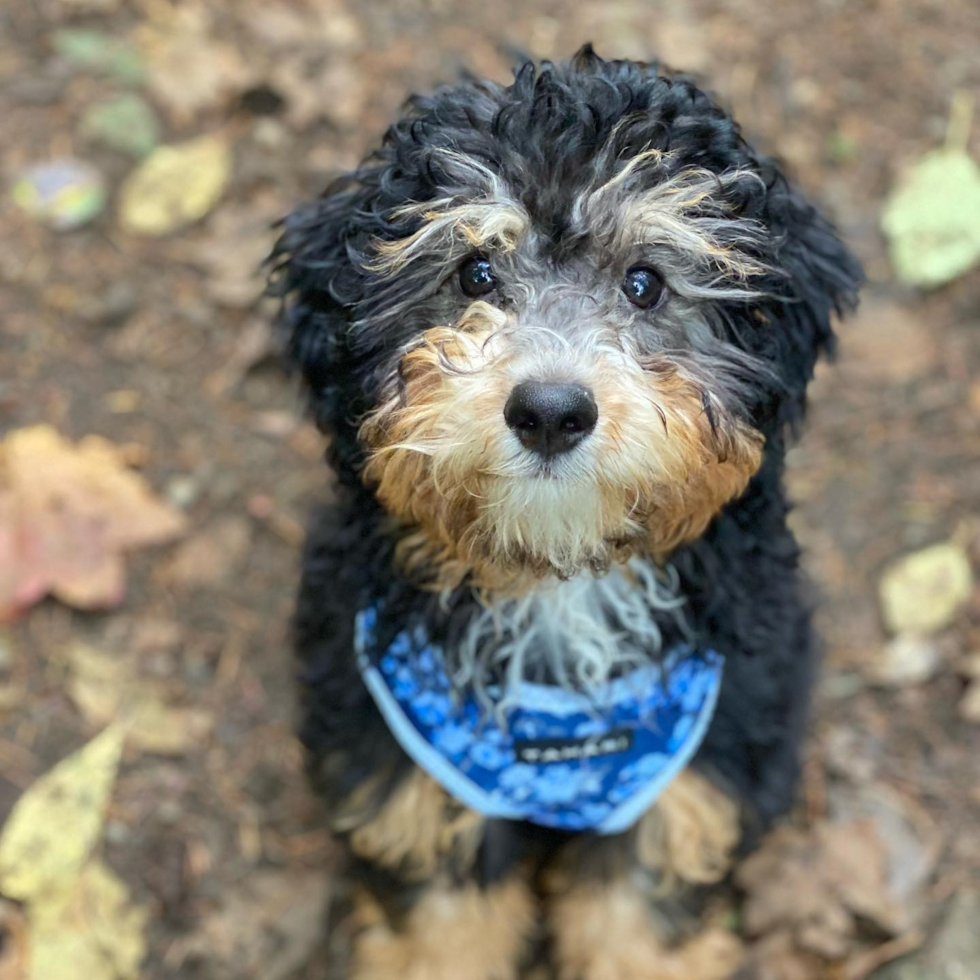
Later-generation Bernedoodles became popular for a reason. Generations like F1BB, F2B, F3, and multigen Bernedoodles are bred with greater consistency, lower shedding tendencies, stronger furnishings, and more predictable coat outcomes in mind. For many families, that added predictability brings a sense of reassurance, especially when allergies, grooming expectations, or coat preferences are part of the decision-making process.
At the same time, predictability does not eliminate responsibility. In many cases, the same traits that make later-generation Bernedoodles so appealing, especially the dense low-shedding coats, also create the highest grooming demands. These dogs require regular brushing, consistent coat maintenance, professional grooming, and a level of upkeep that surprises first-time doodle owners. The fluffy teddy bear look people love so much is absolutely real, but so is the grooming routine that keeps it looking that way.
Beyond the coats, though, Bernedoodles across generations share the qualities that made the breed so loved in the first place. They’re affectionate, emotionally connected, playful, social, and deeply woven into family life. Many owners end up feeling less like they bought a pet and more like they accidentally reserved a permanently involved family member who insists on supervising every part of the day.
No Bernedoodle generation is automatically perfect, and no label can fully predict the personality or experience that comes with an individual dog. But understanding the differences between multigen, F1BB, F2B, and F3 Bernedoodles can make the process far less overwhelming and help families choose a generation that truly fits their lifestyle, expectations, and long-term commitment level.
Elena R.
About The Author
Elena is a leading expert in the field of dog behavior, care, and training, with over a decade of experience in writing about dogs. As a published writer and lifelong dog enthusiast, Elena currently shares her home with three beloved canine companions. She is dedicated to staying up to date on the latest advancements in dog care and training, ensuring that her articles provide readers with accurate and valuable insights. With her extensive knowledge and passion for all things canine, Elena's contributions to the Premier Pups community offer both expertise and authority on a wide range of dog-related topics.
What To Read Next
All Mini Bernedoodle Generations: F1, F1B, F2, Multigen & More
Mini Bernedoodle generations confuse almost everyone at first. One minute you’re researching adorable fluffy puppies, and the next you’re staring at terms like F1, F1B, F2, F1BB, multigen, and F3 trying to figure out whether you’re choosing a... Read More
Are Mini Bernedoodles Hypoallergenic? Shedding, Allergies & More
Mini Bernedoodles are described as hypoallergenic dogs, but the reality is a little more nuanced than that. While many Mini Bernedoodles inherit the low-shedding qualities of the Poodle, no dog is completely hypoallergenic. Some Mini Bernedoodles shed... Read More
Frequently Asked Questions
What is a multigen Bernedoodle? A multigen Bernedoodle is a Bernedoodle produced from multiple generations of Bernedoodle-to-Bernedoodle breeding rather than a direct Bernese Mountain Dog and Poodle pairing. These dogs are bred for greater consistency in coat type, shedding tendencies, furnishings, and temperament.
What does F1BB mean? F1BB stands for a Bernedoodle created by breeding an F1B Bernedoodle back to a Poodle again. This generation is around 87.5% Poodle and 12.5% Bernese Mountain Dog, which leads to curlier coats, lower shedding, and stronger furnishings.
What is an F2B Bernedoodle? An F2B Bernedoodle is created by breeding an F2 Bernedoodle back to a Poodle. This generation aims to improve coat consistency and lower shedding while still keeping a somewhat balanced mix of Bernese Mountain Dog and Poodle traits.
What is an F3 Bernedoodle? An F3 Bernedoodle is considered a third-generation Bernedoodle and is fully multigenerational. These dogs come from several generations of Bernedoodle-to-Bernedoodle breeding and are selectively bred for greater predictability in coat, temperament, and shedding tendencies.
Which Bernedoodle generation sheds the least? F1BB and multigen Bernedoodles are considered the lowest-shedding Bernedoodle generations because they inherit stronger Poodle coat traits and denser furnishings. However, no Bernedoodle generation is completely non-shedding.
Are multigen Bernedoodles hypoallergenic? Multigen Bernedoodles are more allergy friendly because they are commonly bred for lower-shedding furnished coats. Still, no dog is truly 100% hypoallergenic, and allergy responses vary depending on the individual person and the specific dog.
Is F1BB better than F1B? Neither generation is automatically better. F1BB Bernedoodles offer curlier coats and even lower shedding potential, while F1B Bernedoodles may keep a slightly softer balance between Bernese Mountain Dog and Poodle traits. The better choice depends on the owner’s lifestyle, grooming tolerance, and coat preferences.
Do F3 Bernedoodles shed? Yes, F3 Bernedoodles can still shed, though many shed very little compared to earlier generations. Shedding levels depend on coat genetics, furnishings, and the specific breeding line behind the dog.
Which Bernedoodle generation is best? There is no single “best” Bernedoodle generation for everyone. Some families prioritize lower shedding and coat predictability, while others prefer a softer coat texture or a more balanced mix of Bernese Mountain Dog and Poodle traits. The best generation depends on lifestyle, grooming expectations, allergy concerns, and personal preference.
Are multigen Bernedoodles high maintenance? Multigen Bernedoodles are considered fairly high maintenance when it comes to grooming. Lower-shedding coats usually require frequent brushing, professional grooming every 6 to 8 weeks, and regular coat care to prevent tangles and matting.
Why are later-generation Bernedoodles more predictable? Later-generation Bernedoodles are more predictable because breeders selectively pair dogs with specific coat traits, furnishings, shedding tendencies, and temperaments over multiple generations. Over time, this can help create more consistent outcomes within established breeding lines.
Which Bernedoodle generation is best for allergies? F1BB and multigen Bernedoodles are considered the most allergy-friendly generations because they inherit curlier furnished coats and lower shedding tendencies. Even so, no Bernedoodle can guarantee a completely allergy-free experience, and individual reactions still vary significantly.