


Published Friday, October 23, 2026 by Elena R. in New Puppy, Popular Dogs, Dog Grooming
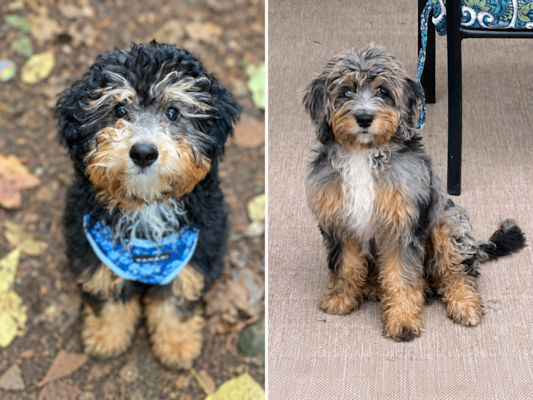
A Phantom Mini Bernedoodle and a Sable Mini Bernedoodle can both combine dark and warm colors in the same coat, but they do it in completely different ways. Phantom is organized. The lighter color appears in recognizable places, such as above the eyes, around the muzzle, across parts of the chest, on the legs, and beneath the tail. Sable is much more blended, with darker color appearing through the tips or shading of hair over a lighter background.
That difference sounds simple enough, yet these are two Mini Bernedoodle patterns that cause plenty of confusion in puppy photos. A black phantom with warm tan points may simply be described as black and brown. Add enough white and the same dog can start to resemble a traditional tricolor. Sable creates a different problem because the puppy coat may be dramatically darker than the eventual adult coat.
A heavily shaded sable puppy can have so much dark color through its back, ears, face, and sides that you might expect a dark adult. A year later, much of that shading may be gone, with cream, apricot, gold, or tan taking over the coat. Meanwhile, a phantom puppy usually keeps the same basic placement of its markings even if the colors themselves become softer.
The easiest way to remember the difference is this: phantom describes where the second color appears, while sable describes how dark color is distributed through a lighter coat. The current Multi-Colored Poodle standard uses those same basic distinctions. Phantom has defined point markings, while sable consists of dark-tipped hairs over another color.
Mini Bernedoodles do not have an official breed standard that fixes every color name and pattern description, so terminology can vary somewhat between breeding programs. Once you know what the coat is actually doing, though, the labels become much easier to understand.
Table of Contents
- What Is a Phantom Mini Bernedoodle?
- What Do Phantom Markings Look Like on a Mini Bernedoodle?
- Why Do Phantom Markings Appear in Such Specific Places?
- Is a Black and Brown Mini Bernedoodle a Phantom?
- What Is a Black Phantom Mini Bernedoodle?
- What Is a Chocolate Phantom Mini Bernedoodle?
- Can Phantom Mini Bernedoodles Have Apricot or Cream Markings?
- Phantom vs. Tricolor Mini Bernedoodles
- Phantom vs. Parti Mini Bernedoodles
- Do Phantom Mini Bernedoodles Change Color?
- Can Phantom Markings Fade or Become Hard to See?
- What Is a Sable Mini Bernedoodle?
- What Does a Sable Mini Bernedoodle Look Like?
- Why Do Sable Mini Bernedoodle Puppies Look So Dark?
- Do Sable Mini Bernedoodles Fade?
- How Much Can a Sable Mini Bernedoodle Change?
- Why Do Sable Mini Bernedoodles Have Darker Ears?
- Does Grooming Change a Sable Mini Bernedoodle's Color?
- Phantom vs. Sable Mini Bernedoodles
- Sable vs. Merle Mini Bernedoodles
- Sable vs. Brindle Mini Bernedoodles
- Can a Sable Mini Bernedoodle Have White Markings?
- Where Do Phantom and Sable Patterns Come From in Mini Bernedoodles?
- How to Choose a Phantom Mini Bernedoodle
- How to Choose a Sable Mini Bernedoodle
- Choosing Between Phantom and Sable
- Final Thoughts on Phantom and Sable Mini Bernedoodles
What Is a Phantom Mini Bernedoodle?

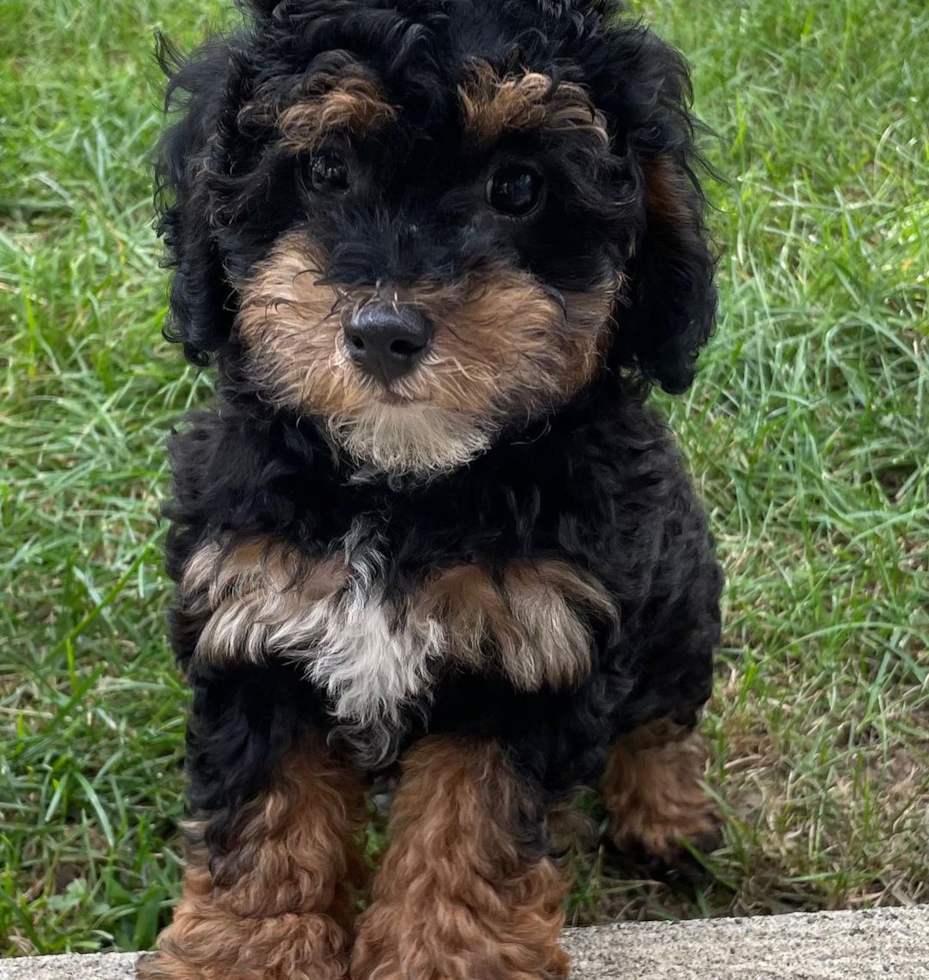
A Phantom Mini Bernedoodle has a darker main coat with a second, lighter color placed in specific areas. The best-known version is black with tan or rust markings, but phantom describes the pattern rather than one required combination of colors.
The most recognizable markings usually appear above the eyes, where they form the little eyebrows that give phantom dogs such expressive faces. The lighter color also tends to appear along the sides of the muzzle, around parts of the chest and throat, on the lower legs and feet, and underneath the tail. This placement closely matches the phantom description used for multi-colored Poodles.
The contrast can be dramatic or surprisingly subtle. A black Mini Bernedoodle with deep copper points may show the pattern from across the room, while a lighter base paired with cream-colored points can look much softer. Long curls can hide some of the definition too, especially around the legs and face.
That is why phantom should be identified by the placement of the colors, not simply by seeing two shades somewhere on the dog.
What Do Phantom Markings Look Like on a Mini Bernedoodle?
The eyebrows usually catch your attention first. Two warm patches sit directly above the eyes against the darker forehead, and yes, they can make a puppy look permanently curious, worried, judgmental, or all three depending on the photograph.
The muzzle usually carries the same lighter shade along the sides and cheeks. You may then see that color on the throat or chest, down the lower legs, across the paws, and beneath the tail. Some puppies have crisp, sharply separated markings, while others show softer borders where the dark and light coat blend together.
Mini Bernedoodle coat texture changes how obvious those markings look. A relatively open wavy coat tends to display color boundaries clearly. Dense curls break up those boundaries, particularly once the coat grows several inches long. A puppy that looked unmistakably phantom at ten weeks may appear much more blended before its next haircut.
White can interrupt the pattern as well. A white chest may cover part of the lighter phantom chest markings, or white socks may hide some of the color on the feet. The phantom pattern can still be present underneath those additional markings.
Why Do Phantom Markings Appear in Such Specific Places?
This is one of the few places where a little genetics actually helps explain what you are looking at.
Dog coats use two broad pigment families: darker black or brown pigment and warmer red-to-yellow pigment. Genes involved in pigment distribution help determine where each type appears on the body. Research into the ASIP gene has shown that it plays an important role in patterns where darker pigment covers much of the dog while warmer coloring appears around the cheeks, eyebrows, legs, and undersides.
For an owner, the useful part is much simpler than the genetic terminology. Phantom eyebrows and leg markings are not random patches that happened to land in cute places. The pattern controls where the contrast appears.
The Bernese Mountain Dog gives us a familiar visual example. Its standard coat has a black base with rich rust above the eyes, on the cheeks, chest, legs, and beneath the tail, along with characteristic white markings. Many of those rust areas overlap with the places we associate with phantom coloring.
So when you look at a black phantom Mini Bernedoodle and think parts of the face look very Bernese, there is a good reason the resemblance feels familiar.
Is a Black and Brown Mini Bernedoodle a Phantom?
Possibly, but “black and brown” describes colors rather than a pattern. If the warm brown-looking color appears above the eyes, along the muzzle, across parts of the chest, down the legs, and beneath the tail, the puppy probably has the characteristic phantom or tan-point look. If brown appears in unrelated patches across the body, the dog is not automatically phantom simply because black and brown are both present.
The word brown can also cause a little confusion here. What people casually call brown markings on a black phantom are often better described as tan, rust, caramel, apricot, or another warm shade. In canine pigmentation, true chocolate-brown is a modification of black pigment, while tan and rust belong to the red-to-yellow side of the color spectrum.
Nobody needs to correct Grandma when she calls the puppy black and brown, of course. The distinction becomes useful when you are trying to understand what pattern a breeder is describing.
RELATED: Parti Mini Bernedoodles: Black & White, Brown & White, +More
What Is a Black Phantom Mini Bernedoodle?
A black Phantom Mini Bernedoodle has a predominantly black coat with lighter point markings. It is probably the easiest phantom combination to recognize because black provides such a strong background for tan, rust, caramel, apricot, or cream.
Some puppies have deep copper points that resemble the rust markings of a Bernese Mountain Dog. Others have much lighter eyebrows and legs, which creates a softer black-and-cream appearance. Both can still fit the phantom pattern because the location matters more than the exact shade of the second color.
Contrast also changes as the coat grows. Short puppy hair tends to show clean outlines around the eyebrows and muzzle. A long adult coat can blur those boundaries, particularly on a curly dog. After grooming, the phantom markings may suddenly look sharper again because the shorter coat reveals their placement.
A black phantom may also carry white. A small white chest patch or white toes do not erase the phantom markings, although more extensive white can make other pattern descriptions useful too.
What Is a Chocolate Phantom Mini Bernedoodle?
A chocolate Phantom Mini Bernedoodle has brown rather than black as the darker base. The lighter phantom points may appear tan, caramel, apricot, cream, or another warm shade in the usual eyebrow, muzzle, chest, leg, and tail areas.
Chocolate phantoms often have a softer overall appearance than black phantoms because there is less contrast between dark brown and the warm point color. A deep chocolate puppy with pale caramel eyebrows can still be striking, but the transition between shades is usually gentler than black paired with bright tan.
The nose provides a useful clue when puppy photos make black and very dark chocolate difficult to separate. Dogs that genetically express brown pigment generally show brown or liver pigment on the nose and foot pads rather than black.
That is particularly useful under questionable indoor lighting, where dark chocolate fur can look almost black. The coat may argue with the camera. The nose usually gives you a better clue.
Can Phantom Mini Bernedoodles Have Apricot or Cream Markings?
Yes. Phantom does not require one exact shade of tan. The current standard for multi-colored Poodles allows different acceptable color combinations within the phantom pattern. In Mini Bernedoodles, the lighter points may therefore range from deep rust and copper through tan, caramel, apricot, and cream.
This creates very different-looking phantom dogs. Black with rich rust produces strong contrast and often feels closest to the classic Bernese palette. Black with cream is more delicate. Chocolate with apricot can appear warm and blended, particularly when the adult coat gets long.
The strength of the point color can change as the puppy grows, just as red, apricot, and cream coats can change with maturity. A puppy that starts with rich copper eyebrows may develop softer apricot ones later.
Phantom vs. Tricolor Mini Bernedoodles
Phantom and tricolor Mini Bernedoodles are easy to confuse because they may share a black base and warm markings in very similar places. The main visual difference is white.
A black phantom is primarily black with tan, rust, apricot, or cream points. A classic tricolor Mini Bernedoodle adds clear white markings, often across the face, muzzle, chest, and feet. That combination reflects the familiar black, rust, and white look associated with the Bernese Mountain Dog.
The distinction becomes less tidy when a phantom puppy has a small amount of white. A white chest patch does not make every black-and-tan dog automatically tricolor, and Mini Bernedoodles do not have an official standard that tells every breeder exactly where one label must stop and another must begin.
It is usually more useful to look at the whole dog. If black and warm phantom points dominate and the white is minimal, phantom remains a helpful description. When white becomes a major part of the visual pattern, tricolor or a more detailed combined description may tell you more.
RELATED: Tricolor Mini Bernedoodles: Colors, Markings & How They Change
Phantom vs. Parti Mini Bernedoodles
Phantom and parti describe different things. Phantom tells you where a second color appears on a darker coat. Parti describes a dog where white covers a large part of the coat and another color appears in patches. The Multi-Colored Poodle standard uses at least 50% white for its formal parti definition, but Mini Bernedoodles do not have a corresponding official breed standard, so breeder usage may not follow that percentage exactly.
The two patterns can also overlap. A dog might have large white areas and a black patch on the head, while the black portion still contains tan eyebrows and warm muzzle markings. In that case, more than one color pattern is visible on the same dog.
This is where Mini Bernedoodle color names occasionally start sounding like someone kept adding words because they forgot where the sentence was supposed to end. The name may be long, but each part is simply describing another visible feature.
Do Phantom Mini Bernedoodles Change Color?
They can, although the change usually looks different from what happens in sable puppies.
With phantom, the placement of the markings generally remains recognizable. What may change is the depth of the base coat, the shade of the points, and how much contrast you see between them.
A puppy with a very dark base and rich copper eyebrows may mature into a softer-looking dog if either color lightens. Brown can become less intense. Warm points may shift toward apricot or cream. Some Poodle colors also undergo progressive clearing, and the Poodle standard recognizes that certain colors can contain hairs in different stages of clearing as the coat matures.
Coat length creates another visual change. Sharp little puppy eyebrows become less obvious once curls grow across the forehead. Leg markings can disappear into several inches of fluffy coat. A shorter groom may reveal those same points clearly again.
The dog has not lost the phantom pattern. It may simply become less dramatic.
Can Phantom Markings Fade or Become Hard to See?
Yes, particularly when the two colors begin to move closer together. Imagine a puppy with a nearly black coat and deep copper points. The contrast is strong because the colors are far apart. If the darker coat softens and the copper becomes pale apricot, the difference between them becomes gentler. The eyebrows are still there, but they no longer announce themselves from the other side of the yard.
A lower-contrast phantom may also become harder to recognize when the coat is long. Facial furnishings cover part of the muzzle, curls break up the eyebrows, and fluffy legs blend different shades together. Grooming often brings those markings back into focus.
If strong contrast matters to you, adult relatives are useful to look at. They cannot guarantee exactly what one puppy will do, but they show whether similar dogs in the family tend to keep bold points or mature into softer combinations.
RELATED: Everything You Need to Know About Puppy Color Changes
What Is a Sable Mini Bernedoodle?
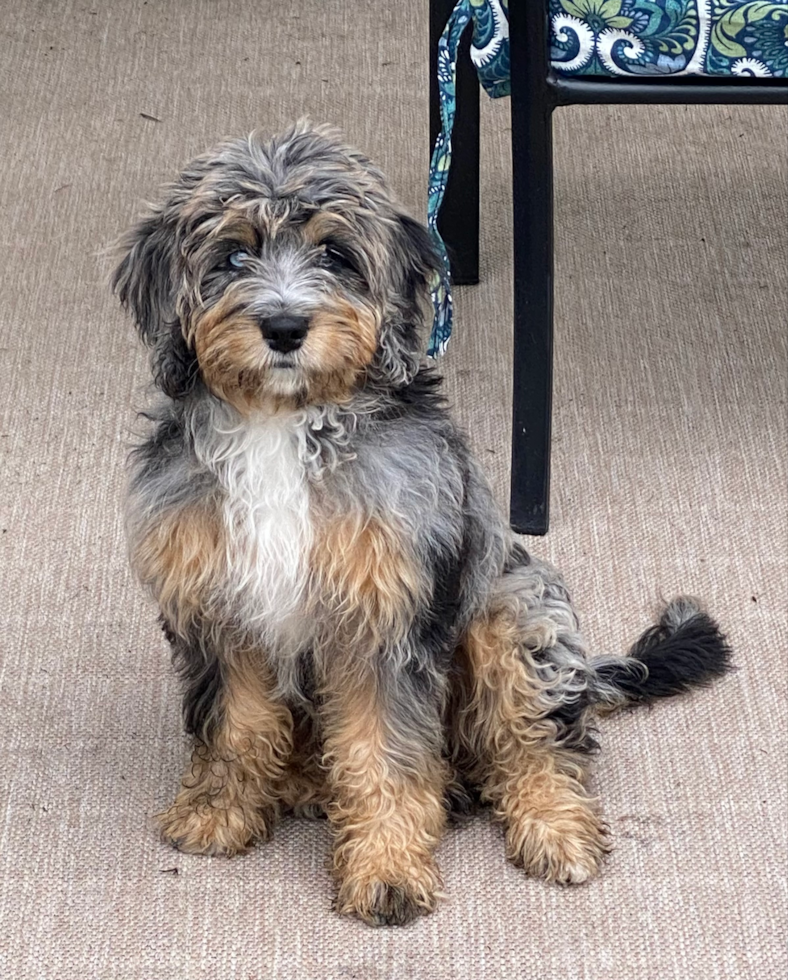
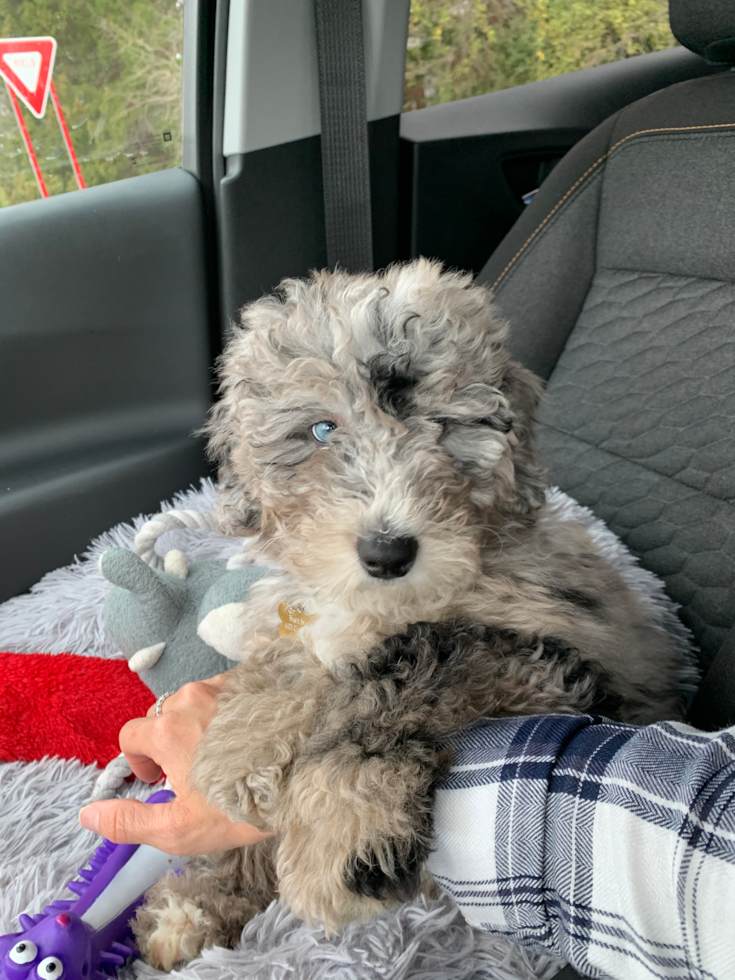
A Sable Mini Bernedoodle has a lighter underlying coat with darker shading or darker tips through the hair. Instead of placing the warm color into predictable points, as phantom does, sable spreads dark pigment across parts of a lighter coat.
The background may be cream, gold, apricot, tan, or another warm shade. Over that sits darker tipping, often most visible around the ears, back, neck, face, or tail. Some puppies have only a modest smoky overlay, while others are so heavily shaded that much of the lighter background is difficult to see at first.
The Multi-Colored Poodle standard describes sable as black-tipped hairs over another color without requiring those dark hairs to appear in one specific location. That is an especially useful definition for Mini Bernedoodle owners because it focuses on what you can actually see.
Sable is less about neat patches and more about layers.
What Does a Sable Mini Bernedoodle Look Like?
A sable coat can be difficult to appreciate from a single photograph because the darker color often sits through the ends of lighter hair. Up close, one strand may be pale gold or cream closer to the skin and much darker toward the tip.
Stand back and all of those dark tips blend together. The puppy may look smoky brown, blackish gold, dark caramel, or almost charcoal in certain areas. Move the hair apart and suddenly the lighter base becomes obvious.
The amount of shading varies enormously. Some Sable Mini Bernedoodles have dramatic dark coverage over the back and ears, while the chest and legs remain much lighter. Others show a more even dusting of darker tips throughout the body.
White markings can appear alongside sable too. A sable puppy may have a white chest, blaze, muzzle, paws, or larger white areas without changing what sable means in the colored sections of the coat.
Why Do Sable Mini Bernedoodle Puppies Look So Dark?
This is one of the most useful things to know before choosing a sable puppy. Young sable coats often show a large amount of dark tipping because the puppy hair is short. When each hair has a lighter base and a dark end, that dark section makes up a considerable portion of what you see on a tiny puppy.
As the hair grows, more of the lighter section becomes visible. Then the puppy coat begins to give way to the adult coat, and grooming removes some of the older dark-tipped hair. The result can be a much lighter dog.
A puppy that appears dark brown or almost black across the back at eight weeks might eventually develop a warm gold, apricot, tan, or cream body with darker ears and only traces of the original shading. Another sable may keep considerably more darkness.
That range is why sable is one of the patterns where adult photos of related dogs become particularly valuable.
RELATED: Chocolate, Brown, Black & Gray Mini Bernedoodles: Colors & How They Change
Do Sable Mini Bernedoodles Fade?
Many sable Mini Bernedoodles become noticeably lighter, but fade does not explain the entire process.
Some of the darkness sits toward the ends of individual hairs. When those hairs are trimmed, shed, or replaced by adult coat, much of the visible dark color disappears with them. At the same time, the dog's mature coat may naturally present the sable pattern differently from the short, heavily shaded puppy coat.
The genetics behind sable and related shaded patterns are more complex than older dog-color terminology suggested. Modern research into ASIP recognizes several ways dogs can distribute dark and warm pigment, including shaded-yellow patterns with dark-tipped hairs. For a puppy owner, however, the practical takeaway is straightforward: two sable puppies that look similarly dark when young may not finish with equally dark adult coats.
Some keep dark ears, shading along the back, and a smoky tail. Others clear so extensively that only small traces of the original dark puppy coat remain.
If you choose sable because you love the contrast in an eight-week photo, make sure you also like the much lighter possibilities.
How Much Can a Sable Mini Bernedoodle Change?
Quite a lot. A lightly shaded sable may simply soften as it matures, with the same general golden or apricot appearance becoming clearer. Heavily shaded puppies have the potential for a much more dramatic transformation because there is more dark tipping available to disappear.
The face often gives you an early hint. As facial hair grows and receives its first few trims, lighter coloring around the muzzle and cheeks may become much more obvious. The torso can follow, particularly if the dog is regularly clipped.
Longer areas such as the ears may hold dark color much longer. That is why adult sable Mini Bernedoodles sometimes have a very pale body paired with deep brown or black-tipped ears.
Pull out an early puppy photograph at that point and you may wonder whether somebody switched dogs on you.
They did not. Sable is simply very good at before-and-after photos.
Why Do Sable Mini Bernedoodles Have Darker Ears?
The ears often preserve more of the original shading for two reasons. First, sable itself may be more strongly expressed in certain areas of the coat. Second, ear hair is usually left longer than much of the body, which means dark-tipped hairs remain intact for longer.
Regular body grooming gradually removes old hair tips. The ears may only receive shaping rather than a short clip, so the darker portion stays visible.
This can produce a striking adult coat. A puppy that began dark all over may eventually have a cream or apricot body with deep smoky ears and perhaps a little shading through the tail or back.
It is worth looking at adult sable dogs before deciding whether this is a pattern you love. The mature look can be every bit as attractive as the puppy coat, but it may be attractive for completely different reasons.
Does Grooming Change a Sable Mini Bernedoodle's Color?
Grooming can change the appearance of sable much more dramatically than it changes most other Mini Bernedoodle patterns.
When dark pigment is concentrated toward the ends of hairs, clipping removes those ends. The lighter portion underneath then becomes the part you see. A heavily shaded sable puppy can therefore walk into a grooming appointment looking dark and come home several shades lighter.
That does not mean the groomer removed the dog's actual genetic color. The sable pattern is still part of the dog. You are simply seeing different portions of the hair and, over time, a more mature coat.
The effect is especially noticeable after the first significant puppy haircut. Families who want to preserve more of the visibly shaded puppy look sometimes prefer longer styles for a while, although coat care and comfort should still guide grooming decisions rather than color alone.
RELATED: Do Mini Bernedoodles Shed? Coat Types and Allergies Explained
Phantom vs. Sable Mini Bernedoodles
Once you understand the structure of the two patterns, phantom and sable are actually very different.
A Phantom Mini Bernedoodle usually starts with the darker color as the main background. Warm color appears at specific points, especially the eyebrows, muzzle, chest, legs, and beneath the tail. Those locations remain the key feature even if the shades soften with maturity.
A Sable Mini Bernedoodle works in the opposite visual direction. The lighter color forms the background, while darker pigment sits through the ends or shading of the hair. There is no required pair of eyebrows or fixed set of leg points.
Their puppy-to-adult changes differ too. Phantom usually keeps the same general map while the contrast changes. Sable may lose a large portion of its visible dark overlay as the coat grows, matures, and is trimmed.
If you are looking at a puppy and cannot decide which pattern you are seeing, check the face. Clear warm eyebrows on a darker forehead strongly suggest phantom. Dark shading sitting over a lighter face points much more toward sable.
Sable vs. Merle Mini Bernedoodles
Sable and merle may both produce coats with several shades, but they create those shades in completely different ways.
Merle forms irregular areas where dark pigment is diluted, which gives the coat a mottled or marbled appearance. The Veterinary Genetics Laboratory describes merle as irregular patches of diluted pigment mixed with fully pigmented areas.
Sable is an overlay effect. Dark tipping or shading sits through a lighter coat rather than forming those characteristic diluted patches.
From a distance, a heavily shaded sable puppy can occasionally look uneven enough to confuse someone who is unfamiliar with the patterns. Looking more closely at the hair usually clears things up. Merle appears through patches in the coat. Sable looks smoky, shaded, or dark-tipped.
The distinction also matters for breeding rather than just appearance. Merle has specific genetic considerations because offspring inheriting two merle variants may have an increased risk of auditory, eye, and other developmental problems. Sable does not carry that merle-specific breeding concern.
RELATED: Merle Mini Bernedoodle: Blue Merle, Chocolate Merle & Blue Eyes
Sable vs. Brindle Mini Bernedoodles
Sable can also be confused with brindle, particularly in longer coats where individual markings become difficult to separate.
Brindle forms stripes over a base color. Sable forms dark tipping or shading over a lighter background. The UKC multi-colored Poodle standard makes the same distinction, with brindle defined through striping and sable through dark-tipped hair.
A curly brindle coat may not display crisp tiger-like stripes when several inches of hair are blending together. Shorter areas around the face or a recently groomed body can make them easier to see. Sable should not show that organized stripe pattern. The coat may have darker and lighter areas, but the overall impression is more shaded than striped.
Can a Sable Mini Bernedoodle Have White Markings?
Yes. Sable describes what is happening in the colored part of the coat. White spotting can appear alongside it.
A sable Mini Bernedoodle might have a small white chest and white toes, a full facial blaze, white legs, or considerably more white across the body. If the white becomes extensive, you may see the dog described with more than one pattern term.
The UKC recognizes this same general principle in multi-colored Poodles by allowing dogs to display more than one accepted pattern at once. Mini Bernedoodles do not follow that breed standard, but the concept helps explain why one puppy can visibly combine sable shading with white spotting.
Again, photographs usually tell you more than the longest possible color name.
Where Do Phantom and Sable Patterns Come From in Mini Bernedoodles?
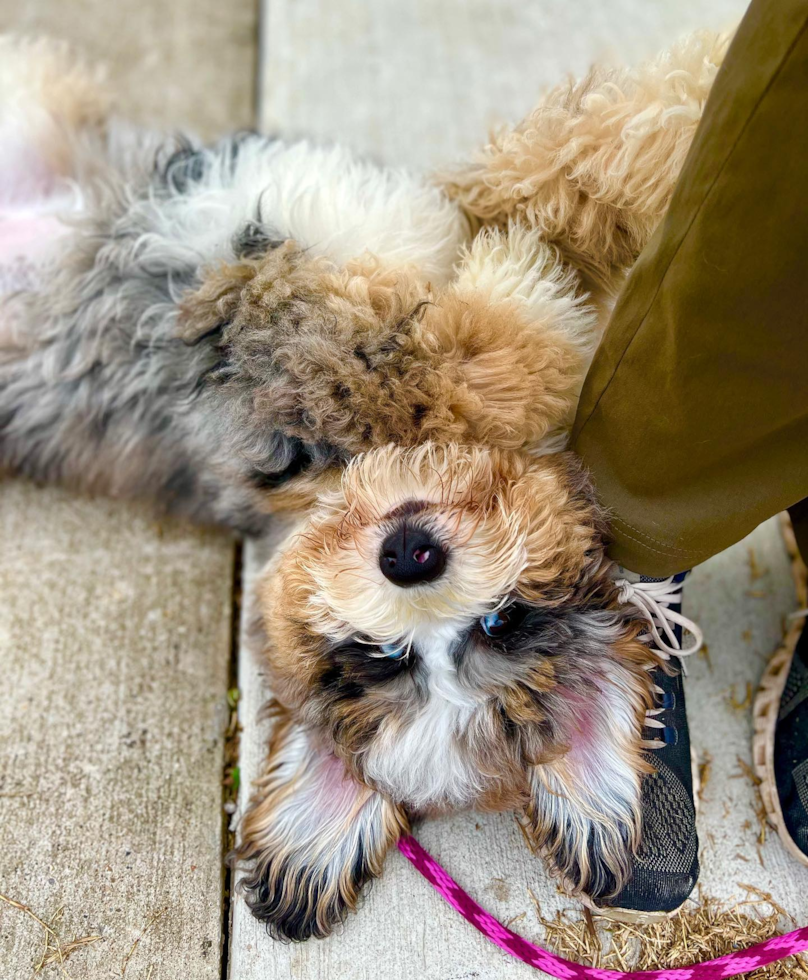
Mini Bernedoodles bring together the color possibilities of Bernese Mountain Dogs, Poodles, and, in later generations, Bernedoodles already carrying color traits from earlier pairings.
The Bernese Mountain Dog contributes its familiar black, rust, and white arrangement. Its rust markings occur above the eyes, on the cheeks, chest, legs, and beneath the tail, which is why the facial placement on some phantom Mini Bernedoodles feels familiar. Multi-colored Poodles can also express phantom, sable, parti, brindle, and combined patterns under the current standard.
Later-generation Mini Bernedoodles make it less useful to think of every trait as coming directly from the Poodle or Bernese parent standing beside a particular litter. A puppy may inherit color traits that have been present within established Bernedoodle lines for generations.
For families choosing a puppy, the ancestry lesson that matters most is much simpler: look at the dogs behind the puppy. Mature parents, grandparents, siblings, and previous litters may offer useful clues about how a particular pattern tends to look once the puppy fluff is gone.
RELATED: All Mini Bernedoodle Generations: F1, F1B, F2, Multigen & More
Are Phantom and Sable Mini Bernedoodles Rare?
You will often see both phantom and sable described as rare Mini Bernedoodle colors, but there is no reliable population-wide database that tells us what percentage of Mini Bernedoodles have either pattern.
Availability varies greatly between breeding programs. A program with established phantom lines may produce phantom puppies regularly, while another may rarely have them. The same applies to sable.
The more specific the look, the harder it may be to find. A black phantom is one thing. A black phantom with deep rust points, minimal white, a particular adult size, a certain coat type, and strong color retention is a much narrower combination.
Sable has its own version of that problem. Producing sable may be one goal, but predicting a sable puppy that will retain one exact amount of dark shading into adulthood is another.
So “less common” is usually more useful than treating every phantom or sable puppy as automatically rare. Scarcity also tells you nothing about the quality of the dog.
Do Phantom or Sable Colors Affect Temperament?
There is no good reason to expect a Mini Bernedoodle's phantom or sable coat pattern to determine its personality.
Those phantom eyebrows may look as though the puppy is evaluating every life decision you have ever made, but that is our interpretation of the markings, not a temperament trait.
A sable dog is not naturally calmer because its adult coat looks soft and golden either. Personality depends much more on the individual puppy, parental temperament, early development, socialization, training, experiences, and home environment.
When choosing between puppies, color can absolutely be part of what attracts you. Temperament should tell you far more about which puppy fits your actual life.
RELATED: Are Mini Bernedoodles Good Family Dogs? What Life Really Looks Like
Do Phantom or Sable Mini Bernedoodles Shed Differently?
Coat pattern does not tell you how much a Mini Bernedoodle will shed. Phantom and sable describe pigment. Curl, furnishings, coat texture, and shedding are influenced by other inherited coat traits. A black phantom can have a loose wavy coat while another black phantom develops dense curls. Two sable littermates may share similar shading yet have noticeably different adult textures.
Sable does have one unusual relationship with grooming because clipping the dark-tipped hair may change how much shading you see. That is a visual color change, not evidence that sable dogs shed differently.
If shedding or grooming commitment is important to you, evaluate coat type separately from color.
RELATED: Are Mini Bernedoodles Hypoallergenic? Shedding, Allergies & More
How to Choose a Phantom Mini Bernedoodle

If phantom is the pattern you love, start by deciding what part of the appearance attracts you most. Some people want strong contrast, with a dark black base and rich rust eyebrows, cheeks, and legs. Others prefer a chocolate phantom where the colors blend more softly.
Look closely at the markings themselves. Are the eyebrows clear? How much lighter coloring appears around the muzzle and legs? Is there white as well, and do you like how it changes the overall look? Those details will tell you more than the word phantom alone.
Then think about maturation. A high-contrast puppy may become softer in color. Long curls can hide some of the points. Chocolate can appear lighter later, and warm markings may soften toward apricot or cream.
If you like both the bold puppy version and the softer adult possibilities, you are in a good position to enjoy whatever direction the coat takes.
How to Choose a Sable Mini Bernedoodle
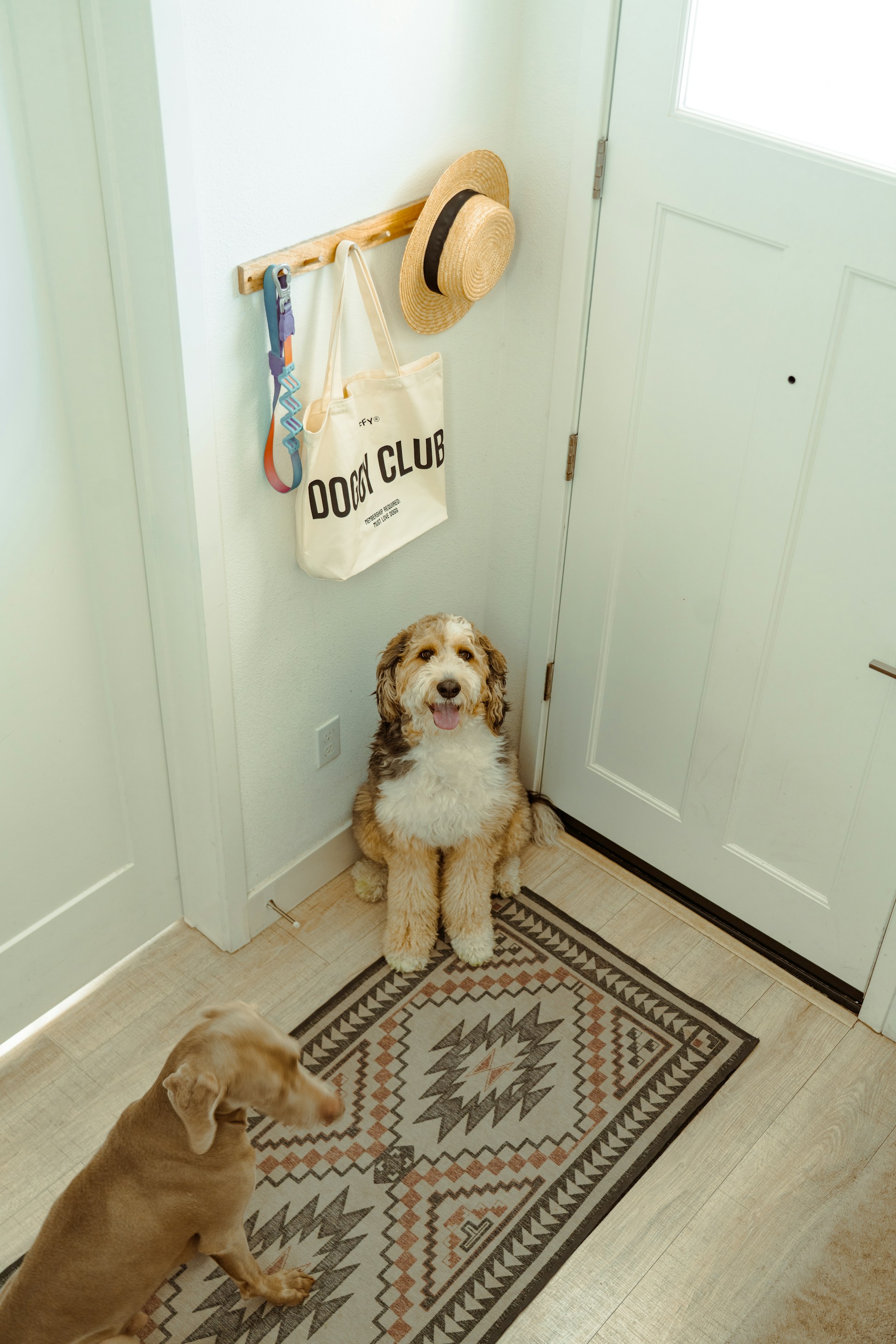
Sable asks for a little more flexibility. The first thing to look for is the lighter color underneath the dark shading. That background is often a better clue to the eventual adult appearance than the overall darkness of the puppy coat.
A puppy with pale cream underneath heavy tipping may become very light. An apricot or golden background can mature into a warmer adult. Dark ears and some shading may remain, but the amount is difficult to predict exactly from an early photograph.
Mature sable relatives are particularly valuable. Look at what they were like as puppies if those photos exist, then compare them with their adult coats. That gives you a much better idea of the type of change that has occurred within the family.
Most of all, make sure you like sable as a changing pattern rather than falling in love with one frozen puppy shade. For many owners, the transformation is part of its appeal. You get to watch the coat reveal itself over the first year instead of knowing the ending on day one.
RELATED: Mini Bernedoodle Pros and Cons
Choosing Between Phantom and Sable
Phantom is a good fit for someone who loves defined markings. Those eyebrows, warm muzzle, and lighter legs give the face plenty of expression, and the basic pattern usually remains recognizable even if the colors become softer.
Sable appeals to people who enjoy more natural shading and do not mind some mystery in the adult coat. The puppy may start dark and smoky, then gradually reveal gold, cream, apricot, or tan underneath. The finished dog may look surprisingly different from the one in the first photos.
Neither pattern is better. They simply behave differently.
If exact adult color matters strongly to you, phantom may offer a little more visual predictability in terms of where the colors will appear, although their shades can still change. Sable generally requires more flexibility because the amount of dark tipping may decrease considerably.
Once you have decided which look you prefer, bring the rest of the puppy back into the decision. Health, temperament, early development, socialization, adult size, coat type, and compatibility with your household will affect everyday life much more than whether the eyebrows are perfectly symmetrical.
Color catches the eye. The puppy underneath it is the part you actually live with.
See available Mini Bernedoodle puppies for sale
Final Thoughts on Phantom and Sable Mini Bernedoodles
Phantom and sable Mini Bernedoodles can both combine rich dark pigment with warm tan, gold, apricot, or cream, but that shared color palette is where the resemblance mostly ends.
Phantom is structured. The lighter color appears in recognizable places, particularly above the eyes, around the muzzle, through the chest and legs, and beneath the tail. Black phantom offers the strongest contrast, while chocolate and lighter combinations produce a softer version of the same general pattern.
Sable is layered. A lighter coat sits underneath darker tips and shading, sometimes to such an extent that a puppy looks much darker than the adult dog will eventually become. Grooming and coat maturation gradually reveal more of the lighter background, while areas such as the ears may keep their darker color for much longer.
That difference is the key to understanding both patterns. With phantom, watch where the lighter color sits. With sable, look at what lies underneath the dark shading.
And if you are choosing a puppy, give yourself some room for the coat to surprise you. A phantom may lose some contrast. A sable may change dramatically. That does not make the puppy's original description wrong. It is simply what happens when color, adult coat, grooming, and genetics all get a vote.
Sometimes the tiny phantom eyebrows stay almost exactly as you imagined them. Sometimes your nearly black sable puppy grows into a golden dog with dark ears and leaves you scrolling through old photos to make sure it really is the same animal.
Either way, the coat rarely makes the dog less interesting.
Elena R.
About The Author
Elena is a leading expert in the field of dog behavior, care, and training, with over a decade of experience in writing about dogs. As a published writer and lifelong dog enthusiast, Elena currently shares her home with three beloved canine companions. She is dedicated to staying up to date on the latest advancements in dog care and training, ensuring that her articles provide readers with accurate and valuable insights. With her extensive knowledge and passion for all things canine, Elena's contributions to the Premier Pups community offer both expertise and authority on a wide range of dog-related topics.
What To Read Next

Chocolate, Brown, Black & Gray Mini Bernedoodles: Colors & How They Change
A black Mini Bernedoodle can have the deepest, glossiest coat in the litter, sometimes so dark that the eyes seem to disappear into all that puppy fluff. Chocolate and brown Mini Bernedoodles trade that black pigment for warmer shades ranging from espresso and... Read More

Parti Mini Bernedoodles: Black & White, Brown & White, +More
A Parti Mini Bernedoodle stands out for a very different reason than a classic tricolor. Instead of black, rust, and white arranged in the familiar Bernese pattern, a parti coat uses white as a major part of the design. Large patches of black, brown, red, apricot,... Read More
Frequently Asked Questions
What is a Phantom Mini Bernedoodle? A Phantom Mini Bernedoodle has a darker main coat with lighter markings in specific areas. Those markings typically appear above the eyes, around the sides of the muzzle, through parts of the chest and throat, on the lower legs and feet, and beneath the tail. Black with tan or rust is a common example, but other color combinations are possible.
What is a Sable Mini Bernedoodle? A Sable Mini Bernedoodle has darker tips or shading over a lighter background coat. The underlying color may be cream, gold, apricot, tan, or another warm shade. Some sable puppies are heavily shaded when young and become much lighter as the adult coat develops.
What is the difference between phantom and sable Mini Bernedoodles? Phantom is defined mainly by the placement of a second color. Sable is defined by darker tipping or shading over a lighter background. A phantom commonly has lighter eyebrows and muzzle markings against a dark face, while sable tends to create a smoky or layered appearance across the coat.
Is a black and brown Mini Bernedoodle a phantom? It may be. If the brown, rust, or tan color appears above the eyes, along the muzzle, through parts of the chest, on the legs, and beneath the tail, the dog may have phantom markings. Random areas of brown elsewhere on a black coat do not automatically make the dog phantom.
Is phantom the same as black and tan? The appearances are closely related. Phantom is the term commonly used in the Poodle world for a pattern with lighter points in characteristic locations against a darker base. A phantom Mini Bernedoodle may be black and tan, but phantom can also appear with different base and point colors.
Can a Phantom Mini Bernedoodle be chocolate? Yes. A chocolate Phantom Mini Bernedoodle has a brown base with lighter points that may appear tan, caramel, apricot, or cream. Brown or liver-colored nose pigment can help distinguish true chocolate from a very dark coat that only looks brown under certain lighting.
Can Phantom Mini Bernedoodles have white markings? Yes. White spotting can occur alongside phantom markings. A puppy might have tan phantom points plus a small white chest, white toes, or much larger white areas. Extensive white may lead breeders to use additional pattern terms such as tricolor or parti.
What is the difference between a phantom and tricolor Mini Bernedoodle? Both may have a dark base with warm point markings. Tricolor adds obvious white as a major part of the coat, while a basic phantom pattern focuses on the darker base and lighter points. Small amounts of white can make the boundary between breeder descriptions less exact.
Do Phantom Mini Bernedoodles change color? They can. The locations of the markings generally remain recognizable, but the base coat or point color may become lighter with maturity. Coat growth and grooming can also make the points look more or less obvious at different stages.
Can phantom markings disappear? The underlying pattern does not normally vanish, but it can become difficult to see. If the base and point colors both lighten, the contrast may become subtle. Long curls can also cover small eyebrow or leg markings that become more obvious again after grooming.
Why does my sable Mini Bernedoodle look lighter now? Sable hair may carry much of its darker pigment toward the tips. As the puppy coat grows out, adult hair develops, and dark ends are trimmed away during grooming, more of the lighter background becomes visible. Some sable Mini Bernedoodles therefore look dramatically lighter as adults.
Will a Sable Mini Bernedoodle always fade? Not every sable changes to the same degree. Some dogs keep significant dark shading across the ears, back, or tail, while others become mostly cream, gold, apricot, or tan. Mature relatives can offer clues, but one puppy's exact adult appearance is difficult to guarantee.
Why do sable Mini Bernedoodles often have darker ears? Ear hair is usually kept longer than the body coat, so dark-tipped hairs remain visible for longer. Some dogs also naturally retain stronger sable shading around the ears. This can leave an adult with a much lighter body and noticeably darker ears.
Does grooming change a sable Mini Bernedoodle's color? Grooming can change the visible color quite dramatically. A haircut may remove darker portions from the ends of sable hairs and expose more of the lighter color underneath. The dog's genetics have not changed, but the difference before and after a groom can be striking.
Is sable the same as merle? No. Sable produces darker shading or tipping over a lighter coat. Merle creates irregular patches where dark pigment is diluted, which gives the coat a mottled or marbled appearance. The two patterns also have different genetics.
Is sable the same as brindle? No. Brindle creates stripes across a base color, while sable produces darker tips or shading without an organized stripe pattern. Longer curly coats can make either one harder to identify at first glance.
Can a sable Mini Bernedoodle have white markings? Yes. Sable can occur alongside white spotting. A dog may have a sable-colored body with a white chest and paws, or larger areas of white combined with sable patches.
Can a sable Mini Bernedoodle become cream as an adult? A heavily shaded puppy with a cream background can mature into an adult that appears predominantly cream, especially after much of the darker puppy tipping is gone. Some dark shading may remain on the ears, tail, or back.
Are phantom and sable Mini Bernedoodles rare? There is no reliable population-wide data showing exactly how common either pattern is in Mini Bernedoodles. Availability depends heavily on the breeding lines involved. They may be less commonly seen in some programs and relatively familiar in others.
Do phantom or sable colors affect temperament? There is no good evidence that either coat pattern determines temperament. Parental traits, individual genetics, early development, socialization, training, and environment are much more useful when evaluating a puppy's likely personality.
Do phantom or sable Mini Bernedoodles shed less? Color pattern does not tell you how much a Mini Bernedoodle will shed. Coat texture, furnishings, curl, and other coat traits matter more. Phantom and sable Mini Bernedoodles can both have curly, wavy, or relatively straighter coats.
Which changes more, phantom or sable? Sable usually has the potential for the more dramatic visual transformation because much of the dark puppy shading may become less visible with age and grooming. Phantom colors can lighten too, but the characteristic placement of the point markings tends to remain easier to recognize.
Which is better, a phantom or sable Mini Bernedoodle? Neither coat pattern is inherently better. Phantom suits people who enjoy defined contrast and recognizable point markings, while sable appeals to those who like layered shading and do not mind more uncertainty about the exact adult shade. Health, temperament, development, and fit with your household should matter more than either color pattern.