





Published Friday, October 16, 2026 by Elena R. in New Puppy, Popular Dogs, Dog Grooming
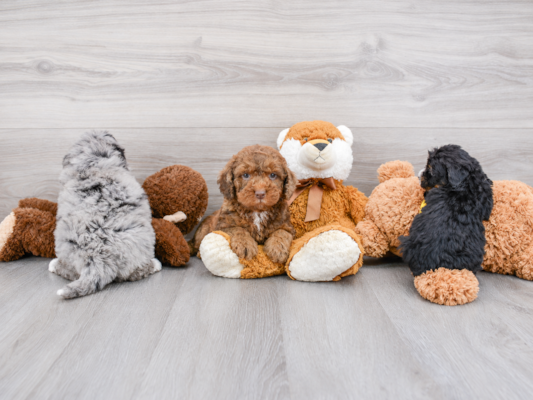
A black Mini Bernedoodle can have the deepest, glossiest coat in the litter, sometimes so dark that the eyes seem to disappear into all that puppy fluff. Chocolate and brown Mini Bernedoodles trade that black pigment for warmer shades ranging from espresso and dark cocoa to softer milk chocolate. Gray Mini Bernedoodles take the palette in another direction, with coats that can range from deep charcoal to smoky steel or much lighter silver-gray.
At puppy age, the differences can look fairly straightforward. Black is black. Brown is brown. Gray looks gray. Then the adult coat begins coming in and things become a little more interesting.
Some black Mini Bernedoodles remain richly black for life. Others inherit color traits through their Poodle ancestry that cause the coat to lighten gradually, sometimes toward charcoal, blue-gray, or silver. Brown can change too. A deep chocolate puppy may mature into a softer brown, café-au-lait, taupe, or silvery beige shade depending on the color genetics behind the coat.
The terminology can make things sound more complicated than they really are. Chocolate and brown usually describe the same basic type of pigment, while gray, blue, and silver are separate Poodle color terms that are sometimes used more loosely when describing Bernedoodles. Coat texture, grooming, lighting, and age can make all of them look different from one photograph to the next.
Understanding what each color actually means makes those changes much easier to follow, especially if you are trying to imagine what a dark Mini Bernedoodle puppy might look like a few years from now.
Table of Contents
- What Do Black, Brown, Chocolate, and Gray Mini Bernedoodles Have in Common?
- Where Do These Mini Bernedoodle Colors Come From?
- Black Mini Bernedoodles
- Chocolate Mini Bernedoodles
- Brown Mini Bernedoodles
- What Is a Gray Mini Bernedoodle?
- Why Do Some Dark Mini Bernedoodles Look Brownish in the Sun?
- Does Grooming Change the Color of a Black, Brown, or Gray Mini Bernedoodle?
- When Does a Mini Bernedoodle's Adult Dark Color Become Clear?
- Can You Predict Whether a Black or Brown Puppy Will Fade?
- Black vs. Chocolate Mini Bernedoodles
- Do Black, Brown, or Gray Colors Affect Coat Type?
- Are Black, Chocolate, Brown, or Gray Mini Bernedoodles Rare?
- How to Choose Between Black, Chocolate, Brown, and Gray
- Final Thoughts on Chocolate, Brown, Black & Gray Mini Bernedoodles
What Do Black, Brown, Chocolate, and Gray Mini Bernedoodles Have in Common?
Black, brown, and many gray Mini Bernedoodle coats are built around the same dark pigment family.
Dogs produce two basic types of coat pigment. One creates black and brown shades, while the other produces the reds, yellows, apricots, and creams we covered in the previous Mini Bernedoodle color guide. The dark pigment is called eumelanin.
Black is the basic dark form of that pigment.
Brown occurs when inherited color traits modify black pigment into brown. The change quite clearly: the brown gene affects black pigment throughout the dog while leaving red and yellow pigment alone.
Gray becomes more complicated because dogs can arrive at a gray-looking coat in more than one way. Poodles have recognized colors including black, blue, gray, silver, brown, café-au-lait, and silver beige, and several of those shades can change significantly as the coat matures.
Mini Bernedoodles can inherit pieces of that much wider Poodle color palette, which is why two puppies that look similarly dark at eight weeks old may eventually develop very different adult coats.
RELATED: Learn Everything There Is To Know About The Mini Bernedoodle Breed
Where Do These Mini Bernedoodle Colors Come From?
Black has strong roots on both sides of Mini Bernedoodle ancestry. The Bernese Mountain Dog's traditional coat begins with a jet-black ground color, combined with rich rust and clear white markings. Black is also one of the established Poodle colors. A predominantly black Mini Bernedoodle therefore has plenty of genetic opportunity to inherit dark pigment from either side of its family tree.
Brown, chocolate, gray, silver, blue, café-au-lait, and silver beige are much more closely associated with the expanded color range brought in through Poodle ancestry. Modern Poodle standards recognize all of those colors except “chocolate,” which is generally another everyday name for brown.
Later-generation Mini Bernedoodles can pass these colors through Bernedoodle parents too, so the immediate parent producing a brown or gray puppy does not always have to be a Poodle. Once those color traits become established within Bernedoodle lines, they can continue through future generations.
The traditional Bernese influence remains easiest to recognize in black. The farther a Mini Bernedoodle moves toward chocolate, café-au-lait, gray, blue, or silver, the more obvious the contribution from its Poodle-derived color background becomes.
RELATED: All Mini Bernedoodle Generations: F1, F1B, F2, Multigen & More
Black Mini Bernedoodles
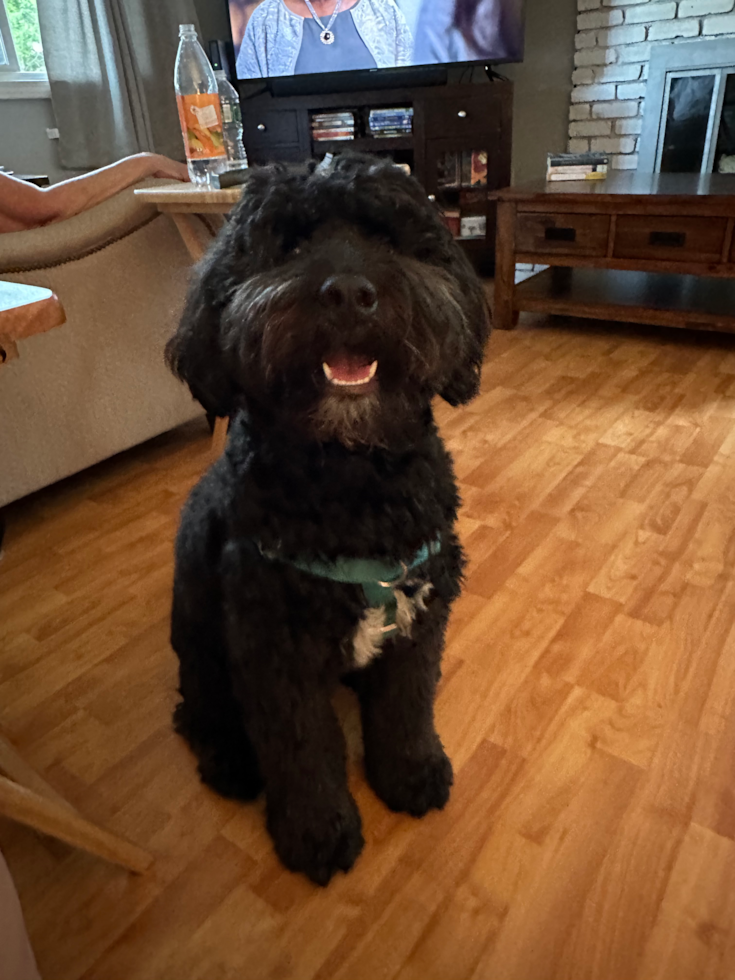
A black Mini Bernedoodle can be almost entirely black or predominantly black with small areas of white depending on the other markings inherited by the puppy.
True black coats are usually deep and saturated rather than charcoal or brownish. Black pigmentation also typically appears on the nose, lips, and eye rims. Poodle breed standards describe black dogs as having black facial pigment and very dark eyes, although Mini Bernedoodles themselves do not have an official breed standard requiring one exact appearance.
Some black Mini Bernedoodles look particularly dramatic when they have loose waves because light reflects across the coat and gives the black a glossy finish. Dense curls create a softer effect, especially as the coat grows longer and individual strands overlap.
Small white markings are possible too. A black Mini Bernedoodle might have a white patch on the chest, several white toes, or a small amount of white around the chin. Once white becomes a major part of the coat, terms such as abstract, tuxedo, or parti may describe the pattern more accurately, depending on the amount and placement.
A mostly black dog with tan-point markings belongs more naturally in the phantom family, while black, tan, and white create the tricolor pattern covered earlier in this color cluster.
The underlying black is the same general pigment. The markings layered over it are what change the final name.
Do Black Mini Bernedoodles Stay Black?
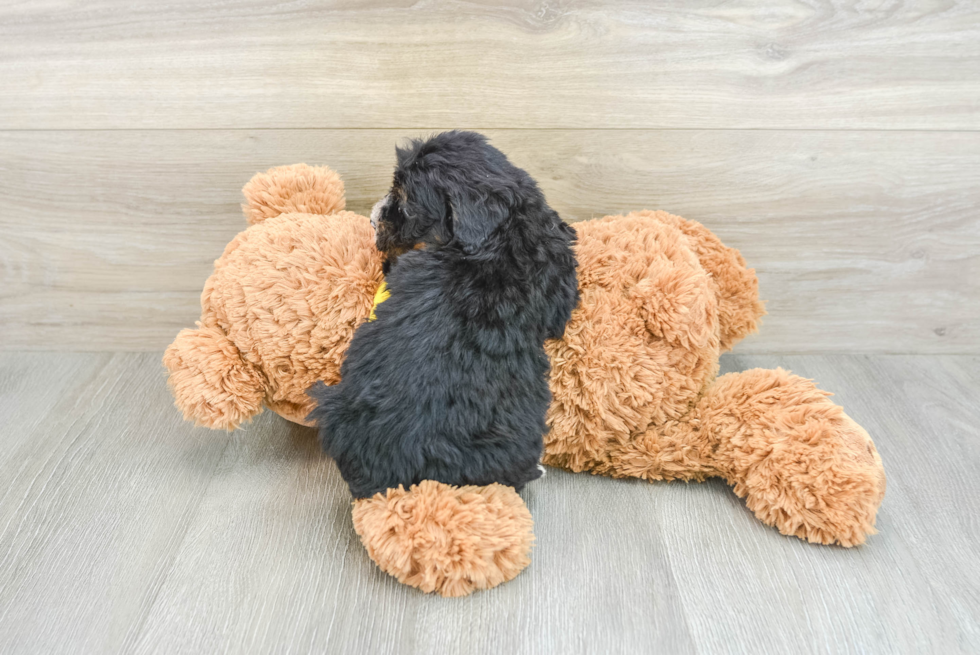
Some do, and some definitely do not.
A black Mini Bernedoodle that does not inherit strong clearing or progressive greying traits may remain deep black well into adulthood. Normal sun exposure, coat wear, and eventually age-related graying can still alter the appearance slightly, but the dog remains recognizably black.
Other puppies begin almost jet black and gradually lighten as the adult coat develops.
Progressive coat lightening is well documented in Poodles. UKC specifically recognizes progressive clearing in Poodle colors such as blue and silver, where darker puppy hair gives way to lighter adult shades over time. The broader genetics of progressive greying are still being studied, so it is more accurate to describe what happens to the coat than to pretend every changing Poodle carries one perfectly understood “fading gene.”
For Mini Bernedoodles, the visible result can be a dog that begins black and gradually develops charcoal, smoky gray, blue-gray, or silver tones.
The change may first become obvious around areas where shorter hair is constantly being replaced, including the face. As more adult coat grows, the overall difference becomes easier to see.
Not every random gray hair means the puppy is going to turn silver, though. Mature relatives and the known color history of the breeding line provide much better clues than one suspiciously pale curl above the nose.
Can a Black Mini Bernedoodle Turn Gray?
Yes, some black Mini Bernedoodles can become considerably grayer as they mature.
The process is different from a coat simply becoming old and gray late in life. Poodle-type progressive greying begins much earlier and affects newly growing hair over time, so the adult color may eventually be substantially lighter than the puppy coat.
A black puppy may mature into dark charcoal while still looking black from across the room. Another may develop a clearly gray or steel-colored adult coat. Dogs with stronger clearing can become much lighter.
Poodle terminology makes the picture slightly more complicated because blue, gray, and silver are recognized separately. Blue generally describes a darker steel or blue-gray appearance, while silver is considerably lighter. Gray occupies its own recognized color category as well.
Bernedoodle color descriptions are often less formal. Owners and breeders may use “gray” as an everyday umbrella term for several smoky, charcoal, blue-gray, or silver-looking coats.
That is why the adult dog matters more than the label alone.
RELATED: Mini Bernedoodle Pros and Cons
Chocolate Mini Bernedoodles
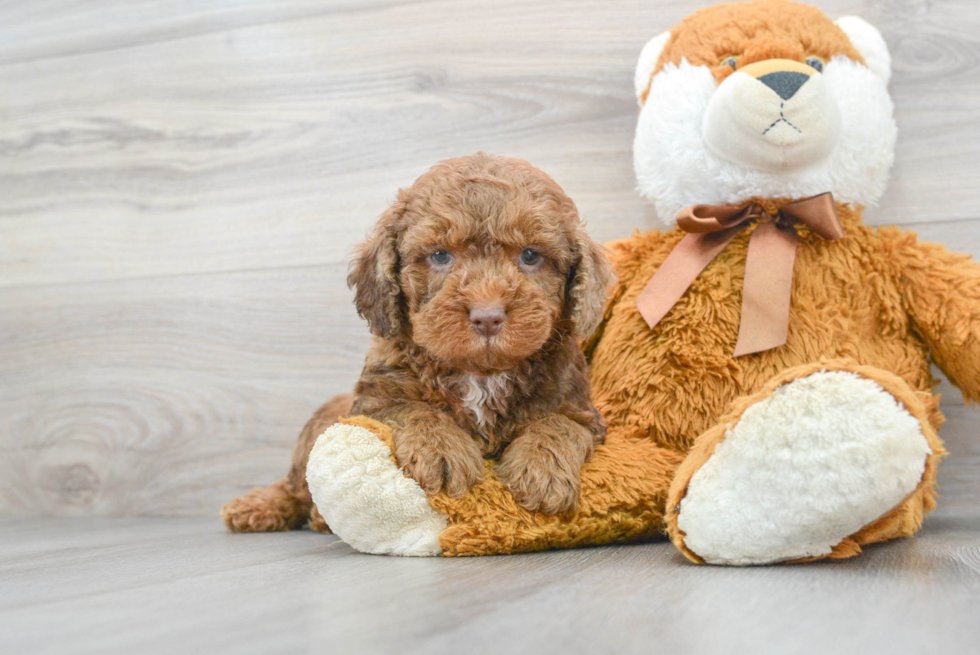
A chocolate Mini Bernedoodle has brown rather than black as its dark pigment.
Chocolate can be extremely deep, particularly in puppyhood. Some coats look like espresso or very dark cocoa, especially indoors. Others are clearly medium brown with warm undertones from the beginning.
Brown pigmentation affects more than the hair. A genuinely brown-based dog usually has a brown or liver-colored nose, lips, eye rims, and paw-pad pigment rather than black. The genetic change responsible for brown modifies black pigment wherever that pigment appears, including the skin.
The eyes may also look warmer. Poodle standards allow dark amber eyes with brown coats, along with liver-colored facial pigment.
Those details can help when photographs make a coat difficult to judge. Deep chocolate sometimes looks nearly black under poor lighting, but a brown nose immediately gives away the underlying pigment family.
In bright sunlight, the opposite can happen. Chocolate may pick up reddish highlights and look considerably warmer than it does indoors.
Is Chocolate the Same as Brown in Mini Bernedoodles?
For most practical Mini Bernedoodle discussions, yes.
“Brown” is the formal Poodle color term. Poodle breed standards recognize brown, café-au-lait, and silver beige, while “chocolate” is not one of the official solid-color names.
Chocolate is simply a very intuitive way to describe a rich brown dog, and it is widely used across many dog breeds and designer-dog communities.
A deep dark-brown Mini Bernedoodle may therefore be listed as chocolate by one breeder and brown by another without the dogs representing two fundamentally different pigment systems.
Shade is where the labels become more useful.
“Chocolate” usually creates the expectation of a richer, deeper brown. “Brown” can cover the entire range more comfortably, including medium and lighter shades.
The underlying genetic distinction is between black-based and brown-based pigment, not between a chocolate gene and a separate brown gene.
RELATED: Red, Apricot, Cream & Blonde Mini Bernedoodles: Colors & How They Change
Brown Mini Bernedoodles
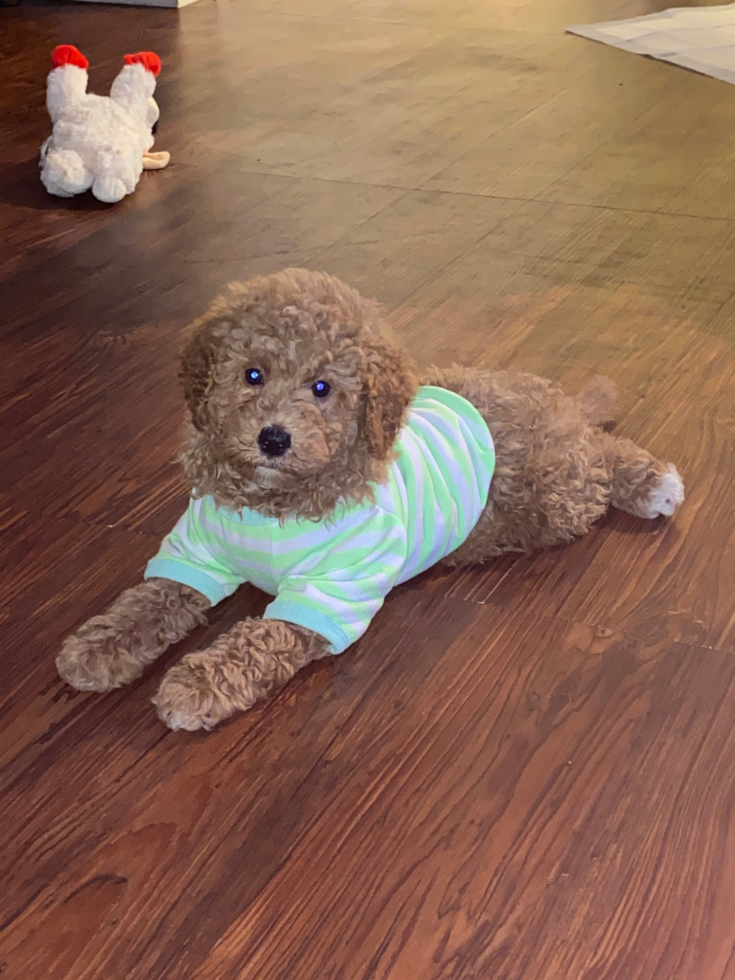
A brown Mini Bernedoodle can range from deep chocolate to much softer brown depending on the dog's inherited pigment intensity and whether the coat changes with maturity.
Some remain richly brown throughout adulthood. Others lighten enough that the original puppy shade becomes difficult to believe when old photographs come out.
Poodles provide several established names for that brown-based range. Brown itself sits at the darker end, while café-au-lait and silver beige represent lighter recognized Poodle colors. UKC specifically lists café-au-lait and silver beige among colors that can undergo progressive clearing as the coat matures.
Mini Bernedoodles do not have to fit neatly into those formal Poodle labels.
A breeder may simply describe the adult as light chocolate, faded brown, taupe, or another familiar term. What matters is understanding that brown-based coats can show considerable shade variation.
Brown facial pigment usually remains an important clue even when the coat becomes much lighter. A dog whose body has softened from deep chocolate toward café-au-lait generally keeps the liver or brown pigmentation associated with its brown base.
Do Chocolate and Brown Mini Bernedoodles Fade?
They can. Poodle standards have long acknowledged natural shade variation within brown coats, and modern UKC material recognizes progressive clearing in brown-based colors such as café-au-lait and silver beige.
A deep chocolate Mini Bernedoodle may therefore remain dark brown or gradually move toward lighter shades such as:
- cocoa
- medium brown
- café-au-lait
- taupe
- beige-brown
- silver-beige tones
The amount of change differs considerably between dogs. Some puppies show relatively little difference between their first and third birthdays. Others lighten enough that the dark chocolate puppy eventually becomes a noticeably softer brown adult.
Coat development adds to the effect because adult curls and waves reflect light differently from puppy fur. A long brown coat may also appear lighter at the ends, while freshly clipped hair closer to the skin can look richer.
Families who strongly prefer dark chocolate should look at mature dogs from the same breeding lines whenever possible. Adult relatives cannot guarantee one exact shade, but they give far more useful information than comparing a puppy to an unrelated chocolate Bernedoodle found on social media.
Brown vs. Café-au-Lait Mini Bernedoodles
Café-au-lait is an established Poodle color and a useful term for understanding some lighter brown Mini Bernedoodles.
The name means “coffee with milk,” which is a pretty accurate visual description. Instead of deep chocolate, the coat has a softer light-brown or milky-coffee appearance.
Poodle standards recognize both brown and café-au-lait as separate colors, and dogs in the brown color family typically retain liver-colored nose and eye-rim pigmentation.
A brown-based Mini Bernedoodle may be born considerably darker and lighten toward a café-au-lait appearance as it matures.
Not every lighter brown Bernedoodle needs to be formally labeled café-au-lait, especially because Mini Bernedoodles have no color standard requiring one official term. Still, knowing the Poodle color exists explains why some chocolate puppies develop adult coats that are much lighter without becoming genetically black, gray, or cream.
Their brown foundation remains the same. The shade sitting on top of it has changed.
RELATED: Parti Mini Bernedoodles: Black & White, Brown & White, +More
What Is a Gray Mini Bernedoodle?
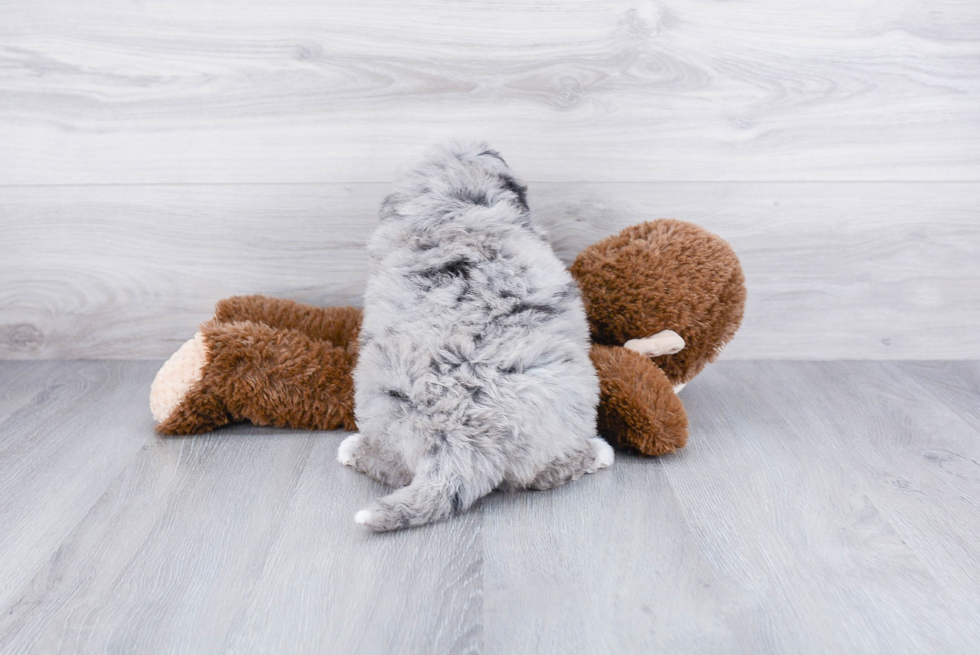
A gray Mini Bernedoodle, also spelled grey, generally has an even coat or broad areas that appear charcoal, smoky gray, steel, or silver-gray rather than solid black.
The word sounds simple, but gray is one of the trickier Bernedoodle color labels because several dark-color processes can create similar-looking results.
Poodles themselves recognize black, blue, gray, and silver as separate colors. Some of those coats begin much darker in puppyhood and clear gradually as the dog matures.
A Mini Bernedoodle can inherit the same tendency through Poodle ancestry.
Some gray adults begin as very dark puppies. Others already show noticeable gray shading fairly young. The final color can range from almost-black charcoal to a much softer silver-gray.
Bernedoodle breeders do not follow one universal naming system, so one person's gray may be another person's blue or silver. Photographs and the dog's actual adult coat are usually more informative than trying to force every smoky shade into one label.
Gray vs. Blue vs. Silver Mini Bernedoodles
Gray, blue, and silver overlap visually, which is why the names are easy to mix up. In Poodle terminology, they are recognized separately. Blue is generally a darker steel-gray coat that can still look nearly black in some lighting. Silver is much lighter and can range toward pale gray or platinum.
Gray sits within the broader gray family but is also recognized as its own Poodle color rather than simply being another spelling of blue or silver.
Mini Bernedoodles are not standardized Poodles, so real-world descriptions are less exact. A dark gray Bernedoodle may be advertised as blue-gray. A very light gray one may be called silver. Another may simply be labeled gray regardless of where it would fall under Poodle terminology.
The useful distinction is less about finding the perfect word and more about asking whether the puppy is expected to stay dark or progressively lighten.
Is a Gray Mini Bernedoodle the Same as a Merle Mini Bernedoodle?
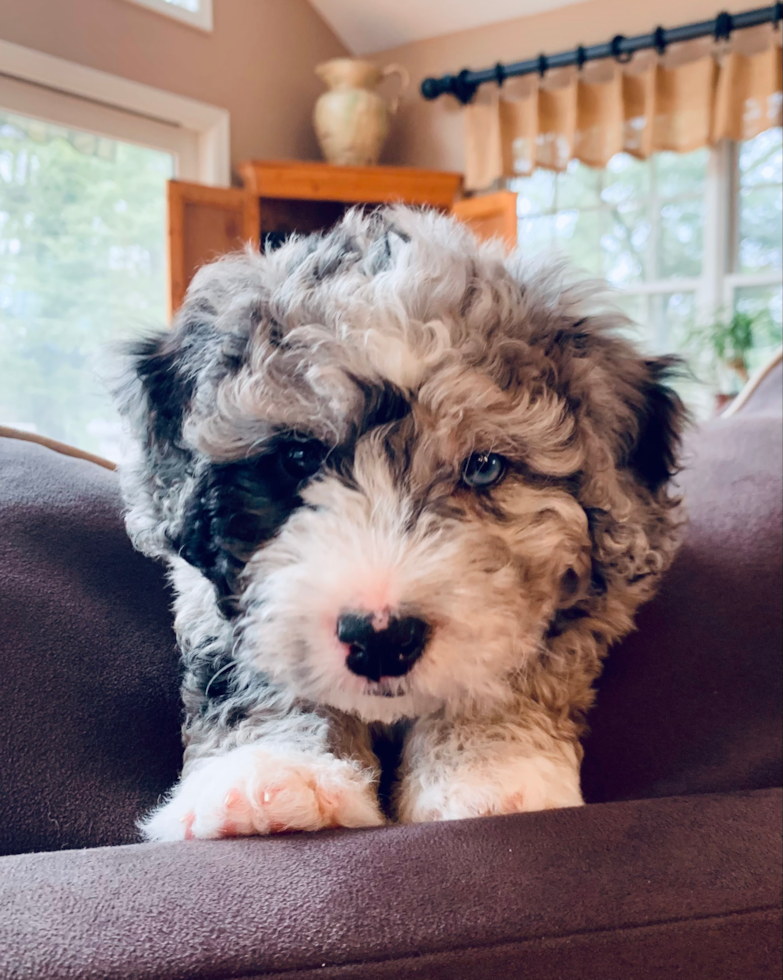
No. A gray coat and a merle pattern are completely different visual concepts.
A gray Mini Bernedoodle generally has a relatively even gray, charcoal, blue-gray, or silver appearance. Shade variation can certainly occur, especially during coat maturation, but the dog does not need the irregular mottled patches that define merle.
A merle Mini Bernedoodle has distinct areas where dark pigment is irregularly diluted, creating the marbled black-and-gray or brown-and-lighter-brown pattern.
A blue merle may contain plenty of gray, but that does not make every gray Bernedoodle a merle.
The distinction matters because merle has its own inheritance pattern and specific breeding considerations. Gray is a color description. Merle is a pattern.
Once you see them side by side, the difference is usually pretty obvious.
Can a Chocolate Mini Bernedoodle Turn Gray?
A brown-based Mini Bernedoodle can become much lighter and may develop a cooler, muted appearance, but the result is usually better understood within the brown-based color family rather than as the same gray seen in a black-based dog.
Poodle colors offer useful examples.
Café-au-lait and silver beige are both recognized brown-family colors. UKC describes them among the progressive-clearing Poodle shades, meaning a darker brown coat can gradually become much paler and more muted with maturity.
A heavily lightened brown Mini Bernedoodle can therefore look taupe, mushroom-colored, beige-gray, or almost silvery in certain lighting.
The nose provides an excellent clue. Brown-based dogs usually retain brown or liver-colored nose and eye-rim pigment even when the coat becomes pale.
A black-based gray dog generally keeps black facial pigment. That little nose can settle a surprising amount of color confusion.
RELATED: Merle Mini Bernedoodle: Blue Merle, Chocolate Merle & Blue Eyes
Why Do Some Dark Mini Bernedoodles Look Brownish in the Sun?
Dark coats can look remarkably different under different light. Black fur sometimes develops warm-looking highlights in strong sunlight, especially when the coat is long. Chocolate may look reddish or coppery outdoors and considerably deeper indoors.
Coat age matters too. Older hair at the tips has been exposed to sunlight, washing, brushing, friction, and normal environmental wear longer than newly grown hair close to the skin.
After a haircut, the same dog can suddenly appear darker because much of that older outer coat has been removed.
None of those visual changes necessarily mean the dog's underlying genetic color changed.
Photography makes the effect even stronger. Warm indoor bulbs can turn gray toward brown. Cool daylight can pull a dark coat toward charcoal. Automatic phone-camera processing occasionally decides a chocolate dog needs to be orange for reasons known only to the phone.
For color comparisons, natural daylight and several photographs are much more reliable than one carefully edited image.
RELATED: Tricolor Mini Bernedoodles: Colors, Markings & How They Change
Does Grooming Change the Color of a Black, Brown, or Gray Mini Bernedoodle?

Grooming changes how the color looks, sometimes dramatically, but it does not rewrite the dog's color genetics.
Long curls soften transitions between shades. Dense hair also creates shadows, particularly around the face, ears, and body, making dark dogs look richer in some areas.
A short haircut exposes newer hair and changes the way light reaches the coat. Black can suddenly appear more even. Brown may look darker or warmer. A progressively clearing gray dog can reveal obvious lighter roots that were difficult to see underneath several inches of adult curls.
Poodles with progressive gray-type colors can also have hairs at different stages of clearing at the same time, which UKC specifically acknowledges in its breed standard.
The result can temporarily look almost multi-toned.
Give that dog a fresh haircut and the coat may seem like someone quietly changed the color while nobody was watching. Usually, the groomer is innocent.
When Does a Mini Bernedoodle's Adult Dark Color Become Clear?
There is no exact birthday when a Mini Bernedoodle's coat announces that it has finished changing.
The transition from puppy coat to adult coat happens during the first year, but color maturation can continue after the adult texture begins appearing.
Poodle standards provide some useful context. The Royal Kennel Club notes that browns, silvers, and blues may show varying shades during the first 18 months. UKC also recognizes that progressive-clearing colors can contain hairs at different stages until the coat has fully matured.
Mini Bernedoodles add another layer because they combine Poodle color traits with Bernese ancestry and may come from several different generations of Bernedoodle breeding.
One black puppy may look essentially finished by the end of the first year. Another may continue becoming noticeably grayer well beyond that point.
Brown can behave similarly. For anyone trying to predict adult color, patience is unfortunately one of the more accurate tools available.
RELATED: Do Mini Bernedoodles Shed? Coat Types and Allergies Explained
Can You Predict Whether a Black or Brown Puppy Will Fade?
Sometimes you can make a reasonable prediction, but certainty is harder. The best clues usually come from the family line.
If a black Poodle or Bernedoodle parent remained jet black into adulthood, that information is useful. If several relatives began black and matured into blue-gray or silver, a dark puppy from the same line has a greater chance of showing similar clearing.
Brown lines work the same way. Adult chocolate relatives can show whether the family tends to hold deep color or lighten toward café-au-lait and softer brown shades.
Early coat changes can offer clues too. Lighter hair developing around the face or noticeable differences between new roots and older coat may suggest the puppy is starting to clear.
Prediction still has limits because canine coat color involves several interacting genetic factors, and some progressive greying mechanisms remain incompletely understood. The current scientific literature on canine pigmentation specifically notes that certain coat phenotypes still involve unidentified or complex genetic influences.
RELATED: Everything You Need to Know About Puppy Color Changes
Black vs. Chocolate Mini Bernedoodles
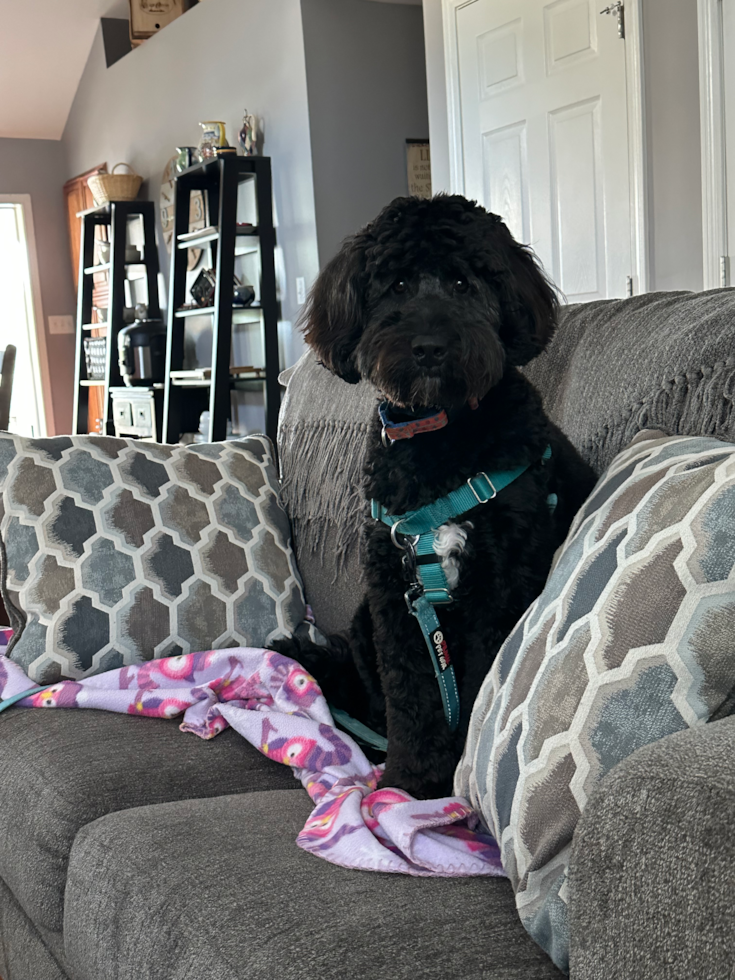
Black and chocolate are easy to distinguish once you know where to look.
A black Mini Bernedoodle has black-based dark pigment, usually accompanied by a black nose, black eye rims, and dark pigmentation around the lips.
A chocolate Mini Bernedoodle has brown-based dark pigment. The coat may range from espresso to medium brown, while the nose, lips, and eye rims usually appear brown or liver-colored instead of black.
Very dark chocolate can occasionally look black in photographs, especially indoors. Nose color is often the giveaway.
The distinction remains useful even when the coat changes later.
A black puppy that clears toward gray generally retains black facial pigment. A chocolate puppy that clears toward café-au-lait or lighter brown generally keeps brown facial pigment. So when the fur is being uncooperative, check the nose.
Do Black, Brown, or Gray Colors Affect Coat Type?
No. Color and coat texture are separate inherited traits. A black Mini Bernedoodle can develop tight curls, loose waves, or a relatively straight coat. Chocolate, brown, and gray dogs can do exactly the same.
The relationship sometimes looks stronger than it is because dense curls change how dark colors appear. A curly black dog may look softer or more charcoal in certain lighting, while a loose-wavy black coat can reflect enough light to look almost glossy.
Shedding is separate from color too. A gray Mini Bernedoodle is not more or less likely to shed because the coat is gray. Furnishings, curl, generation, and shedding-related genetics matter much more.
Color determines what the hair looks like. It does not determine how determined that hair is to remain attached to the dog.
RELATED: Are Mini Bernedoodles Hypoallergenic? Shedding, Allergies & More
Are Black, Chocolate, Brown, or Gray Mini Bernedoodles Rare?
There is no reliable population-wide database showing how frequently individual Mini Bernedoodle colors occur, so attaching precise rarity claims to these coats would be difficult to support.
Black has a strong foundation in both parent breeds and is one of the most natural colors for a Bernedoodle to inherit.
Chocolate and brown depend more heavily on the color traits carried through Poodle-derived and established Bernedoodle lines, so availability can vary considerably between breeding programs.
Gray is equally dependent on the lines involved and on how breeders label maturing dark coats. A program working with black Poodle lines that regularly clear toward blue, gray, or silver may see these colors much more frequently than one working with black dogs that consistently hold their color.
Specific combinations can still be less common.
Finding “a chocolate Mini Bernedoodle” is one request. Finding a deep chocolate puppy expected to hold dark color, with loose waves, a certain adult size, minimal white, and exactly the face someone pictured is a rather more ambitious genetic shopping list.
Color becomes rarer very quickly when six other requirements are attached to it.
How to Choose Between Black, Chocolate, Brown, and Gray
The biggest question is whether you love the puppy color or the entire range of adult colors that puppy might reasonably become.
If deep black is the goal, look at adult relatives and ask whether the breeding line tends to hold strong black pigment. Families comfortable with charcoal or gray have much more flexibility if the coat begins clearing.
Chocolate deserves the same thought. Someone who loves espresso, cocoa, café-au-lait, and softer brown shades is unlikely to be disappointed by normal maturation. Someone who wants the puppy to remain exactly one deep shade should spend more time looking at mature relatives.
Gray requires even more flexibility because the label covers a fairly broad visual range in Bernedoodles. Ask what the parents looked like as puppies, what shade they reached as adults, and whether similar dogs in the line continued changing beyond the first year.
Coat texture deserves attention too. Loose waves show broad areas of dark pigment beautifully, while dense curls create more shadows and visual variation.
Then put color back where it belongs in the larger decision.
Health, temperament, early development, socialization, adult size, and compatibility with the household will shape far more of the next decade than whether the final coat settles at espresso, charcoal, or café-au-lait.
The dark puppy photo may be what gets your attention.
Living with the dog is what makes you stop caring whether the official shade is “gray,” “blue-gray,” or “whatever color the couch is now covered in.”
See available Mini Bernedoodle Puppies for Sale
Final Thoughts on Chocolate, Brown, Black & Gray Mini Bernedoodles
Black, chocolate, brown, and gray cover a surprisingly wide part of the Mini Bernedoodle color palette.
Black has the strongest connection to both parent breeds. It forms the traditional ground color of the Bernese Mountain Dog and is also an established Poodle color, which makes a deep black Mini Bernedoodle feel equally at home on both sides of its ancestry.
Brown shifts that same dark pigment into a warmer range. Chocolate is essentially the familiar descriptive name for a rich brown coat, while lighter brown-based dogs may eventually resemble café-au-lait or other softer Poodle-derived shades. Brown nose and facial pigmentation often remain the easiest clue to the dog's underlying color even after the coat lightens.
Gray brings the greatest amount of variation. Some Mini Bernedoodles begin black and progressively develop charcoal, blue-gray, or silver tones through color traits inherited from their Poodle ancestry. Poodle standards recognize blue, gray, and silver separately, while Bernedoodle terminology tends to be more relaxed. The exact word matters less than understanding that a very dark puppy does not always remain that dark.
None of those changes mean the original puppy color was somehow wrong. Dark coats can genuinely mature, sometimes subtly and sometimes dramatically.
For families choosing one of these colors, the best approach is to love a range rather than one frozen shade. Look at adult relatives. Pay attention to nose pigment. Ask how the breeding line tends to mature, and remember that curls, grooming, sunlight, and photography can all change how color looks from one day to the next.
A black puppy may stay black. Chocolate may soften to cocoa. A nearly black puppy may become a smoky gray adult.
The color story is part of watching the dog grow up, and with Mini Bernedoodles, that story occasionally comes with a few plot twists.
Elena R.
About The Author
Elena is a leading expert in the field of dog behavior, care, and training, with over a decade of experience in writing about dogs. As a published writer and lifelong dog enthusiast, Elena currently shares her home with three beloved canine companions. She is dedicated to staying up to date on the latest advancements in dog care and training, ensuring that her articles provide readers with accurate and valuable insights. With her extensive knowledge and passion for all things canine, Elena's contributions to the Premier Pups community offer both expertise and authority on a wide range of dog-related topics.
What To Read Next

Parti Mini Bernedoodles: Black & White, Brown & White, +More
A Parti Mini Bernedoodle stands out for a very different reason than a classic tricolor. Instead of black, rust, and white arranged in the familiar Bernese pattern, a parti coat uses white as a major part of the design. Large patches of black, brown, red, apricot,... Read More
Tricolor Mini Bernedoodles: Colors, Markings & How They Change
A Tricolor Mini Bernedoodle carries one of the most recognizable looks associated with the breed. Black usually covers most of the coat, white brightens the chest, face, and paws, and warm tan or rust markings sit above the eyes, along the cheeks, and around the... Read More
Frequently Asked Questions
Is chocolate the same as brown in Mini Bernedoodles? Usually, yes. Brown is the established Poodle color term, while chocolate is a common descriptive name for rich brown coats. Both refer to brown-based dark pigment rather than two completely different colors.
What color nose does a chocolate Mini Bernedoodle have? True brown or chocolate dogs generally have brown or liver-colored nose pigment rather than black. The lips, eye rims, and paw pads also commonly show brown pigmentation because the brown color trait affects dark pigment throughout the dog.
Can a black Mini Bernedoodle turn gray? Yes. Some black Mini Bernedoodles inherit progressive coat-clearing tendencies through Poodle ancestry and may become charcoal, blue-gray, gray, or silver-toned as they mature. Other black dogs remain dark throughout adulthood.
Do all black Mini Bernedoodles fade? No. Many remain strongly black. The tendency to progressively lighten depends on the color genetics present in the dog's breeding line. Adult relatives provide useful clues about whether a particular line tends to hold black or clear toward lighter shades.
Is a gray Mini Bernedoodle a merle? Not necessarily. Gray describes coat color. Merle is an irregular mottled pattern that creates patches of diluted and fully pigmented color. A gray Mini Bernedoodle can have an even gray coat without carrying merle at all.
What is the difference between gray, blue, and silver Mini Bernedoodles? The terms overlap visually, but Poodles recognize blue, gray, and silver as separate colors. Blue generally describes a darker steel-gray appearance, while silver is much lighter. Gray occupies the broader middle range, although Bernedoodle breeders may use the terms more loosely than formal Poodle standards do.
Can a chocolate Mini Bernedoodle get lighter? Yes. Brown-based Mini Bernedoodles can soften considerably with age. Some remain deep chocolate, while others move toward lighter brown, café-au-lait, taupe, or silver-beige shades.
Can a chocolate Mini Bernedoodle become café-au-lait? A brown-based Mini Bernedoodle can mature into a coat that resembles café-au-lait, particularly when progressive clearing is present through Poodle ancestry. Café-au-lait is an established Poodle color within the brown family.
Why does my black Mini Bernedoodle look brown in sunlight? Lighting and normal coat weathering can add warmer highlights to very dark fur. Long outer hair may look warmer than newly grown coat, and cameras can exaggerate the difference. A genuinely black dog still retains black underlying pigmentation.
Why does my chocolate Mini Bernedoodle look almost black indoors? Deep brown absorbs a great deal of light and can appear nearly black in dim conditions. Brown or liver-colored nose and eye-rim pigmentation usually make the underlying chocolate color easier to identify.
Do gray Mini Bernedoodle puppies start black? Some do. Progressive-clearing Poodle colors can begin much darker and lighten as the dog matures. The exact progression varies between colors, individuals, and breeding lines. Not every gray-looking adult follows one identical color pathway.
When will I know my Mini Bernedoodle's final color? Much of the adult color becomes clearer during the first year or two, but some Poodle-derived shades can continue developing as the coat matures. Browns, blues, and silvers are among the Poodle colors known to show substantial shade changes during early adulthood.
Does a black Mini Bernedoodle get gray because it is aging? Not always. Young dogs can lighten through inherited progressive coat-clearing traits long before ordinary age-related gray hair would be expected. Age-related graying and Poodle-type progressive color change are separate processes.
Does dark coat color affect a Mini Bernedoodle's personality? There is no good evidence that black, brown, chocolate, or gray coloration determines temperament. Personality depends on much broader genetics, parental temperament, early development, socialization, training, and the individual dog rather than coat pigment.
Does color affect shedding? No. A black, chocolate, brown, or gray Mini Bernedoodle can have a curly, wavy, or straighter coat. Shedding tendency and coat texture are inherited separately from color.