





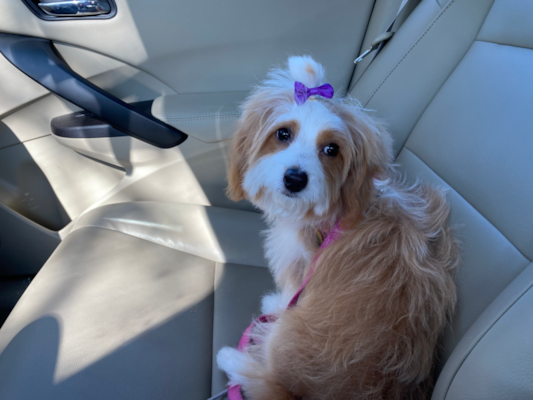
Published Friday, October 2, 2026 by Elena R. in Popular Dogs, New Puppy, Dog Grooming
A Parti Mini Bernedoodle stands out for a very different reason than a classic tricolor. Instead of black, rust, and white arranged in the familiar Bernese pattern, a parti coat uses white as a major part of the design. Large patches of black, brown, red, apricot, or another color sit against that white background, creating dogs that can look boldly patterned, softly patched, or almost hand-painted depending on where the color lands.
Some have a dark head with a mostly white body. Others have broad colored sections across the back, ears, or tail. A black and white Mini Bernedoodle may have a dramatic high-contrast coat, while an apricot and white puppy can look much softer, especially once the apricot begins to lighten with age.
The word parti gets used rather loosely online, though. A Mini Bernedoodle with a white chest is sometimes called parti. So is a dog with white feet, a blaze, and a mostly colored body. Technically, those dogs may fit better under terms such as abstract or mismarked, depending on the pattern and how much white is actually present.
There is no official Mini Bernedoodle color standard deciding exactly where one label ends and another begins. A useful convention comes from Poodles, where parti coloring has a long history. The current United Kennel Club standard for multi-colored Poodles defines parti as a coat that is at least 50% white with patches or spots of another color. Less than 50% white is classified separately as abstract.
Using that definition makes Parti Mini Bernedoodles much easier to understand. White is not simply an accent on the chest or paws. It is a major part of the coat.
Table of Contents
- What Is a Parti Mini Bernedoodle?
- Why Are Parti Mini Bernedoodles Mostly White?
- Parti vs. Abstract Mini Bernedoodles
- Parti vs. Tricolor Mini Bernedoodles
- Black and White Parti Mini Bernedoodles
- Brown and White Parti Mini Bernedoodles
- Apricot and White Parti Mini Bernedoodles
- Red and White Parti Mini Bernedoodles
- Tan and White Mini Bernedoodles
- What About a White Mini Bernedoodle?
- Do Parti Mini Bernedoodle Markings Change as They Grow?
- Can Parti Mini Bernedoodles Develop More Spots?
- Does Parti Coloring Affect Coat Type or Shedding?
- Are Parti Mini Bernedoodles Rare?
- Do Parti Mini Bernedoodles Stay the Same Color?
- How to Choose a Parti Mini Bernedoodle When Color Matters to You
- Final Thoughts on Parti Mini Bernedoodles
What Is a Parti Mini Bernedoodle?

A Parti Mini Bernedoodle is a Mini Bernedoodle with a predominantly white coat broken up by clearly defined areas of another color.
Black and white is probably the easiest version to recognize, but parti can appear with many of the colors found in Poodle-influenced Bernedoodle lines. Brown and white, red and white, apricot and white, cream and white, and other combinations are possible.
The colored areas do not need to appear in matching positions from one side of the body to the other. Parti markings are often irregular, and veterinary genetics resources specifically note that piebald or parti-style white spotting can vary considerably in extent and is frequently asymmetrical.
One puppy might have two dark ears, a black patch around one eye, and several large spots across an otherwise white body. Another may have a completely colored head followed by a mostly white neck and torso. A third could have broad colored areas covering the back while the chest, belly, legs, and muzzle remain white.
Those differences are normal. Parti describes the overall relationship between white and color rather than one prescribed arrangement of markings.
Where Does Parti Coloring Come From in Mini Bernedoodles?
Parti coloring has a genuine historical connection to the Poodle side of the Mini Bernedoodle.
Modern images of show Poodles tend to create the impression that Poodles have always been solid-colored dogs, but historical records tell a more interesting story. AKC archival material on Poodle history notes that early Poodles were frequently parti-colored, including dogs seen in historical European art. Multi-colored Poodles continued to exist even as solid colors became preferred in modern conformation standards.
Parti Poodles are still bred today. The United Kennel Club has a current Multi-Colored Poodle standard that specifically recognizes parti, abstract, phantom, sable, brindle, and combinations of those patterns.
The American Kennel Club takes a different approach to conformation. Its Poodle standard requires an even solid color and disqualifies parti-colored Poodles from the show ring. That rule concerns the Poodle breed standard rather than whether parti coloring genuinely occurs in Poodles, and it has no bearing on whether a Mini Bernedoodle can have a legitimate parti coat. Mini Bernedoodles are a crossbreed and do not have an AKC breed standard of their own.
The Bernese Mountain Dog contributes white markings too, although its traditional pattern is very different. A purebred Bernese is tricolor, with a jet-black ground color and carefully positioned rust and white markings rather than the large random areas of white associated with parti.
When the two breed backgrounds meet, Mini Bernedoodles can inherit a much wider range of white-marked coats than the classic Bernese pattern alone would produce. Later Bernedoodle generations can widen those possibilities further depending on the colors and patterns carried by the dogs in the breeding line.
RELATED: Tricolor Mini Bernedoodles: Colors, Markings & How They Change
Why Are Parti Mini Bernedoodles Mostly White?
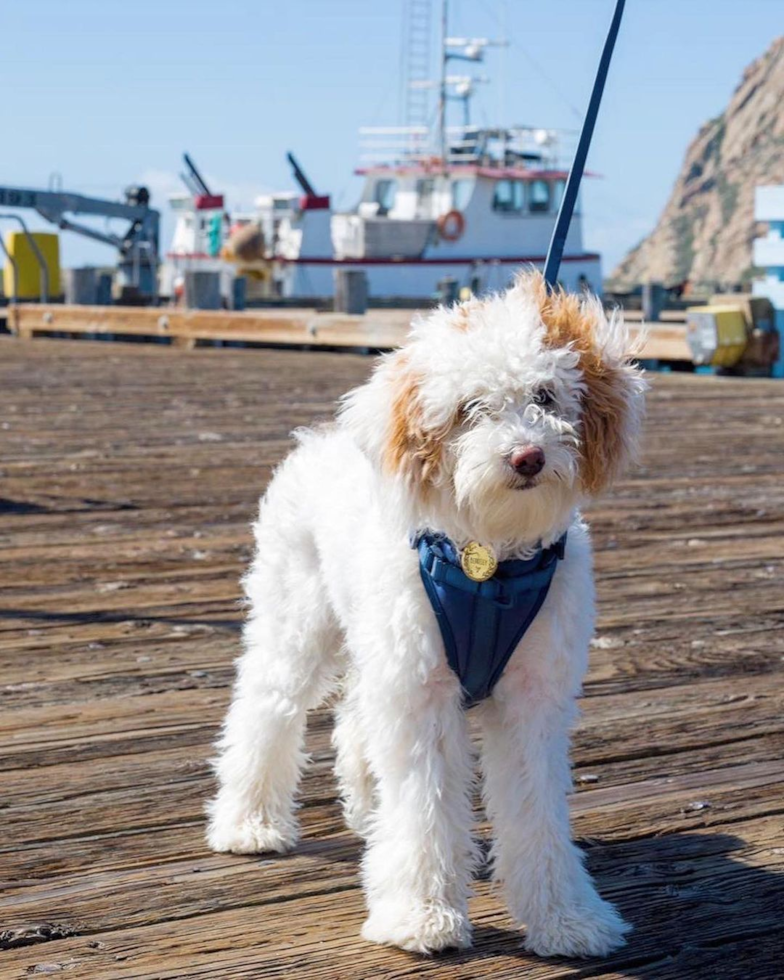
White dog hair is essentially hair without visible pigment. In parti and piebald-style patterns, inherited white spotting affects where pigment-producing cells populate the developing skin. Areas that receive pigment develop color, while areas without that pigmentation grow white hair.
The biology underneath it is fairly complicated, and white spotting does not behave identically in every breed. Piebald and parti white spotting as genetically complex, with the amount of white varying considerably even among dogs carrying similar underlying traits. The practical result is much easier to see than to explain genetically.
A Parti Mini Bernedoodle can inherit enough white spotting that the white becomes the background of the coat. Colored areas then appear as patches rather than forming the majority of the body.
The boundaries can be sharp or slightly blended depending on coat texture. Loose waves tend to show large blocks of color clearly. Tight curls can visually break the edges apart, especially when the coat is long.
Grooming can make those same markings look surprisingly different. A freshly clipped parti shows much cleaner boundaries between white and color than the fluffy version that walked into the salon a few hours earlier.
How Much White Does a Parti Mini Bernedoodle Have?
There is no official Bernedoodle rule requiring a precise percentage, but the established Poodle convention provides a useful guideline.
The current UKC Multi-Colored Poodle standard defines parti as at least 50% white, with spots or patches of another accepted color. It allows considerable variation in how those patches are distributed, including colored heads, white facial markings, and full or partial saddle-like patches across the body.
Using that convention, a Mini Bernedoodle with a mostly black body, white chest, and four white feet would not really be a classic parti. A dog that is predominantly white with large black areas would.
Real-world Bernedoodle descriptions are not always that precise. Breeders and owners sometimes use parti for any strongly white-marked dog, so photographs can be more informative than the label alone.
If someone tells you a puppy is parti, the useful question is simply: what does the coat actually look like? A label cannot tell you whether the dog has 55% white, 80% white, a dark head, a saddle across the back, or three wonderfully random spots that seem to have been placed at the last possible minute.
RELATED: Merle Mini Bernedoodle: Blue Merle, Chocolate Merle & Blue Eyes
Parti vs. Abstract Mini Bernedoodles
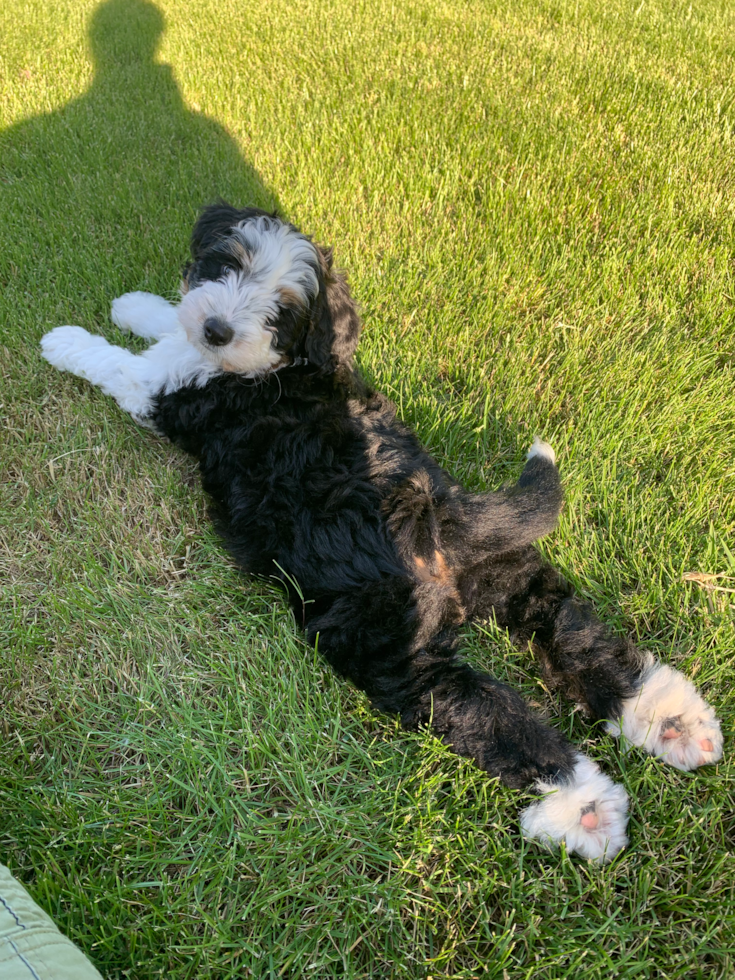
Parti and abstract are closely related terms, which is why they are often confused. Using the Poodle convention, a parti dog has at least 50% white, while an abstract dog has less than 50% white.
An abstract Mini Bernedoodle may have a mostly black, chocolate, red, or apricot coat with white on the chest, chin, face, paws, or tail. The white can be quite noticeable without being the main color of the body.
A true parti reverses that balance. White dominates, and the other color appears in larger patches against it.
The difference can sometimes be obvious. A white dog with three black body patches is comfortably in parti territory. A black dog with a white chest and toes clearly is not.
Dogs near the middle can be harder to label from photographs, especially under several inches of curly coat. Bernedoodles also lack a formal breed standard assigning percentages to these terms, so some variation in breeder terminology is inevitable.
Parti vs. Tricolor Mini Bernedoodles
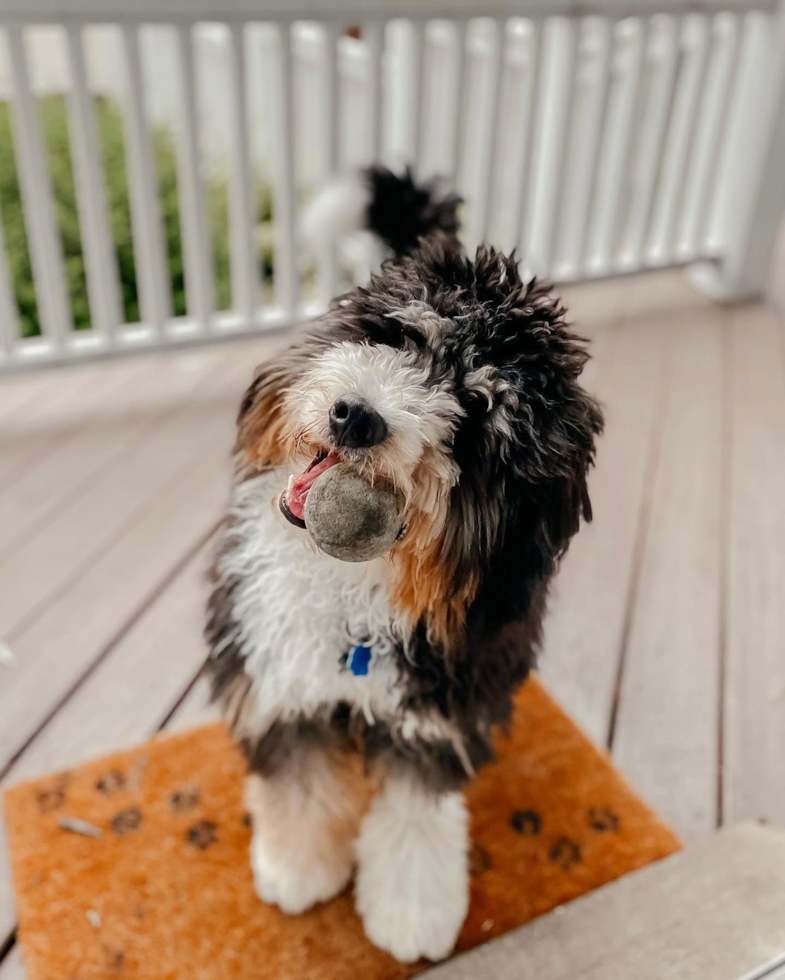
Parti and tricolor describe different aspects of a coat.
Parti describes the distribution of white and another color.
Tricolor describes the presence of three visible colors.
A classic Tricolor Mini Bernedoodle usually has a predominantly black coat with white markings and tan or rust points. The Bernese influence is easy to see in that arrangement.
A black and white Parti Mini Bernedoodle has two primary visible colors and a very different distribution, with white generally covering much more of the body.
The categories can overlap.
A dog can have a mostly white parti pattern with black patches and tan-point markings within those black areas. In Poodle terminology, combinations of more than one pattern are possible, and UKC recognizes multi-patterned Poodles for exactly that reason.
Mini Bernedoodle color names can therefore be surprisingly long when every visible trait is included. Fortunately, the dog stays entirely unconcerned with the paperwork.
Black and White Parti Mini Bernedoodles

A black and white Mini Bernedoodle is one of the boldest parti combinations because the contrast between the two colors is so strong.
White may cover the chest, legs, belly, neck, face, and large portions of the body, while black appears in defined patches across the ears, head, back, sides, or tail.
Some puppies have almost completely black heads sitting above white bodies. Others have wide white blazes splitting the face between black ears. A black patch around one eye can create an especially distinctive look, while scattered body markings can make each side of the dog appear completely different.
Black pigment generally comes with black nose, lip, and eye-rim pigmentation, giving black-and-white dogs strong facial contrast.
Whether the black remains deep into adulthood depends on the dog's broader color genetics. Mini Bernedoodles can inherit progressive lightening traits through Poodle ancestry, so some black areas soften toward charcoal, gray, or silver as the adult coat matures.
Others stay richly black. White does not fade in the same way because there is no dark pigment there to lighten.
Brown and White Parti Mini Bernedoodles
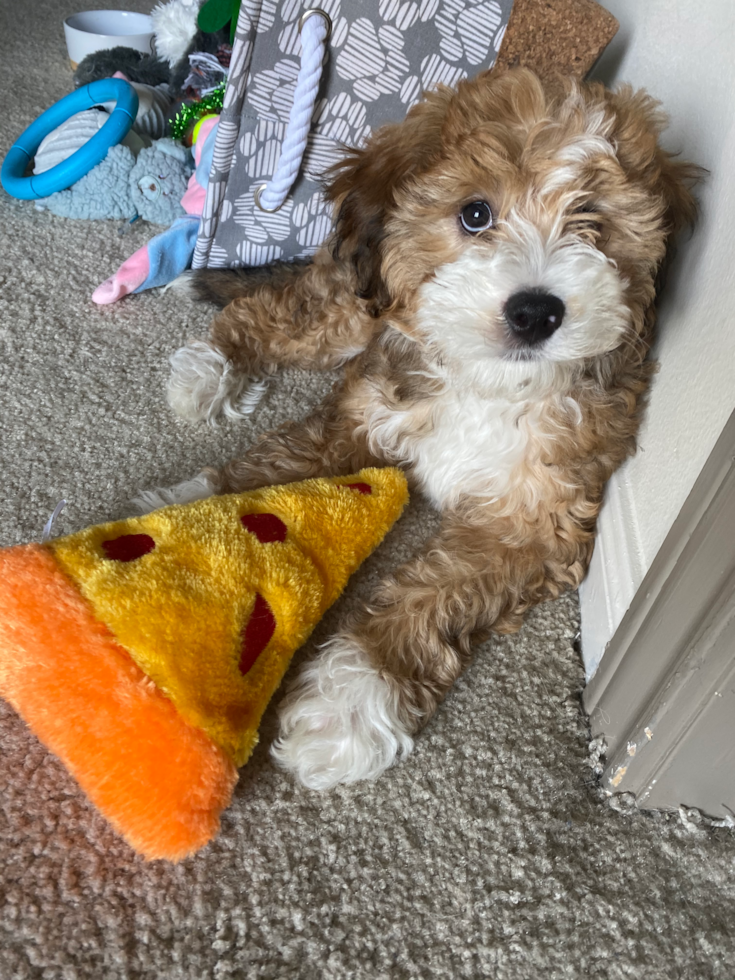
A brown and white Mini Bernedoodle replaces black with warmer brown or chocolate pigment. Deep chocolate patches against a white coat can create almost as much contrast as black and white, while lighter brown shades produce a softer appearance.
True brown pigmentation usually extends beyond the coat. Brown-based dogs typically have brown or liver-colored noses, lips, and eye rims rather than black pigmentation, which can help distinguish a genuinely chocolate dog from one whose warm tan markings simply look brown in photographs.
Brown itself can vary enormously. A young Parti Mini Bernedoodle may begin with very dark chocolate patches that look nearly black in poor lighting. Other puppies start with milk-chocolate, cocoa, or reddish-brown tones.
Some brown Poodle colors are also known to change as dogs mature. The Royal Kennel Club's current Poodle standard acknowledges that browns and several related shades may show variation during early development, while Poodle color genetics include progressively lighter brown-based shades such as café au lait and silver beige.
A brown-and-white puppy should therefore be expected to keep the same general patch pattern while the exact shade of those patches may soften with age.
RELATED: All Mini Bernedoodle Generations: F1, F1B, F2, Multigen & More
Apricot and White Parti Mini Bernedoodles
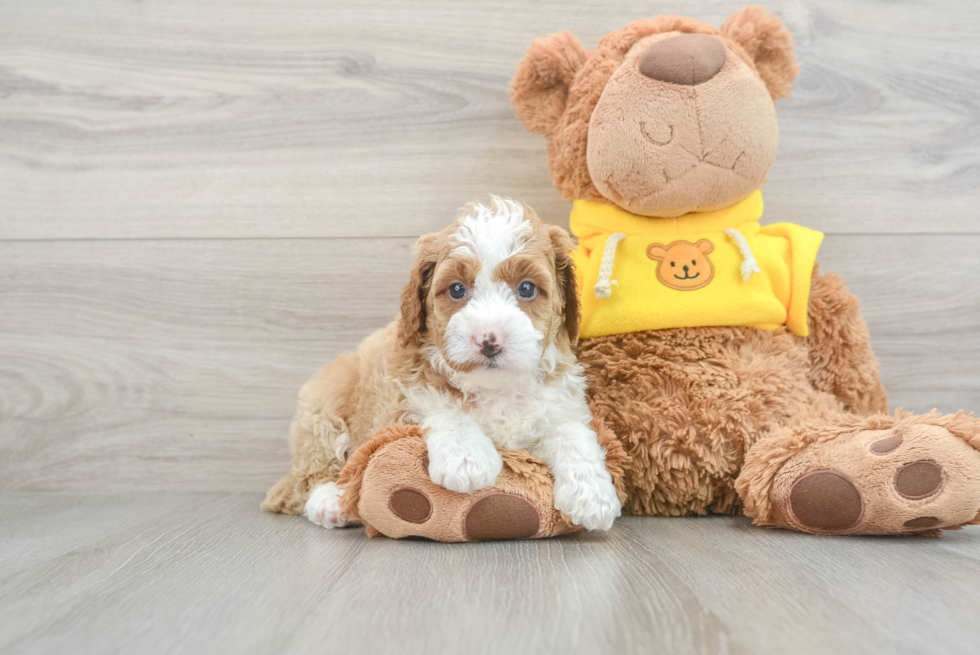
An apricot and white Mini Bernedoodle has much less contrast than the black-and-white or chocolate versions, but the pattern can be especially pretty once the adult coat fills in.
Apricot ranges from warm golden-peach to softer cream-orange tones. Against white, even a relatively light apricot patch can remain visible, particularly around the ears and face where color is sometimes richer.
The difference between white and apricot may become more subtle as the dog grows.
Poodle ancestry matters quite a bit here because apricot is an established Poodle color, and Poodle breed standards recognize that apricot can show variation in shade during maturation.
Some Mini Bernedoodles hold strong apricot color into adulthood. Others lighten substantially, especially across the body. The ears may stay darker while body patches soften toward cream.
A puppy with very clear apricot islands across a white coat can therefore become a much more softly patterned adult. The patches have not disappeared. The contrast between the two colors has simply narrowed.
Red and White Parti Mini Bernedoodles
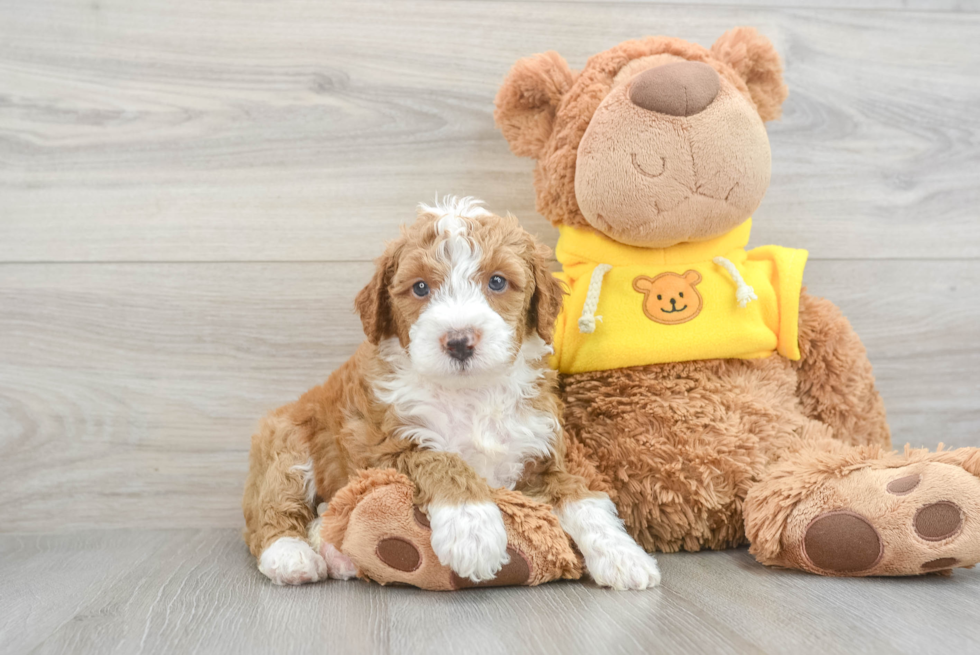
A red and white Mini Bernedoodle follows the same general pattern with deeper, richer red pigment. Red can range from warm copper to a darker mahogany-like shade, although exact intensity varies between breeding lines. Against white, strong red creates a particularly clear two-color pattern.
Red comes largely through the Poodle side of Mini Bernedoodle ancestry. Poodles are recognized in red as well as apricot, cream, black, brown, and several other solid colors.
Like apricot, red can change with maturity. Some dogs keep deep color remarkably well. Others lighten toward apricot or a softer golden shade as they age. How much a particular Mini Bernedoodle will fade cannot be predicted perfectly from a puppy photograph alone.
White areas stay much more visually consistent, so a red-and-white puppy that lightens considerably can look less dramatically parti as an adult even while the distribution of white and colored hair stays essentially the same.
Tan and White Mini Bernedoodles
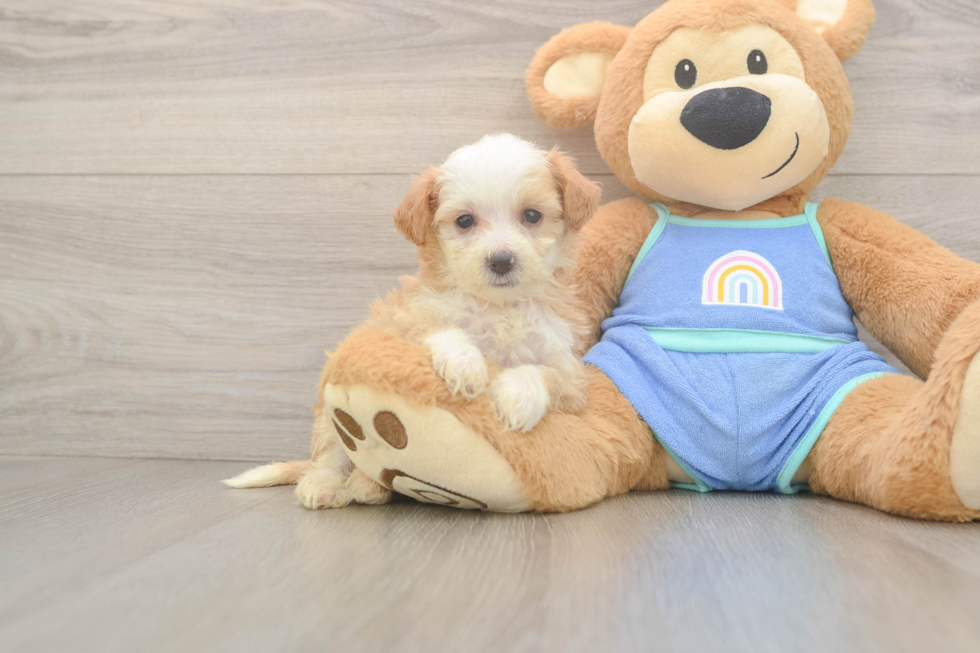
Tan and white Mini Bernedoodle is a search phrase that needs a little context because “tan” can mean several things in everyday color descriptions.
Some people use tan for a very pale red or apricot dog. Others use it for warm beige or caramel coloring. Tan is also the word commonly used for the point markings seen on tricolor and phantom dogs.
A dog that is predominantly white with large pale tan or caramel patches may reasonably be described as tan and white in everyday language, even if a breeder uses a more specific term such as cream, apricot, red, or sable to describe the underlying color.
The important distinction is pattern. If white forms most of the coat and the tan-colored areas appear as distinct patches, the dog can have a parti-style appearance. If tan simply appears as eyebrows, cheek markings, or leg points on a darker coat, the pattern belongs elsewhere in the Mini Bernedoodle color family.
Color labels can get surprisingly subjective once shades become pale. One person's light apricot is another person's tan, and a third person will insist the puppy is caramel. The coat itself usually settles the argument better than the name.
What About a White Mini Bernedoodle?
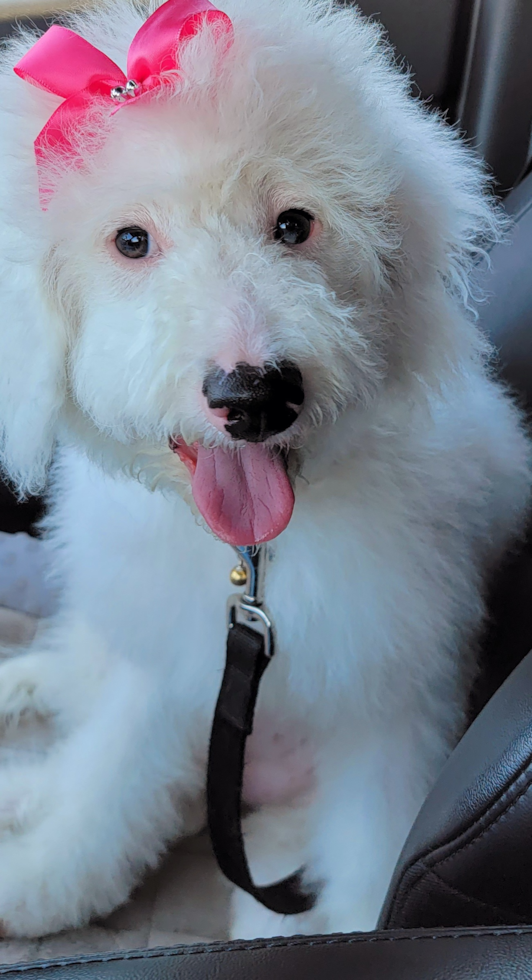
A white Mini Bernedoodle deserves separate clarification because white does not automatically mean parti. A true parti needs another visible color alongside the white.
Some Mini Bernedoodles can appear almost completely white because other inherited pigment has been diluted to a very pale cream. In dogs generally, red and yellow pigment can be reduced so strongly that the coat appears cream or nearly white, while the underlying color genetics are quite different from white spotting. Another dog may be extremely heavily white-marked with only a small amount of visible color remaining.
Those two dogs can look similar in a photograph while arriving at that appearance through different pigment patterns.
For most people, the distinction matters mostly when trying to understand what the coat may do with age. A very pale cream dog may develop or retain a warm cast, particularly around the ears. A heavily white-spotted dog will generally keep white in those unpigmented areas while any remaining colored patches mature according to their own inherited shade.
A mostly white puppy with one colored ear is certainly memorable either way. Genetics simply has a more complicated name for what everyone else sees as “the really white one.”
Do Parti Mini Bernedoodle Markings Change as They Grow?
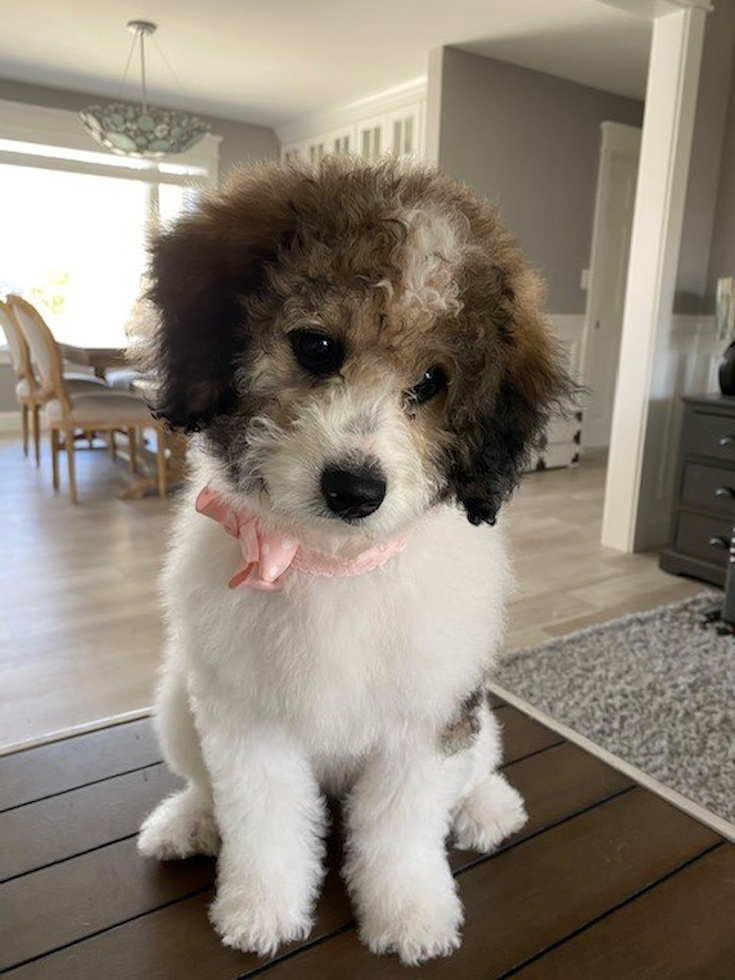
The placement of parti markings usually stays recognizable, but the adult dog can still look quite different from the puppy photograph.
Growth changes proportions first.
A black patch that covered most of a tiny puppy's back may occupy a smaller-looking portion of the body once the dog reaches adult size. A wide facial blaze can appear narrower as the muzzle and skull develop. White legs may look less dramatic simply because the dog is no longer ten inches tall.
Coat growth changes the pattern visually too. Short puppy fur tends to show crisp boundaries. As waves and curls become longer, neighboring colors begin to overlap visually. A small colored patch can disappear under several inches of white curls from the surrounding coat, only to reappear quite clearly after grooming.
Color maturation creates the biggest changes in some dogs. Black may soften toward gray or silver. Brown may lighten. Red may become apricot. Apricot may become creamier. Those changes do not rearrange where the parti patches are located, but they can alter how strongly the pattern stands out.
A black-and-white parti may remain dramatically contrasted for life. An apricot-and-white parti can eventually become so softly colored that people need a second look to notice where cream ends and white begins. Same pattern, very different final effect.
RELATED: Do Mini Bernedoodles Shed? Coat Types and Allergies Explained
Can Parti Mini Bernedoodles Develop More Spots?

Large parti patches are established by the dog's underlying pigmentation pattern rather than appearing randomly throughout adulthood.
Small flecks of color can be a different story.
Some white-patterned dogs can show ticking, where small pigmented hairs or spots become visible within white areas. The Multi-Colored Poodle standard specifically allows ticking within the white portion of a parti coat.
Ticking should not be confused with the dog suddenly developing new large parti patches. It usually appears as smaller flecks or speckles rather than broad blocks of color.
Whether a particular Mini Bernedoodle develops visible ticking depends on the other pattern traits present in its background.
Most owners will notice much greater apparent change from coat growth, fading, and grooming than from genuinely new pigmentation.
Does Parti Coloring Affect Coat Type or Shedding?
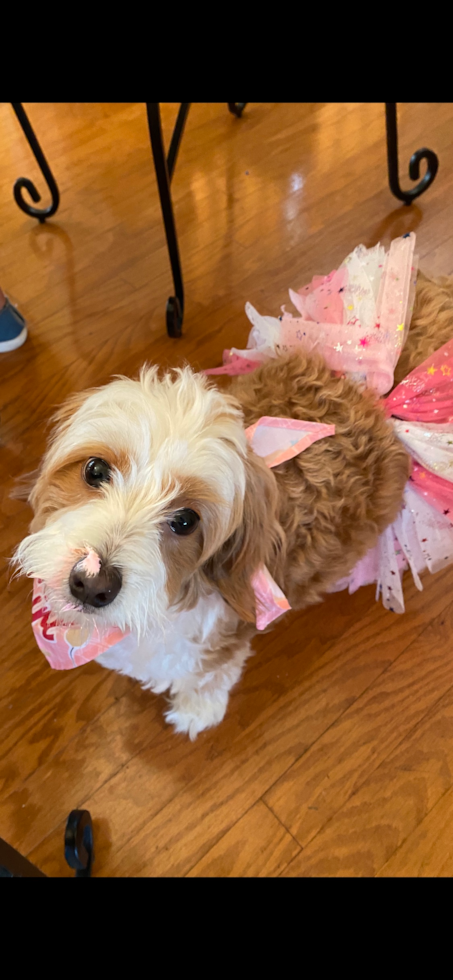
Parti determines where pigment appears. It does not determine whether the coat will be curly, wavy, straight, low shedding, or more likely to shed.
Mini Bernedoodles inherit coat texture through a different set of genetic traits.
A black-and-white Parti Mini Bernedoodle can have loose waves while its brown-and-white littermate develops much tighter curls. Another puppy in the same litter may have a relatively straight coat despite sharing similar colors.
Shedding follows the same principle. The amount of white in a coat does not tell you how much hair will come off the dog. Furnishings, curl, shedding-related genes, generation, and the individual puppy's inheritance matter much more.
Color can change how shedding looks, though. A black dog leaves very obvious hair on a cream sofa. A mostly white parti dog may appear innocent right up until someone wearing black pants sits down.
The furniture usually knows the truth.
RELATED: Are Mini Bernedoodles Hypoallergenic? Shedding, Allergies & More
Are Parti Mini Bernedoodles Rare?

There is no reliable population-wide data showing how many Mini Bernedoodles are parti, so assigning a percentage or confidently calling every parti puppy “rare” would be difficult to justify.
Frequency depends on the breeding lines involved.
A program using Poodles or Bernedoodles with strong parti genetics may produce white-marked puppies fairly regularly. Another program focused primarily on classic Bernese-style tricolor lines may produce them much less often.
Specific combinations can be harder to find than parti as a general category.
A black-and-white parti may be relatively accessible in certain lines, while someone searching for a very specific red-and-white puppy with a particular patch arrangement, coat type, size, and adult color intensity has narrowed the possibilities considerably.
The exact pattern also cannot be ordered reliably.
Breeders can understand which colors and white-pattern traits their dogs carry and plan for possible outcomes, but they cannot dictate where every patch will appear on every puppy. Genetics tends to keep creative control.
RELATED: Mini Bernedoodle Pros and Cons
Do Parti Mini Bernedoodles Stay the Same Color?
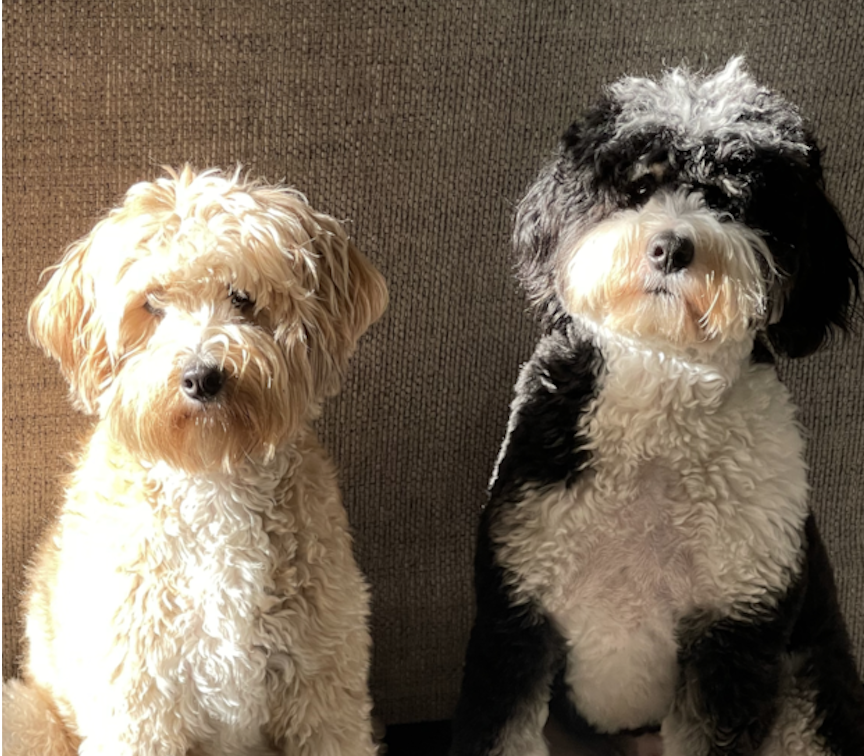
Some change very little. Others change enough that puppy and adult photographs look surprisingly different side by side.
White areas tend to remain visually stable because they lack the pigment responsible for the colored portions of the coat.
The colored patches can mature according to whatever shade the dog inherited.
Black may stay black or progressively lighten. Brown can soften. Red and apricot are particularly known for variation in intensity as Poodle coats mature, and creams may become pale enough that the difference between colored patches and white becomes subtle.
Coat texture develops at the same time, which makes separating genuine fading from simple visual change tricky. A long adult curl contains far more hair than a short puppy coat and catches light differently. Photographs taken indoors, outdoors, freshly groomed, or several weeks after grooming can make the same dog appear to have four slightly different shades.
RELATED: Everything You Need to Know About Puppy Color Changes
How to Choose a Parti Mini Bernedoodle When Color Matters to You
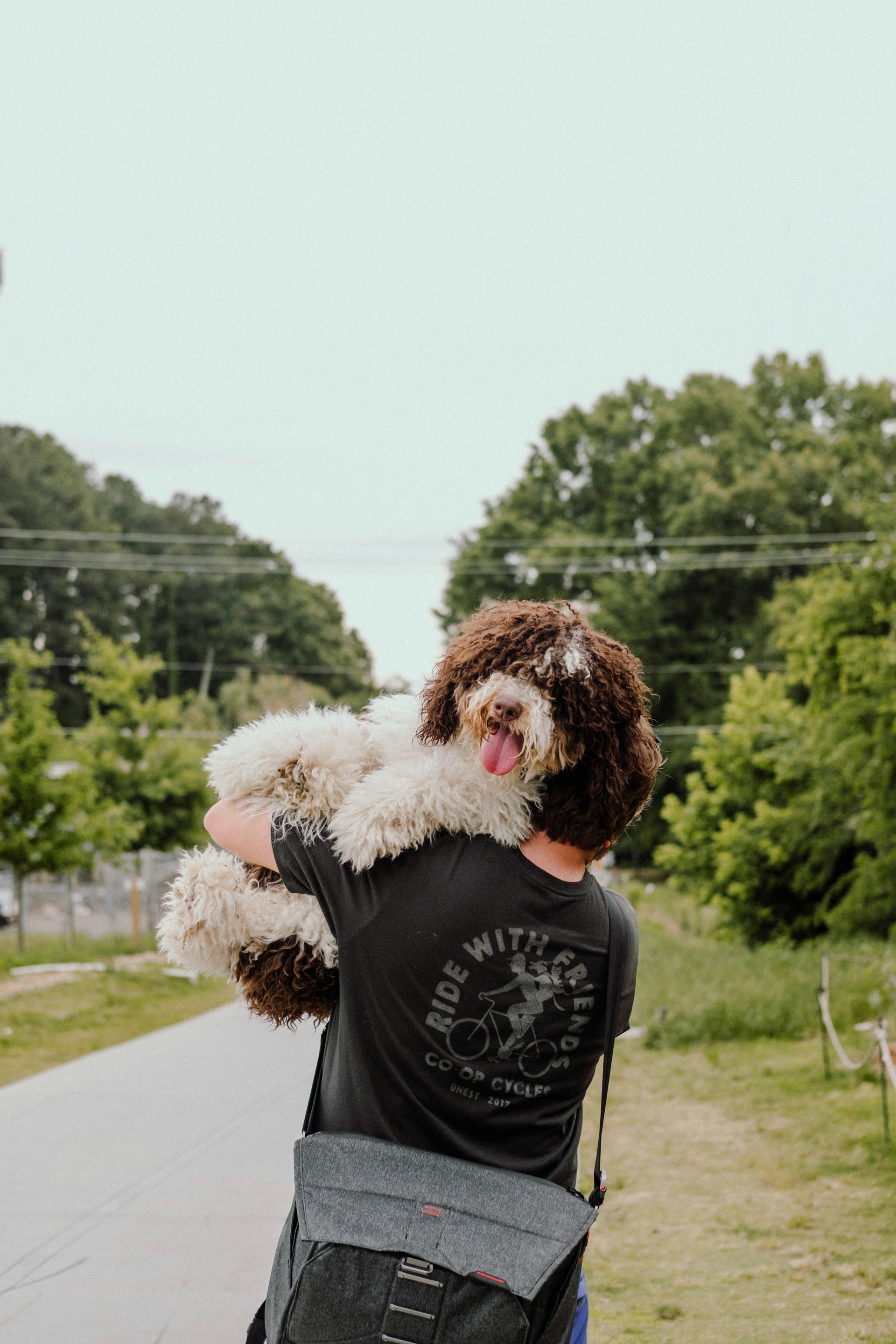
There is nothing wrong with loving a particular Mini Bernedoodle color. People connect with appearance, and a beautifully marked black-and-white or red-and-white puppy can be exactly what someone has imagined for years. Color preference only becomes a problem when it pushes everything else out of the picture.
Start by deciding what you actually like about parti. If high contrast is the draw, black and white or deep chocolate and white are the strongest candidates. If you prefer something softer, apricot and white, cream and white, or a lighter brown combination may fit better.
Then think about change. Ask how adult dogs from the same family or breeding line look. A deep red puppy may become lighter. Black may gray. Apricot can soften dramatically. Someone who would be disappointed by those changes should know the possibility before becoming attached to one exact puppy shade.
Coat type deserves equal attention because it changes the visual effect of the pattern. Large black patches look crisp on loose waves and more blended beneath dense curls.
After color comes the much bigger picture: health, temperament, early development, socialization, expected adult size, and whether the individual puppy fits the household.
The patch over one eye may be what gets the puppy bookmarked. The dog wearing it is the one you will love.
See our available parti mini Bernedoodle puppies for sale.
Final Thoughts on Parti Mini Bernedoodles
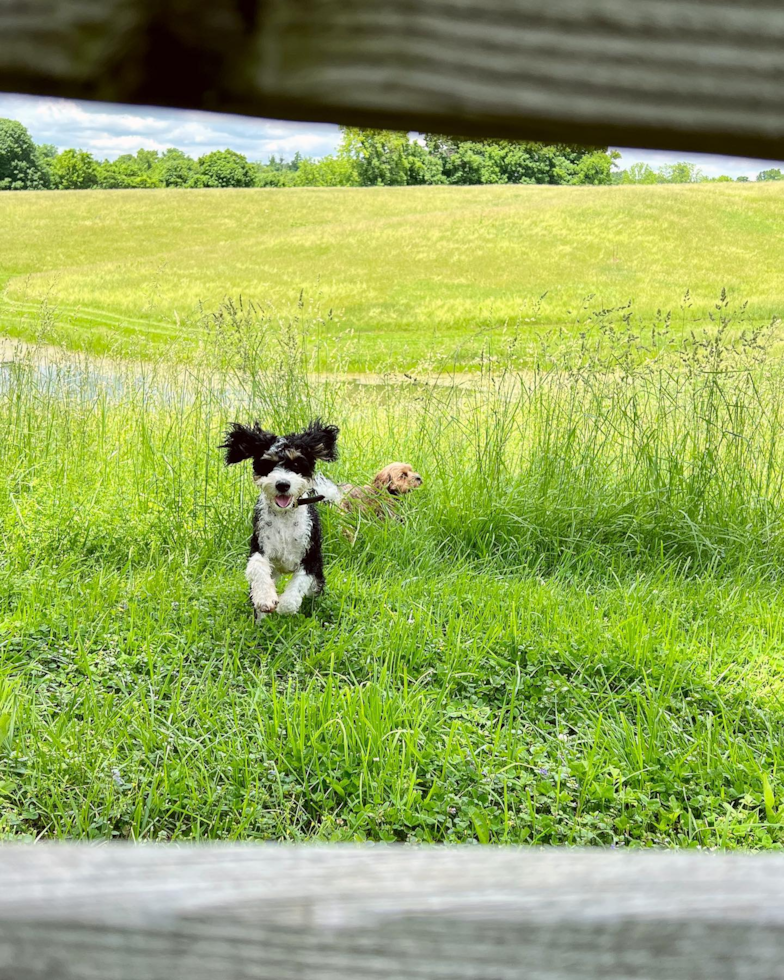
Parti opens up an entirely different side of Mini Bernedoodle coloring. Instead of using white as a small accent around the chest, face, or paws, the pattern makes white a major part of the coat and lets another color create the design on top of it.
Black and white gives the strongest contrast. Chocolate and white keeps the pattern bold but warmer. Red and white can be vivid as a puppy and softer with age, while apricot and white creates a much gentler transition between the two colors. Tan, cream, and very pale combinations can become subtle enough that the adult coat looks almost entirely light from a distance.
The Poodle ancestry behind these patterns is well established. Parti-colored Poodles have historical documentation, and multi-colored Poodles continue to be recognized by registries such as the UKC even though the modern AKC conformation standard prefers solid-colored Poodles. The Bernese side adds its own white-marking background, giving Mini Bernedoodles plenty of genetic material for color variation.
Knowing what parti means makes the entire group easier to navigate. A splash of white does not automatically make a Mini Bernedoodle parti. The clearest convention reserves the term for dogs where white covers at least half of the coat and the remaining color appears in distinct patches.
The exact design is where predictability ends. One Parti Mini Bernedoodle may have a beautifully balanced face and several large body patches. Another gets one dark ear, a crooked patch over an eye, and a spot halfway down its back that looks like someone changed their mind halfway through painting it. Both can be equally striking.
Color may soften and curls may change how the pattern looks, but the individual arrangement is part of that dog's identity from the beginning. For people drawn to coats that feel a little less uniform and a lot more individual, that is really the charm of a Parti Mini Bernedoodle.
Elena R.
About The Author
Elena is a leading expert in the field of dog behavior, care, and training, with over a decade of experience in writing about dogs. As a published writer and lifelong dog enthusiast, Elena currently shares her home with three beloved canine companions. She is dedicated to staying up to date on the latest advancements in dog care and training, ensuring that her articles provide readers with accurate and valuable insights. With her extensive knowledge and passion for all things canine, Elena's contributions to the Premier Pups community offer both expertise and authority on a wide range of dog-related topics.
What To Read Next
Tricolor Mini Bernedoodles: Colors, Markings & How They Change
A Tricolor Mini Bernedoodle carries one of the most recognizable looks associated with the breed. Black usually covers most of the coat, white brightens the chest, face, and paws, and warm tan or rust markings sit above the eyes, along the cheeks, and around the... Read More
Chocolate, Brown, Black & Gray Mini Bernedoodles: Colors & How They Change
A black Mini Bernedoodle can have the deepest, glossiest coat in the litter, sometimes so dark that the eyes seem to disappear into all that puppy fluff. Chocolate and brown Mini Bernedoodles trade that black pigment for warmer shades ranging from espresso and... Read More
Frequently Asked Questions
What does parti mean in a Mini Bernedoodle? Parti generally describes a dog with a predominantly white coat and distinct patches of another color. Mini Bernedoodles do not have an official color standard, but the established Poodle convention defines parti as at least 50% white with another color appearing in spots or patches.
Is a black and white Mini Bernedoodle a parti? It can be. A mostly white Mini Bernedoodle with large black patches fits the traditional parti description very well. A mostly black dog with a white chest and feet would usually be better described as abstract or simply black with white markings. The amount and distribution of white make the difference.
Can a Parti Mini Bernedoodle be brown and white? Yes. Brown and white is a common possible parti combination. Brown can range from deep chocolate to considerably lighter shades, and true brown-based dogs generally have brown or liver-colored nose and eye-rim pigment rather than black.
Can a Parti Mini Bernedoodle be red and white? Yes. Red can occur through Poodle ancestry, and a predominantly white dog with clearly defined red patches can have a red-and-white parti appearance. Red intensity may change as the Mini Bernedoodle matures, so some adult dogs become lighter than they were as puppies.
Can a Parti Mini Bernedoodle be apricot and white? Yes. Apricot and white creates a softer parti pattern than black and white. Apricot patches may range from warm peach-gold to much lighter shades and can become paler as the adult coat develops.
Is tan and white considered parti? It can be if tan or caramel-colored patches sit against a predominantly white coat. “Tan” is used rather loosely in puppy descriptions, though, and the underlying shade may actually be classified as apricot, cream, red, sable, or another color depending on the dog.
Is a white Mini Bernedoodle automatically parti? No. Parti requires at least one other visible color. A nearly solid white or cream Mini Bernedoodle may appear white because very pale pigment is present rather than because of a parti pattern. A heavily white-spotted dog with small remaining colored patches is another possibility.
What is the difference between parti and tricolor? Parti refers mainly to the distribution of white with another color, while tricolor means three visible colors are present. A classic Tricolor Mini Bernedoodle usually has black, white, and tan or rust. A black-and-white parti has two primary colors and substantially more white. Some dogs can display both parti-style white spotting and additional tan-point markings.
What is the difference between parti and abstract? The clearest convention comes from multi-colored Poodles. Parti means at least 50% white. Abstract means less than 50% white, usually appearing as white markings on an otherwise colored dog. Mini Bernedoodles have no official standard enforcing those percentages, but the distinction is useful when describing their coats.
Do Parti Mini Bernedoodles change color? They can. The white portions usually remain white, while the colored patches may lighten as the dog matures. Black can soften toward gray, brown can lighten, and red or apricot can become less intense. How much change occurs varies between individual dogs and breeding lines.
Do Parti Mini Bernedoodle spots move as they grow? The underlying patches do not migrate around the body. Growth changes their proportions, and longer adult coat can make the boundaries look different. Grooming often reveals the original pattern much more clearly again.
Can Parti Mini Bernedoodles develop freckles? Some can develop visible ticking or small pigmented flecks inside white areas. Those markings are different from the large patches that define the parti pattern and depend on additional inherited traits.
Does parti coloring come from the Poodle? Poodles have a documented history of parti coloring, and modern multi-colored Poodle lines continue to produce it. The Bernese Mountain Dog also contributes white-marking genetics, but its traditional pattern is the structured black, rust, and white tricolor rather than the predominantly white random-patch pattern associated with parti.
Does parti coloring affect a Mini Bernedoodle's personality? No evidence shows that parti coloring creates a particular temperament. Personality depends on the broader genetics of the dog, parental temperament, early development, socialization, training, environment, and individual personality rather than whether its coat happens to be black and white or apricot and white.