


Published Friday, November 27, 2026 by Elena R. in Dog Training
There's a very particular moment in life with a new Mini Bernedoodle when you begin to question everything you thought you knew about puppy training. You've taken your puppy outside, waited patiently while they inspected the grass, praised their excellent outdoor manners, and brought them back in. Thirty seconds later, there's a puddle on the kitchen floor.
It's frustrating, especially when your Mini Bernedoodle seems clever enough to understand almost everything else you're teaching. But potty training isn't simply a matter of intelligence. A puppy has to develop bladder and bowel control, learn where bathroom trips should happen, recognize the feeling of needing to go, and eventually figure out how to tell you in time. Those skills develop at different speeds.
If you're wondering how to potty train a Mini Bernedoodle, the most useful thing to understand is that a consistent routine does most of the work. Your job in the beginning is to make the right choice easy, notice the moments your puppy is likely to need a bathroom break, and reward success in a way they can understand. Accidents are part of learning, but they don't have to turn your home into a guessing game.
With the right schedule, close supervision, and realistic expectations, you can teach your Mini Bernedoodle where to go while protecting the happy, trusting relationship you're building together.
Table of Contents
- Are Mini Bernedoodles Easy to Potty Train?
- When to Start Potty Training Your Mini Bernedoodle
- How Often Should a Mini Bernedoodle Puppy Go Potty?
- How to Potty Train a Mini Bernedoodle Step by Step
- A Realistic Mini Bernedoodle Potty Training Schedule
- How to Tell When Your Mini Bernedoodle Needs to Go Potty
- How to Prevent Potty Accidents Inside the House
- Potty Training a Mini Bernedoodle at Night
- Should You Use Puppy Pads to Potty Train a Mini Bernedoodle?
- Potty Training a Mini Bernedoodle in an Apartment
- What to Do When Your Mini Bernedoodle Has a Potty Accident
- Why Your Mini Bernedoodle Pees Outside and Then Pees Again Inside
- How to Potty Train a Mini Bernedoodle in Rain, Snow, or Cold Weather
- Potty Training When You Work Outside the Home
- Common Mini Bernedoodle Potty Training Mistakes
- Why a Mini Bernedoodle May Have Potty Training Setbacks
- Final Thoughts on Potty Training a Mini Bernedoodle
Are Mini Bernedoodles Easy to Potty Train?
Mini Bernedoodles are generally capable learners, and many respond well to consistent, reward-based training. Their interest in people can help because they pay attention to routines and enjoy getting things right. Once they understand that going outside earns praise and a treat, some puppies catch on remarkably quickly.
That doesn't mean every Mini Bernedoodle is easy to housebreak. A puppy who gets distracted by every leaf may forget why they went outside. Another might understand the preferred bathroom spot but still have an accident because their bladder isn't ready to wait. A sensitive puppy may hesitate to go in noisy or unfamiliar places, even when they know what they're supposed to do.
Mini Bernedoodles also vary in size, maturity, energy, and temperament. The word mini doesn't tell you exactly how long an individual puppy can hold their bladder, and an especially bright puppy won't necessarily develop physical control earlier than a quieter one. Potty training progress depends far more on age, opportunity, and consistency than on how quickly your dog learns to sit.
The encouraging part is that house training is built around a simple pattern your Mini Bernedoodle can learn: outside is where bathroom needs get met, and you help them reach that spot before they become urgent. The clearer you make that pattern, the less guesswork there is for your puppy.
RELATED: Learn About Mini Bernedoodles
When to Start Potty Training Your Mini Bernedoodle
Start on your puppy's first day home. You don't need to wait for your Mini Bernedoodle to feel completely settled or learn obedience commands before establishing a bathroom routine. In fact, the first few days are an excellent time to introduce the route outside and the spot you want them to use.
Young puppies may have already experienced early toileting routines before coming home. Some have used a particular type of surface or a designated area in their previous environment. Even with that foundation, a new house is an entirely different setting, so expect your Mini Bernedoodle to need patient guidance at first.
What an Eight-Week-Old Puppy Can Realistically Do
At around eight weeks, your Mini Bernedoodle is still developing the physical ability to wait. During active periods, many puppies need opportunities to go out every hour or two, and sometimes more frequently. A big drink, an energetic play session, or waking from a nap can create an immediate need, regardless of when the last trip happened.
It's possible for a very young puppy to go several successful days with few accidents when an owner manages the schedule closely. That doesn't mean the puppy is fully potty trained yet. Much of the success comes from you correctly predicting when they need to go, not from their ability to wait and ask for the door independently.
What Changes Around Three to Six Months
As your Mini Bernedoodle matures, they should gradually gain more bladder control and begin recognizing the routine. Many puppies make noticeable progress by three or four months, especially when the household has stayed consistent. Some are reliable in familiar rooms by around six months, while others need more time to master the habit across different situations.
An improvement in bladder control doesn't automatically mean your puppy understands the entire house is off-limits. They might do well in the kitchen and living room, then have an accident the first time they're allowed into a quiet guest bedroom. Physical development, learning the rule, and applying it everywhere are three separate parts of housebreaking.
The goal is steady progress, not a promise that every Mini Bernedoodle will finish training at a certain age. You'll know the habit is taking hold when your puppy uses the right spot consistently, begins giving you signs, and stays dry during ordinary periods of supervised freedom.
RELATED: Mini Bernedoodle Pros and Cons
How Often Should a Mini Bernedoodle Puppy Go Potty?
In the early weeks, more frequent bathroom trips generally mean fewer accidents. Your puppy's bladder capacity matters, but so do meals, water, play, sleep, excitement, and changes in routine. Plan around those events first, then use the clock as a backup.
A common rule of thumb estimates that a puppy may be able to hold urine for roughly the number of hours corresponding to their age in months, sometimes with an extra hour added. That estimate is not a target for how long you should make an awake puppy wait. It describes a possible limit under favorable circumstances, and individual puppies may need breaks much sooner.
| Mini Bernedoodle age | Practical daytime starting point | What to remember |
| 8–10 weeks | About every 60–90 minutes while awake | Go out sooner after sleep, meals, water, or active play |
| 10–12 weeks | Roughly every 1–2 hours while awake | Watch your puppy's pattern instead of stretching the time automatically |
| 3–4 months | Often every 2–3 hours when comfortable and accident-free | Many still need extra trips during busy periods |
| 4–6 months | Gradually extend toward 3–4 hours if the puppy is ready | Consistency at home matters more than reaching a number |
| 6 months and older | Adjust to the dog's individual needs and routine | A longer holding ability should not replace regular bathroom access |
These are planning ranges, not rules your puppy must meet. If an eight-week-old Mini Bernedoodle has an accident after forty-five minutes of vigorous play, the next active session needs a bathroom break sooner. If a slightly older puppy stays dry through a relaxed nap, you can take them out when they wake without trying to prove they can wait longer.
The Bathroom Breaks You Should Never Forget
Some moments are so predictable that they deserve an automatic trip outside. Take your Mini Bernedoodle to their potty spot immediately after waking in the morning and after every nap. Offer another break shortly after meals or a substantial drink, after active play, before bedtime, and as soon as you return from an appropriate period of confinement.
Young puppies may urinate more than once during a trip, particularly when they're distracted. If your Mini Bernedoodle pees as soon as they reach the grass, consider waiting another quiet minute before heading inside. Some puppies still need to poop, while others haven't finished emptying their bladder.
You won't need to maintain such an intense schedule forever. Early repetition creates successful trips, and the record of those trips tells you when it's reasonable to extend the interval. For now, a few extra journeys to the yard are much easier than repeated cleanup indoors.
How to Potty Train a Mini Bernedoodle Step by Step
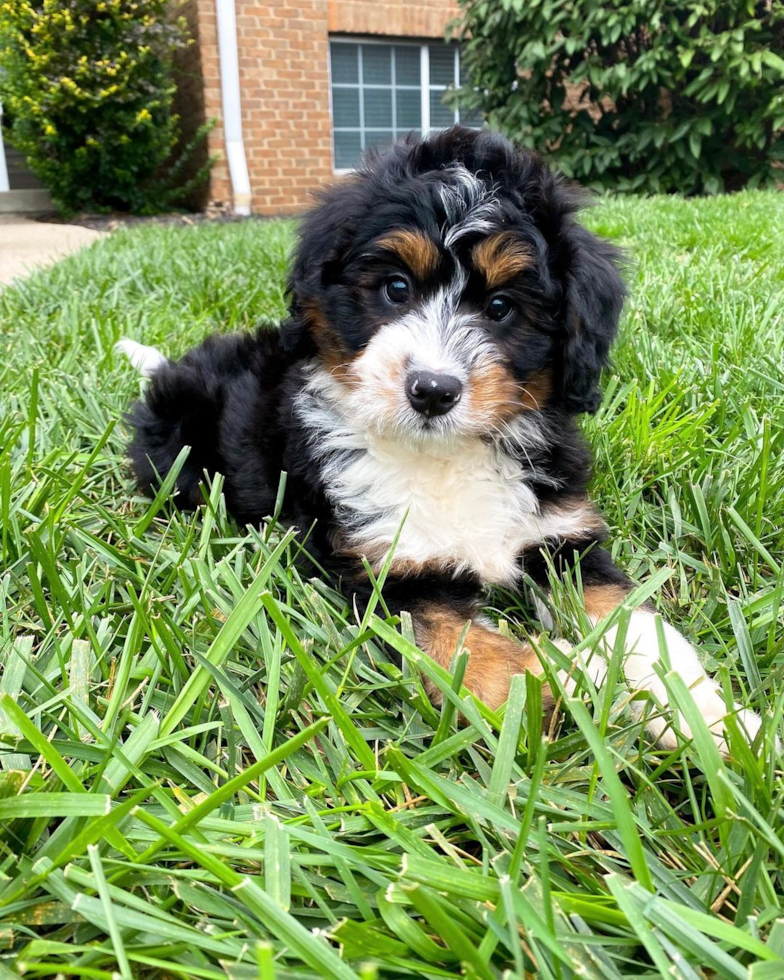
Potty training works best when each trip follows the same simple sequence. You take your Mini Bernedoodle to a familiar place, give them a quiet chance to go, reward them immediately afterward, and return to the day's routine. That repetition helps your puppy understand which part of the outing matters.
1. Choose One Bathroom Spot
Pick an outdoor area that's easy to reach, reasonably quiet, and safe for your puppy's age and vaccination status. A familiar patch of grass in a private yard is convenient, but a designated outdoor area can also work for families without a yard. The important thing is that your Mini Bernedoodle can reach it frequently and that your veterinarian considers the location appropriate during the puppy vaccination series.
Take your puppy to this same spot through the same door whenever possible. Familiar smells and a predictable route help them understand what the trip is for. As your dog grows more reliable, they'll learn to use other suitable places too, but early consistency makes the lesson clearer.
2. Go Outside With Your Puppy
Stay with your Mini Bernedoodle during potty breaks rather than opening the door and assuming they'll take care of it. A puppy left alone in the yard may chase leaves, investigate a fence, or sit by the door until you let them back in. Then, once inside, they'll remember they needed to go.
For the first few weeks, a lightweight leash can help you stay near the selected area without turning the outing into a walk or game. Stand quietly, give your puppy enough space to sniff, and let them find the right spot. You don't have to talk through the entire process, and excited encouragement before they've gone can be distracting.
3. Wait Briefly, Then Reset if Nothing Happens
Give your puppy a few quiet minutes to eliminate. If they don't go after about five minutes, head back inside and keep them close enough to supervise directly. Try again in roughly ten to fifteen minutes, or sooner if they begin sniffing, circling, or showing other signs that they need to go.
This step matters because an unsuccessful trip isn't proof that your puppy doesn't need the bathroom. Some Mini Bernedoodles become interested in everything outside and momentarily forget the task. If you let them roam through the house immediately afterward, the next quiet corner can look like an excellent place to finish what they started.
4. Reward Immediately After They Finish
As soon as your Mini Bernedoodle finishes peeing or pooping in the correct spot, offer warm praise and a small treat. Keep the reward with you so it happens outside, right after the action. If you wait until you've gone back indoors and opened the treat jar, your puppy may associate the reward with coming inside rather than using the bathroom.
Timing makes a difference. Wait until your puppy has finished instead of startling them halfway through with an enthusiastic celebration. A simple "Good potty!" followed by a treat is enough to make the connection clear.
5. Give Your Puppy a Little Time Afterward
Some puppies learn that going potty makes the outdoor fun end. They may start delaying the job because the moment they finish, they're taken straight back to the house. You can prevent this by allowing a little relaxed sniffing or play after a successful trip when the setting is safe.
That doesn't mean every bathroom break must turn into a long walk. A few extra minutes of enjoyable outdoor time can help your Mini Bernedoodle see that eliminating promptly is worthwhile. The reward comes first, and then normal life continues.
RELATED: When Can Puppies Go Outside?
A Realistic Mini Bernedoodle Potty Training Schedule
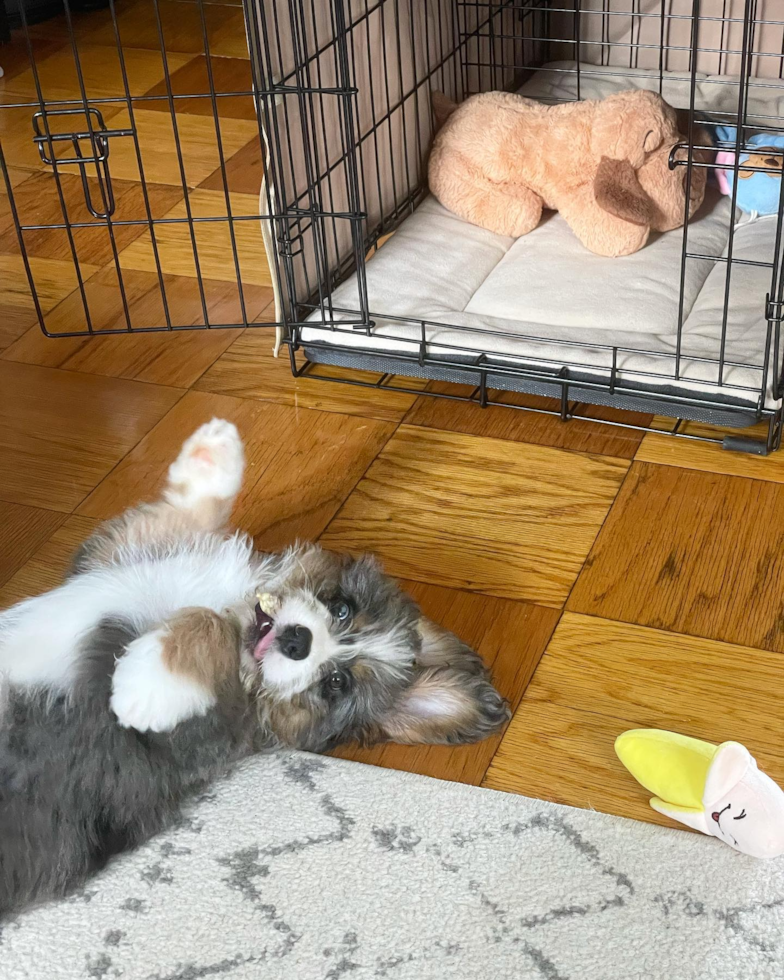
Schedules are helpful because young puppies aren't very good at planning ahead. If you're waiting for your Mini Bernedoodle to tell you they need to go, you may be waiting until the need is already urgent. A routine turns many of those emergencies into ordinary, predictable breaks.
The example below shows one possible day with a young puppy who is around eight to ten weeks old and lives in a home where someone can supervise. It is not a fixed timetable. Feeding times, naps, activity, and your puppy's individual pattern will change the exact hours, and additional breaks may be needed.
| Time or event | What the owner does | Why it helps |
| 6:30 a.m. | Carry or lead puppy directly to the potty spot | Prevents an accident after the overnight rest |
| 7:00 a.m. | Feed breakfast, then offer another bathroom break soon afterward | Accounts for the digestive response to eating |
| 7:30–8:00 a.m. | After play and before a nap, go out again if needed | Active movement can bring on another urge |
| After each nap | Go straight to the potty area | Waking is a common bathroom trigger |
| During awake periods | Offer breaks about every 60–90 minutes, or sooner if signs appear | Prevents the puppy from reaching their limit indoors |
| After lunch and dinner | Allow time to eat, then make another potty trip | Helps establish predictable bowel habits |
| After evening play | Take a calm bathroom break | Reduces excitement-related accidents indoors |
| Immediately before bed | Offer one final quiet outing | Starts the night with an empty bladder |
| Overnight, if needed | Make a brief, low-key trip when the puppy wakes or at an appropriate planned interval | Supports a young puppy who cannot comfortably wait until morning |
Notice that the schedule is built around events instead of demanding that your puppy go at exact clock times. If breakfast is later one morning, the trip that follows moves too. If your puppy naps longer than usual, the bathroom break happens when they wake, not while they're still sleeping simply because an alarm went off.
Use a Potty Training Log for the First Week
For several days, write down when your Mini Bernedoodle pees, poops, eats, drinks, naps, and has accidents. You don't need a complicated app. A note on your phone with times and a few words is enough to show patterns you might otherwise miss.
You may discover that your puppy usually needs to poop twenty minutes after breakfast, or that accidents happen during the same lively period every evening. Those patterns allow you to adjust the schedule before an accident occurs. A log is especially useful when more than one person in the household shares puppy care, because everyone can see what has already happened.
Once your Mini Bernedoodle is having reliable, predictable days, you can stop recording every trip. The log is a temporary tool to help you understand your puppy, not another chore you need to maintain for months.
RELATED: How To Potty Train A Puppy
How to Tell When Your Mini Bernedoodle Needs to Go Potty

Many owners picture a puppy walking straight to the back door and politely asking to be let out. Some dogs eventually do something close to that, but the early signals are usually less obvious. A Mini Bernedoodle may stop chewing a toy, lower their nose to the floor, and wander toward a corner before you realize what's happening.
Watch for concentrated sniffing, circling, restlessness, sudden breaks from play, pacing, or heading toward an area where your puppy has had an accident before. A puppy may also stand near the door, whine, look back and forth between you and the exit, or leave a room for no apparent reason. Each Mini Bernedoodle develops their own pattern, and the earliest clues can be easy to miss.
If you notice one of these behaviors, don't wait to see whether it turns into a stronger signal. Take your puppy to their bathroom spot right away. Even if nothing happens, you've reinforced the idea that the feeling of needing to go leads outside.
Teaching Your Mini Bernedoodle to Ask for the Door
Once your puppy understands where to eliminate and has gained some physical control, you can encourage a consistent way to request a trip. Some Mini Bernedoodles naturally sit at the door or come to find their person. You can acknowledge that behavior by opening the door promptly and taking them to the potty spot.
A bell near the door is an option if you'd prefer a more obvious signal. Teach your puppy that touching the bell leads to a brief trip to their bathroom area, then reward elimination there as usual. Be aware that a clever Mini Bernedoodle may also discover that ringing the bell gets them outside for entertainment, so keep the signal linked to a calm bathroom opportunity.
Door signaling isn't the first goal, and it doesn't replace regular breaks for a very young puppy. Your Mini Bernedoodle may understand the bell long before they can hold their bladder long enough for someone to respond. Continue taking the lead until they're reliably able to wait.
RELATED: Week One with A New Puppy: See What to Expect
How to Prevent Potty Accidents Inside the House
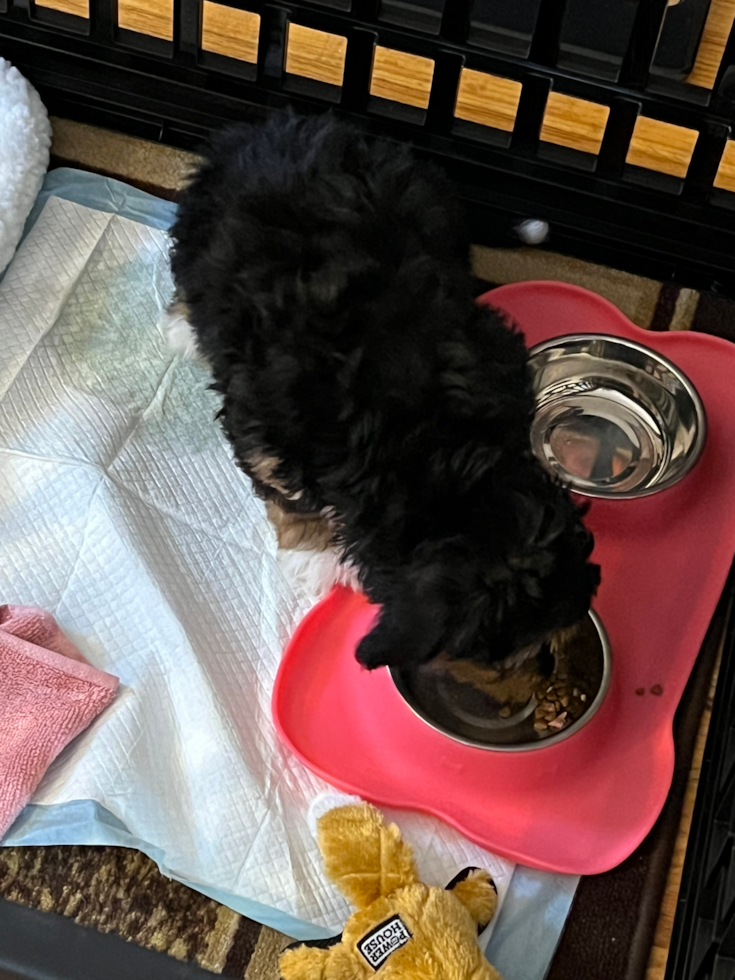
During the early stages of Mini Bernedoodle house training, your puppy needs either direct supervision or a safe, carefully planned space when you cannot watch them. Giving full access to the house too soon makes accidents easy to miss, and every unnoticed accident gives your puppy another chance to practice using the wrong place.
Keep Your Puppy Where You Can See Them
For a while, your Mini Bernedoodle will probably spend most of their awake indoor time near you. Baby gates can keep them in the room where you're working, cooking, or relaxing, and a lightweight leash can help with supervised movement when appropriate. The point is to notice the moment your puppy starts searching for a bathroom spot.
It's surprisingly easy to miss that moment. You're answering an email, the puppy was chewing happily two minutes ago, and now they've wandered into the hallway. If you can't see what they're doing, it's time to check, redirect them back nearby, or offer another potty break.
Use a Safe Resting Area When You Can't Supervise
A puppy-safe pen or an appropriately introduced crate can help prevent wandering and support a predictable routine. The space should be comfortable, suited to your puppy's age and needs, and never used as a punishment for having an accident. Take your Mini Bernedoodle to their potty spot immediately after they wake or leave a resting area.
Confinement is a management tool, not a way to force a puppy to hold their bladder beyond their ability. If you'll be away longer than your puppy can comfortably wait, arrange a bathroom break with a trusted caregiver or provide a well-designed indoor toileting option. We'll cover the full process of helping a Mini Bernedoodle feel comfortable in a crate in its own dedicated guide.
Expand Access to the House Slowly
After your Mini Bernedoodle has stayed dry in a supervised area for a reliable stretch, you can introduce a little more space. Open one additional room while someone is watching, keep the usual potty schedule, and see how the puppy handles the change. If accidents return, reduce the space temporarily and rebuild success.
This is a common point of confusion for owners. A puppy may learn not to pee in the family room but still treat an unfamiliar upstairs bedroom as fair game. The lesson has to generalize across the home, and giving freedom in stages helps make that happen without unnecessary setbacks.
RELATED: Top 5 Benefits of Doggy Daycare
Potty Training a Mini Bernedoodle at Night
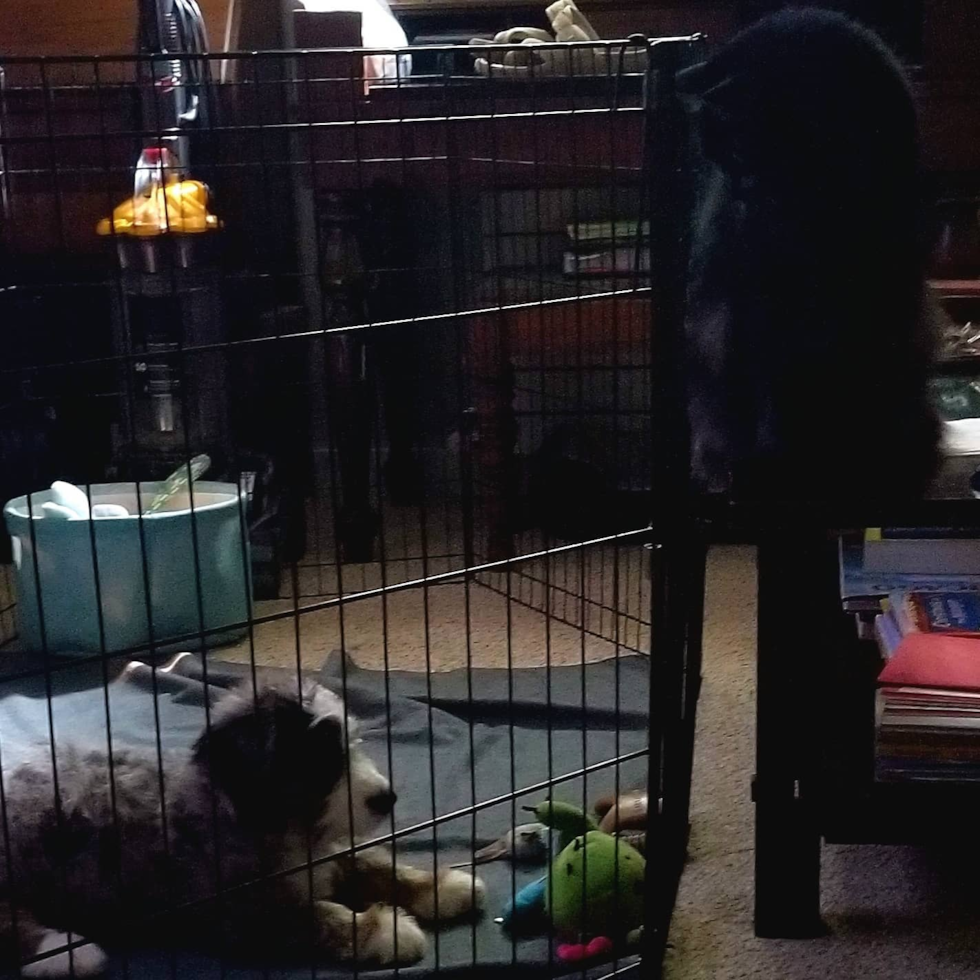
Nighttime house training is where the age of your puppy matters most. A young Mini Bernedoodle may sleep deeply for part of the night and still need a bathroom trip before morning. Some can manage longer stretches earlier than others, but it isn't fair to expect an eight-week-old puppy to meet an adult dog's schedule.
Create a Quiet Bedtime Routine
Keep the last part of the evening fairly calm and take your puppy to their potty spot immediately before bed. Give them a real opportunity to eliminate rather than assuming a quick step outside is enough. If they have been playing hard or drinking after dinner, an extra trip may help before everyone settles.
Consistency with meals, rest, and the bedtime outing can make overnight needs more predictable. Your puppy should still have appropriate access to drinking water during the day; do not routinely deprive them of water to avoid accidents. Ask your veterinarian about any special hydration or overnight concerns rather than relying on strict water restrictions.
What to Do When Your Puppy Wakes Overnight
If your Mini Bernedoodle wakes, becomes restless, or cries because they need the bathroom, respond calmly and take them to their usual spot. Keep lights low, avoid exciting conversation, and give the puppy a quiet chance to go. After they've finished, return them to their sleeping area without turning the outing into playtime.
For a very young puppy, some owners find it helpful to set a planned overnight break before the puppy reaches their limit. Others discover a predictable wake-up time after a few nights. Use the pattern your puppy shows you, and gradually adjust the timing as they mature and wake up dry.
If your Mini Bernedoodle sleeps through an expected break and wakes comfortable and dry, you don't necessarily need to interrupt that sleep to meet an arbitrary schedule. On the other hand, frequent overnight accidents are a sign that the current routine needs more support. Watch the puppy's comfort and the actual results rather than treating a certain number of hours as a milestone to force.
When Will a Mini Bernedoodle Sleep Through the Night?
Some puppies begin sleeping longer stretches within their first few weeks at home, while others need overnight bathroom trips for several months. Their age, size, routine, and individual development all influence the process. Sleeping through the night doesn't mean they can wait the same length of time while awake, playing, and drinking water.
It's usually easier to judge progress by a growing number of dry mornings and fewer urgent wake-ups. If your Mini Bernedoodle suddenly starts wetting their sleeping area after a period of reliable nights, consider whether bedtime routines changed and speak with your veterinarian if the pattern continues or comes with other symptoms.
RELATED: Top 5 Things to Know Before Getting a Mini Bernedoodle Dog
Should You Use Puppy Pads to Potty Train a Mini Bernedoodle?
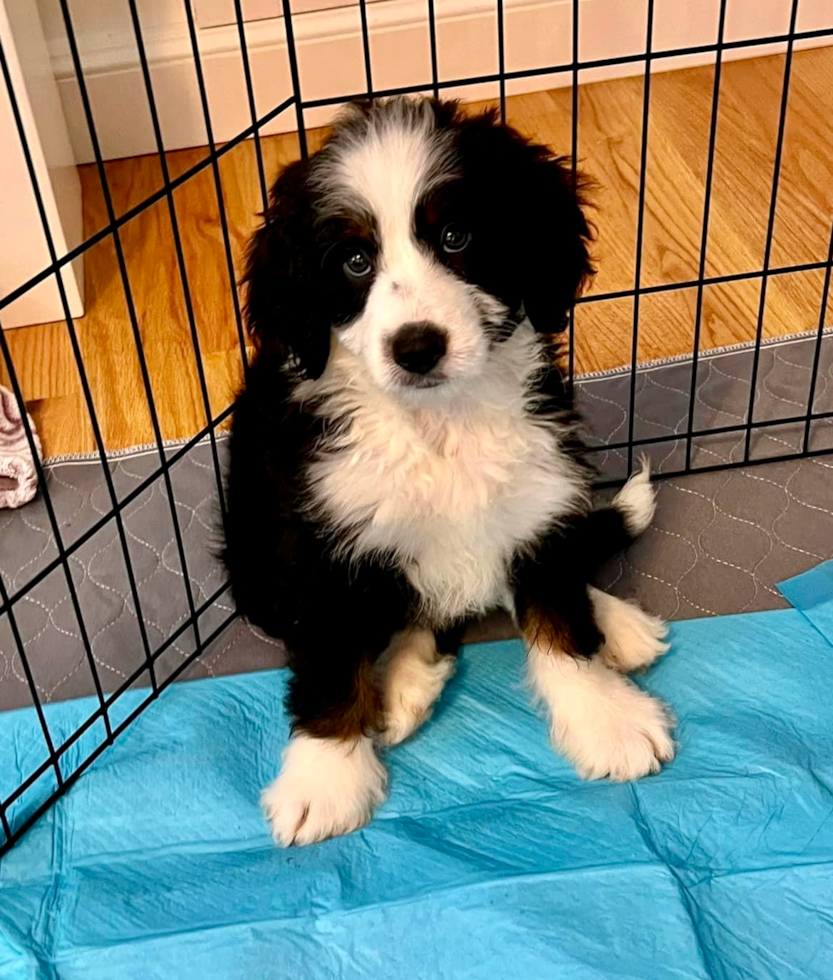
Puppy pads can be useful, but the best choice depends on your home and your long-term goal. If you have quick access to a safe private yard and want your Mini Bernedoodle to eliminate outdoors, teaching that habit directly is usually the clearest approach. Your puppy learns one location and one surface rather than having to switch rules later.
An indoor potty area may be a sensible temporary or ongoing solution for some families. Apartment residents who cannot reach a suitable outdoor spot quickly, owners with mobility limits, and puppies whose veterinarian advises avoiding high-risk shared dog areas may benefit from a designated indoor station. The important part is choosing that location intentionally instead of placing pads throughout the house wherever accidents happen.
How to Use an Indoor Potty Area Consistently
Select one easy-to-clean location and use the same kind of pad or indoor grass-style station every time. Take your Mini Bernedoodle there on the same schedule you would use for outdoor house training, then reward immediately after successful elimination. Keep the station away from their food, water, and sleeping area when possible.
Pads can resemble rugs, bath mats, or other soft surfaces to a puppy, so supervise closely and keep valuable absorbent items out of reach during training. If your Mini Bernedoodle is using pads accurately, that means they've learned a particular bathroom location. It doesn't automatically mean they'll understand the outdoor rule without additional practice.
Transitioning From Puppy Pads to Outdoor Potty Training
When your goal is outdoor elimination, begin offering regular outdoor trips at the times your puppy is most likely to go. Reward successful outdoor potty breaks generously and maintain close supervision indoors. If needed, move the indoor station gradually toward the exit or use a familiar surface in the new outdoor location while your puppy learns the change.
Avoid suddenly removing the only toilet option your puppy understands before they can reach and use the outdoor spot reliably. A gradual transition can prevent confusion and unnecessary accidents. Some Mini Bernedoodles adapt quickly, while others need more repetition, especially if they've spent several weeks using an indoor surface.
RELATED: 10 Reasons Why Dogs Lose Interest in Training & How to Fix it
Potty Training a Mini Bernedoodle in an Apartment
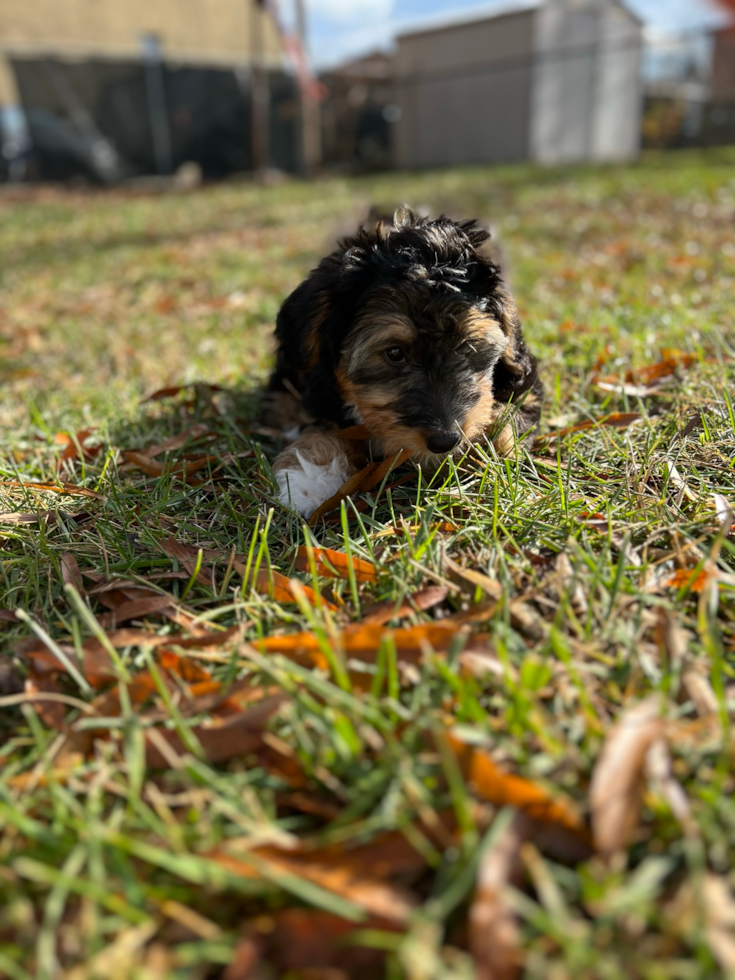
Apartment potty training has one major complication: distance. A puppy who signals at the door may still need to cross a hallway, wait for an elevator, and reach a designated outdoor area before they can go. For a young Mini Bernedoodle with limited bladder control, that journey can be longer than they can comfortably manage.
Choose the nearest suitable potty location your veterinarian approves and practice the same route consistently. For a small puppy, carrying them through the building can prevent an accident on the way. Keep treats, keys, shoes, and cleanup supplies ready so you're not searching for everything after your puppy has already started sniffing the floor.
The vaccination question deserves attention here. Shared grass, dog relief stations, and heavily used sidewalks may carry higher infection risks for puppies whose vaccine series is incomplete. Ask your veterinarian whether those areas are appropriate; if not, an indoor station or private alternative can help bridge the gap while you continue teaching the bathroom routine.
Apartment living doesn't make successful potty training impossible. It does mean planning around the extra travel time and responding sooner to your puppy's signals. As your Mini Bernedoodle matures, the trip to the outdoor potty area should get easier, provided you keep the routine consistent.
RELATED: New Puppy Owner Guide
What to Do When Your Mini Bernedoodle Has a Potty Accident

You will probably clean up some accidents, even if you're careful. One missed signal, an unexpectedly long phone call, or a puppy who gets distracted outdoors can be enough. How you respond matters because an accident is information about the routine, not a reason to frighten your dog.
If You Catch the Accident Happening
If your Mini Bernedoodle starts to squat indoors, calmly interrupt if you can do so without startling them and guide them to the proper potty area. If they finish there, offer the usual reward. If they have already finished, skip the interruption and clean up.
Avoid yelling, chasing, grabbing roughly, or making your puppy afraid to eliminate in front of you. A frightened puppy may learn to hide behind furniture or wait until you're not watching, which makes potty training harder. You want them comfortable using the bathroom in your presence so you can reward the right choice.
If You Find the Accident Later
Clean it up without involving your puppy. They cannot connect a scolding now with something they did twenty minutes earlier, and rubbing their nose in a mess serves no useful training purpose. Your next step is to look at the schedule and ask what made the accident possible.
Use an enzymatic cleaner labeled for pet urine or feces, following the product instructions for the surface. Ordinary cleaners may remove the visible mess while leaving odors a dog's nose can still detect. Keep your puppy away from the treated area until it is safe and dry, especially if they tend to revisit that spot.
What an Accident Can Tell You
Accidents are more useful when you look for patterns instead of treating each one as a setback. Did your Mini Bernedoodle pee immediately after coming inside? The outdoor trip may have been too distracting or too short. Did they have an accident right after a nap? They may need to go out the moment they wake rather than after a few minutes of play.
If the accidents happen in a particular room, your puppy may have too much unsupervised access. If they appear during late-evening excitement, shorten the interval between breaks at that time. Changing one part of the routine based on what happened is much more effective than repeating the same schedule and hoping for a different result.
RELATED: Understanding Dog Body Language
Why Your Mini Bernedoodle Pees Outside and Then Pees Again Inside

This is one of the most frustrating puppy behaviors because it feels as if your Mini Bernedoodle deliberately saved the second bathroom trip for your carpet. In reality, a puppy may have been distracted before fully emptying their bladder, or they may need to urinate again soon after drinking or playing. Their physical control is still developing, and they aren't making a statement about your choice of flooring.
Try giving your puppy a little more quiet time after the first pee. Keep the outing calm enough for them to finish, then reward each appropriate elimination. If nothing else happens, return inside but supervise closely and offer another chance before giving them full access to play.
Repeated small urinations, straining, pain, blood in the urine, or a sudden increase in how frequently your Mini Bernedoodle needs to go warrant veterinary advice. Those signs shouldn't be dismissed as a stubborn potty training phase. A health concern can make it difficult or impossible for a puppy to follow even a well-planned routine.
RELATED: How to Train a Puppy
How to Potty Train a Mini Bernedoodle in Rain, Snow, or Cold Weather

Weather changes the experience of using the bathroom. A puppy who happily runs outside on a sunny morning may pause at the door when the grass is wet or a strong wind starts blowing. Some Mini Bernedoodles barely notice the change; others want to get back to their warm bed immediately.
Try to make the potty area comfortable and accessible. A sheltered patch near the door, a cleared path through snow, or a dry spot in a private yard can help. For very cold conditions, use your veterinarian's guidance about safe exposure and suitable protective clothing, especially for small or young puppies.
Keep the outing focused without becoming impatient. Walk to the usual spot, let your puppy sniff and settle, and reward them as soon as they finish. If they refuse to go, return inside, supervise closely, and try again soon rather than leaving them outdoors until they're frightened or uncomfortable.
Consistency through ordinary weather helps your Mini Bernedoodle understand that the bathroom location stays the same even when conditions change. In extreme conditions, safety comes first, and a temporary indoor arrangement may be more sensible than forcing an outing that isn't appropriate for your puppy.
Potty Training When You Work Outside the Home
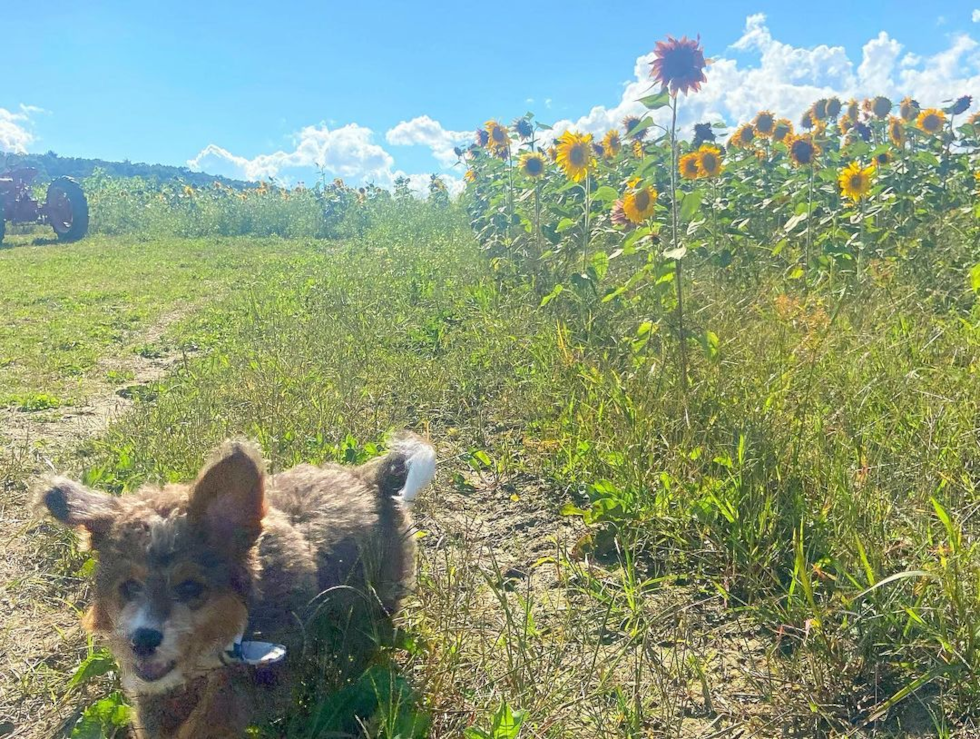
Young Mini Bernedoodles cannot reasonably be expected to wait through a full workday without a bathroom opportunity. An eight- or ten-week-old puppy may need several breaks during the hours you're away, along with meals, rest, and supervision. No amount of clever training can speed up their physical development enough to make an eight-hour wait comfortable.
If everyone in the household works away from home, arrange a practical care plan before the puppy arrives. A trusted family member, pet sitter, or other suitable caregiver can follow the same potty routine and record successful trips. The important thing is that the puppy has enough opportunities to eliminate in the correct place rather than being left to manage an impossible schedule.
When regular visits aren't possible, a properly planned puppy-safe area with a separate indoor toilet station may be necessary. That can mean a slower transition to outdoor-only elimination, but it is kinder and more realistic than expecting a young puppy to hold their bladder until someone comes home. As your Mini Bernedoodle grows, you can gradually adjust the arrangement to match their developing abilities.
Consistency between caregivers matters as much as the schedule itself. Agree on the bathroom location, reward timing, meals, and accident response so your Mini Bernedoodle isn't learning a different routine every day. A short shared log can make these handoffs easier.
RELATED: How to Crate Train a Mini Bernedoodle Puppy
Common Mini Bernedoodle Potty Training Mistakes
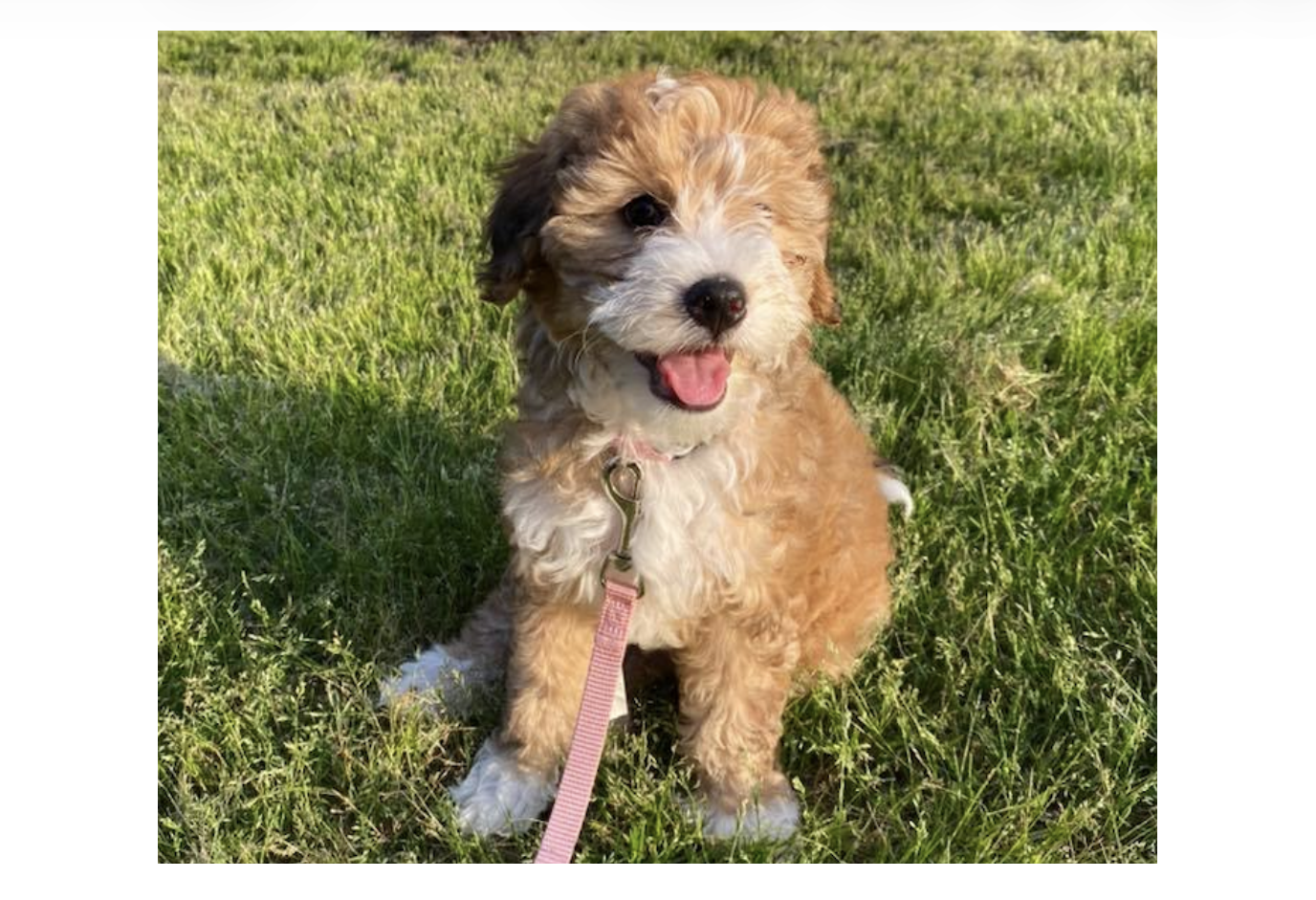
Most housebreaking problems begin with understandable assumptions about puppies. Owners expect a clever dog to figure out the rule quickly, assume a successful week means the process is finished, or become so focused on avoiding accidents that they forget how young the puppy actually is.
Waiting for Your Puppy to Ask Before Offering Breaks
Reliable signaling develops after your Mini Bernedoodle has learned the bathroom routine and gained some ability to wait. At eight or ten weeks, the signal may simply be a quick sniff and a squat. If you depend on a whine at the door, you'll miss many opportunities to help your puppy succeed.
Use a proactive schedule until the habit is established. The more successful outdoor trips your Mini Bernedoodle experiences, the easier it becomes for them to connect the urge to go with the correct place.
Giving the Puppy Too Much Freedom Too Early
A few accident-free days can make it tempting to open the entire house. But a puppy who stays clean while you're watching them in one room may still have no idea what to do when they're alone in another. Increase freedom gradually and continue supervising until your Mini Bernedoodle shows consistency in each new area.
Rewarding Too Late or Making Potty Time Too Exciting
If the treat arrives back in the kitchen, the connection to outdoor elimination is weak. If you start a lively game the moment your puppy steps onto the grass, they may forget to use the bathroom. Keep the first part of each trip calm, reward immediately after a successful potty, and then let your puppy enjoy a little outdoor time when appropriate.
Expecting the Age Formula to Replace Observation
A puppy who might hold their bladder for several hours while sleeping may need to go repeatedly during an active morning. The age-based estimate is a broad guide, not a rule your Mini Bernedoodle has to obey. A schedule based on real behavior will serve you better than trying to stretch every interval to its theoretical maximum.
Punishing Accidents or Changing the Rules Constantly
Scolding can make a puppy afraid to eliminate near you, and switching between several bathroom spots or reward routines can create confusion. Choose a consistent plan, respond calmly when something goes wrong, and adjust the timing when your puppy shows they need more help. Patience is practical here, not merely a nice personality trait.
RELATED: Are Mini Bernedoodles Smart? Intelligence, Trainability & Behavior
Why a Mini Bernedoodle May Have Potty Training Setbacks

Potty training progress is rarely a perfect upward line. Your Mini Bernedoodle may have a wonderful week, then several accidents when relatives visit, the weather changes, or your family travels. New places, excitement, altered meal times, and more freedom indoors can all disrupt a habit that is still developing.
Adolescence can bring different distractions too. A Mini Bernedoodle who understood the backyard routine may begin spending outings sniffing and investigating instead of promptly eliminating. Some dogs start urine marking as they mature, which has a different motivation from a young puppy simply being unable to hold their bladder.
When accidents return, go back to the basics for a few days. Shorten the interval between breaks, supervise more closely, use the familiar potty spot, and reward every success. If the puppy improves again, you can gradually restore more freedom and longer intervals.
When to Call the Veterinarian
Not every accident is a training problem. Contact your veterinarian if your Mini Bernedoodle suddenly starts urinating much more frequently, strains to pee or poop, cries during elimination, has blood in the urine, develops diarrhea, seems unusually thirsty, or loses control after previously being reliable. These changes can have medical causes that need attention.
If your puppy is making little progress despite a consistent routine, a veterinary check is still worthwhile. Pain, digestive problems, urinary issues, and other factors may interfere with successful house training. A veterinarian can help determine whether you need to adjust the training plan, investigate a health issue, or both.
Excitement-related urination also deserves a different response from ordinary accidents. Some young dogs dribble urine during greetings or moments of strong emotion without intending to empty their bladder. Keep greetings calm, avoid punishment, and seek veterinary or behavior guidance if the problem is frequent or worrying.
RELATED: Are Mini Bernedoodles High Energy? An Honest Look at Daily Life
Final Thoughts on Potty Training a Mini Bernedoodle

Learning how to potty train a Mini Bernedoodle is largely about seeing the day from a puppy's point of view. They wake up, eat, drink, play, get excited, and suddenly need the bathroom with very little warning. Your routine gives those needs a predictable place to go while your puppy develops the control to manage them more independently.
Start early, take your Mini Bernedoodle out frequently, reward them immediately, and keep enough supervision in place to prevent repeated mistakes. When an accident happens, clean it up and use the information to improve the schedule. Your puppy will learn far more from a hundred successful, ordinary outings than from one upset reaction to a puddle on the floor.
Before long, the day begins to feel different. You notice the familiar glance toward the door, your Mini Bernedoodle heads outside with a purpose, and the constant guessing slowly fades. It's a small milestone in the bigger experience of raising a dog, but after those early mornings and repeated trips to the yard, it feels like a pretty wonderful one.
Elena R.
About The Author
Elena is a leading expert in the field of dog behavior, care, and training, with over a decade of experience in writing about dogs. As a published writer and lifelong dog enthusiast, Elena currently shares her home with three beloved canine companions. She is dedicated to staying up to date on the latest advancements in dog care and training, ensuring that her articles provide readers with accurate and valuable insights. With her extensive knowledge and passion for all things canine, Elena's contributions to the Premier Pups community offer both expertise and authority on a wide range of dog-related topics.
What To Read Next
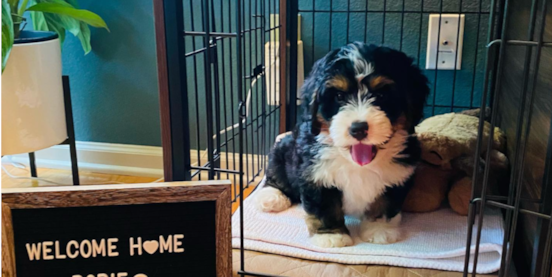
How to Crate Train a Mini Bernedoodle Puppy
You buy a crate, arrange a soft bed inside, add a favorite toy, and set it in the perfect corner of the living room. Your Mini Bernedoodle walks over, sniffs the doorway, and steps inside to investigate. For a moment, everything looks promising. Then the door closes,... Read More

Are Mini Bernedoodles Aggressive? What Owners and Experts Say
Mini Bernedoodles have a reputation that precedes them. Fluffy, affectionate, deeply people-oriented — the kind of dog that greets every visitor like a long-lost friend and considers your lap a permanent reservation.
Mini bernedoodles are not an aggressive... Read More
Frequently Asked Questions
Are Mini Bernedoodles hard to potty train? Mini Bernedoodles can learn house-training routines well, especially with a consistent schedule and immediate rewards. Some puppies pick up the preferred bathroom spot quickly, while others need more repetition or time to develop bladder control. Their intelligence helps with learning, but it doesn't eliminate normal puppy accidents.
How long does it take to potty train a Mini Bernedoodle puppy? Many Mini Bernedoodle puppies show progress within the first few weeks of consistent training. Reliable house training can take several months, and many puppies improve significantly around four to six months of age. The exact timeline depends on your puppy's development, supervision, routine, and environment.
How often should an eight-week-old Mini Bernedoodle go outside? An eight-week-old Mini Bernedoodle may need a bathroom break about every 60 to 90 minutes while awake, sometimes sooner during active play or after drinking. Go outside immediately after naps, meals, and exciting activities regardless of the clock. Use your puppy's actual pattern to adjust the intervals.
How long can a Mini Bernedoodle puppy hold their pee? Bladder control develops gradually and varies between puppies. Age-based estimates sometimes use roughly one hour per month of age, with an additional hour in some versions, but these are possible limits rather than recommended daytime intervals. Active puppies typically need more frequent opportunities than sleeping puppies.
Should I wake my Mini Bernedoodle puppy up at night to go potty? Very young puppies may need an overnight break, and a planned trip can help if your puppy has predictable nighttime accidents. As they develop, some sleep longer and wake dry without needing that interruption. Follow your puppy's comfort and results rather than waking them solely to meet a rigid schedule.
What should I do if my Mini Bernedoodle pees in the house right after going outside? Your puppy may have been distracted outdoors or may not have fully emptied their bladder. Next time, allow another quiet minute outside after the first pee, then supervise closely once indoors. If repeated small urinations or other urinary symptoms appear, consult your veterinarian.
Can I potty train a Mini Bernedoodle without a crate? Yes. You can use baby gates, direct supervision, a puppy-safe pen, and a consistent bathroom schedule to support house training. A crate can be useful when introduced appropriately, but it is a management tool rather than a requirement for learning where to eliminate.
Are puppy pads good for Mini Bernedoodle potty training? Puppy pads can help when outdoor access is difficult, such as in some apartments or when a veterinarian advises avoiding shared dog areas during vaccination. Use one consistent indoor bathroom location and reward successful trips. If your long-term goal is outdoor-only elimination, plan a gradual transition instead of expecting your puppy to change surfaces instantly.
How do I stop my Mini Bernedoodle from pooping inside? Track when your puppy usually poops, especially after meals, and schedule outdoor trips around that pattern. Stay with them long enough to finish and reward immediately afterward. If indoor accidents continue, increase supervision and consult your veterinarian if stool changes, straining, or digestive problems appear.
Should I punish my Mini Bernedoodle for potty accidents? No. Punishment can frighten your puppy and teach them to hide when they need to eliminate. If you catch an accident beginning, calmly redirect them to the correct spot; if you find it later, simply clean with an enzymatic product and adjust the schedule.
Why has my previously potty-trained Mini Bernedoodle started having accidents? Routine changes, a new environment, excitement, more freedom, or incomplete training can contribute to setbacks. Return temporarily to frequent breaks and closer supervision while you identify the pattern. Sudden or repeated accidents, especially with unusual thirst, pain, or urinary changes, deserve a veterinary check.
How do I know my Mini Bernedoodle is fully potty trained? A reliably house-trained Mini Bernedoodle consistently uses the correct bathroom area, can wait an age-appropriate amount of time, and communicates when they need access. The habit should hold across different rooms and ordinary daily situations, not only when you're watching every move. Look for sustained consistency rather than declaring training complete after a few accident-free days.