



Published Friday, November 20, 2026 by Elena R. in Dog Training, Dog Care & Safety
You buy a crate, arrange a soft bed inside, add a favorite toy, and set it in the perfect corner of the living room. Your Mini Bernedoodle walks over, sniffs the doorway, and steps inside to investigate. For a moment, everything looks promising. Then the door closes, and your puppy decides this entire arrangement needs to be discussed immediately.
That reaction can catch new owners off guard. Mini Bernedoodles are clever, curious dogs, and many enjoy being close to their people. A puppy who happily explores a crate with the door open may feel very differently about having the door shut, especially in a new home where almost everything is unfamiliar.
Learning how to crate train a Mini Bernedoodle means teaching your puppy that the crate is a comfortable place where they can rest, chew something appropriate, and feel secure even when you aren't giving them your full attention. That confidence takes practice. The crate itself doesn't teach a puppy to relax, and closing the door for longer periods won't necessarily make them accept it faster.
With the right introduction, a crate can be useful during puppyhood and beyond. It can provide a quiet place to sleep, help you manage a busy household, and prepare your Mini Bernedoodle for situations where safe confinement may be necessary. But good crate training begins with your puppy's comfort, not with a timer or a rule about how long they should stay inside.
Table of Contents
- What Crate Training Should Teach Your Mini Bernedoodle
- Are Mini Bernedoodles Easy to Crate Train?
- Choose the Right Crate Before You Start Training
- When Should You Start Crate Training a Mini Bernedoodle?
- How to Crate Train a Mini Bernedoodle Step by Step
- A Realistic First-Week Crate Training Plan
- How to Crate Train a Mini Bernedoodle at Night
- How Long Can a Mini Bernedoodle Stay in a Crate?
- What to Do When Your Mini Bernedoodle Whines or Barks in the Crate
- Crate Training and Separation Anxiety Are Different Issues
- How to Make the Crate Part of Everyday Life
- What if Your Mini Bernedoodle Refuses to Enter the Crate?
- Common Mini Bernedoodle Crate Training Mistakes
- Why a Mini Bernedoodle Might Have Accidents in the Crate
- Can You Crate Train an Older Mini Bernedoodle?
- How Do You Know Crate Training Is Working?
- When Can You Stop Using the Crate?
- Final Thoughts on Crate Training a Mini Bernedoodle
What Crate Training Should Teach Your Mini Bernedoodle

Crate training teaches a dog to enter a crate willingly and rest comfortably there for an appropriate period. Your Mini Bernedoodle learns that going inside predicts pleasant, predictable experiences and that the door opening and closing isn't something to fear. Eventually, the crate can become one of several places where your dog feels at ease.
That last point matters. A crate is a useful management tool, but it isn't a requirement for every dog or household. Some Mini Bernedoodles do well with a crate, while others are more comfortable in a puppy-proofed room or exercise pen. The aim is safe, relaxed confinement when it's needed, not insisting that every dog must love the same setup.
For a young puppy, crate training may help with supervised rest periods, safer management while you're occupied, and the early stages of house training. Later, being comfortable in a crate can help during travel, boarding, veterinary care, or recovery when a veterinarian recommends restricted activity. Those situations are easier when the dog already knows that entering a confined space can be an ordinary part of life.
There is a difference between a dog who is quietly tolerating confinement and one who is genuinely comfortable. A relaxed Mini Bernedoodle may lie down, stretch out, chew calmly, or fall asleep. A puppy who is rigid, panting, trying to force the door open, or too upset to eat hasn't learned to settle, even if they eventually stop making noise.
The most reliable progress happens when you teach the pleasant part first. Once your Mini Bernedoodle chooses to spend time inside, you can introduce the door, then longer rests, and finally short periods when you're out of sight.
RELATED: Learn About The Mini Bernedoodle Breed
Are Mini Bernedoodles Easy to Crate Train?
Many Mini Bernedoodles respond well to reward-based training because they enjoy interacting with their families and can learn household patterns quickly. A puppy may soon recognize that the crate is where special treats appear or where a quiet nap follows playtime. Their curiosity can also help when you're introducing a new space.
But Mini Bernedoodles aren't all alike. One may walk into the crate and curl up on the first afternoon. Another may inspect every corner, step back out, and decide the family couch is a much better option. Neither reaction tells you whether the puppy will eventually succeed with crate training.
Some Mini Bernedoodles are particularly interested in what their people are doing. They may settle comfortably in the crate while you sit nearby but complain when you walk into another room. That doesn't necessarily mean they're stubborn. They may be comfortable with the crate itself but still learning how to handle being apart from you.
It helps to think of crate training as several skills rather than one. Your puppy needs to feel comfortable near the crate, enter willingly, tolerate the door closing, settle while you move around, and eventually cope with an appropriate period of separation. You can teach each part gradually instead of expecting your Mini Bernedoodle to understand the whole idea at once.
RELATED: Are Mini Bernedoodles Smart? Intelligence, Trainability & Behavior
Choose the Right Crate Before You Start Training

The setup can make an enormous difference. A crate that's cramped, noisy, too hot, or placed in a busy walkway may feel uncomfortable before you've even started the lessons. A thoughtful setup helps your Mini Bernedoodle focus on learning rather than coping with the environment.
What Size Crate Does a Mini Bernedoodle Need?
Your Mini Bernedoodle should be able to stand naturally without hitting their head, turn around easily, sit comfortably, and lie down with enough room to stretch out. The correct crate size depends on the individual dog's measurements, not simply the word mini in the breed name. Mini Bernedoodles vary considerably in adult size, so a crate that fits one won't necessarily suit another.
If you're choosing a crate for a growing puppy, an adjustable divider can be useful. It allows you to change the available space as your Mini Bernedoodle grows without buying a new crate every few weeks. Never use a divider to create a cramped space or prevent a puppy from changing position comfortably.
Some owners choose a wire crate because it allows airflow and gives the puppy a view of the room. Others prefer a sturdy plastic-sided crate that feels more enclosed, especially for certain travel situations. Either can work when properly sized, secure, well ventilated, and suited to your puppy's behavior. A collapsible crate should be assembled correctly so it cannot fold or shift while in use.
Where Should You Put the Crate?
For daytime practice, a quiet corner of a room where your family spends time is usually a good starting point. Your Mini Bernedoodle can hear ordinary household activity without feeling isolated, and you can notice whether they're relaxed. Avoid placing the crate in a busy doorway, next to a loud appliance, or where children and other pets will disturb the puppy's rest.
For the first nights, consider keeping the crate or puppy sleeping area near your bed. A puppy who has recently left their mother and littermates may find a distant room difficult, even if they've started to enjoy the crate during the day. Being nearby also makes it easier to recognize when they need a bathroom break or reassurance.
You can move the sleeping setup gradually later if you prefer a different location. Start with comfort and stability while your Mini Bernedoodle adjusts to their new home.
What Should Go Inside the Crate?
Begin with a comfortable, washable resting surface if your puppy can use it safely. Some Mini Bernedoodles love a padded bed; others prefer a thin mat or cooler surface. Watch how your puppy rests, and remove bedding they chew, shred, or try to swallow until you can offer something safer.
Appropriate food toys or chews can make the crate pleasant, but they must suit your puppy's size and chewing habits. Introduce them while you're supervising so you know how your dog handles them. Avoid leaving items that could break apart, splinter, or create a choking risk during unsupervised rest.
Remove your Mini Bernedoodle's collar and harness before closing them inside the crate. Straps, tags, or buckles can catch on the bars and cause serious injury. The crate should also have good airflow, a comfortable temperature, and appropriate access to fresh water, especially during longer periods of confinement. If you use a cover for a quieter environment, keep ventilation clear, avoid overheating, and make sure your puppy cannot pull the fabric inside and chew it.
The best crate setup isn't necessarily elaborate. A safe, comfortable space with a few positive associations gives you everything you need to begin.
When Should You Start Crate Training a Mini Bernedoodle?
You can begin introducing the crate as soon as your puppy arrives home, but the first session should be gentle. Your Mini Bernedoodle is also learning new sounds, faces, rooms, and routines, so a brief, pleasant introduction is enough for the first day. There's no need to close the door immediately or insist that the puppy spend their first night confined in a space they haven't learned to trust.
If your puppy had positive experiences with a crate or pen before coming home, that foundation may help. Even so, a new crate in a different house can feel unfamiliar. Give your Mini Bernedoodle an opportunity to explore the setup without pressure and see how they respond.
Older Mini Bernedoodles can learn crate skills too. The process may take longer if a dog has previously had frightening experiences with confinement, but age alone doesn't prevent progress. The same gentle, step-by-step approach applies.
RELATED: Do Mini Bernedoodles Bark a Lot? What’s Normal and What’s Not
How to Crate Train a Mini Bernedoodle Step by Step
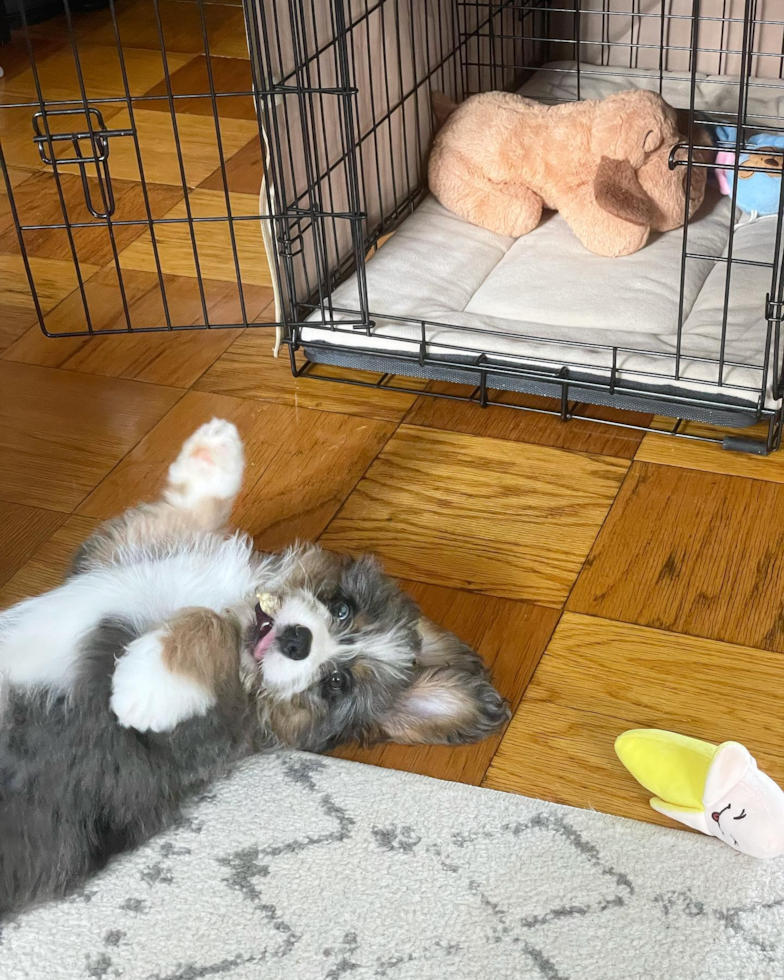
The first goal is simple: your Mini Bernedoodle should feel free to explore the crate and happy to return to it. Only after that should you begin changing the experience by closing the door or moving away. Each stage builds on the one before it, and your puppy's body language tells you when to move forward.
Step 1: Let Your Puppy Explore With the Door Open
Place the crate in its chosen spot and secure the door open so it cannot swing against your puppy. Scatter a few treats near the entrance, then just inside. Let your Mini Bernedoodle sniff, take a treat, and walk away if they want to. There is no need to put them inside or guide them by the collar.
Some puppies investigate immediately. Others need several sessions before all four paws cross the threshold. If your Mini Bernedoodle reaches in with their front paws and backs away, that's a reasonable first step. Reward their curiosity without pushing for more than they're comfortable offering.
Keep these early sessions short and repeat them at relaxed points throughout the day. You want the crate to feel like a familiar object that occasionally produces good surprises, not a place where something demanding always happens.
Step 2: Make Going In and Coming Out a Little Game
Once your Mini Bernedoodle happily enters the crate, toss a treat toward the back and let them walk in to collect it. Then toss another treat outside so they can come out again. Repeat a few times, allowing your puppy to choose each entry without closing the door.
This simple game teaches something important: going into the crate doesn't mean losing control of what happens next. Your puppy can enter, enjoy a reward, and leave. Many dogs gain confidence when they discover that the crate door won't suddenly close behind them.
As your puppy grows comfortable, pause for a moment while they're standing or sitting inside and quietly offer another treat there. You're beginning to reward staying in the space, not merely stepping across the entrance.
Step 3: Introduce Meals and Quiet Activities Inside
Meals can help your Mini Bernedoodle build a positive connection with the crate. If they're still hesitant, start with the food bowl near the entrance and move it farther inside over several meals. If they already enter happily, you can place the bowl or an appropriate food toy inside from the beginning.
Leave the door open while your puppy eats and explores. You might sit nearby reading or working so they learn that they can enjoy something quietly without needing constant interaction. A puppy who chooses to lie down after eating is showing you that the space is starting to feel comfortable.
This stage may take a few days, and that's perfectly reasonable. The time you spend building a positive association now can prevent difficulties when the door becomes part of the lesson.
Step 4: Close the Door for Just a Moment
When your Mini Bernedoodle enters readily and can relax with the door open, begin introducing brief closures. Give your puppy a familiar chew or several treats, gently close the door for a second or two while you're sitting beside the crate, and open it again before they become concerned. Repeat a few times with pauses between attempts.
The sound and movement of the door can be a separate challenge for some puppies. If yours startles when it clicks, practice moving the door slightly and rewarding calm behavior before closing it fully. There's no benefit in rushing past a detail your puppy finds worrying.
Build from a few seconds to slightly longer periods only when your Mini Bernedoodle looks comfortable. You can offer treats through the bars, speak softly if that helps, or simply remain nearby while they chew. Your puppy should be learning that a closed door is uneventful, not that they have to struggle until they're released.
Step 5: Practice Settling While You Stay Nearby
Once your puppy tolerates short door closures, choose a calm moment after a suitable play session and bathroom break. Invite them into the crate with a reward, close the door, and sit nearby while they enjoy a safe activity. Begin with an amount of time you already know they can manage, even if that's only a minute.
Over several sessions, gradually extend the quiet period. Watch whether your Mini Bernedoodle can shift position, lie down, or rest after finishing the treat. A puppy who only stays calm while food is continuously available may need more practice before you're ready to leave them for longer.
Keep your own behavior ordinary. You don't need to stare through the bars or celebrate every second of silence. Reading a few pages or answering an email nearby can help your puppy experience the crate as a normal part of household life.
Step 6: Begin Moving Away and Returning
Being comfortable in a crate and being comfortable without you nearby are different skills. Start by standing up, taking a step away, and returning while your Mini Bernedoodle stays relaxed. Then try moving across the room, sitting down again, or briefly stepping through a doorway.
At first, your departures may last only seconds. Return before your puppy becomes distressed and keep the reunion calm. As your Mini Bernedoodle succeeds, vary the distance and duration gradually. Don't add a long absence just because they managed one short attempt.
If you can, use a camera for the first sessions when you're fully out of sight. A puppy may seem quiet when you leave but spend the entire time standing rigidly near the door. Seeing whether they actually settle helps you judge progress much more accurately.
Step 7: Add a Crate Cue Once Your Puppy Understands the Routine
When your Mini Bernedoodle willingly goes into the crate, introduce a simple cue such as "crate," "bed," or "kennel." Say the word just before your puppy enters, then reward them inside. Over time, wait for them to respond to the cue before offering the treat.
Keep the cue associated with pleasant experiences. Sometimes ask your dog to enter, reward them, and release them again without closing the door. That variety helps prevent the cue from predicting a long period of confinement every single time.
The goal isn't an impressive trick. It's an easy, predictable way to guide your Mini Bernedoodle to a comfortable resting place when you need one.
A Realistic First-Week Crate Training Plan
It's tempting to search for a schedule that promises your Mini Bernedoodle will sleep peacefully in the crate after three days. Puppies don't work according to that kind of deadline. Some are comfortable almost immediately, while others need several days to accept even a brief door closure.
Use the following progression as a guide rather than a test your puppy must pass. Repeat a stage as many times as needed, and move back to an easier one if your Mini Bernedoodle becomes worried.
| Training stage | What to practice | A sign you're ready to progress |
| Exploring | Open-door sniffing, treats near and inside the crate | Puppy approaches and enters willingly |
| Enjoying the space | Short treat games, meals, or quiet chewing with door open | Puppy stays inside comfortably without being coaxed |
| Accepting the door | Gentle closures lasting a few seconds while you sit nearby | Puppy continues eating, resting, or exploring calmly |
| Settling nearby | Brief closed-door periods with you in the room | Puppy can relax even after finishing a treat |
| Handling movement | You stand, walk a few steps, and return | Puppy stays comfortable when you move around |
| Brief separations | You step out of sight and return before distress | Puppy can settle during short, ordinary absences |
A good session may last only a few minutes, especially at the beginning. Two or three relaxed practices spread through the day can be more productive than one long session that ends with a frightened puppy. Leave room for play, food, socialization, bathroom breaks, and plenty of sleep outside the crate as well.
Some Mini Bernedoodles will move through several stages quickly. Others may need a week or longer on the first few steps, particularly if they're adjusting to a new household or have already had an unpleasant experience with confinement. The pace is determined by your puppy's comfort, not the calendar.
How to Crate Train a Mini Bernedoodle at Night
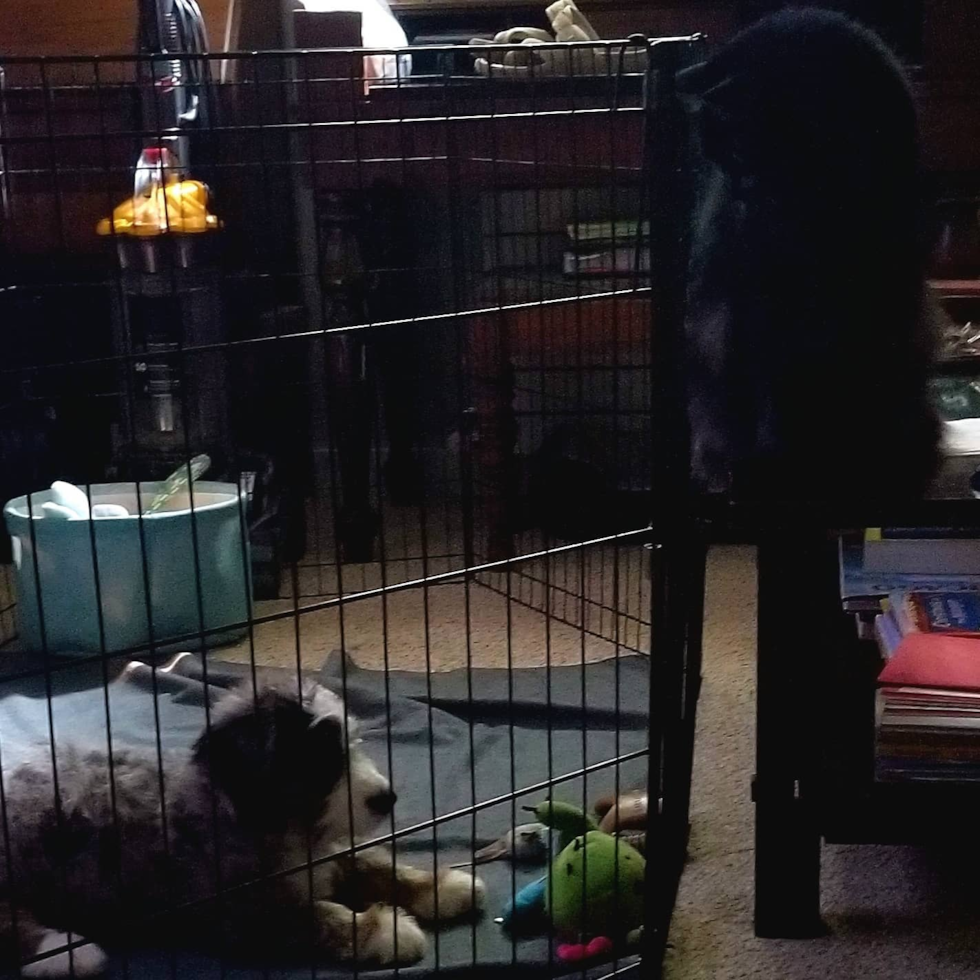
The first night home is emotionally different from an ordinary daytime training session. Your Mini Bernedoodle has left familiar surroundings, and the house becomes quieter just as the people they want to stay close to disappear into their bedrooms. A puppy who managed a few minutes of crate practice that afternoon may not be ready for hours behind a closed door overnight.
Keep the Sleeping Area Near You at First
Place the crate or another safe puppy sleeping area beside your bed or in the same room. Your Mini Bernedoodle can hear and smell you, and you're close enough to notice restlessness or a bathroom need. This arrangement doesn't spoil the puppy or mean they'll never learn to sleep elsewhere.
If your Mini Bernedoodle is already relaxed with the crate door closed, you may gradually use it for overnight sleep while responding to their needs. If they're still frightened by confinement, a puppy-safe pen with the crate door secured open can be a better starting point. You can continue daytime crate training and work toward closed-door sleeping when they're genuinely comfortable.
Build a Predictable Bedtime Routine
Give your puppy an opportunity for age-appropriate activity earlier in the evening, followed by a quieter period before bed. Offer a bathroom break immediately before settling and keep the sleeping area comfortable. A familiar routine helps your Mini Bernedoodle understand that evening activity is winding down.
Avoid trying to exhaust a puppy until they collapse into the crate. An overtired Mini Bernedoodle can be restless, mouthy, and less able to settle. Gentle predictability is more useful than turning bedtime into the final round of an energetic game.
What if Your Mini Bernedoodle Cries the First Night?
Start by considering what the puppy needs. They may be uncertain in a new home, uncomfortable with a closed door, lonely, or ready for a bathroom break. Check whether the sleeping arrangement is appropriate and stay close enough to reassure them without making the night exciting.
If your Mini Bernedoodle settles when you sit nearby, that tells you your presence is helping. You can maintain that support while gradually building their confidence during daytime sessions. If they panic behind the closed door, use a safer, more comfortable arrangement for the night instead of insisting they stay confined until morning.
Some puppies make a brief complaint, shift around, and then settle. Others cry continuously, pant, scratch frantically, or try to escape. Those situations shouldn't be treated as equivalent, and a fixed rule to ignore every cry for a certain number of minutes can miss a genuine need or distress.
Nighttime Bathroom Breaks and Returning to Sleep
Young puppies may need to go outside during the night because their bladder and bowel control is still developing. If your Mini Bernedoodle wakes after resting and seems restless, offer a calm bathroom trip. Keep the lights low, avoid play, and return them to their sleeping area afterward.
The detailed timing and age-based potty schedule belong in our separate Mini Bernedoodle potty training guide. For crate training, the important point is that the crate should never be used to make a puppy hold their bladder beyond their ability. A puppy who repeatedly soils their sleeping space may need a different schedule, a more suitable setup, or veterinary advice.
Moving the Crate to Another Room Later
If you'd prefer your Mini Bernedoodle to sleep in a separate room eventually, wait until they're comfortable resting and can manage appropriate periods without you in sight. Move the crate gradually or practice short daytime rest sessions in the new location. A sudden switch from sleeping beside your bed to sleeping alone at the other end of the house can be a bigger change than owners expect.
Some families decide to keep the crate in the bedroom permanently, and others move it once their dog is settled. Both can work. The right arrangement is one that supports your Mini Bernedoodle's comfort and fits the household's routine.
RELATED: Are Mini Bernedoodles Aggressive? What Owners and Experts Say
How Long Can a Mini Bernedoodle Stay in a Crate?
This is one of the most important questions because comfort with the crate and the ability to stay inside for a particular length of time are separate things. A puppy may happily nap in a crate for an hour but become restless after fifteen minutes when they're wide awake. Physical needs, age, training progress, and emotional comfort all affect how long confinement is appropriate.
A Young Puppy's Limits
An eight- or ten-week-old Mini Bernedoodle needs frequent bathroom opportunities, movement, meals, interaction, and rest. Short, successful crate sessions are an excellent starting point, but an entire morning shut inside is generally unrealistic. Puppies under six months should not be expected to tolerate long uninterrupted daytime confinement, and a commonly cited upper limit of three to four hours is not an appropriate goal for every young puppy.
The correct interval may be considerably shorter, particularly for a newly arrived puppy or one who hasn't finished learning the crate routine. Don't confuse how long a puppy might physically hold their bladder while asleep with how long they should stay confined while awake. A dog can have enough bladder control and still be unhappy, bored, or distressed in the crate.
Daytime Crate Time Versus Overnight Sleep
Nighttime sleep and daytime confinement shouldn't be added up as if they make the same demands on a puppy. A Mini Bernedoodle who rests comfortably through a longer stretch at night still needs movement, social interaction, and regular breaks during the day. Spending most of both day and night confined leaves too little time for normal puppy life.
Use the crate for selected periods when it helps your puppy rest safely, and provide plenty of time outside for appropriate play, exercise, training, and companionship. As your Mini Bernedoodle grows, you can gradually build the ability to settle during longer periods without making the crate their main living space.
What if You Work Full Time?
A young Mini Bernedoodle shouldn't spend an entire workday alone in a closed crate. If you need to leave for several hours, arrange help from a trusted family member or caregiver, or use a suitable puppy-proofed area that offers space, water, and an appropriate toileting arrangement. The exact plan depends on your puppy's age, comfort, and needs.
Be realistic about the first few weeks. You may need time off, a flexible schedule, or extra help while your Mini Bernedoodle adjusts to your home and learns brief periods of independence. Crate training can support that process, but it cannot replace someone meeting the puppy's physical and social needs.
What to Do When Your Mini Bernedoodle Whines or Barks in the Crate

Whining is one of the most common concerns during Mini Bernedoodle crate training, and it's also one of the easiest behaviors to misunderstand. A little vocal frustration may sound similar to distress at first, but the puppy's overall behavior tells you much more than the noise alone.
Normal Adjustment or Genuine Distress?
A puppy who gives a brief whimper, changes position, takes a treat, and settles may be adjusting to a new routine. You can quietly observe for a moment to see whether they're able to relax. If brief complaints are a recurring pattern, make the next practice easier and reward calm behavior before frustration builds.
Persistent barking, frantic scratching, repeated escape attempts, heavy panting when the room isn't hot, drooling, trembling, or an inability to settle may signal significant distress. A Mini Bernedoodle who cannot eat a favorite treat or who hurts themselves trying to escape needs a different approach. End the confinement safely and consult your veterinarian or a qualified behavior professional before attempting further closed-door sessions.
Don't assume that silence always means success. Some frightened dogs stop vocalizing but continue standing rigidly or watching the door without resting. Look for loose body language, normal movement, and the ability to relax after an activity ends.
Should You Let Your Mini Bernedoodle Cry It Out?
Leaving a genuinely distressed puppy to cry until they are exhausted isn't a good crate training plan. Repeated panic can strengthen a negative association with the crate, and a puppy may hurt themselves trying to get out. A gradual, reward-based approach is safer and gives you a better chance of building lasting comfort.
That doesn't mean you must rush to open the door whenever your Mini Bernedoodle makes a sound. If the puppy is safe, has had their needs met, and makes a brief, non-escalating complaint before settling, you can allow a moment for them to relax. The important distinction is whether the dog is coping comfortably or becoming increasingly upset.
If you repeatedly reach the point where your puppy is barking or crying intensely, the training has moved too fast. Return to open-door activities or much shorter closed-door periods, and practice when your Mini Bernedoodle is calm. Protecting the puppy's sense of safety is more useful than winning a contest of endurance.
Use a Camera to Check What Happens When You Leave
Your puppy's behavior may change the moment you step out of sight. A small camera can show whether they lie down after a minute, spend the entire time pacing, or begin to panic as soon as the door closes behind you. This is particularly useful before you extend the duration of real absences.
Use what you see to adjust the next session. If your Mini Bernedoodle finishes a food toy and then becomes anxious, shorten the absence so you return before that point. If they stay relaxed and rest, you may be ready for a slightly longer practice, provided their physical needs are met.
RELATED: Are Mini Bernedoodles Good Family Dogs? What Life Really Looks Like
Crate Training and Separation Anxiety Are Different Issues
A Mini Bernedoodle can enjoy their crate while you're sitting nearby and still feel distressed when left alone. Another dog may relax in a puppy-proofed room but panic when confined behind a crate door, even with you in the house. Those are different problems, and the solution depends on what is actually upsetting the dog.
Separation-related distress may involve persistent barking or howling after you leave, pacing, drooling, destructive escape attempts, or an inability to settle. Confinement distress can look similar, but it may happen specifically because the dog feels trapped. A crate doesn't automatically prevent either issue, and for some dogs it can make the situation worse.
If your Mini Bernedoodle shows strong distress when left alone or confined, don't simply extend the time and hope they adjust. Use a comfortable alternative while you seek guidance from your veterinarian or a qualified reward-based behavior professional. A tailored plan may involve helping your dog feel safe during very short separations before introducing longer periods.
For puppies who are comfortable, crate practice can be one small part of learning independence. Give your Mini Bernedoodle safe opportunities to rest while you do ordinary household tasks, including some practice with the door open and you nearby. The broader work of teaching alone-time skills deserves patience beyond the crate itself.
How to Make the Crate Part of Everyday Life
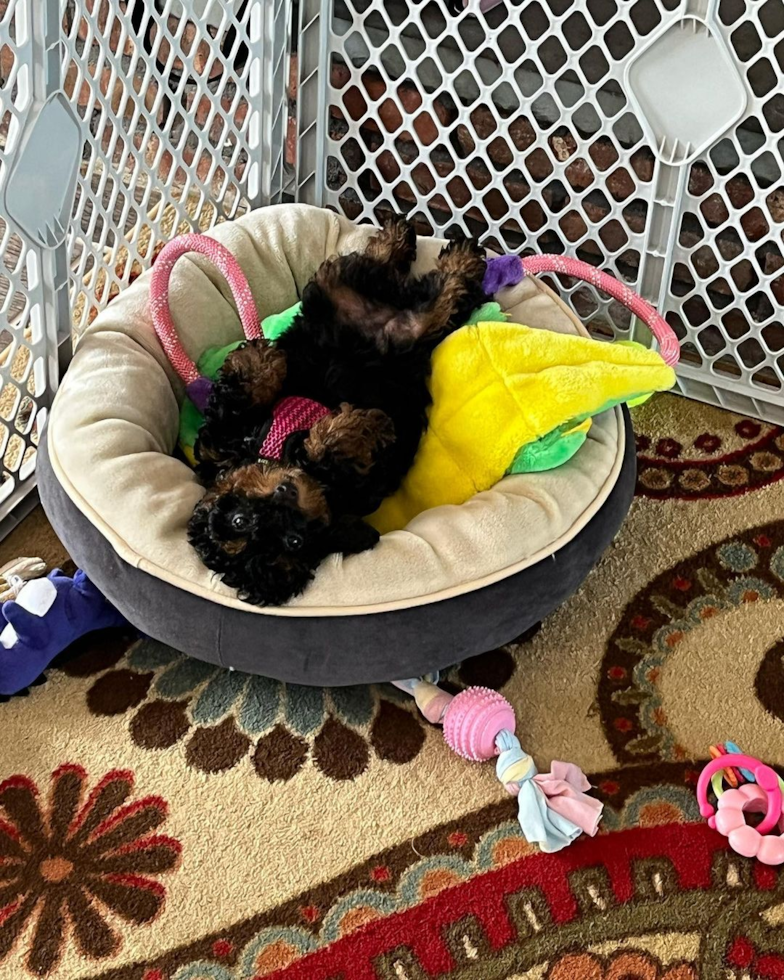
Successful crate training is easier when the crate appears in your Mini Bernedoodle's routine at calm, predictable times. If the only time your puppy enters is when everyone leaves the house, the crate may begin to predict an event they find difficult. Positive experiences while the family is home help create a more balanced association.
Use the Crate for Rest, Not Punishment
After an age-appropriate play session and bathroom break, offer your puppy a quiet opportunity to settle. Some Mini Bernedoodles will walk into their crate voluntarily when they're tired. Others may prefer a nearby bed at first and gradually learn to enjoy resting inside the crate.
Never send your Mini Bernedoodle to the crate as a punishment for jumping, barking, chewing, or having a potty accident. If the crate predicts anger or isolation, it becomes harder for your puppy to trust the space. Instead, manage the situation calmly and use the crate only when your dog has been taught to feel comfortable there.
Make the Crate a Protected Quiet Space
Children and visitors should understand that a resting puppy isn't available for attention. Don't let anyone poke fingers through the bars, tap on the crate, or pull a Mini Bernedoodle out to play. If the puppy chooses to retreat there with the door open, respect that choice.
This can be especially helpful in a lively household. A Mini Bernedoodle who enjoys being involved in everything may need opportunities to rest without having to decide whether to join another game. A quiet space is useful only if the family actually allows it to stay quiet.
Balance Crate Time With Normal Puppy Activity
Mini Bernedoodles need social contact, play, appropriate exercise, enrichment, and time to explore their homes. The crate supports those activities by providing occasional rest and safe management; it shouldn't replace them. A puppy who has been confined for too much of the day may have unused energy and struggle to settle when the door closes again.
Build crate sessions around a balanced routine instead of trying to fill the day with confinement. Your Mini Bernedoodle should have plenty of opportunities to interact with you and enjoy ordinary family life outside their resting area.
What if Your Mini Bernedoodle Refuses to Enter the Crate?
A puppy who refuses to go inside may be unsure about the floor texture, the sound of the crate, the location, or a previous experience with the door closing. Don't assume the puppy is being difficult. A refusal is a useful sign that you need to make the introduction easier.
Start with the crate door secured open and reward any calm interest in the area. If your Mini Bernedoodle won't approach the entrance, place treats a little farther away and let them work closer over several sessions. Some dogs prefer a mat placed partly inside the crate, while others need a quieter location with less activity around them.
If your puppy was previously forced into the crate or left there while distressed, rebuilding trust may take longer. Keep early practices entirely voluntary and avoid closing the door until your Mini Bernedoodle can rest inside comfortably. If the fear is strong or doesn't improve, ask a qualified trainer or veterinary behavior professional for help.
For some dogs, a pen or puppy-proofed room is simply a better arrangement. Choosing an alternative that supports your dog's comfort is a sensible decision, not a failure of training.
RELATED: Are Mini Bernedoodles High Energy? An Honest Look at Daily Life
Common Mini Bernedoodle Crate Training Mistakes
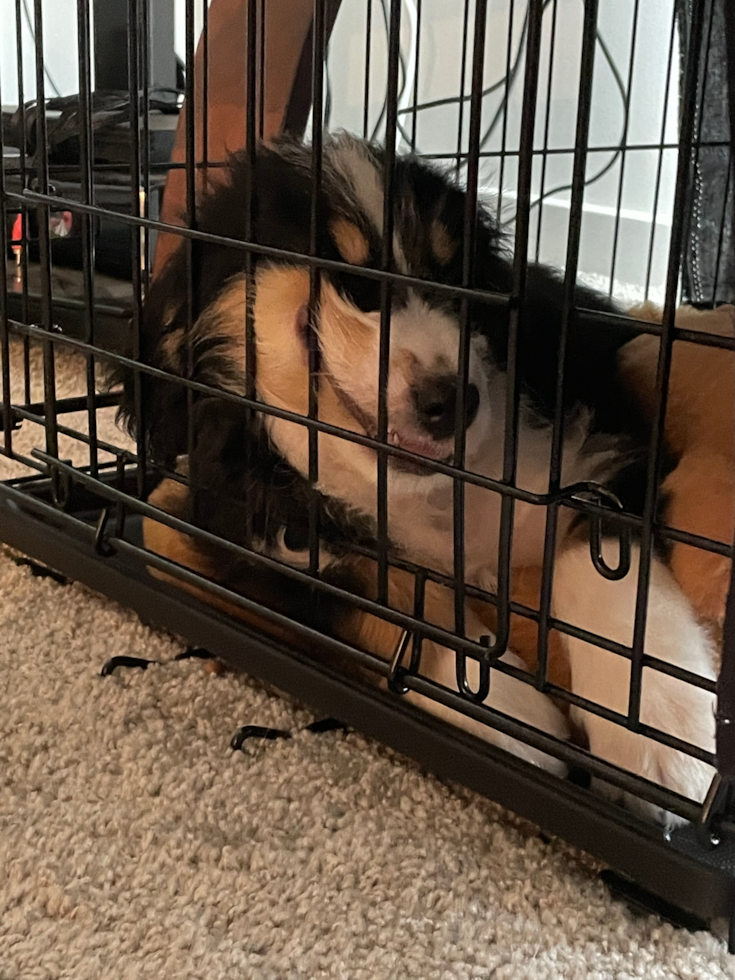
Crate training problems generally develop when the demands become larger than the puppy is ready to handle. The crate may have been introduced too quickly, used for too many hours, or linked mainly to the family's departures. Knowing those patterns makes them easier to prevent.
Closing the Door Too Soon
A puppy who steps into the crate to grab a treat hasn't necessarily agreed to stay there. Closing the door immediately can teach your Mini Bernedoodle to hesitate at the entrance next time. Build a history of pleasant, voluntary visits before introducing even a brief closure.
Increasing the Time Too Quickly
One good five-minute session doesn't guarantee your puppy will manage thirty minutes the next day. Extend the duration in small steps, and include easy sessions even after progress. If your Mini Bernedoodle shows signs of discomfort, return to the last length of time they handled calmly.
Only Using the Crate When You Leave
If the crate always predicts several hours without company, your Mini Bernedoodle may begin worrying as soon as you approach it. Practice pleasant crate time while you're nearby, including short open-door rests and brief closed-door sessions. The crate should have a place in ordinary home life, not only in your departure routine.
Using Confinement to Solve Every Problem
A crate can stop a puppy from reaching a shoe or wandering into an unsafe room, but it doesn't teach them what to chew or how to settle around household activity. Those skills need separate training and appropriate management. Relying on long periods of confinement can create new frustration instead of resolving the original concern.
Ignoring Signs of Distress
Some puppies need only a slower introduction. Others are genuinely distressed by confinement or separation, and pushing forward may make that fear stronger. If your Mini Bernedoodle is panicking, injuring themselves, or repeatedly unable to settle, stop the closed-door training and seek professional guidance.
Why a Mini Bernedoodle Might Have Accidents in the Crate
Puppies don't always have the physical control to stay dry for the amount of time an owner expects. A Mini Bernedoodle may also have been confined too long, given an unsuitable sleeping arrangement, or become so distressed that elimination occurs. Repeated accidents are a sign that something about the setup or schedule needs attention.
Review whether your puppy has enough bathroom opportunities before and after crate time. Check that the space is comfortable and that your Mini Bernedoodle can rest without becoming trapped or frightened. If the puppy is repeatedly soiling the crate, avoid punishment and consider a different temporary setup while you investigate the cause.
Medical issues can also affect bladder or bowel control. Contact your veterinarian if crate accidents are frequent, appear suddenly, or come with diarrhea, straining, increased thirst, pain, or other unusual symptoms.
Can You Crate Train an Older Mini Bernedoodle?
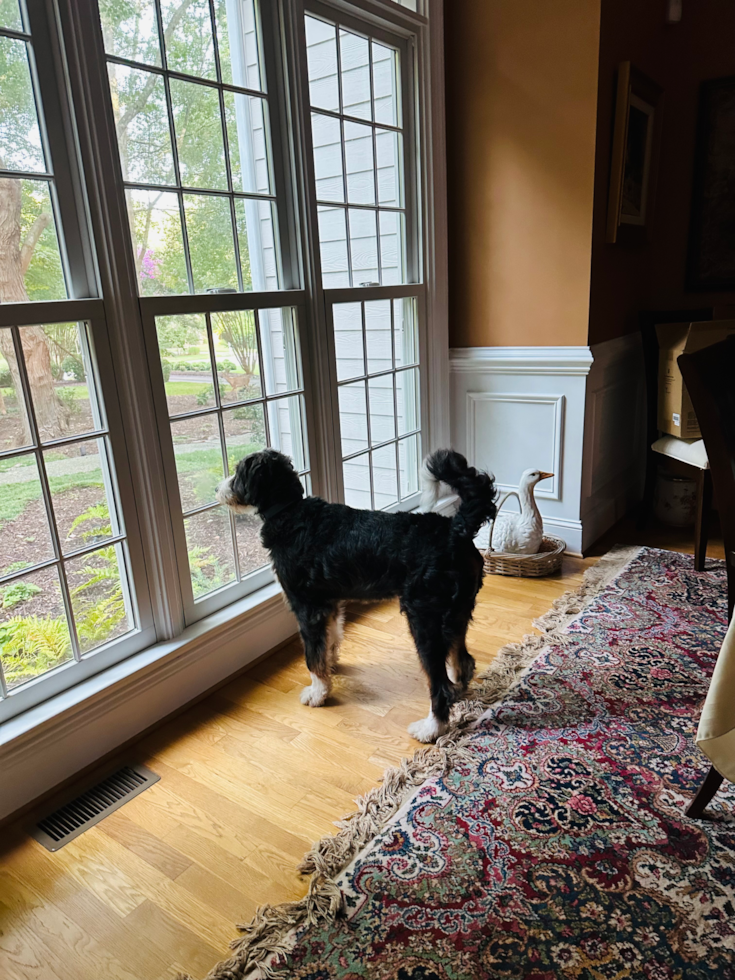
Yes. An adolescent or adult Mini Bernedoodle can learn to enter and rest in a crate, even if they never used one as a puppy. Older dogs may understand reward games quickly, but they can also bring established preferences or previous experiences with confinement. A dog who has spent years sleeping freely in a bedroom may need time to adjust to a closed door.
Begin with open-door exploration, meals, and voluntary rests just as you would with a puppy. Avoid assuming an older dog can handle a long session merely because they have mature bladder control. Emotional comfort with confinement is learned separately from the physical ability to wait.
If your Mini Bernedoodle has a history of panic or injury in a crate, don't attempt to force them through a new training schedule. A veterinarian or qualified behavior professional can help assess whether gradual crate training is appropriate or whether a safe room or pen would be better.
How Do You Know Crate Training Is Working?
The clearest sign is willingness. Your Mini Bernedoodle approaches the crate without hesitation, enters when invited, and can rest comfortably inside. They may choose to nap there with the door open or settle after finishing a treat when you're sitting nearby.
As training progresses, your puppy should also be able to handle the door closing and normal movement around the house without escalating worry. They might glance up when you walk away, then return to resting. That relaxed response is a much better measure than the number of minutes you managed to keep the door closed.
Progress may not be perfectly steady. A new environment, a particularly active day, or a stage of greater sensitivity can temporarily make confinement harder. Adjust the session to your Mini Bernedoodle's needs and keep building from experiences they can handle well.
RELATED: Mini Bernedoodle Pros and Cons
When Can You Stop Using the Crate?

Some owners keep the crate available throughout their dog's life because their Mini Bernedoodle enjoys using it as a quiet resting spot. Others gradually give their dog access to a larger puppy-proofed area once house training is reliable and the dog can rest safely without supervision. Both approaches can work.
If you're reducing crate use, begin with short periods in a safe room and see how your Mini Bernedoodle handles the extra freedom. Extend access gradually as they demonstrate that they're comfortable and can make safe choices. There's no need to rush from crate time to full access to the entire house.
Even if you stop closing the door regularly, keeping positive associations with the crate can be worthwhile. Your dog may need appropriate confinement during travel or veterinary care someday, and familiarity can make those situations less stressful.
Final Thoughts on Crate Training a Mini Bernedoodle
The best way to crate train a Mini Bernedoodle is to begin with the part your puppy can enjoy. Let them explore, reward voluntary visits, introduce the door gently, and build up quiet time in steps that match their comfort. A crate that feels safe to your puppy is much more useful than one they enter only because they have no choice.
There will be moments when progress seems slow, particularly during the first nights or when you begin stepping out of sight. Pay attention to what your Mini Bernedoodle is telling you, respond to genuine needs, and make the next lesson easier when necessary. Comfort is something you build together, not something a puppy learns from being left to panic.
Eventually, you may notice your Mini Bernedoodle wandering into the crate after a busy morning, turning in a small circle, and settling down without being asked. That quiet choice is a lovely sign of progress. It means the crate has found its place in your dog's world as somewhere they can genuinely relax.
Elena R.
About The Author
Elena is a leading expert in the field of dog behavior, care, and training, with over a decade of experience in writing about dogs. As a published writer and lifelong dog enthusiast, Elena currently shares her home with three beloved canine companions. She is dedicated to staying up to date on the latest advancements in dog care and training, ensuring that her articles provide readers with accurate and valuable insights. With her extensive knowledge and passion for all things canine, Elena's contributions to the Premier Pups community offer both expertise and authority on a wide range of dog-related topics.
What To Read Next

Do Mini Bernedoodles Bark a Lot? What’s Normal and What’s Not
Do Mini Bernedoodles bark a lot? Most don’t. But they are definitely not silent dogs either. Mini Bernedoodles fall somewhere in the middle. They bark when something feels important to them, whether that’s a knock at the door, excitement, frustration,... Read More

Are Mini Bernedoodles Aggressive? What Owners and Experts Say
Mini Bernedoodles have a reputation that precedes them. Fluffy, affectionate, deeply people-oriented — the kind of dog that greets every visitor like a long-lost friend and considers your lap a permanent reservation.
Mini bernedoodles are not an aggressive... Read More
Frequently Asked Questions
At what age should I start crate training my Mini Bernedoodle? You can begin a gentle introduction as soon as your Mini Bernedoodle comes home, commonly around eight weeks of age. Start with the crate door open, allow voluntary exploration, and use rewards to create a pleasant association. Closing the door and longer sessions can wait until your puppy is comfortable.
How long does it take to crate train a Mini Bernedoodle? Some Mini Bernedoodles accept the crate within several days, while others need weeks of gradual practice. Progress depends on temperament, prior experiences, and how comfortably the puppy handles each stage. A relaxed dog is a better measure of success than meeting a specific deadline.
Should my Mini Bernedoodle sleep in a crate the first night? Only if the puppy is comfortable enough with the crate and the arrangement meets their needs. Many puppies benefit from sleeping near their owners initially, and a pen with an open crate may be more suitable when closed-door training is still new. Avoid forcing a frightened puppy to stay confined all night.
Why does my Mini Bernedoodle cry in the crate? Your puppy may need a bathroom break, feel uncertain about confinement, dislike being separated from you, or simply be adjusting to a new routine. Watch their full behavior rather than judging the sound alone. Persistent or escalating distress means the training needs to be adjusted and may require professional guidance.
Should I ignore my Mini Bernedoodle crying in the crate? A brief, non-escalating whimper may settle on its own, but prolonged crying, frantic scratching, panting, or escape attempts shouldn't be ignored. Check for physical needs and make the next practice easier. Never punish your puppy for vocalizing or leave them to panic in the crate.
How long can an eight-week-old Mini Bernedoodle stay in a crate? Begin with very short, positive sessions measured in seconds or minutes, then gradually extend them as your puppy relaxes. An eight-week-old puppy also needs frequent bathroom breaks, meals, movement, and company, so long daytime confinement is inappropriate. Let the puppy's comfort and physical needs determine the duration.
Where should I put my Mini Bernedoodle's crate at night? Near your bed or in the same room is a good starting point for many young puppies. Being close helps them adjust to their new home and allows you to notice nighttime bathroom needs. If you prefer a different sleeping location later, make the change gradually once the puppy is comfortable.
What size crate should I buy for a Mini Bernedoodle? Choose a crate that lets your dog stand naturally, turn around, sit, and lie down fully stretched. Mini Bernedoodles vary in size, so use the individual dog's measurements rather than relying on a single breed-size label. A secure adjustable divider can help accommodate growth without making the space cramped.
Can crate training help potty train a Mini Bernedoodle? A comfortable crate can help you supervise and manage a puppy's routine, but it doesn't teach the bathroom habit on its own. Your Mini Bernedoodle still needs frequent chances to eliminate in the correct place and immediate rewards for doing so. Never use the crate to make a puppy wait longer than they can comfortably manage.
Can a Mini Bernedoodle have separation anxiety even if they're crate trained? Yes. Comfort in a crate and comfort being left alone are different skills. Some dogs settle in a crate while their owner is present but become distressed during separation, and confinement can worsen anxiety in certain dogs. Consult your veterinarian or a qualified behavior professional if your Mini Bernedoodle shows persistent separation distress.
What if my Mini Bernedoodle hates the crate? Return to voluntary, open-door exploration and reward calm interest without forcing entry. Check whether the crate size, floor surface, location, or previous experiences are making the space uncomfortable. If fear continues, a safe pen or puppy-proofed room may be a better option while you seek professional guidance.
Do Mini Bernedoodles need crates as adults? Not necessarily. Some adult Mini Bernedoodles enjoy a crate as a quiet resting place, while others do well in a safe room or with appropriate freedom around the house. Keeping crate skills familiar can still help with travel or veterinary care, even when you rarely close the door at home.