





Published Friday, January 16, 2026 by Elena R. in Popular Dogs, New Puppy
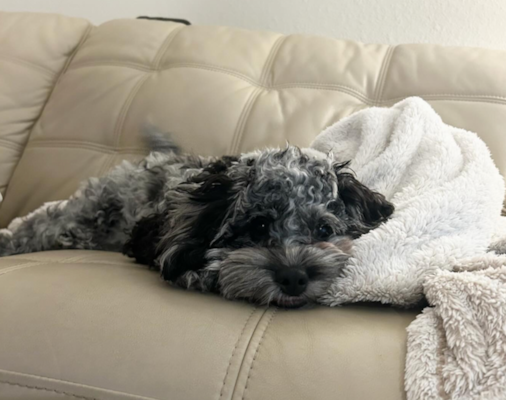
If you’ve spent time around Cockapoos, you know how much variety there is in their coats. You’ll see creams, reds, blacks, and every mix in between. Then, once in a while, one stands out, a dog with a coat that looks patterned rather than solid. That’s a merle Cockapoo.
The first thing you notice isn’t just the color. It’s the uneven mix with lighter and darker shades sitting side by side. Sometimes the contrast is strong, sometimes it’s faint, but it always looks different from the usual Cockapoo coat. It’s the kind of pattern that makes people stop and ask what they’re seeing.
When someone points to one and says, “That’s a blue merle,” or “That’s a chocolate merle,” they’re not naming a new type of Cockapoo, but describing the base color beneath the pattern. Blue merle coats lean cooler, often with gray or silver tones mixed into black. Chocolate merles carry warmer, softer browns. Both are variations of the same pattern.
People who know Cockapoos well will tell you the pattern doesn’t change who the dog is. The temperament, energy, and personality are exactly what you’d expect from the breed - friendly, easygoing, and people-focused. What changes is the coat: how it looks in person, how it feels under your hand, and how no two ever look quite alike.
That’s what draws people to merle Cockapoos. Not rarity, not trend, just the look. The next sections break down what this pattern actually is, how it appears on the coat, and what to expect if you live with one.
Table of Contents
- What a Merle Cockapoo Is
- Merle Cockapoo Appearance
- Blue Merle Cockapoo
- Chocolate Merle Cockapoo
- How the Merle Pattern Appears in Cockapoos
- How Rare Is a Merle Cockapoo
- Merle Cockapoo Color Changes Over Time
- Merle Cockapoo Temperament and Personality
- Care Considerations for a Merle Cockapoo Coat
- Responsible Breeding and the Merle Pattern
- Merle Cockapoo vs Other Cockapoo Color Variations
- Merle Cockapoo Cost
- Is a Merle Cockapoo Right for You
- Conclusion
What a Merle Cockapoo Is
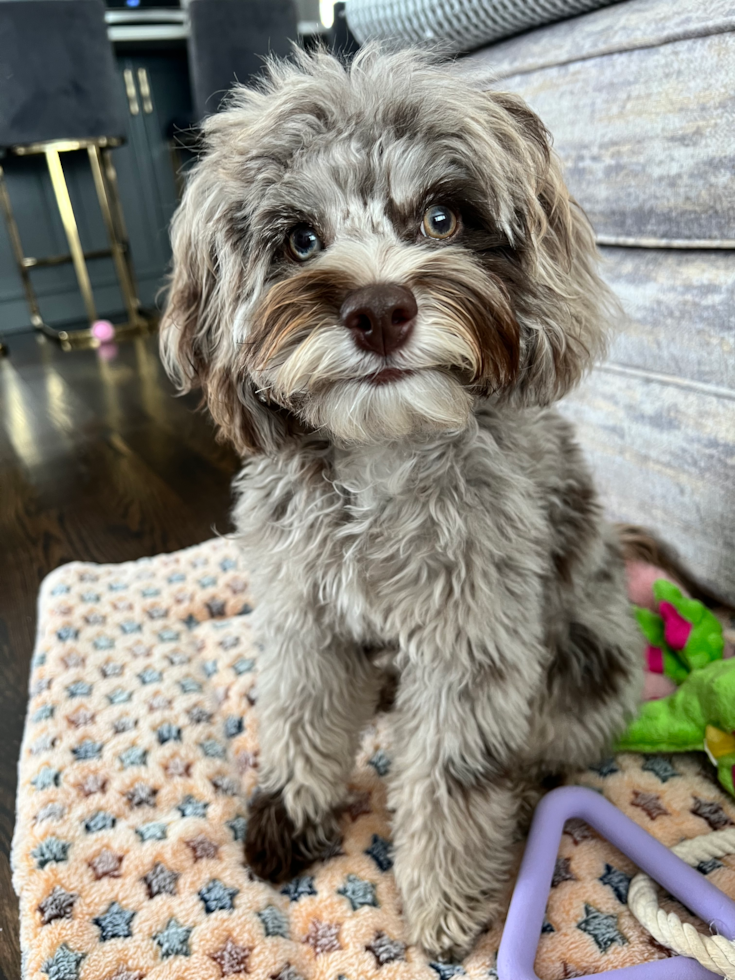
A merle Cockapoo is simply a Cockapoo whose coat carries a pattern of lighter and darker shades across its base color. It isn’t a separate variety or designer twist. It’s a color expression that shows when the merle gene is present. The dog itself is still a Cockapoo through and through: same size range, same coat texture, same easygoing nature.
You notice the difference right away when you’ve been around enough Cockapoos. Most coats are solid or have small patches of white or tan. The merle pattern looks different. It's not patchy like a parti coat, but marbled, where colors blend softly into each other. Each strand carries a little variation, so the effect stays consistent no matter how the light hits.
The merle pattern doesn’t change the coat’s texture. A merle Cockapoo can have a loose wave, a tight curl, or something in between, just like any other Cockapoo. The difference is visual, not structural. The same grooming habits, brushing routines, and trims apply. What changes is that the pattern gives the coat more dimension, especially when it’s freshly groomed or when the curls start to loosen with age.
The pattern can appear on any part of the body, but it often shows most clearly on the back, shoulders, and sides of the face. You might see faint dappling along the legs or a few lighter streaks running through the tail. Eyes can vary too. Some merle Cockapoos have one blue or partially blue eye, while others have the typical brown. It’s unpredictable, and that’s part of what makes this color so distinctive.
People sometimes assume that “merle” means rare, but that isn’t quite right. It’s less common than the solid shades like apricot or black, yes, but it’s not an exclusive line or a special type. It’s just one of the many ways colors can appear in a Cockapoo’s coat, and one that tends to catch your eye a little faster.
RELATED: Cockapoo Breed Information – Everything you need to know about Cockapoos
Merle Cockapoo Appearance
When you first see a merle Cockapoo in person, the pattern can be hard to describe. It’s not spotted like a Dalmatian, and it’s not divided the way a parti Cockapoo is. The color looks more blended with soft areas of contrast that move across the body in a way that feels natural. Depending on the dog, the pattern can look bold and clear or muted and smoky. Either way, it’s unmistakable once you’ve seen it up close.
The merle pattern usually spreads across the body, face, and legs, but not in any predictable way. One dog might have a darker saddle over the back with lighter shading on the sides. Another might show small flecks all through the coat. Sometimes the pattern wraps around the eyes or frames the muzzle. No two coats follow the same layout, which is why merle Cockapoos tend to stand out even in a group of mixed colors.
Lighting changes how the pattern looks more than most people expect. Indoors, the colors blend together and look softer. In natural light, the contrast comes through with darker areas deepening, and the lighter parts pick up a bit of shine. It’s one of those coats that shows better in person than in photos. Cameras flatten the texture and lose the subtle variation you can see with your eyes.
Because Cockapoos can have different coat textures, the same merle pattern can look completely different from one dog to another. On a wavier coat, the color transitions appear smoother. On a curlier coat, the shifts feel tighter, almost pixel-like. Both are normal. It just depends on which parent’s coat the puppy takes after. Either way, the merle Cockapoo appearance always has that layered depth that makes it easy to recognize.
Merle Cockapoo Coat and Pattern
The merle Cockapoo coat feels no different from other Cockapoos. It’s soft, dense, and a little springy when you press your hand into it. What makes it distinct is how the color sits on that texture. The mottling doesn’t stay flat; it weaves through the curls and waves, so the coat looks slightly different from every angle. When freshly trimmed, the color edges look sharper. As the coat grows, the pattern softens again.
You can usually tell a merle pattern by the uneven edges between light and dark. The transition isn’t clean; it blurs, like a fade instead of a border. That’s why people describe it as “marbled.” The colors mix in a natural way, never perfectly even. You might see a small patch of pure base color on one shoulder or a streak of lighter hair down a leg. These small details are what make every merle Cockapoo unique.
In many merle Cockapoos, the pattern runs deepest on the back and shoulders, then breaks up slightly toward the chest and legs. The face can carry more contrast, sometimes a half-shaded muzzle, or a light mark near one eye. You notice these differences most when you’ve seen several together. Each one has its own version of the pattern, but they all share that same broken, layered color.
For owners, what matters is that the pattern doesn’t affect how the coat behaves. It still grows, curls, and mats the same way as any other Cockapoo coat. Regular brushing, trimming, and grooming routines don’t change. What you get is a coat that just happens to be more visually complex, one that catches the eye, especially once you know what to look for.
RELATED: Top 12 Pros and Cons of Owning a Cockapoo
Blue Merle Cockapoo
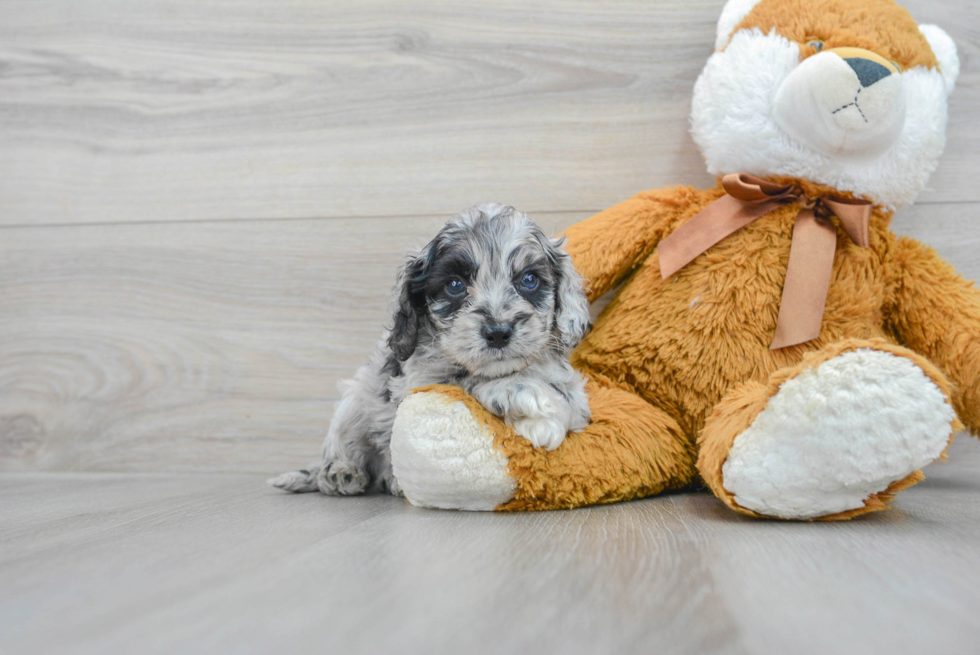
The blue merle Cockapoo is usually the first version people see when they search for merle patterns. Despite the name, the coat isn’t truly blue. The term “blue” in this case refers to the cool gray tones that appear when black pigment is broken up by the merle pattern. It’s a soft, steel-gray color mixed with patches of darker black, often layered over a lighter base. Up close, it looks almost smoky like a black coat that’s been gently dusted with silver.
Blue merle Cockapoos can vary a lot in appearance. Some have bold contrast, with deep black patches next to very light gray. Others have a smoother blend where the differences are more subtle. The lighter parts can lean toward silver or even a faint bluish tint depending on lighting, which is likely how the name stuck. When the coat catches the sun, the mix of tones gives a textured, dimensional look you can’treally capture in a photo.
The pattern doesn’t stop at the body. Many blue merle Cockapoos have facial markings that draw attention: a light patch around one eye, a shaded muzzle, or small streaks above the eyes that make their expression look sharper. Eyes can also be different shades; some blue merles have one or both eyes that are blue or partly blue, while others have classic brown. It’s one of those unpredictable traits that adds to the individuality of each dog.
Even with all that variation, there’s a recognizable “feel” to blue merles. They carry a cooler tone overall, more grayscale, and less warmth. When you see one next to a chocolate merle, the difference is clear right away. The blue merle looks crisp and silvery, while the chocolate version feels softer and richer. Both draw attention, but for different reasons.
Chocolate Merle Cockapoo
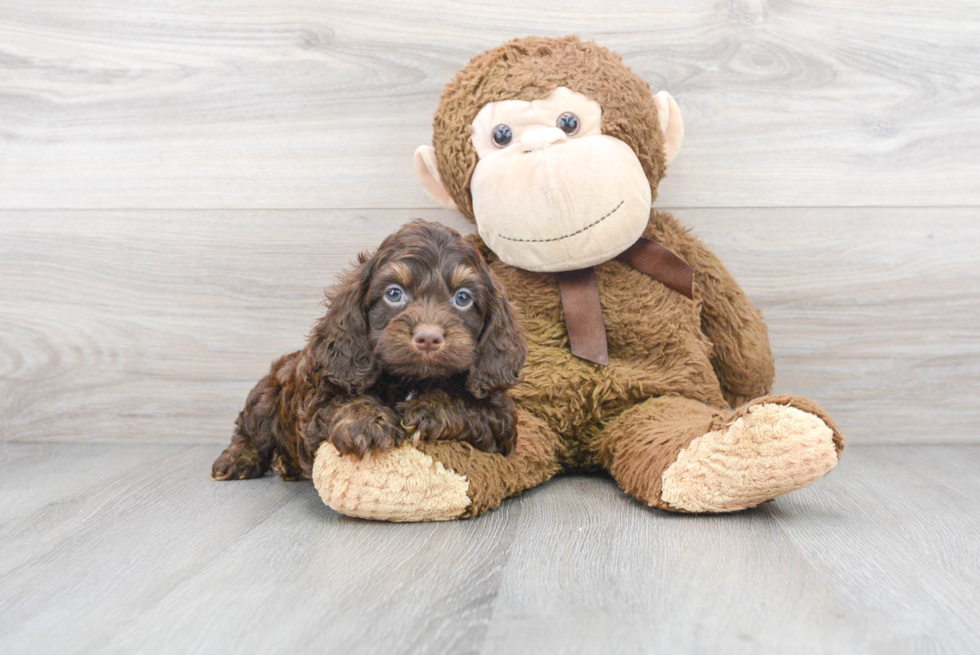
The chocolate merle Cockapoo is easy to recognize once you’ve seen a few blue merles. Where the blue carries cooler, silvery tones, the chocolate merle looks warmer and softer. The base color ranges from light milk chocolate to a deeper coffee brown, with lighter patches that can look beige, tan, or even creamy gold. It’s a more mellow mix (less contrast, more warmth) but still unmistakably merle.
What people usually notice first is how natural the color looks. The lighter areas don’t jump out as much as they do on a blue merle. They blend more gently into the coat, especially in wavy or loose curls. In some lights, the pattern looks almost velvety, as if the darker and lighter browns are sitting in thin layers instead of sharp sections. It’s the kind of color that changes quietly depending on the setting: soft indoors, richer outside.
Chocolate merle Cockapoos often have lighter highlights around the muzzle, chest, and legs. These areas can give the impression of depth and shape, especially when the coat grows out between trims. Around the eyes, you might see a slightly darker halo, which makes the dog’s expression more pronounced. It’s subtle but noticeable once you know to look for it. Some also carry small cream or tan accents inherited from their poodle parent.
How the Merle Pattern Appears in Cockapoos
The merle pattern shows up when a Cockapoo inherits a specific gene that affects how pigment spreads in the coat. It doesn’t change the texture or quality of the hair, just how the color settles across it. Where solid coats have an even layer of pigment, a merle coat has places where the color lightens or fades, creating that mottled, mixed look people recognize right away.
In Cockapoos, this pattern can come through in a few different ways depending on the base color and coat type. On darker coats like black or chocolate, the pattern looks more dramatic - clear light and dark contrast. On lighter bases like cream or red, the difference can be much softer, sometimes barely visible until you see the dog in person. Either way, the pattern follows no set layout. It can show up in large sections, small patches, or subtle flecks spread through the coat.
Because Cockapoos inherit traits from both the Cocker Spaniel and Poodle breeds, the merle effect can vary quite a bit. Some carry the more defined mottling common in Cocker lines; others show a smoother, cloud-like pattern closer to the Poodle side. It’s one of the few coat traits that feels unpredictable. Two merle Cockapoos from the same litter might look completely different, even when their base color is identical.
When breeders talk about merle, responsible ones pay close attention to how it’s passed on. Breeding two merle-patterned dogs together can lead to excessive lightening and, in some cases, health issues related to pigment. That’s why ethical Cockapoo breeders avoid pairing merle to merle. Instead, they match a merle Cockapoo with a solid-colored mate to ensure healthy puppies and preserve that distinct, balanced coat pattern that people love.
The pattern itself doesn’t fade or disappear over time, but the contrast can soften as the dog ages or after grooming. Puppies sometimes start out lighter and gain depth as their adult coat comes in. So while the pattern stays, how it looks day to day can change slightly.
How Rare Is a Merle Cockapoo
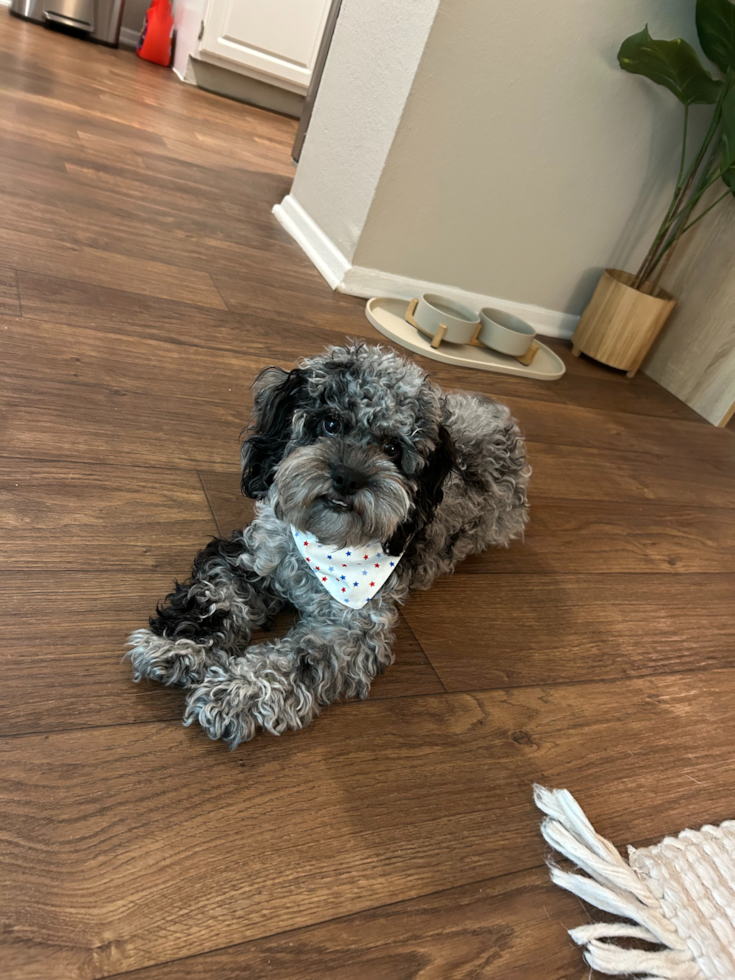
The merle Cockapoo isn’t common, but it’s not as rare as some sources make it sound. It sits somewhere between “unusual” and “occasional.” You won’t see one in every litter, and many breeders don’tproduce them at all. The pattern depends on whether the merle gene is present in one of the parents. If it isn’t, it won’t show up, no matter how many generations you breed.
In most Cockapoo programs, only a few lines carry the merle gene. That’s one reason you don’t see the pattern everywhere. Responsible breeders use it sparingly - one merle parent paired with a solid partner -both to preserve variety and to avoid health risks that can appear when two merle dogs are bred together. So, while the pattern itself isn’t artificially rare, it’s naturally limited by careful breeding practices.
For someone looking specifically for a merle Cockapoo, availability depends on timing and region. Some breeders may have one or two merle puppies in a litter every few years. Others focus entirely on solid and parti colors. It’s less about exclusivity and more about ethics. Breeders who understand the genetics behind the pattern know that moderation is key. That balance keeps merle Cockapoos healthy and supports the coat’s distinct look without overproduction.
Because of that, merle Cockapoos do tend to draw attention. People notice them at the park or in photos because the coat stands out, and that visibility sometimes makes them seem rarer than they are. In truth, it’s more accurate to say they’re selectively bred rather than rare. The pattern isn’t a novelty; it’s just one of the more carefully managed color variations within the breed.
So, while you won’t find merle Cockapoos flooding the market, they’re also not one-in-a-million. They’re a controlled part of the Cockapoo spectrum - distinctive, responsibly bred, and admired for their appearance rather than their scarcity.
Merle Cockapoo Color Changes Over Time
One of the most common surprises for new Cockapoo owners, especially with merle coats, is how much the color can shift as the dog grows. It’s not that the pattern disappears, but the tone and contrast can change noticeably from puppyhood to adulthood. This isn’t unique to merles; all Cockapoos can go through subtle coat transitions as their puppy fluff gives way to their mature coat. The difference is simply easier to notice on a patterned coat.
When a merle Cockapoo puppy is born, the pattern is usually softer. Puppies often look lighter overall, with their markings faint and blended. As they grow, the darker areas deepen and the lighter ones settle into their true shade. Around the time the adult coat starts coming in, usually between six months and a year, the merle pattern becomes clearer and more defined. That’s when you start seeing the dog’s permanent coloring.
After that, changes tend to be gradual. The pattern doesn’t vanish or shift positions, but the contrast can fade slightly with age. Some merles lighten overall, especially around the muzzle and ears. Others keep the same richness throughout their life. The difference often comes down to genetics, grooming routine, and how much sunlight the coat gets. Just like human hair, prolonged sun exposure can subtly warm or bleach the outer layer of fur.
Grooming also plays a big role in how the color reads. A fresh trim often makes the merle pattern pop. The shorter the coat, the clearer the contrast between shades. As the hair grows out and the curls start to relax, the pattern looks softer and more blended. It’s one reason owners sometimes think their dog’s coat has changed when, really, it’s just a difference in length and texture.
For anyone who loves the merle look, it’s worth knowing that the coat you see at eight weeks won’t be identical at two years, but that’s part of the appeal. Each stage brings out something new. Puppies grow into richer tones, adults gain depth, and seniors often develop a gentler, more diffused color. The pattern stays true. It just matures along with the dog.
RELATED: Everything You Need To Know About Puppy Color Changes
Merle Cockapoo Temperament and Personality
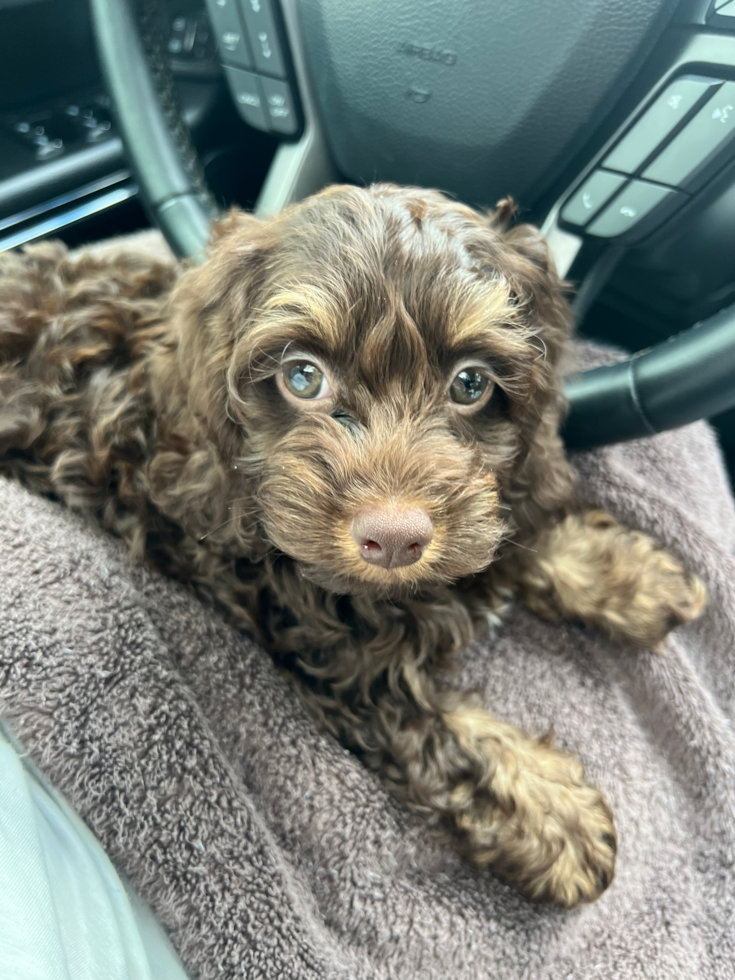
The merle Cockapoo may look different, but its personality comes from the same reliable mix of Cocker Spaniel and Poodle traits. The color pattern has no connection to temperament. Whether the coat is merle, red, black, or cream, you’re still looking at a companion breed known for its intelligence, warmth, and adaptability.
Most merle Cockapoos are outgoing dogs that like to be involved in whatever’s happening around them. They’re quick to pick up on routines, good with people, and happiest when they’re part of family life. They bond closely with their owners, and that constant desire to connect is one of the most recognizable traits of the Cockapoo as it doesn’t fade with color or coat type.
From the Poodle side, they get alertness and sharp focus. From the Cocker Spaniel side, they get affection and a steady, people-pleasing nature. The combination makes them easy to train but also sensitive. They read tone and body language quickly, which means they thrive on calm guidance rather than harsh correction. A merle Cockapoo learns fast, but it also remembers how you make it feel, so consistency goes further than strictness.
Energy levels sit comfortably in the middle. They’re active enough to enjoy daily walks, games, or a quick training session, but they’re not demanding. What they want most is time with their people. Leave them alone too long, and they’ll look for ways to fill the gap, not out of defiance, but because they don’t like isolation. That’s true for all Cockapoos, regardless of color.
If you’ve met more than a few of them, you’ll notice how similar their behavior feels even when their coats couldn’t be more different. A blue merle, a chocolate merle, or a plain black Cockapoo; they all carry the same expressive face, the same mix of curiosity and warmth. The merle pattern changes how they look, but not who they are.
RELATED: Are Cockapoo Good Dogs?
Care Considerations for a Merle Cockapoo Coat
Caring for a merle Cockapoo’s coat isn’t any harder than caring for a solid-colored one, but there are a few small things worth knowing if you want to keep the color and texture looking their best. The coat still follows the same rules as any Cockapoo: regular brushing, proper trimming, and consistent grooming, but the merle pattern can make certain details stand out more when neglected.
Because merle coats have lighter and darker areas, uneven grooming shows faster. When the coat grows out, the lighter patches can appear duller and the pattern less distinct. A trim every six to eight weeks keeps the curls clean and helps maintain definition in the coat’s natural color mix. For owners who prefer a longer coat, weekly brushing is essential to prevent matting, especially where the hair thickens around the chest, ears, and hind legs.
Sun exposure can also play a role in how the color holds over time. Extended time outdoors, especially in strong sunlight, can gently fade the darker areas or warm up the cooler tones. It’s not dramatic, but over months you might notice a softening in contrast. This happens with all Cockapoo coats to some degree, but it shows more on merles because of the built-in variation. A shaded yard or limiting peak sun hours during summer walks can help preserve the natural balance of the pattern.
Bathing is another area where moderation helps. Cockapoo coats have natural oils that keep them soft and resilient. Over-bathing or using harsh shampoos can strip those oils and leave the hair flat or frizzy. A mild, pH-balanced dog shampoo, ideally one for curly or long coats, is usually enough. After drying, a light brush-through brings back the coat’s texture and lets the merle pattern show clearly again. A well-groomed merle coat almost looks three-dimensional when it’s healthy.
The only real adjustment for merle owners is paying attention to the skin under the lighter areas. Because those sections can have less pigment, they’re slightly more sensitive to sun or irritation. It’s not a big concern, just something to keep in mind during grooming or outdoor activities. Most dogs never have an issue, it’s simply one of those small, practical details you learn after living with them.
RELATED: Are Cockapoos Hypoallergenic? Do Cockapoos Shed?
Responsible Breeding and the Merle Pattern
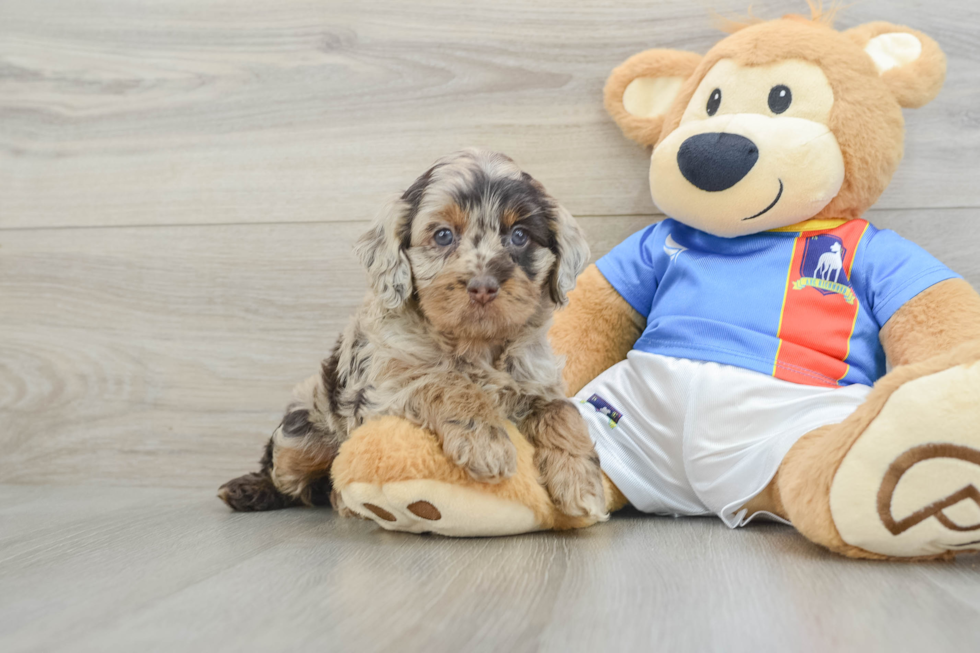
When it comes to the merle Cockapoo, responsible breeding is everything. The pattern itself is perfectly healthy when it’s managed correctly, but it needs to be handled with understanding. The merle gene is what creates the pattern, and when a dog inherits one copy of it, from just one parent, the result is the beautiful, balanced marbling that owners love. That’s what produces the blue merle and chocolate merle coats people recognize.
The problem only arises when two merle-patterned dogs are bred together. That pairing can result in puppies that inherit two copies of the merle gene, often called “double merles.” These puppies can have excessive lightening in their coats and, in some cases, may experience hearing or vision problems linked to pigment loss. It’s not unique to Cockapoos; this is true across all merle-patterned breeds. That’s why knowledgeable breeders never pair merle to merle.
Responsible Cockapoo breeders follow a simple, effective rule: one merle parent, one solid-colored parent. That ensures every puppy gets just one copy of the gene and develops a healthy, clearly defined coat pattern without the associated risks. This approach keeps the merle variation in the breed strong, predictable, and safe. It’s how the pattern should be bred: intentionally and respectfully.
Good breeders also test their parent dogs before any litter. They confirm the presence of the merle gene, assess coat color genetics overall, and make sure the pairing makes sense. They’ll be open about lineage, testing, and results, because transparency builds trust and helps owners understand what they’re getting.
For owners, responsible breeding practices mean peace of mind. You get a dog that’s not only beautiful but also well-rounded, sound, and steady, exactly what the Cockapoo should be. That’s what separates a thoughtful breeder from someone chasing colors.
RELATED: Premier Pups Breeders: The People Behind the Promise
Merle Cockapoo vs Other Cockapoo Color Variations
Cockapoos come in more colors than almost any other mixed breed, and each one has its own appeal. You’ll see creams, apricots, reds, blacks, tans, and parti coats, all familiar to anyone who’s been around the breed. The merle Cockapoo simply sits in a different category. While the others are solid or patterned by clear sections, the merle coat looks blended - a natural mix of shades that gives it depth and texture you don’t see elsewhere.
Compared to solid-colored Cockapoos, merles tend to look more complex. A solid black or red coat is striking in its simplicity, rich, even, and classic. Merle coats trade that uniform look for dimension. They draw your attention not because they’re brighter or rarer, but because there’s more going on visually. You see the variation in tone, the soft marbling, and the small irregularities that make each coat its own fingerprint.
When placed next to parti or phantom Cockapoos, the difference is clearer. Parti coats have defined patches: white mixed with another color, often symmetrical. Phantom coats show specific markings on the face, chest, and legs. Merle, on the other hand, doesn’t follow any pattern you can predict. It looks random but balanced, more like natural shading than distinct sections. That unpredictability is part of what makes the merle pattern so recognizable.
Despite their visual differences, all these Cockapoo color variations share the same core qualities: soft, low-shedding coats; a range of curl textures; and the same affectionate personality. The color doesn’taffect maintenance much, either. Grooming a merle coat takes the same effort as grooming a red, black, or cream one. The difference is in how the result looks, not how much work it takes to get there.
RELATED: Meet The Black Cockapoo: Pictures, Color Fading +More
Merle Cockapoo Cost
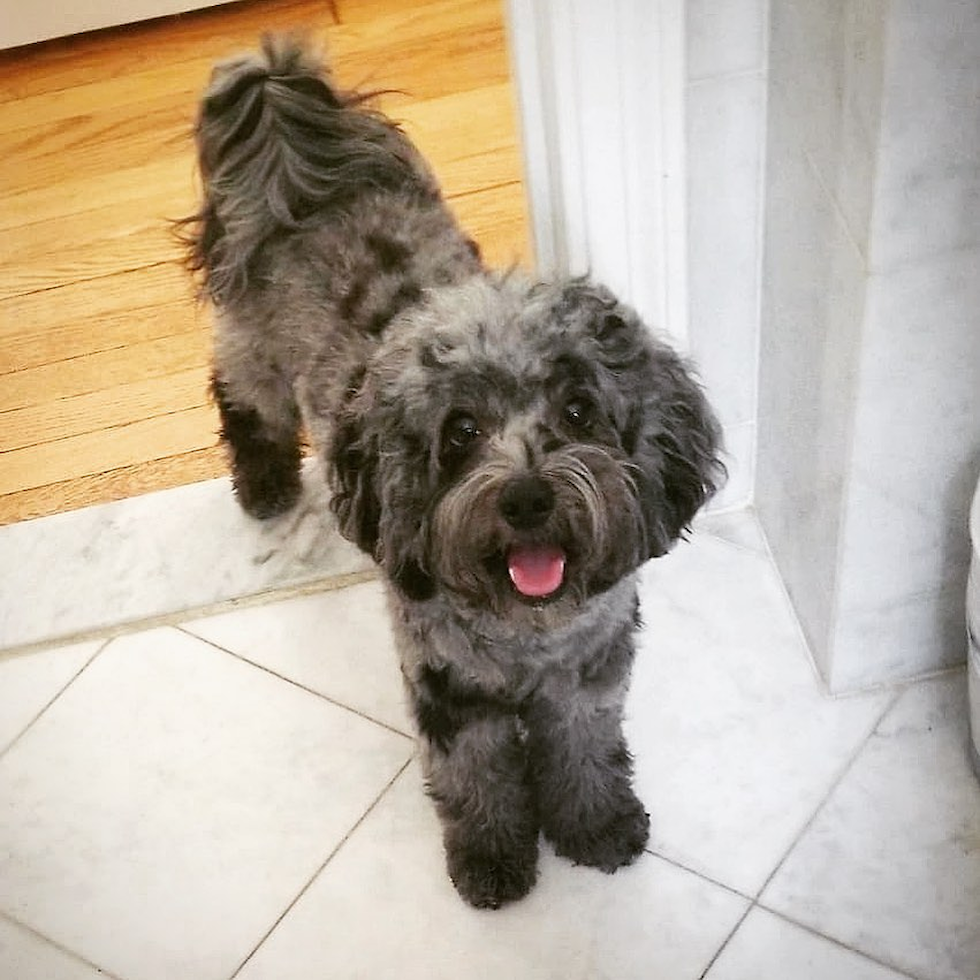
The cost of a merle Cockapoo can vary quite a bit, but what matters most isn’t just the number; it’s what’s behind it. Most well-bred Cockapoos, regardless of color, fall within a similar general range, but merle-patterned dogs often sit toward the higher end. That’s not because they’re “designer” or “rare,” but because producing them responsibly requires extra care, testing, and selective breeding.
Across reputable breeders in the United States, merle Cockapoos typically range from about $2,000 to $3,500. In some regions, prices may go higher depending on demand, parent pedigrees, and breeder reputation. For comparison, solid-colored Cockapoos from the same kind of responsible program might range from $1,500 to $2,800. The difference reflects how deliberately the merle lines are managed, not that the dogs themselves are inherently “worth” more.
What often drives cost for merle Cockapoos are three key factors:
- Genetic Testing and Responsible Pairing – Ethical breeders test parent dogs for the merle gene and other health traits to ensure safe, one-merle-to-solid pairings. Those extra steps add time and expense, but they’re essential to avoid issues like double-merle pairings or pigment-related health problems. When breeders do it right, it costs more, and it should.
- Limited Availability – Because reputable breeders don’t produce merle litters frequently, there’s naturally less supply. A single litter might include only one or two merle puppies, depending on genetics. That selective breeding process makes the pattern less common on the market, which influences pricing.
- Breeder Standards – As with any Cockapoo, the price also reflects how a breeder raises their dogs. Puppies raised in clean, social environments with early handling, vet checks, and age-appropriate care will always cost more than those from volume-focused operations. Color should never be the only reason for a price tag, quality of breeding and care should.
It’s worth being cautious with prices that seem far outside the norm. If you see a merle Cockapoo offered far below reputable ranges, that often signals corners cut somewhere - testing skipped, questionable pairings, or mass breeding. On the other end, a sky-high price doesn’t necessarily guarantee better quality either. The best breeders explain exactly what their cost covers and are transparent about their program.
At the end of the day, a merle Cockapoo’s cost reflects the same principles as any other Cockapoo: health, ethics, and effort. The color makes it distinctive, but what you’re paying for is a responsibly bred, well-adjusted dog that fits the reputation of the breed.
Is a Merle Cockapoo Right for You
Choosing a merle Cockapoo shouldn’t be about color first. The pattern might be what draws you in, but what you’ll be living with is the temperament, the energy, and the coat care that every Cockapoo shares. Merle or not, this is a breed that thrives on attention, consistency, and connection. If that fits your lifestyle, the coat color becomes just one of many good details.
Merle Cockapoos are people dogs through and through. They want to be part of everything you do: sitting nearby while you work, greeting guests at the door, joining family walks. They do best in homes where someone is around most of the time or where routines are predictable. If your schedule means long stretches away, this breed can struggle with that. It’s not a behavior issue; it’s just how they’re wired.
Their intelligence makes them easy to train but also quick to get bored. Regular engagement that includes short walks, small challenges, simple commands, keeps them balanced. They read emotion easily, which is one reason they fit so naturally into family life. They respond to calm leadership, and they don’t forget how you treat them. With steady guidance, they become the kind of companion that blends into your rhythm rather than competing with it.
When it comes to coat care, owning a merle Cockapoo means committing to regular maintenance. The coat grows continuously and needs brushing a few times a week, plus trims every couple of months. It’snot difficult work, but it’s consistent work. Owners who stay on top of it tend to enjoy it. The coat looks and feels best when it’s cared for regularly. The merle pattern rewards the effort by showing depth and clarity after each grooming.
In the end, deciding if a merle Cockapoo is right for you comes down to how much time and attention you want to invest in a dog that’s affectionate, bright, and sensitive. The color is what catches your eye; the personality is what keeps you hooked. If you’re looking for a companion that matches your pace, enjoys close company, and brings quiet, steady joy to everyday life, see our available Cockapoo puppies for sale.
Conclusion
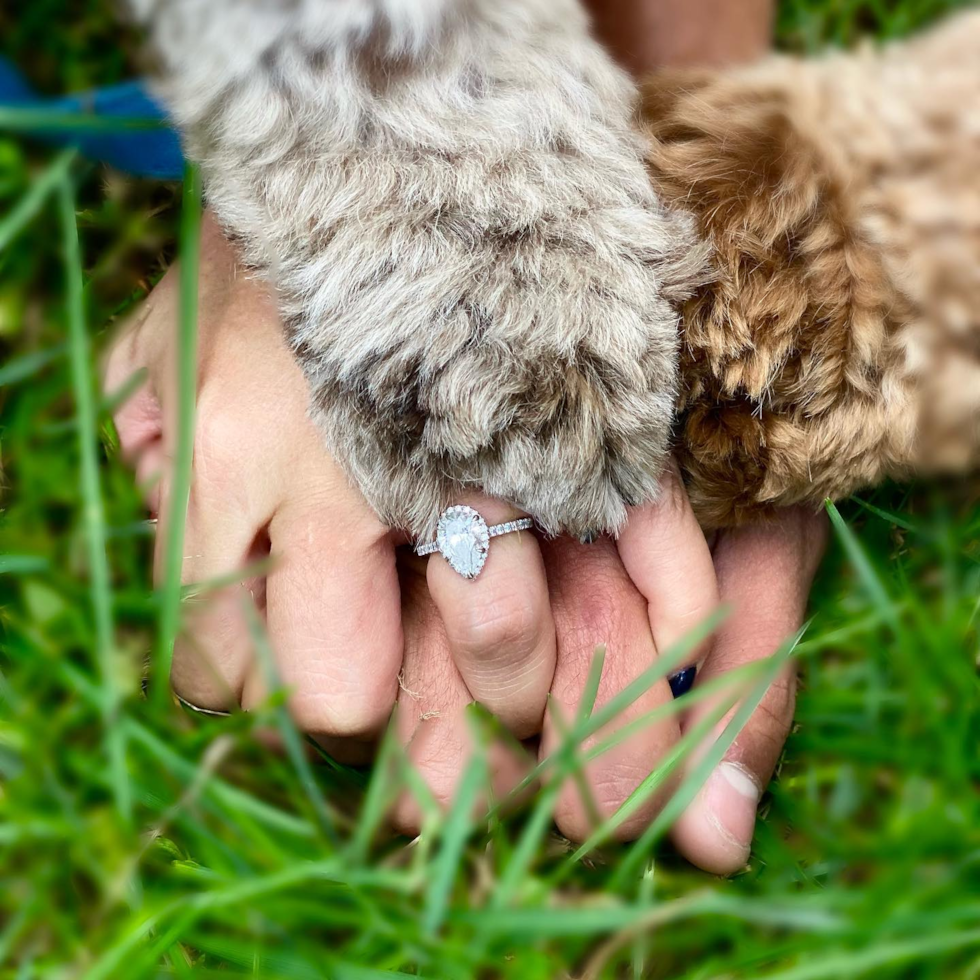
The merle Cockapoo is a perfect example of how genetics and good breeding come together to create something beautiful without changing what makes the breed special. The pattern adds color and individuality, but everything else - the intelligence, the friendliness, the easy companionship - stays exactly the same.
Understanding how the pattern works, what it takes to produce it safely, and what care it needs helps you see the merle Cockapoo for what it really is: not a novelty, not a rarity, just one more honest expression of a great little dog.
Scroll down to see FAQs about merle Cockapoos.
Elena R.
About The Author
Elena is a leading expert in the field of dog behavior, care, and training, with over a decade of experience in writing about dogs. As a published writer and lifelong dog enthusiast, Elena currently shares her home with three beloved canine companions. She is dedicated to staying up to date on the latest advancements in dog care and training, ensuring that her articles provide readers with accurate and valuable insights. With her extensive knowledge and passion for all things canine, Elena's contributions to the Premier Pups community offer both expertise and authority on a wide range of dog-related topics.
What To Read Next
Brown Cockapoo: Guide to all Shades of Brown
If you’ve been looking into Cockapoos, you’ve probably noticed that brown coats show up in more ways than one. Some are dark and glossy, almost like melted chocolate. Others are lighter like soft caramel or golden brown and sometimes mixed with bits... Read More
Top 12 Pros and Cons of Owning a Cockapoo
If you’ve ever met a Cockapoo, you know why people fall for them so easily. They have that unmistakable mix of intelligence and heart. They have alert eyes that seem to catch everything and a temperament that leans toward friendliness almost by default.
The... Read More
Frequently Asked Questions
What exactly is a merle Cockapoo? A merle Cockapoo is a Cockapoo whose coat shows a marbled mix of light and dark shades. The pattern comes from a gene that affects how pigment is distributed in the hair. It doesn’t create a new type of Cockapoo; it just changes how the color appears on the coat.
Are blue merle and chocolate merle Cockapoos different breeds? No. They’re both merle Cockapoos. The terms “blue” and “chocolate” simply describe the base color beneath the merle pattern. Blue merles have cooler gray and black tones, while chocolate merles carry warmer browns. The pattern is the same; the base color is what changes.
Does the merle gene affect a Cockapoo’s health? When bred responsibly, no. A dog with one merle parent and one solid-colored parent is perfectly healthy. The concern comes only when two merle dogs are bred together, as double-merle puppies can inherit pigment-related hearing or vision problems. Reputable breeders avoid that pairing entirely.
Do merle Cockapoos change color as they get older? The pattern stays, but the contrast can soften over time. Puppies often start lighter and darken as their adult coat grows in. Sun exposure and grooming length can also make the pattern look slightly different, but it never disappears.
How much do merle Cockapoos usually cost? Prices vary, but most merle Cockapoos from ethical breeders fall between $2,000 and $3,500 USD. The cost reflects health testing, selective breeding, and limited availability, not rarity or marketing. If the price is far below that, it’s worth asking why.
Does the merle pattern change a Cockapoo’s temperament? No. The coat color has no influence on personality. Merle Cockapoos have the same affectionate, intelligent, people-oriented nature as any other Cockapoo. Their color doesn’t make them calmer, livelier, or smarter. Those traits come from their breeding and environment.
Are merle Cockapoos considered rare? They’re uncommon, but not rare in the sense of being one-of-a-kind. Merle Cockapoos are selectively bred in smaller numbers because responsible breeders plan their pairings carefully. That control keeps the pattern healthy and consistent without overproduction.
Do merle Cockapoos need special grooming products? Not special ones, just high-quality, mild products suited for curly or wavy coats. A gentle dog shampoo and conditioner help keep the coat soft and preserve its natural sheen. Brushing two to three times a week prevents matting and keeps the merle pattern clear.
Can two merle Cockapoos safely be bred together? No. Breeding two merle-patterned dogs can produce double-merle puppies with health risks. Responsible breeders always pair a merle with a solid-colored mate to avoid that outcome. That’s standard, ethical practice for any breed that carries the merle gene.