






Published Friday, February 13, 2026 by Elena R. in Popular Dogs, New Puppy, Dog Grooming
White Cockapoos are easy to recognize and often one of the first colors people ask about. They stand out for their bright, clean coats and for how clearly the texture of the hair shows - every wave, curl, and line is visible. The color looks simple, but there’s a bit more to it once you see one up close.
Most white Cockapoos aren’t a perfect, pure white. Many have a touch of cream or ivory in the coat, especially around the ears, back, or tail. Some even look closer to pale beige in certain lights. It’s normal and comes from the mix of Cocker Spaniel and Poodle coat traits. The color can also shift slightly as the dog grows, softening with age or brightening after grooming.
Because the shade is so light, people often wonder if white Cockapoos are hard to keep clean. They’re not — at least not more than other light colors. A quick brush or wipe after walks usually keeps the coat looking tidy. Regular grooming helps, especially around the face and paws where dirt can show sooner.
White Cockapoos aren’t rare, but they’re consistently popular. The color shows up naturally in both parent breeds, so it appears often in litters.
Table of Contents
What Is a White Cockapoo

A white Cockapoo is a Cockapoo whose coat is mostly or completely white, sometimes with very light cream or ivory tones mixed in. The color comes naturally from both parents. The Cocker Spaniel and Poodle breeds can each produce solid white coats, so it’s common for their offspring to inherit the same. White is considered a solid color, not a pattern, unless there are visible patches of another color.
In Cockapoos, white usually appears as a soft, warm shade rather than a bright, cool white. The difference comes from pigment intensity and coat texture. Wavy or curly coats scatter light, which softens the tone slightly. When the coat is freshly groomed, it can look cleaner and lighter; as it grows out, the shade may take on a creamier look.
From a breeding standpoint, white is the result of reduced pigment in the hair shaft, not an absence of pigment entirely. That’s why you sometimes see a faint beige tint or slightly darker ears. It’s also why a dog that looks pure white indoors might appear closer to cream in natural sunlight. This variation is normal and part of what makes the color appear more natural than artificial.
White Cockapoos can also have small visible features that contrast slightly with their coat. This includes dark eyes, a black or brown nose, and paw pads that stand out against the pale fur. Those contrasts give white dogs a more defined, expressive look, especially around the face.
RELATED: Top 12 Pros and Cons of Owning a Cockapoo
White Cockapoo Appearance

A white Cockapoo’s appearance changes slightly depending on coat type and grooming, even when the color itself stays the same. The way the fur sits (loose, wavy, or tightly curled) affects how light moves across it, and that can make the color look softer or brighter.
In wavier coats, the white tends to reflect light evenly. The surface looks smooth, and the tone stays consistent from root to tip. In curlier coats, the same color can appear a shade deeper because the hair catches shadows within the curls. It’s not a pigment change, just how the light behaves around texture.
Length plays a role too. When kept short, the coat looks neater and a little brighter. As it grows, especially on dogs with curlier hair, it can look creamier or slightly warmer in tone. Regular brushing keeps the color looking fresh by lifting dust and oils that can dull the surface.
You’ll sometimes see white Cockapoos with a few small patches of shading on the ears or tail. Those are natural and usually more visible when the hair is longer. Grooming can make them fade visually, but they’re part of what gives the coat its depth. None of these small changes affect how the color is classified. They’re just normal details you start to notice once you’ve lived with the dog for a while.
RELATED: Tan Cockapoo Guide: Color, Pictures, Cost +more
How White Cockapoo Coats Change Over Time
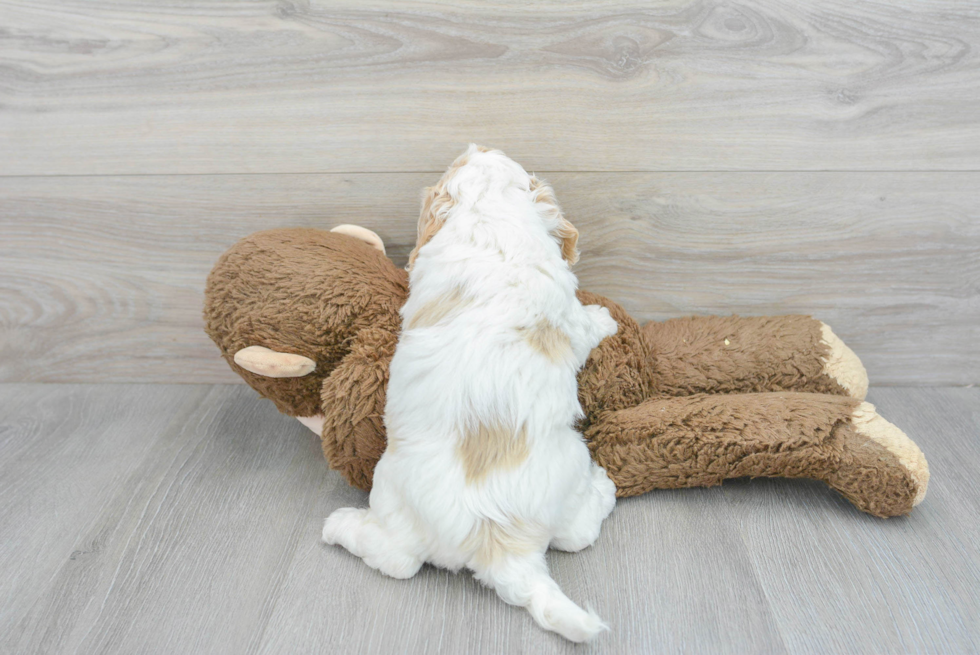
A white Cockapoo’s coat doesn’t change color dramatically, but small shifts do happen as the dog matures. Most white Cockapoo puppies are born a touch creamier, closer to ivory than bright white. As the adult coat grows in, usually between six months and a year, the color lightens and evens out. That transition is gradual, and it’s often easier to see in photos than day to day.
In some dogs, the coat keeps a faint warmth even after the change. This isn’t fading, it’s just how their pigment develops. The shade usually stays stable from about a year onward, though coats can appear lighter right after grooming or bathing when the hair is freshly trimmed and clean.
Sunlight can also play a small role. Dogs that spend a lot of time outdoors may develop a slight yellow or beige tint, especially around the ears or back where the coat is thicker. It’s not damage, just a natural effect of light exposure over time.
One thing owners notice most is how texture changes the way white looks as dogs age. Younger Cockapoos often have fluffier, softer coats that scatter light, while mature coats grow denser and hold shape better. That shift can make the color appear deeper or flatter, even though the pigment itself stays the same.
White Cockapoos don’t usually experience major fading like darker colors sometimes do. Instead, what you see after the first year is what you’ll keep. This means that adult Cockapoos have a steady, even color that may warm slightly with time and grooming habits.
RELATED: Everything You Need To Know About Puppy Color Changes
Caring for a White Cockapoo Coat

Keeping a white Cockapoo coat clean takes a bit of routine, but it isn’t difficult once you know what to expect. Because the fur is light, dirt and staining show faster than they do on darker coats, especially around the paws, mouth, and eyes. Regular maintenance helps the color stay bright without the need for heavy products or constant bathing.
Most owners brush their dogs two or three times a week. This keeps the coat from matting and removes surface dust that can dull the color. A quick wipe with a damp cloth after outdoor walks is often enough to prevent buildup. Full baths are best every four to six weeks, depending on activity level and how often the dog goes outside.
Tear staining is common in light-colored dogs, including white Cockapoos. It’s usually a cosmetic issue, not a health problem, caused by natural tear flow and bacteria around the eyes. Cleaning the area gently with a soft cloth and warm water once a day can minimize staining. For some dogs, filtered water and regular grooming around the face also make a noticeable difference.
If you use shampoo, choose a mild formula made for white or light coats. These shampoos are designed to remove dull tones without drying the skin or hair. Avoid harsh brightening products, as they can strip natural oils and make the coat more prone to tangling.
Sunlight can slightly warm the tone of white fur over time, especially on the back and ears. Keeping the coat brushed and clean helps it reflect light evenly, which keeps the color looking natural. Beyond that, caring for a white Cockapoo is the same as for any other color. Steady grooming, gentle products, and a bit of consistency go a long way.
RELATED: Are Cockapoos Hypoallergenic? Do Cockapoos Shed?
Black and White Cockapoo

The black and white Cockapoo is one of the clearest examples of how color and pattern come together in the breed. Instead of a single shade, these dogs have a mix of both colors in distinct areas, usually black along the back, head, or ears, with white on the chest, muzzle, and legs. The pattern can be bold or balanced, depending on how much of each color appears.
This combination is often called parti-color or bicolor. It’s common in both Poodles and Cocker Spaniels, so it shows up naturally in their mix. The ratio of black to white can vary. Some dogs have large white sections with smaller black patches, while others are mostly black with lighter markings. In either case, the pattern stays consistent as the dog grows, even though the texture of the coat may make the edges look softer over time.
The contrast between the two colors gives these Cockapoos a tidy, defined look. You can see their facial features and expression clearly, especially when the muzzle and eyebrows carry lighter markings. Wavier coats often make the color boundaries look smooth, while curlier coats create a softer blend between the black and white.
Care is the same as for any Cockapoo, though the white areas may need slightly more attention during grooming. Dirt and tear stains show more easily against the lighter sections, while the darker fur tends to hide small marks.
RELATED: Meet The Black Cockapoo: Pictures, Color Fading +More
Temperament and Behavior
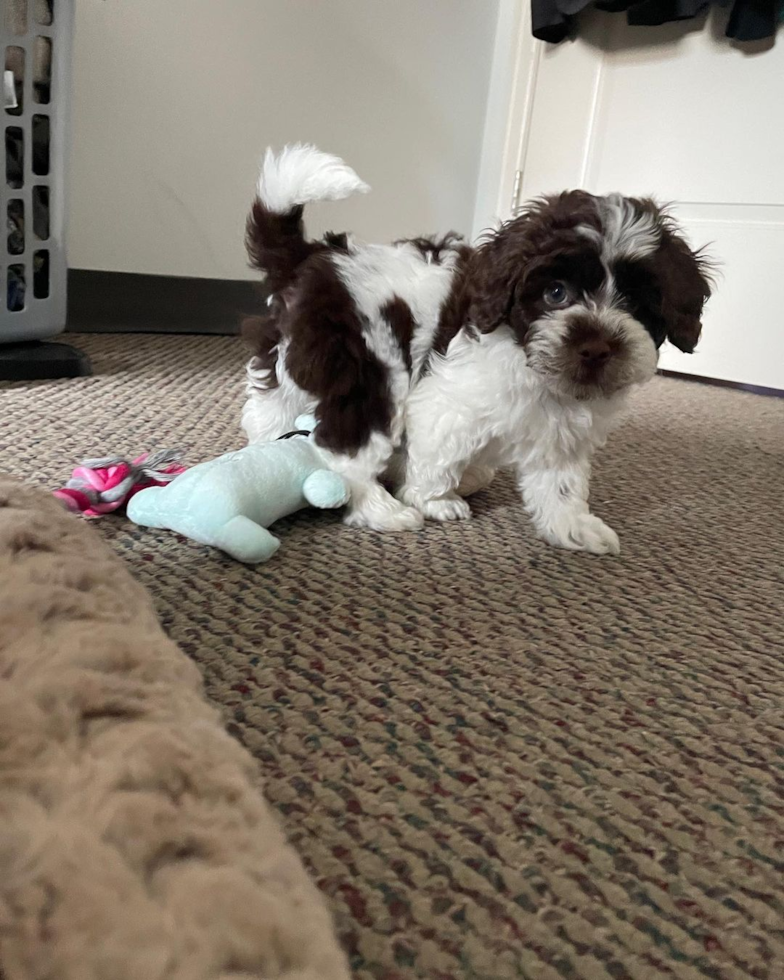
White and black-and-white Cockapoos share the same temperament as any other color. Their coat doesn’t influence how they act, learn, or bond with people. Like all Cockapoos, they’re friendly, loving, and adaptable dogs that do well with steady routines and regular attention.
There’s a common idea that white dogs are calmer or gentler, but that’s not supported by experience or breeding. Behavior comes from genetics, socialization, and daily life. A well-raised Cockapoo will have the same sweet, good-natured personality whether its coat is white, black, apricot, or brown.
What owners often notice most is how easy these dogs are to live with. They stay close to their favorite people, adjust quickly to household routines, and enjoy being part of whatever’s happening.
RELATED: Are Cockapoo Good Dogs?
Cost and Availability
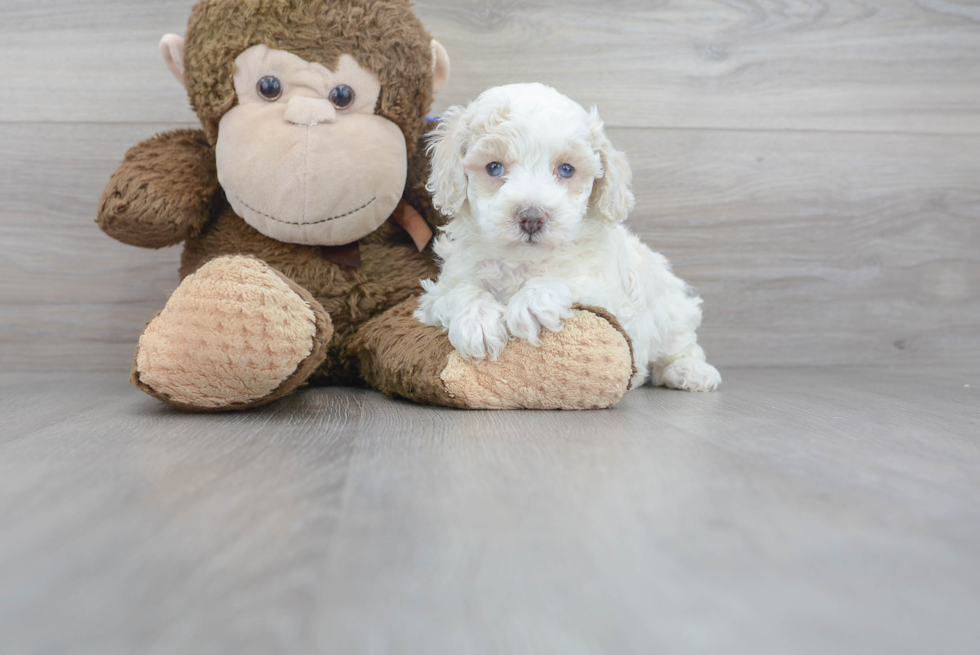
White Cockapoo puppies are not rare, but they’re always in steady demand. The color shows up naturally in both Cocker Spaniels and Poodles, so breeders don’t need to pair for it specifically. You’ll often see at least one light-colored puppy in a litter, though the exact shade can vary from bright white to a soft cream or ivory.
In the United States, prices for Cockapoos from responsible, health-tested programs usually range from $1,500 to $3,000. Color can influence how quickly puppies are reserved but rarely changes the overall price. What matters most is the breeder’s approach — how the puppies are raised, handled, and socialized during their first weeks.
Because white is such a recognizable shade, it appears frequently across Cockapoo sizes — Toy, Mini, and Standard. Wait times are usually short compared to less common colors like merle or chocolate. Some white Cockapoos may have small beige or cream patches that shift slightly in tone as the puppy grows, but that’s expected and doesn’t affect quality or classification.
If you’re considering a breeder, it’s worth looking into trusted, transparent programs that focus on health and temperament first.
RELATED: Premier Pups Breeders: The People Behind the Promise
Is a White Cockapoo Right for You
A white Cockapoo fits easily into most homes. The color doesn’t change how the dog behaves or learns, but it can influence the kind of upkeep you’ll need to plan for. Light coats show dirt more quickly, especially around the face and paws, so a bit of routine grooming goes a long way. If you’re comfortable brushing a few times a week and keeping up with regular trims, a white Cockapoo will stay clean and tidy without much effort.
Visually, it’s one of the most classic Cockapoo colors. It’s bright enough to stand out, but soft enough to look balanced on any coat type. Because the shade is common, you won’t have trouble finding one from reputable breeders. The key is to look for sound breeding and good care early on rather than focusing only on color.
For people who like a lighter, low-change coat and a steady, even-tempered dog, a white Cockapoo makes the perfect choice. They’re sweet, friendly, and easy to adapt into family life. The coat just adds a cleaner, softer look to a breed already known for being easy to love.
Other Cockapoo Articles That Might Interest You
How Long Do Cockapoos Live? Cockapoo Lifespan – A Guide to Longevity
The Merle Cockapoo: Expert Guide to Blue and Chocolate Merle Coats
Brown Cockapoo: Guide to all Shades of Brown
Apricot Cockapoo Guide: Color, Cost, Pictures +More
Scroll down to see FAQs about white Cockapoos.
Elena R.
About The Author
Elena is a leading expert in the field of dog behavior, care, and training, with over a decade of experience in writing about dogs. As a published writer and lifelong dog enthusiast, Elena currently shares her home with three beloved canine companions. She is dedicated to staying up to date on the latest advancements in dog care and training, ensuring that her articles provide readers with accurate and valuable insights. With her extensive knowledge and passion for all things canine, Elena's contributions to the Premier Pups community offer both expertise and authority on a wide range of dog-related topics.
What To Read Next

Tan Cockapoo Guide: Color, Pictures, Cost +more
Among the many colors you’ll see in Cockapoos, tan is one that always seems to fit the breed. It’s balanced, not too light, not too dark, and it gives the dog a calm, even look that works on every coat type. You’ll see it on wavy coats that catch... Read More

Brown Cockapoo: Guide to all Shades of Brown
If you’ve been looking into Cockapoos, you’ve probably noticed that brown coats show up in more ways than one. Some are dark and glossy, almost like melted chocolate. Others are lighter like soft caramel or golden brown and sometimes mixed with bits... Read More
Frequently Asked Questions
Are white Cockapoos rare? No. White Cockapoos are fairly common because both Poodles and Cocker Spaniels can produce white coats. The shade appears naturally in litters without special breeding.
Do white Cockapoos stay white as they get older? Most do. Puppies often start slightly cream or ivory and lighten as their adult coat grows in. Sun exposure or natural oils can add a faint warmth over time, but the overall color stays steady.
Are white Cockapoos harder to keep clean? Not by much. Light fur shows dirt faster, but regular brushing and the occasional wipe after walks usually keep the coat bright. A gentle whitening shampoo can help between grooming sessions.
Do white Cockapoos fade like darker ones? No. Fading mostly affects darker pigments like black, chocolate, or red. White coats may look slightly warmer with age, but they don’t fade in the same way.
What’s the difference between a white Cockapoo and a cream Cockapoo? White coats are lighter and more neutral, while cream coats carry more pigment, often with a warm beige tone. In bright light, the two can look similar, but cream dogs generally appear deeper in color.
Are black and white Cockapoos the same as parti Cockapoos? Yes. The black and white combination is one example of a parti-color pattern, meaning the coat is two distinct colors rather than one solid shade. The pattern stays consistent as the dog matures.
How much does a white Cockapoo cost? On average, white Cockapoos from reputable breeders cost between $1,500 and $3,000, depending on size, parents, health tests, and breeder practices.
Do white Cockapoos have health issues related to their color? No. White coloring in Cockapoos isn’t linked to specific health concerns. The most important factor is the breeder’s health testing, not the coat color.