






Published Friday, August 28, 2026 by Elena R. in New Puppy, Popular Dogs
Choosing between a male vs female Mini Bernedoodle sounds simple at first. Then you start researching and suddenly everyone says something different. Males are more affectionate. Females are calmer. Males are clingy. Females are easier to train. Females mature faster. Males stay playful forever. The truth is a little more nuanced than that.
Yes, there are some commonly observed differences between male and female Mini Bernedoodles. Many owners notice certain behavioral trends over time, especially when it comes to affection, emotional intensity, maturity speed, independence, and attention-seeking behavior. But gender alone does not determine personality nearly as much as people hope it will. Temperament, genetics, emotional balance, confidence, early socialization, training, environment, and daily lifestyle shape adult behavior far more than whether the dog is male or female.
Some families want a deeply affectionate dog that follows them everywhere and treats personal space like a confusing suggestion. Others want a companion that still loves attention but settles more independently throughout the day. Some owners enjoy high emotional engagement and constant interaction. Others prefer a calmer, less emotionally demanding presence around the house. Neither preference is wrong, but they can lead people toward very different dogs.
Mini Bernedoodles are emotionally intelligent dogs to begin with, which makes these differences feel even more noticeable in everyday life. Small personality traits become part of the household rhythm quickly. The dog that insists on touching your leg during every work meeting. The dog that watches visitors carefully before deciding how excited to become. The dog that matures into a calm companion at two years old. The dog that still acts like an oversized puppy well into adulthood.
This is also why two people can own opposite-gender Mini Bernedoodles and walk away completely convinced their experience proves a universal truth about males or females. In reality, they are experiencing the interaction between personality, environment, emotional needs, and lifestyle compatibility more than gender alone.
So, when comparing a male or female Mini Bernedoodle, it helps to think beyond stereotypes. Affection, trainability, barking tendencies, emotional regulation, confidence, independence, energy level, and maturity all exist on a spectrum. Some trends absolutely appear more often in one gender than the other, but individual personality almost always matters more in the long run.
Table of Contents
- Is There Really a Difference Between Male and Female Mini Bernedoodles?
- The Biggest Mistake People Make When Choosing Between a Male or Female Mini Bernedoodle
- Male Mini Bernedoodle Personality Traits
- Female Mini Bernedoodle Personality Traits
- Which Is More Affectionate?
- Which Is Easier to Train?
- Which Calms Down Faster?
- Which Barks More?
- Which Is Better for First-Time Owners?
- Male vs Female Mini Bernedoodle Size Differences
- Which Is Better With Children?
- Which Is Better With Other Dogs?
- Health Differences Between Male and Female Mini Bernedoodles
- So, Should You Get a Male or Female Mini Bernedoodle?
Is There Really a Difference Between Male and Female Mini Bernedoodles?

Yes, there are real differences between male and female Mini Bernedoodles. Certain personality trends appear often enough that they are hard to ignore. Many owners describe males as more openly affectionate, clingier, goofier, and slower to mature emotionally. Females are described as slightly more independent, more self-regulated, and emotionally steady earlier in life. Those patterns show up repeatedly for a reason.
Gender influences behavior. It just does not control behavior nearly as much as people sometimes expect it to. Personality, confidence, emotional sensitivity, genetics, socialization, training, household environment, and daily routine all shape the dog that eventually develops in front of you. Sometimes those factors amplify gender-based tendencies. Other times they completely overshadow them.
This is why people confuse personality with gender. A calm female puppy grows into a calm adult, and someone becomes convinced all female Mini Bernedoodles are naturally composed and emotionally mature. Another owner lives with an extremely clingy male that follows them from room to room like a fuzzy emotional support intern and decides all males are velcro dogs forever. Meanwhile, somewhere else, another family has the exact opposite experience.
A lot of what owners perceive as “male behavior” or “female behavior” is actually the interaction between temperament and emotional development. Confidence matters. Sensitivity matters. Some dogs naturally recover from stimulation quickly. Others stay emotionally engaged with every sound, movement, and household shift around them. Those traits shape daily life more than gender alone ever will.
Adolescence changes things dramatically too. A calm puppy may become chaotic at ten months old. A highly independent dog may suddenly become deeply attached during certain developmental phases. Some males stay puppy-like longer, while some females appear to regulate themselves earlier. But adolescence affects both genderes, and many temporary behaviors disappear once maturity catches up.
That’s an important aspect because long-term compatibility usually depends more on emotional regulation than early puppy personality. The puppy that feels endlessly cuddly at four months old may become overstimulated and demanding during adolescence before settling beautifully as an adult. The more reserved puppy may mature into an incredibly balanced companion with quiet affection and emotional stability.
So yes, male vs female Mini Bernedoodle differences absolutely exist. Ignoring them completely is not very realistic. But reducing personality down to gender alone creates unrealistic expectations too.
RELATED: Learn About The Mini Bernedoodle Breed
The Biggest Mistake People Make When Choosing Between a Male or Female Mini Bernedoodle
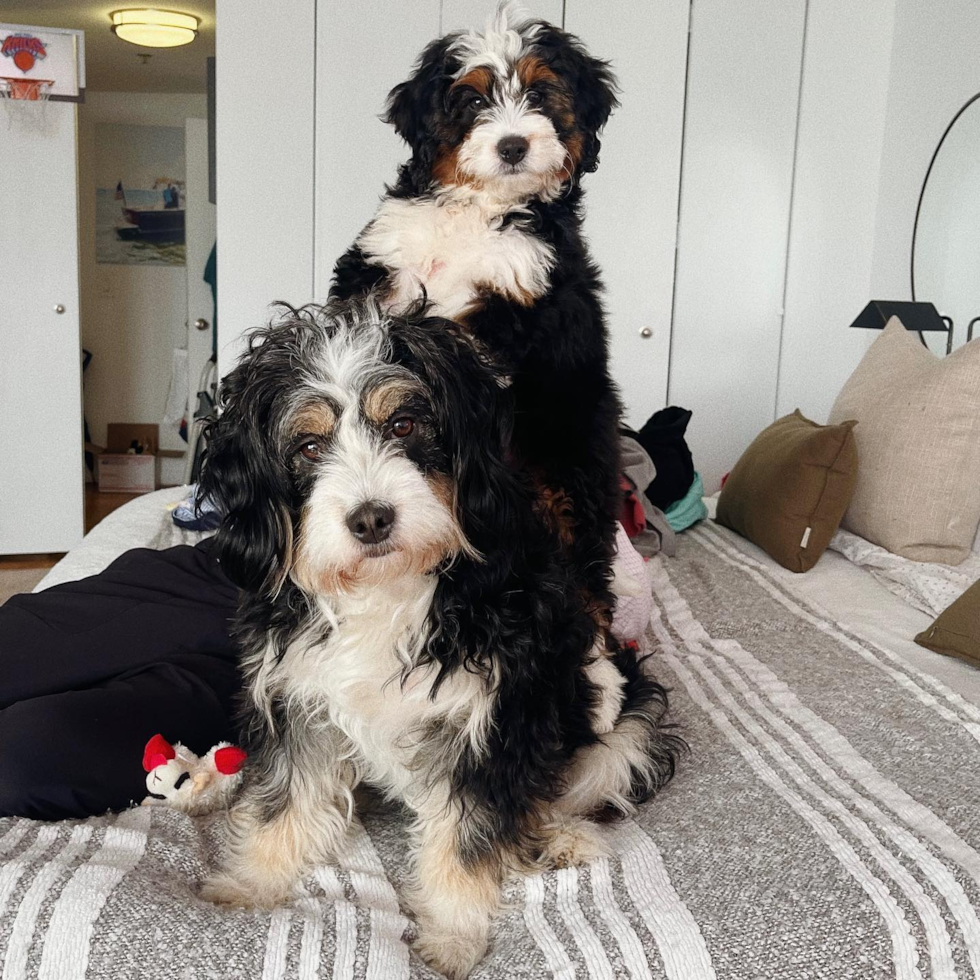
One of the biggest mistakes people make is choosing based on stereotypes instead of thinking about what kind of daily relationship they want with their dog.
A lot of buyers approach this decision almost like choosing between personality labels. Males are cuddly. Females are calmer. Males are goofy. Females are independent. The problem is that real dogs do not read those descriptions before entering your home. And even when certain trends exist, they do not automatically translate into compatibility.
For example, someone who dreams about constant affection and emotional closeness may absolutely love a highly attached male Mini Bernedoodle that follows them everywhere and wants to participate in every moment of the day. Another person may experience that exact same dog as exhausting after six straight months of never using the bathroom alone again.
The opposite can happen too. A more self-possessed female that settles independently and does not constantly demand interaction may feel wonderfully balanced to one owner and emotionally distant to another who expected nonstop cuddling and velcro-dog behavior.
Lifestyle changes the experience even more. High-energy households with children, visitors, movement, and constant activity experience personality traits differently than quieter homes. A playful, emotionally intense dog may thrive in a busy environment where engagement happens naturally all day long. That same dog may struggle in a calm apartment with an owner who works long hours and prefers a quieter companion.
First-time owners sometimes underestimate how emotionally demanding highly attached dogs can become, especially during adolescence. On the other hand, some experienced owners intentionally seek that closeness because they genuinely enjoy deep engagement and constant interaction with their dogs.
Training expectations shape compatibility as well. A dog that stays goofy, impulsive, and emotionally expressive longer may frustrate owners who want fast maturity and calm predictability. Other people adore that playful energy and see it as part of the breed’s charm rather than a problem.
This is why the “right” Mini Bernedoodle depends less on whether the dog is male or female and more on what kind of dynamic fits naturally into your life. Some people want independence with affection layered in. Others want a dog that acts like a devoted sidekick every hour of the day. Some love high engagement and constant interaction. Others prefer a calmer presence that blends more quietly into daily routines.
RELATED: Are Mini Bernedoodles High Energy? An Honest Look at Daily Life
Male Mini Bernedoodle Personality Traits

When people describe the male Mini Bernedoodle personality, one theme appears constantly: affection. Many owners describe male Mini Bernedoodles as emotionally expressive, openly cuddly, highly people-oriented dogs that genuinely want to stay close to their families as much as possible. The phrase “velcro dog” comes up a lot with males, and sometimes it fits almost too well.
Some males follow their owners from room to room like they are invested in every household task, including things no dog reasonably needs to supervise. Folding laundry. Showering. Walking to the kitchen for water. Suddenly there is a fluffy assistant standing directly behind your legs like the situation might become unsafe without canine involvement.
That closeness is part of what many people adore about male Mini Bernedoodles. They feel emotionally “open” in the way they interact with people. Many seek physical affection constantly, lean into touch naturally, and show excitement very outwardly. Some owners describe males as deeply attached, goofy, playful companions that seem happiest when fully involved in family life.
Playfulness is another trait that appears frequently in male Mini Bernedoodle temperament discussions. Many males stay puppy-like longer, both in good ways and slightly exhausting ways. They maintaingoofy behavior, playful energy, exaggerated excitement, and emotional silliness well into adolescence and sometimes beyond.
For some families, that energy is one of the most lovable parts of living with a male Mini Bernedoodle. They can feel joyful, emotionally engaging, and constantly entertaining. For other owners, especially those who want calm maturity, the slower emotional development can feel overwhelming during certain phases.
Attention-seeking behavior also tends to appear more often in discussions about males. Some males naturally crave interaction and become very aware of how to keep engagement flowing throughout the day. That does not necessarily mean they are poorly behaved. They simply enjoy connection intensely and actively seek it out.
But this is where nuance matters because not all male Mini Bernedoodles are clingy, overly social, or emotionally intense. Some are calm, balanced, and surprisingly independent. Personality varies enormously depending on genetics, emotional sensitivity, confidence, environment, training, and household dynamics.
This is important because people sometimes expect every male Mini Bernedoodle to become a permanently cuddly, emotionally dependent dog, and that expectation alone can create disappointment or confusion. Some males absolutely fit that stereotype. Others do not.
RELATED: F1 Mini Bernedoodle: Size, Temperament, Shedding & More
Female Mini Bernedoodle Personality Traits
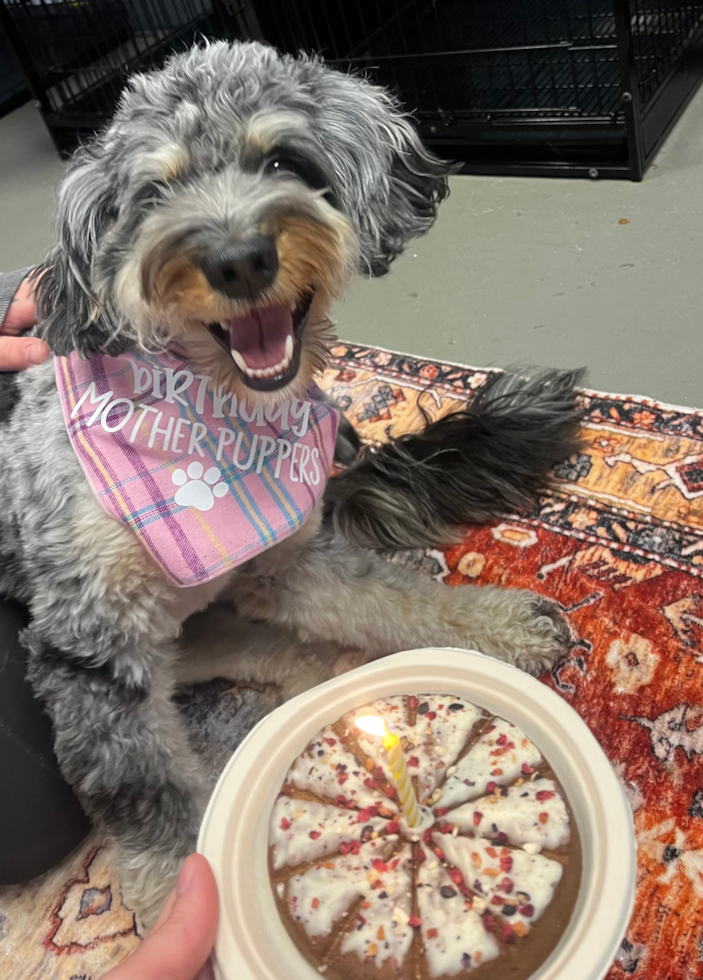
Female Mini Bernedoodles are described as slightly more independent, emotionally steady, and self-regulated compared to males, especially as they mature. Many owners notice that females seem to “settle into themselves” earlier, both emotionally and behaviorally. They may appear calmer sooner, recover from overstimulation faster, or develop better impulse control during adolescence.
That calmer energy is one reason some people strongly prefer female Mini Bernedoodles. For owners who want affection without constant emotional intensity, females sometimes feel easier to live with day to day. They are deeply loving and connected to their families while still showing a little more independence in how they move through the household.
The important thing, though, is understanding that independence does not mean emotional distance. Female Mini Bernedoodles seek affection differently rather than less intensely. Some are incredibly loving but less physically demanding about it. Instead of needing constant touch or nonstop interaction, they may check in quietly throughout the day, stay nearby without being directly on top of someone, or choose affection more selectively.
For many owners, that balance is perfectly comfortable. The dog feels connected and affectionate without needing constant reassurance or engagement every moment of the day. Some people describe female Mini Bernedoodles as more observant or composed because they often pause and assess situations before reacting impulsively.
Confidence can play a role here too. A confident female may appear more self-possessed simply because she feels secure enough not to seek constant interaction. That confidence sometimes gets misunderstood as aloofness, which is not really accurate for most Mini Bernedoodles. Less clingy does not mean less loving. The affection is still there very strongly. It may just feel calmer, quieter, or more balanced in daily life.
Many owners also notice that females mature a bit faster, especially during adolescence. While males may continue acting goofy and chaotic longer, some females begin developing steadier routines and better self-regulation earlier on. Of course, plenty of females still go through intense adolescent phases too. No Mini Bernedoodle magically skips adolescence just because it is female.
Temperament still matters here. Some female Mini Bernedoodles are playful, intensely attached, emotionally dramatic, and highly social. Others are calm, observant, and naturally independent from puppyhood onward. Genetics, socialization, emotional sensitivity, confidence, environment, and training all shape personality development over time.
This is why broad stereotypes about female Mini Bernedoodle temperament usually fall apart once people spend time around enough individual dogs. Females are not automatically aloof, bossy, or emotionally distant any more than males are automatically clingy and chaotic. The trends exist, but personality still shapes how those tendencies appear in real life.
RELATED: What Is an F1B Mini Bernedoodle? Size, Coat Type & More
Which Is More Affectionate?

If you ask Mini Bernedoodle owners which gender tends to be more affectionate, many will immediately say males. Male Mini Bernedoodles are described as openly cuddly, emotionally attached, physically clingy, and deeply invested in staying close to their people throughout the day. They frequently seek touch naturally, follow owners everywhere, and seem genuinely happiest when involved in whatever their family is doing.
That level of attachment is exactly what some people want. They love the constant companionship, the emotional openness, the dog curled against them during work calls, the shadow-like following behavior, and the feeling that their dog genuinely wants to be near them all the time. For those owners, a highly affectionate male Mini Bernedoodle can feel incredibly rewarding.
Female Mini Bernedoodles are affectionate too, sometimes extremely so, but many express it in a calmer or more selective way. Instead of constantly demanding closeness, some females prefer balanced interaction throughout the day. They may stay nearby without physically touching someone nonstop, settle independently after affection, or choose moments of closeness more intentionally rather than treating physical attachment like a full-time job. The dog still feels deeply connected without creating the constant emotional intensity that can sometimes come with highly attached dogs. Other owners interpret that calmer affection style as less loving simply because it feels less outwardly demanding. In reality, many female Mini Bernedoodles form incredibly strong bonds. They just do not always express attachment through nonstop physical closeness or constant interaction.
This is why “more affectionate” can become a misleading way to frame the discussion. Often the real difference is not how much affection exists, but how the dog expresses it. Some dogs show love through constant cuddling, physical attachment, and emotional dependence. Others show it through quiet companionship, emotional steadiness, and calmly staying connected without needing continuous engagement.
The right fit usually depends less on which dog is objectively “more loving” and more on what type of emotional dynamic feels natural and sustainable inside your household every day.
RELATED: Are Mini Bernedoodles Good Family Dogs? What Life Really Looks Like
Which Is Easier to Train?

Mini Bernedoodles are highly intelligent dogs regardless of gender, which means both males and females are usually very trainable when consistency, structure, and emotional balance exist around them. The bigger differences owners notice involve maturity speed, focus, impulse control, and emotional regulation rather than raw intelligence itself.
Many owners feel females are easier to train slightly earlier because they mature faster. Some female Mini Bernedoodles develop better focus, calmer energy, and stronger self-regulation sooner during adolescence, which can make training feel smoother in day-to-day life. They may settle faster after excitement, recover from overstimulation more easily, or stay mentally engaged during training sessions with less emotional chaos happening internally.
Males, on the other hand, stay more playful, distractible, and emotionally impulsive longer. That does not mean they are less intelligent. In fact, many males learn commands extremely quickly. The challenge sometimes comes from maintaining focus consistently when excitement, stimulation, or engagement starts competing for attention.
Adolescence tends to amplify these differences. Some male Mini Bernedoodles go through phases where they seem committed to making every situation slightly more dramatic than necessary. Focus disappears randomly. Impulse control weakens. Excitement takes over basic decision-making. The dog absolutely knows the command, but suddenly responding feels optional because life itself has become too exciting.
Females can absolutely go through difficult adolescent stages too, but many owners describe the experience as slightly steadier. Again, these are trends, not guarantees. Some females are wonderfully focused. Some are chaotic little geniuses. Some males settle beautifully early. Others stay goofy well into adulthood.
Emotional regulation matters more than trainability itself in the long run. A dog that can settle calmly, tolerate frustration, recover from excitement, and regulate emotional responses usually feels easier to train because the nervous system is more available for learning. A dog constantly bouncing between overstimulation, excitement, frustration, and distraction may technically understand training perfectly while still struggling behaviorally in daily life.
Owner consistency matters here too. Intelligent dogs notice patterns quickly, including inconsistent expectations. A calm, structured owner gets dramatically different results from the same dog than an inconsistent owner would.
This is why broad statements like “females are smarter” or “males are harder to train” usually oversimplify what people are actually experiencing. In most cases, owners are noticing differences in maturity speed, emotional regulation, focus, and energy management rather than true intelligence differences between genderes.
RELATED: Are Mini Bernedoodles Smart? Intelligence, Trainability & Behavior
Which Calms Down Faster?

Many owners feel female Mini Bernedoodles calm down slightly faster than males, especially during adolescence and early adulthood. Females are described as steadier earlier on, while males stay playful, goofy, impulsive, and emotionally energetic for longer stretches of time.
That difference is especially noticeable between roughly 6 months and 2 years old, which is when many Mini Bernedoodles go through their most chaotic developmental phases. During adolescence, both genderes can become more distractible, reactive, overstimulated, and dramatically selective about when basic training suddenly applies to them. But many owners describe males as staying in that “oversized puppy” stage longer.
For some people, that playful energy is part of the appeal. A goofy, emotionally expressive dog that stays silly and interactive well into adulthood can feel incredibly fun to live with. Other owners, especially those who want a calmer household rhythm earlier, sometimes find the extended puppy-like behavior exhausting after a while.
Females appear to settle into emotional regulation faster. Many begin developing stronger impulse control, calmer indoor behavior, and better self-settling habits earlier than males, particularly once adolescence starts leveling out. Some owners notice females becoming more balanced around 1.5 to 2 years old, while some males continue acting noticeably more immature well beyond that point.
But maturity is not controlled by gender alone, and this is where nuance matters again. Routine, training, stimulation balance, emotional development, confidence, and household environment all shape how quickly a dog learns to regulate itself.
A well-structured male Mini Bernedoodle with healthy routines, enough mental stimulation, predictable expectations, and emotional consistency may calm down much faster than a female living in a chaotic, overstimulating environment with inconsistent boundaries. Emotional regulation develops through experience and repetition, not just biology.
Stimulation balance matters a lot too. Some owners accidentally keep dogs “amped up” all the time through nonstop excitement, excessive stimulation, inconsistent routines, or constant engagement without enough structured rest. Dogs that never fully learn how to settle stay mentally busy much longer regardless of gender.
Most Mini Bernedoodles begin maturing significantly between roughly 1.5 and 3 years old, although many continue emotionally developing beyond that window as well. And some never lose their goofy side completely. They just become more capable of turning it off when needed instead of acting like caffeinated pups from sunrise to bedtime.
RELATED: Are Mini Bernedoodles Aggressive? What Owners and Experts Say
Which Barks More?
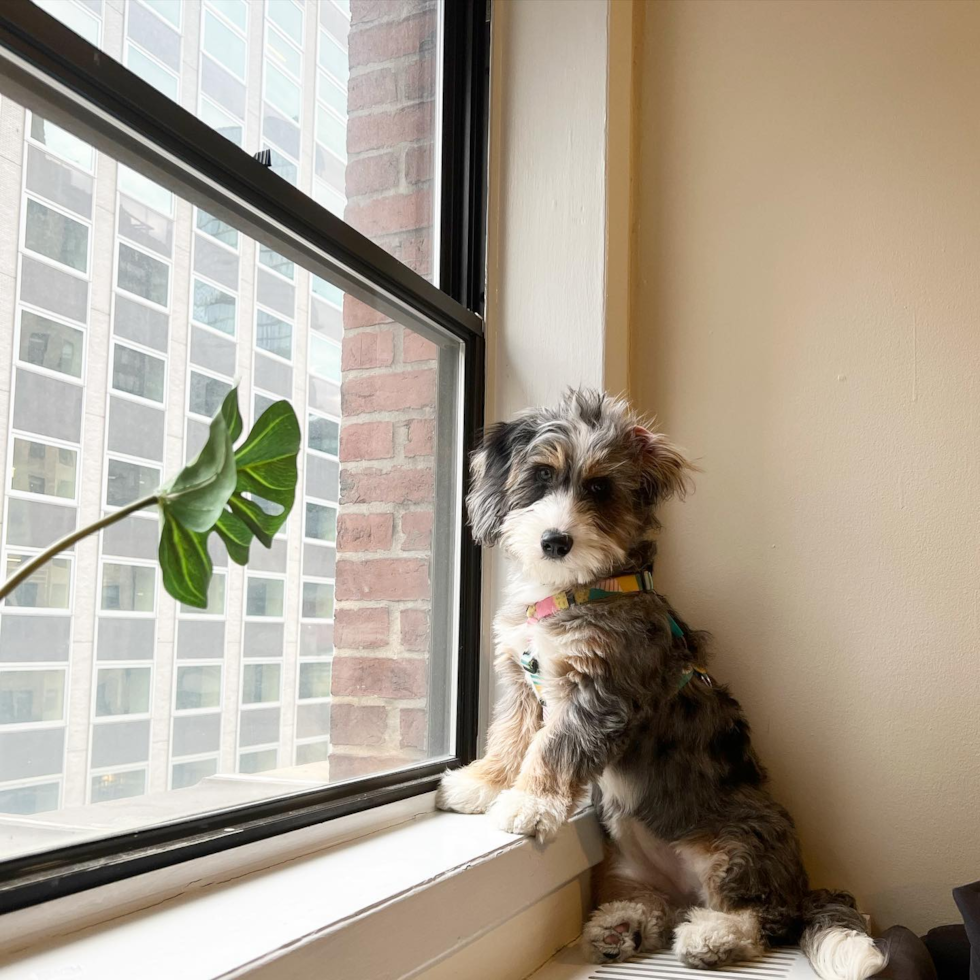
There is no clear universal winner when it comes to barking. Some people swear male Mini Bernedoodles bark more. Others insist females are more alert and environmentally reactive. In reality, emotionalsensitivity, personality, routine, stimulation, confidence, and training influence barking behavior far more than gender alone.
That said, owners sometimes notice different barking patterns between males and females. Male Mini Bernedoodles may show more attention-seeking vocalization in some cases, especially if they lean highly affectionate or emotionally dependent. Barking to continue interaction, demand attention, initiate play, or maintain engagement can appear more frequently in emotionally expressive males that strongly crave connection throughout the day.
Some females, on the other hand, may appear slightly more environmentally alert or observant. Certain female Mini Bernedoodles seem quicker to notice hallway sounds, unfamiliar movement, visitors, or environmental changes around the home. That does not automatically mean they bark more, but their barking sometimes feels more tied to monitoring the environment rather than actively seeking interaction.
Still, these trends are inconsistent enough that they should never be treated like guarantees. Plenty of males are calm and quiet indoors. Plenty of females are highly vocal, socially demanding, or reactive.
Under-stimulated dogs bark more regardless of gender. Dogs struggling with boredom, frustration, overstimulation, anxiety, or lack of structure become more vocal because barking is an outlet for energy that has nowhere else to go.
Routine plays a huge role here too. Dogs that understand when activity happens, when rest happens, and what to expect throughout the day usually settle more easily and react less intensely to environmental stimulation.
Training influences barking patterns heavily as well. Intelligent dogs quickly learn which behaviors create attention, movement, excitement, or interaction from the people around them. Inconsistent responses strengthen barking unintentionally over time, especially in responsive breeds like Mini Bernedoodles.
For a much deeper breakdown of barking behavior, including alert barking, boredom barking, separation-related barking, and apartment living considerations, see our guide on Do Mini Bernedoodles Bark a Lot?
RELATED: Do Mini Bernedoodles Bark a Lot? What’s Normal and What’s Not
Which Is Better for First-Time Owners?

Both male and female Mini Bernedoodles can be wonderful for first-time owners. The better fit usually depends less on gender itself and more on what kind of daily experience the owner wants to live with long term.
This matters because many first-time owners focus heavily on appearance, puppy cuteness, or general breed reputation without fully thinking about compatibility inside everyday life.
Some first-time owners absolutely thrive with highly affectionate, attached dogs that want constant interaction and closeness. Others quickly realize they feel overwhelmed by a dog that follows them non-stop, struggles with independence, or wants to participate in every moment of the day.
That’s why highly clingy dogs can feel either incredibly comforting or surprisingly exhausting depending on the owner’s personality and lifestyle. A work-from-home owner who wants deep companionship may love an emotionally attached Mini Bernedoodle that stays nearby all day. Someone who values more personal space or quieter independence may find that same behavior draining over time.
The opposite dynamic can happen too. A more self-regulated or independent dog may feel wonderfully balanced to one owner and disappointing to another who imagined constant cuddling and nonstop engagement. Less demanding does not mean less loving, but affection styles matter more than many people expect.
Lifestyle fit becomes important very quickly. Apartment owners do best with dogs that settle calmly indoors, tolerate environmental noise reasonably well, and develop healthy emotional regulation early on. Some highly sensitive or overstimulated dogs may struggle more in busy apartment settings regardless of gender, especially without enough routine and mental stimulation.
Work-from-home households sometimes need to think carefully about dependency too. Dogs constantly surrounded by people can accidentally become overly attached if independence and self-settling never develop. Some first-time owners unintentionally create separation-related problems simply because the dog never learns how to comfortably exist without nonstop interaction.
Active families with children enjoy playful, socially engaged dogs that naturally participate in busy household energy. Calmer households may prefer dogs that regulate stimulation more easily and blend into quieter routines without needing constant engagement throughout the day.
And then there’s closeness, which shapes this decision more than most realize. Some owners genuinely want a deeply connected velcro-style companion that is involved in every part of life. Others want affection with a little more breathing room built into the relationship. Neither preference is wrong, but understanding your own comfort level matters a lot before choosing between personality tendencies commonly seen in males and females.
The good news is that Mini Bernedoodles of both genderes are intelligent, affectionate, adaptable dogs when raised with healthy routines, socialization, emotional balance, and consistent training. For most first-time owners, temperament matching matters far more than trying to pick the “perfect” gender.
RELATED: Do Mini Bernedoodles Shed? Coat Types and Allergies Explained
Male vs Female Mini Bernedoodle Size Differences
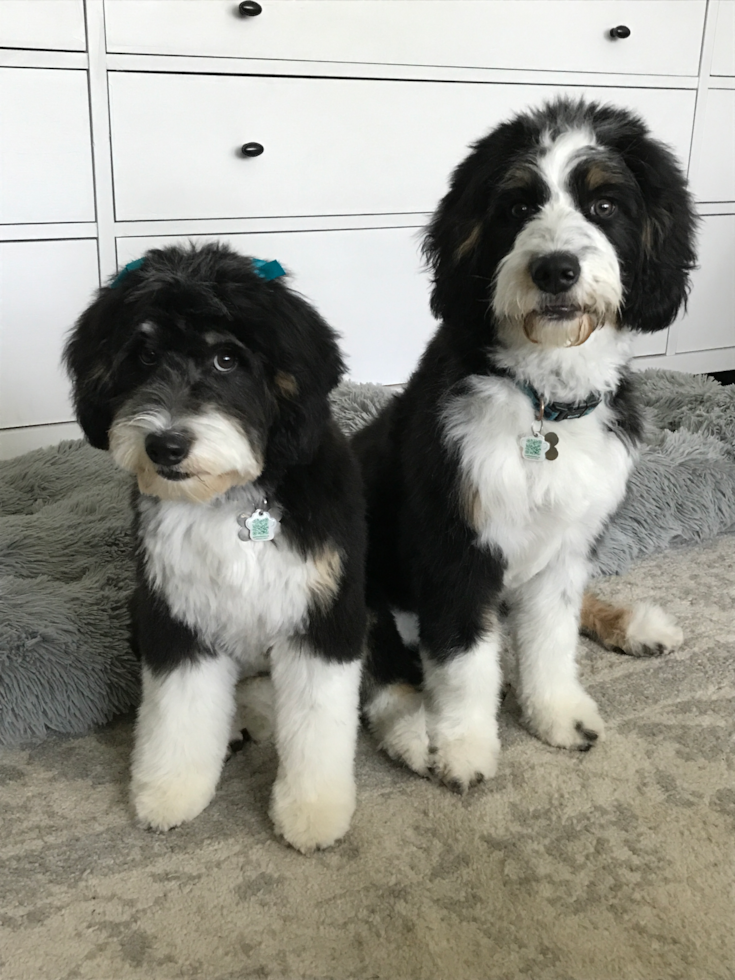
Male Mini Bernedoodles are slightly larger and heavier than females, but the differences are usually modest compared to other breeds. Most people notice the distinction more in build and presence rather than dramatic height differences.
Males develop a slightly taller frame, broader structure, and heavier build. Females are a bit lighter, slightly narrower, and somewhat more compact physically. But because Mini Bernedoodles already vary quite a bit depending on genetics, generation, and parent size, there is a lot of overlap between the genders.
In many cases, genetics influence adult size more than gender alone. A smaller male from compact parent lines may easily end up smaller than a larger female from bigger genetic lines. That’s why looking at the parents provides a much more realistic size expectation than focusing only on whether the puppy is male or female.
Most male Mini Bernedoodles fall somewhere around 30 to 50 pounds as adults, though some stay smaller or grow larger depending on genetics. Females range around 25 to 45 pounds, again with plenty of overlap depending on the specific dog. Height differences are usually relatively subtle, just a couple of inches overall.
RELATED: How Big Do Mini Bernedoodles Get?
Which Is Better With Children?

Both male and female Mini Bernedoodles can be excellent family dogs when temperament, socialization, and training are supported properly from an early age. In most households, those factors influence success around children far more than gender alone.
Mini Bernedoodles are naturally people-oriented dogs, which is one reason families are drawn to them so often. They are playful, affectionate, engaged, and eager to participate in daily family life. But the way those traits show up can feel very different depending on the individual dog’s energy level and emotional balance.
Some males lean more playful, socially intense, and physically interactive with children. Families with active kids love that energy because the dog genuinely wants to participate in games, movement, outdoor activity, and constant engagement. But high excitement can also become overwhelming if impulse control is not developed well. A large adolescent dog that treats every exciting moment like a full-contact sporting event may accidentally overwhelm younger children even with completely friendly intentions.
Some females appear calmer or more measured earlier on, which can feel easier in certain households, especially calmer homes with younger children or owners who want slightly less chaos day to day. But calmer does not automatically mean less playful or less affectionate. Many female Mini Bernedoodles are still extremely social, goofy, and interactive with children.
Temperament matching matters heavily here. A naturally patient, emotionally balanced dog fits family life beautifully regardless of gender. A highly overstimulated or impulsive dog may struggle more around fast-moving children simply because the environment constantly activates excitement.
Socialization and training shape behavior around children. Dogs that learn healthy boundaries, gentle play, and calm recovery from excitement usually integrate into family life much more smoothly. Exposure matters as well. Puppies raised around respectful interactions, household activity, and positive experiences with children develop more confidence and stability long term.
Overstimulation management is especially important in busy homes. Some Mini Bernedoodles become “amped up” after too much excitement, noise, running, or constant engagement without enough structured downtime. In those situations, barking, jumping, mouthiness, or chaotic behavior reflect overload rather than aggression or poor temperament.
The good news is that Mini Bernedoodles mature into incredibly loving family companions once emotional regulation catches up with all the intelligence, excitement, and social energy happening during puppyhood and adolescence. For most families, the best predictor of success is not whether the dog is male or female. It’s whether the dog’s personality, energy level, and emotional needs fit naturally within the rhythm of the household itself.
RELATED: Comparing Doodle Puppy Breeds: Which One is Right for Your Family?
Which Is Better With Other Dogs?

Compatibility with other dogs usually depends much more on temperament, confidence, socialization, and introductions than whether a Mini Bernedoodle is male or female.
A lot of people become very focused on same-gender pairing myths when adding another dog to the household. You’ll often hear things like “two females never work” or “males always get along better,” but real-life dog dynamics are usually more nuanced than that. Some same-gender pairs become inseparable companions. Some opposite-gender pairings struggle. Personality balance matters much more than gender combinations alone.
Energy matching plays a huge role here. A calm dog may become stressed by an extremely intense, playful, overstimulated housemate regardless of gender. On the other hand, two dogs with compatible energy levels and healthy social skills adapt beautifully even if both are male or both are female.
Confidence levels matter too. Highly insecure dogs sometimes struggle more socially because they overreact to correction, excitement, competition, or environmental tension. Confident dogs with healthy socialization navigate dog relationships more smoothly because they do not interpret every interaction as threatening or overwhelming.
Existing household dynamics deserve careful consideration too. An older calm dog may feel overwhelmed by an adolescent Mini Bernedoodle that wants nonstop interaction every waking hour. A highly playful resident dog may thrive with an energetic companion but frustrate a more independent or lower-energy dog.
Gradual introductions make a huge difference regardless of gender. Dogs adapt more successfully when relationships build slowly without immediate pressure, forced interaction, or overwhelming excitement. Neutral introductions, structured interactions, supervised decompression time, and opportunities for calm coexistence create healthier long-term relationships than simply putting two dogs together and hoping personality chemistry handles itself naturally.
RELATED: Top 5 Things to Know Before Getting a Mini Bernedoodle Dog
Health Differences Between Male and Female Mini Bernedoodles

From a general health perspective, male and female Mini Bernedoodles are usually more similar than different. Most long-term health outcomes depend more on genetics, breeding practices, preventive care, nutrition, weight management, and overall lifestyle than gender alone.
That said, there are a few health and behavioral considerations owners think about when comparing males and females.
Spay and neuter decisions are one of the biggest factors because hormones influence both physical development and certain behaviors during adolescence. Hormonal changes can affect maturity timelines, marking behavior, roaming tendencies, mounting behavior, and reactivity in some dogs, although the effects vary significantly from one individual to another.
For example, intact adolescent males may show more hormone-driven behaviors like marking, increased distraction around other dogs, or heightened interest in environmental scents during certain developmental stages. Intact females go through heat cycles, which can temporarily influence mood, energy levels, behavior, and interactions with other dogs.
Timing matters too. Many veterinarians now consider factors like breed size, growth development, joint health, and maturity when discussing when to spay or neuter a dog. This is one reason veterinary guidance is so important rather than relying on generalized advice or one-size-fits-all timelines.
There are also some gender-linked tendencies that owners hear about frequently, although they should be viewed carefully and not treated as guarantees. Certain orthopedic issues, hormonal conditions, reproductive health concerns, or behavioral patterns may appear slightly more often in one gender than the other in some studies, but individual genetics and overall health management still play a much larger role in long-term wellbeing.
Weight management can become important after spaying or neutering as well because metabolic needs sometimes shift afterward. Dogs that are highly active and mentally engaged maintain healthy body condition much more easily than dogs living more sedentary lifestyles regardless of gender.
In the end, most health differences between male and female Mini Bernedoodles are relatively modest compared to the influence of responsible breeding, veterinary care, genetics, nutrition, exercise, emotional balance, and daily lifestyle. Choosing a healthy, well-raised Mini Bernedoodle puppy and maintaining strong preventive care matters more than choosing one gender over the other strictly for health reasons alone.
RELATED: Mini Bernedoodle Pros and Cons
So, Should You Get a Male or Female Mini Bernedoodle?

There probably is not a universally “better” answer, and that’s part of what makes this decision more personal than people expect.
Some people fall completely in love with the emotionally expressive, deeply attached energy male Mini Bernedoodles bring into a home. Others feel much more comfortable with the steadier, slightly more independent dynamic people associate with females. Neither preference is wrong because the best choice depends on what kind of relationship feels natural inside your everyday life.
That’s really the heart of the entire conversation.
A dog becomes part of your environment every single day. The way they seek affection, respond to stimulation, settle indoors, handle independence, react to stress, and engage with people eventually shapes the rhythm of the household more than most people realize during the puppy stage.
Some owners genuinely want a dog that follows them everywhere, constantly seeks closeness, and is involved in every moment of the day. Others want affection with a little more independence built into the relationship. Some love playful chaos and goofy energy that lasts for years. Others are happiest with calmer emotional balance and steadier routines.
The good news is that both male and female Mini Bernedoodle puppies can become incredibly loving, intelligent, emotionally connected companions when raised with healthy structure, socialization, training, and emotional balance.
Elena R.
About The Author
Elena is a leading expert in the field of dog behavior, care, and training, with over a decade of experience in writing about dogs. As a published writer and lifelong dog enthusiast, Elena currently shares her home with three beloved canine companions. She is dedicated to staying up to date on the latest advancements in dog care and training, ensuring that her articles provide readers with accurate and valuable insights. With her extensive knowledge and passion for all things canine, Elena's contributions to the Premier Pups community offer both expertise and authority on a wide range of dog-related topics.
What To Read Next

Do Mini Bernedoodles Bark a Lot? What’s Normal and What’s Not
Do Mini Bernedoodles bark a lot? Most don’t. But they are definitely not silent dogs either. Mini Bernedoodles fall somewhere in the middle. They bark when something feels important to them, whether that’s a knock at the door, excitement, frustration,... Read More

Are Mini Bernedoodles Aggressive? What Owners and Experts Say
Mini Bernedoodles have a reputation that precedes them. Fluffy, affectionate, deeply people-oriented — the kind of dog that greets every visitor like a long-lost friend and considers your lap a permanent reservation.
Mini bernedoodles are not an aggressive... Read More
Frequently Asked Questions
Are male Mini Bernedoodles more affectionate? Many owners describe male Mini Bernedoodles as more openly affectionate and emotionally expressive. Males seek physical closeness more consistently and may develop stronger “velcro dog” tendencies. That said, plenty of females are deeply affectionate too. The biggest difference is affection style rather than affection quantity.
Are female Mini Bernedoodles calmer? Some females appear to mature faster and develop calmer self-regulation earlier, especially during adolescence. But calmness depends heavily on temperament, routine, training, emotional balance, and environment. A well-balanced male may feel calmer than a highly overstimulated female in real-life situations.
Which is easier to train, male or female Mini Bernedoodle? Both are highly intelligent and trainable. Females may sometimes appear easier to train earlier because they mature a bit faster. Males may stay more playful and distractible longer.
Do male Mini Bernedoodles bark more? There is no consistent universal difference in barking between males and females. Some males may show more attention-seeking barking, while some females may appear slightly more environmentally alert. Most barking behavior depends more on stimulation, routine, and training than gender.
Are female Mini Bernedoodles more independent? Many owners perceive females as slightly more independent or self-regulated compared to males. But independence does not mean distance. Many female Mini Bernedoodles form very strong bonds with their families while simply needing less constant physical closeness or interaction throughout the day.
Which gender is cuddlier? Males are described as more physically clingy and openly cuddly, especially in adulthood. Females can still be extremely affectionate, but many show closeness in a calmer or slightly less demanding way. Personality plays a huge role here.
Which Mini Bernedoodle matures faster? Many females appear to mature faster, especially during adolescence. Males stay puppy-like, goofy, and impulsive longer. Most Mini Bernedoodles begin settling more noticeably between 1.5 and 3 years old regardless of gender.
Are male Mini Bernedoodles clingy? Some can be. Male Mini Bernedoodles are described as highly people-oriented dogs that love staying close to their families throughout the day. But not all males are intensely attached, and some females can become extremely clingy too depending on personality and development.
Which is better for first-time owners? Either can work beautifully for first-time owners. The better fit usually depends on the owner’s lifestyle, energy level, training expectations, and comfort with emotional intensity. Some first-time owners love highly attached affectionate dogs, while others prefer a little more independence.
Are female Mini Bernedoodles easier to potty train? Some owners feel females pick up routines and impulse control slightly faster during puppyhood, but there is no guaranteed difference. Consistency, schedule management, supervision, and positive reinforcement usually influence potty training success more than gender alone.
Which is better with children? Both male and female Mini Bernedoodles can be excellent with children when properly socialized and trained. Temperament, energy level, and household structure matter much more than gender. A calm, patient, balanced dog fits family life best regardless of gender.
Do male and female Mini Bernedoodles have different energy levels? The differences are usually subtle. Males sometimes stay more playful and energetic longer, while females may appear steadier earlier. But individual temperament influences daily energy levels more than gender alone. Some females are nonstop chaos. Some males are surprisingly relaxed.
Are female Mini Bernedoodles less playful? Not necessarily. Many females are extremely playful, social, and interactive. They may simply regulate excitement differently or settle faster after stimulation. Less chaotic does not automatically mean less fun or less engaging.
Which gender has fewer behavior problems? Neither gender guarantees fewer behavior challenges. Most long-term behavior issues develop from lack of structure, poor socialization, inconsistent training, under-stimulation, overstimulation, or anxiety rather than gender itself. Temperament and environment matter much more.
Should I get a male or female Mini Bernedoodle if I already have a dog? Compatibility depends more on personality balance, confidence, emotional regulation, and introductions than gender combinations alone. Some same-gender pairings work beautifully. Some opposite-gender pairings struggle. Energy matching and gradual introductions matter more than stereotypes about gender combinations.
Do male Mini Bernedoodles calm down later? Many owners feel males stay goofy, playful, and energetic longer than females, especially during adolescence. Some males do mature later, but healthy routines, training, and mental stimulation heavily influence how quickly a dog settles overall.
Which gender sheds more? There is usually no major difference in shedding between male and female Mini Bernedoodles. Coat type, genetics, generation, grooming routines, and individual variation influence shedding more than gender.
Are female Mini Bernedoodles less needy? Some females appear slightly more independent and less demanding day to day. But less needy does not mean less affectionate. Female Mini Bernedoodles still form extremely close bonds with their families.